

How to Deglaze a Pan for Making Restaurant Quality Pan Sauces
The Secret to Great Pan Sauces
Deglazing is a fundamental cooking technique employed to extract flavor from the browned bits of food stuck to the bottom of a pan after sautéing, searing, or roasting. This process not only adds depth and complexity to dishes but also helps to create rich sauces and gravies.
The deglazing method begins once the main ingredient, be it meat, poultry, or vegetables, has been cooked to perfection, leaving behind caramelized residue on the pan’s surface. To initiate deglazing, one typically removes the cooked item from the pan and sets it aside, leaving the fond—those flavorful browned bits—intact.
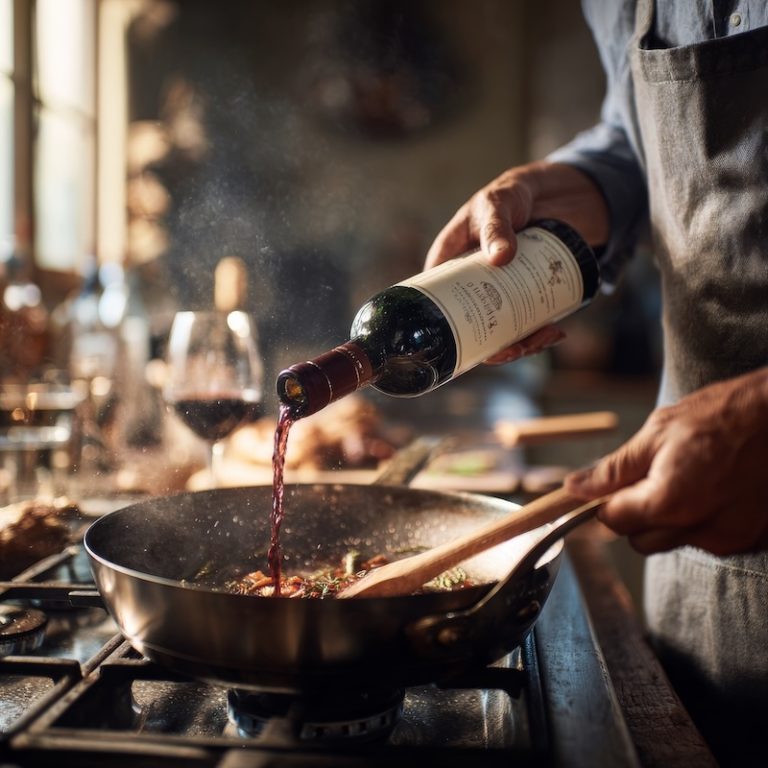
Next, a liquid, often broth, wine, or vinegar, is poured into the pan. The liquid’s temperature helps to loosen the fond from the pan’s surface, effectively incorporating its rich flavors into the sauce. As the liquid simmers, a utensil, such as a wooden spoon or spatula, is used to scrape the pan, dislodging the flavorful bits and allowing them to dissolve into the liquid.
The choice of liquid for deglazing can significantly influence the final flavor profile of the dish. Wine, for instance, adds acidity and complexity, while broth provides a savory base. Additionally, the selection of herbs, spices, or aromatics added during deglazing further enhances the sauce’s taste and aroma.
Once the fond has been fully incorporated into the liquid, the resulting mixture is often reduced through simmering, intensifying the flavors, and thickening the sauce. Depending on the desired consistency, additional ingredients such as butter or cream may be stirred in to further enrich the sauce.
Deglazing is a versatile technique that can be applied to various dishes, from pan-seared steaks to roasted vegetables. Its ability to elevate simple pan drippings into complex sauces makes it an essential skill for home cooks and professional chefs alike. Mastering the art of deglazing not only enhances the flavor of dishes but also adds an element of finesse to one’s culinary repertoire.
How To Deglaze a Pan
Sear food to build fond
Reduce heat to medium; pour off excess fat, leaving ~1–2 tsp
(Optional) Sauté aromatics 30–60 seconds (shallot, garlic, herbs)
Remove pan from heat; add ¼–½ cup deglazing liquid (stock, wine, beer, vinegar, water)
• If using alcohol, kill the flame first for safetyReturn to medium heat and bring to a lively simmer
Scrape up fond with a wooden spoon, including corners and edges
Simmer 2–5 minutes to reduce and concentrate; add a splash more liquid if it gets too thick
Taste; season with salt, pepper, and any acids (lemon, vinegar) to balance
(Optional) Finish: whisk in 1–2 Tbsp cold butter, a splash of cream, mustard, or fresh herbs
(Optional) Strain through a fine sieve for a silky sauce
Serve immediately over the main dish or on the side
Important Tip:
It is important that you remove the pan from the heat when adding any liquids with alcohol so you don’t end up with singed eyebrows. You can now use this mixture to create a wonderful sauce to accompany your meal.
Key Considerations for Deglazing
| Consideration | Details |
|---|---|
| Temperature Control | Ensure the pan is hot enough to form fond but not so hot that it burns. |
| Choice of Liquid | Match the dish: broth, wine, vinegar, or water—choose what complements the flavors. |
| Quantity of Liquid | Add just enough to cover the pan bottom; too much dilutes, too little won’t lift fond. |
| Deglazing Tools | Use a wooden spoon, spatula, or whisk to scrape; avoid metal on delicate pan surfaces. |
| Scraping Technique | Scrape gently but thoroughly, paying attention to corners and edges where fond gathers. |
| Simmering Time | Simmer a few minutes to dissolve fond and concentrate flavor; don’t over-reduce. |
| Seasoning | Taste and adjust with salt, pepper, and herbs; remember your liquid may already be seasoned. |
| Straining (Optional) | Strain through a fine mesh sieve for a smoother, refined sauce. |
| Final Incorporation | Finish with butter, cream, or another enrichener for body and sheen. |
| Serve Promptly | Serve warm over the main dish or on the side for peak flavor. |
By focusing on these steps, you’ll elevate pan sauces with deep, balanced flavor.
Deglazing Liquids and Why They Work
| Liquid | Why It’s a Good Choice |
|---|---|
| Wine (Red or White) | Adds acidity and complexity. Red wine pairs well with red meats, while white wine brightens poultry, fish, or lighter sauces. |
| Broth or Stock | Enhances depth of flavor without overpowering. Chicken, beef, or vegetable stock matches the main protein or dish. |
| Vinegar (Balsamic, Red Wine, or Apple Cider) | Provides tangy brightness and cuts through richness. Balsamic adds sweetness, while red wine or apple cider vinegar gives sharper notes. |
| Beer | Adds malty, yeasty depth and works well with hearty meats or stews. Different styles bring unique flavor tones. |
| Water | Neutral option that lifts fond without altering flavors—ideal if other ingredients already provide enough complexity. |
| Citrus Juice (Lemon, Orange, Lime) | Bright, fresh acidity balances rich dishes and adds a clean finish to seafood, poultry, or vegetables. |
| Brandy | Classic choice for pan sauces. Adds warmth, subtle sweetness, and depth—pairs beautifully with poultry, pork, or creamy sauces. |
| Bourbon | Brings smoky, caramel, and vanilla notes. Excellent for hearty meat dishes or sauces with a touch of sweetness. |
| Sherry | Nutty, slightly sweet, and complex. A staple in classic French cooking, it enriches sauces for chicken, mushrooms, or seafood. |
| Port | Deeply sweet, rich, and fruity. Perfect for deglazing after cooking beef, lamb, or game, adding luxurious body to sauces. |
Fond or Sucs – Doesn’t Matter What You Call It
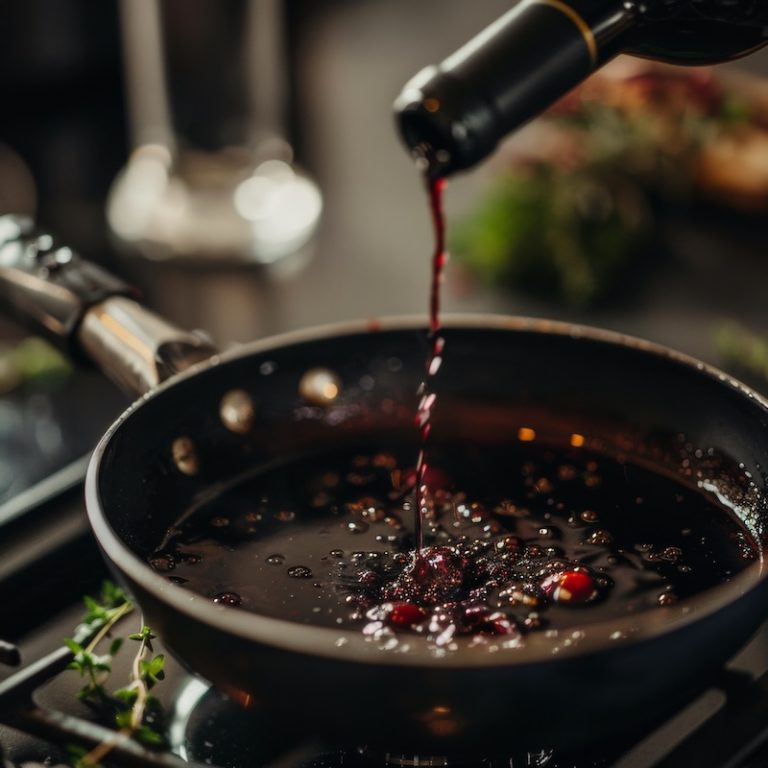
The brown bits of food stuck to the bottom of the pan are commonly referred to as “fond.” The term “fond” comes from the French word for “base” or “foundation.”
These flavorful bits are formed during the cooking process when proteins and sugars in the food undergo the Maillard reaction—a chemical reaction between amino acids and reducing sugars that occurs at high temperatures. This reaction results in the browning of the food and the formation of complex flavor compounds.
Fond develops when food is seared, sautéed, roasted, or grilled at relatively high temperatures, creating a caramelized layer on the surface. As the food cooks, its juices and sugars are released, mingling with the heat to form a flavorful crust on the bottom of the pan.
When properly incorporated through deglazing, these browned bits contain concentrated flavors and aromas that can add depth and complexity to sauces, gravies, and other dishes.
Sucs
The brown bits of food stuck to the bottom of the pan are also commonly referred to as “sucs.” The term “sucs” is derived from the French word “suc,” meaning “juice” or “essence.” Like fond, sucs are formed during the cooking process when proteins and sugars in the food undergo browning reactions, such as the Maillard reaction.
While “fond” and “sucs” refer to the browned bits of food stuck to the pan, some chefs and culinary professionals interchange these terms. In contrast, others may distinguish between them based on the specific cooking technique or regional culinary tradition.
Regardless of the terminology used, both fond and sucs are prized for their rich, concentrated flavors and are integral components in creating flavorful sauces, gravies, and pan sauces through deglazing.
Be Careful!
When deglazing a pan, there are several important precautions to ensure the process goes smoothly and safely:
- Hot Surfaces: Exercise caution when working with hot pans and liquids to avoid burns. Use oven mitts or kitchen towels to handle hot cookware.
- Steam Release: Be mindful of steam that may be released when adding liquid to a hot pan, as it can cause burns. Tilt the pan away from yourself and others when adding liquid to minimize the risk of steam burns.
- Flammable Liquids: Take care when deglazing with alcohol, such as wine or spirits, as they are flammable. Avoid adding alcohol near open flames or hot surfaces, and never pour alcohol directly from the bottle into a hot pan.
- Splattering: When adding liquid to a hot pan, it may splatter or sizzle, especially if it is hot. Stand back slightly and pour the liquid in a controlled manner to prevent burns from splashing hot liquid.
- Metal Utensils: Avoid using metal utensils with non-stick pans, as they can scratch or damage the non-stick coating. Opt for wooden or silicone utensils instead.
- Over-Reducing: Be cautious not to over-reduce the liquid when simmering after deglazing. Over-reduction can lead to a sauce that is too thick or salty. Monitor the sauce closely and adjust the heat as needed to achieve the desired consistency.
- Seasoning: Take care when seasoning the sauce after deglazing, as the liquid used for deglazing may already contain salt or other seasonings. Taste the sauce before adding additional seasoning to avoid over-salting or overpowering the flavors.
- Deglazing with Acidic Ingredients: If using acidic ingredients such as vinegar or citrus juice for deglazing, be mindful that prolonged exposure to acidic substances can damage certain types of cookware, such as aluminum or cast iron. Use stainless steel or non-reactive cookware when deglazing with acidic ingredients.
Pan Sauces
The deglazing technique is especially useful when making pan sauces after you saute a piece of meat, chicken, or fish. On my pan sauce page, you can read all about pan sauces and how to prepare them at home.
35 Responses
Very very interesting! Thanks for sharing!
Thanks for this lovely information…….highly appreciated:)))))
Beautifully simple explanation; thanks! (For all the cooking competitions I watch, I still wasn’t clear on why deglazing should be done, or when.)
You are very welcome Mary. Thanks for your comments.
Thanks for a simple explanation that I can understand!
O wow!I am a 62 year old great grandma from the south and have been “deglazing” for 50 yrs!!!! Thanks for the simple explanation and giving it a “hoity toity” name :))
Fantastic! Much appreciated
One of the reasons to deglaze a pan with wine/booze is that alcohol will molecularly bind with fats and oils, in ways that makes sure that the flavors of whatever you’re trying to deglaze come out better, and it’s easier.
That’s why if you try to deglaze a pan with mushroom broth, it is so much freaking harder to get all the fond up and out than if you use white wine. The alcohol in the wine actually makes everything work just a little better- when I need to deglaze and don’t want the wine flavor as much, I just deglaze with a small amount of that first, then mix in my stock. Works wonders.
Thanks Bippy for your comments and explanation.
I write my own blog and I’m preparing a quick post about deglazing. In my experience you can use heavy-cream to deglaze as it can handle higher heats than other dairy. Let me know if you agree!
Heavy Cream definitely works well, but I usually would add it after deglazing with some kind of alcohol…sherry or Marsala in particular
I googled “how to deglaze” and your site popped up. Thank you so much for your explanantion! After dinner I plan on perusing your site!
Thank you for giving us such an easy and understandable explanation of what “De glazing” means and the proper way to do it.
The little “nugget” you threw in about “Fond” was also something I never knew before.
Jackie Boy
so awesome! just tried it…yay successful. very cool. thanks so much.
I just did it using beer. Worked great & tasted great, and as a bonus, the pan was much easier to clean. Thanks!
Thanks for an explanation in plain English.
Ok, so for lasagne, after I deglaze the pan after browning the ground beef, what do I do with what’s left in the pan? Do I mix it back in with the beef, or add it to the sauce?
After browning ground beef for lasagne, don’t discard what’s left in the pan. The browned bits, or fond, are packed with flavor. If you’re making your tomato sauce from scratch in the same pan, simply deglaze with wine, broth, or another liquid, scrape up the fond, and let it reduce slightly before adding the tomatoes and herbs—this keeps all the flavor together.
If you’ve removed the beef first, deglaze the empty pan, reduce the liquid a little, and pour it into your sauce pot so the flavor is still captured. In either case, always mix those pan juices into the sauce, never toss them, since they add richness and depth to your lasagne.
After sautéing onions, can I leave the onions while deglazing?
Hi Scott, I do all the time when making sauces.
Thanks for the tips.
But you might want to amend this ..
Once the fond is dispersed throughout the liquid, turn down the heat
No one I ever asked could clearly explain “deglazing”. Thank you for getting me to the bottom of it. Fond regards, Terry
You are welcome. Thanks for contacting me.
In some website I’ve read, the ‘brown bits’ are called ‘sucs'(?). Is it really called ‘sucs’ or ‘fond’? I’m confused. Thanks!
No worries Ariana, both terms in the United States are used interchangeably. According to Rouxbe Cooking School, the word sucs, which derives from “sucre” (French for sugar) was invented specifically to describe those caramelized bits that stick to the bottom of a pot or pan. Although the term “fond” has several meanings in cooking, one of them is described as “a classic French culinary term meaning the browned caramelized and concentrated bits or residue that remains in the pan after cooking meat.” Use either.
Fat is a flavor transmitter — it help to better translate the flavor to your tastebuds.
I am browning Italian sausage before I put it into tomato sauce finish cooking. I was wondering what I should use to deglaze the browning pan? I have red wine vinegar or balsamic vinegar to choose from. Which would be my best choice? Thank you in advance for your reply!I only wish I would get that reply before I was finished browning my sausages ! LOL
Hi Terri, I’m sure you are done cooking by now but it really depends on you personal tastes. The balsamic will give you a sweeter result than the red wine vinegar but both are perfectly acceptable.
HI,
I am new to your website. I googled how to Deglaze. And yours showed up. You explained much easier then the other ones. Thank-you!!!!
My question is, What about the fruit flavor wines? can you use them? and with what? chicken or what?
You can use fruit flavored wines if you like and yes, chicken would be good as well as pork or fish if you are trying to make a sweet pan sauce. How about making a pan sauce with orange marmalade made with a sweet wine for chicken breasts?
Hi Stephen,
Wow, Thank-you so much!! I will try it. I get that you deglaze the pan with wine, But how do I use the Orange marmalade with the chicken breast? I am a very new gourmet cook, and I want to try the degazing. Sounds so yummy!
I don’t think anyone saw my question. (above.)
Hi Stephen,
You mention “How about making a pan sauce with orange marmalade made with a sweet wine for chicken breasts?”
How would I incorporate the “orange marmalade” with the sweet wine? Do I deglaze first and then put the marmalade in?
Many thanks
Hi Sheri, yes, I would deglaze with the sweet wine, let it reduce in half and then add the orange marmalade. If you need some more cooking liquid to make the sauce, you could try chicken stock or even some orange juice.
Hi, thank you for this great article. I have a question. If I’m roasting chicken in the oven, and cannot put the roasting pan on the stove after the meat is cooked (to make gravy), can I transfer the juices and good gunky stuff onto a pan and deglaze? I can’t deglaze in the oven I assume. Or does it just happen very quickly, while the roasting pan is still piping hot? Thanks!
Hi Hazel, sure you can. I think it’s a great idea anyway. It’s much easier to reduce the sauce, add ingredients and whisk in a sauce pan than in the roasting pan. Some people might say you don’t get all the “good gunky stuff” but I think there will be plenty for making a gravy. Only downside is another pan to clean but I think it’s worth it.