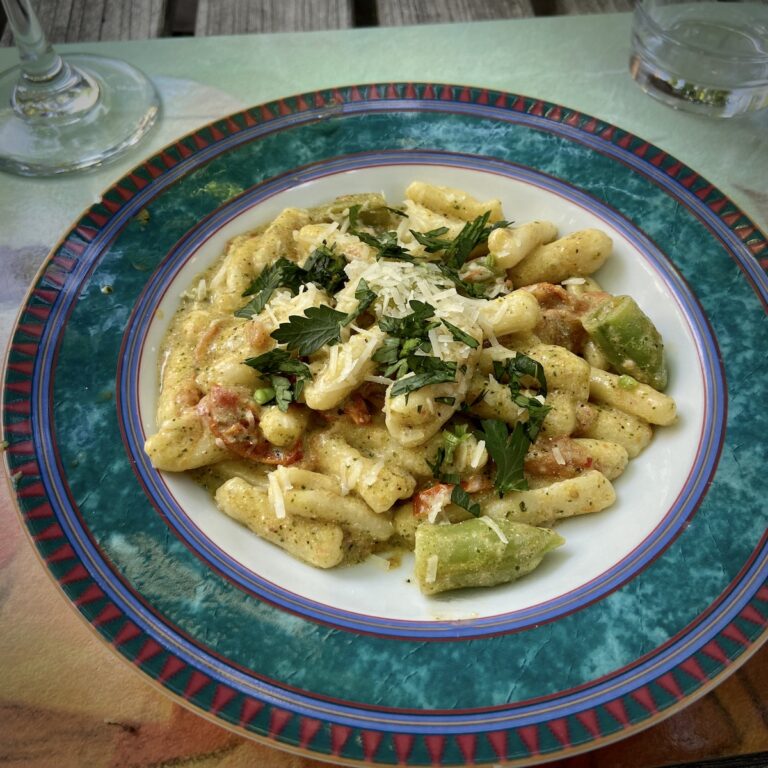
Cavatelli Pasta with Spring Peas and Pancetta Recipe

Fresh, fancy, and faster than you think—this cavatelli dish is your weeknight ticket to feeling like a springtime chef in Italy. Sweet peas, salty pancetta, and tender pasta come together in a way that screams “I know what I’m doing” (even if you don’t). Ready to fake gourmet without the fuss?

Why This Recipe Works

  • Cavatelli holds the sauce: The ridges and curves trap olive oil, pasta water, and mascarpone so every bite tastes finished, not slippery.
  • Seasonal balance matters: Sweet spring peas lighten the dish while pancetta adds savory depth, keeping flavors bright but grounded.
  • Pancetta cooks quickly: Its rendered fat becomes the base of the sauce, adding richness without needing cream.
  • Lemon sharpens everything: A small hit of zest wakes up the pasta and prevents the dish from feeling heavy.
  • Minimal ingredients, maximum payoff: Each component earns its place, which is why this pasta tastes intentional, not busy.
  • Weeknight-friendly timing: The sauce finishes in the time it takes to cook the pasta, making this an easy, reliable dinner.

A Quick & Easy Cavatelli Pasta with Fresh Peas and Pancetta

Spring cooking asks for restraint and confidence, and this cavatelli pasta recipe delivers both. It celebrates what Italian spring pasta does best: simple ingredients, quick timing, and flavors that feel bright without trying too hard. Tender cavatelli catch the sauce in every curve, while sweet peas, crisp pancetta, and a touch of lemon turn this dish into one of the best seasonal pasta dishes you’ll want to make on repeat.

If you’ve ever wondered how to cook cavatelli, this recipe shows you exactly why the shape matters. The pasta holds onto olive oil, mascarpone, and pasta water, creating a silky finish without a heavy sauce.

The contrast comes from pasta with fresh peas and pancetta, where the peas bring sweetness, and the pancetta adds depth and salt. If you’re asking what pancetta is, think of it as Italian cured pork that delivers richness without overpowering the dish.

This is the kind of easy weeknight pasta dinner that feels special but stays practical. It comes together quickly, adapts easily, and works just as well for a casual Tuesday as it does for a relaxed spring gathering. Light, satisfying, and deeply Italian, this dish proves that seasonal cooking doesn’t need complications, just good timing and smart choices.

Cavatelli Pasta with Spring Peas & Pancetta Recipe

How to make a simple pasta dish with cavatelli, aspring peas and pancetta.
Prep Time15 minutes
Cook Time20 minutes
Total Time35 minutes
Course: Pasta
Cuisine: Italian
Keyword: cavatelli, pancetta, pasta
Servings: 2 servings

Equipment

  • 1 large pot for cooking eggs and pasta
  • 1 large saute or fry pan

Ingredients

Instructions

Soft Boiled Eggs

  • Fill a pot large enough to cook the pasta and bring to a boil.
  • Salt the water.
  • When the water comes to a boil, carefully add the eggs using a slotted or regular spoon. Don't just drop them in.
  • Cook for 7 minutes for soft-boiled eggs.
  • Using a slotted spoon, carefully remove the eggs from the pan and rinse under cold water for about 45 seconds to stop the cooking process.
  • Once the eggs are cool enough to handle, remove the peels and season with salt and pepper.
  • Reserve the eggs, but don't throw out the boiling water. You'll need it to cook the pasta.

Prep the Ingredients

  • Blue Apron says to wash and dry all the fresh produce before starting the prep. This is an excellent idea because you don't know where most of the produce comes from, how it is handled, and what pesticides they use.
  • The sugar snap peas have a string that runs the length of each pod. This string is challenging and most difficult to chew. Remove the string using a paring knife to grab the string from one end and pull it off.
  • Once the snap peas are de-stringed, cut them in half crosswise.
  • Asparagus has a tough woody stem that you'll want to remove. I like grabbing it at the end and middle and snapping off the tough, woody stem. It's magic how the asparagus knows precisely where to snap off, but it always works.
  • Cut the asparagus into 1-inch pieces, but please leave the pointed tips intact. They always look impressive on a plate.
  • Zest the lemon with a zester or small side of a box grater. I've noticed many of Blue Apron's recipes require zesting a lemon or lime. It does, however, add a nice layer of flavor.
  • After zesting, quarter the lemon, remove the seeds, and reserve for later.
  • Peel the shallot and dice to a medium dice. We could get technical and examine what a medium dice looks like, but we'll reserve that for another day.
  • Finally, pick the mint leaves off the stems and discard the stems.
  • Oh yeah, most likely, you will not purchase pancetta already diced like Blue Apron sends you. You will buy a piece from the market and need to dice it yourself. This dice is larger than the dice you made for the shallot. I may need to write a post about the different dice sizes!

Cook the Pancetta

  • Heat a large fry pan, large enough to hold all the ingredients, including the pasta, on medium-high heat until hot. Blue Apron suggests using a nonstick pan if you have one. When the pan starts getting hot, add one drizzle of olive oil. When the oil is hot, add the diced pancetta.
  • Cook the pancetta until it is lightly browned and is cooked through. This will take about 5 minutes. Transfer the cooked pancetta to a plate topped with a paper towel and reserve for later.

Cook the Pasta

  • In the same pot of boiling water, you soft-boiled the eggs, add the pasta and bring to a boil. Cook until the pasta is al dente. The cooking times will differ if you use fresh cavatelli or dried. The cooking times should be posted on the container.
  • When the pasta is al dente, turn off the heat, remove 1 cup of the pasta water, reserving for later, and drain the pasta into a colander.

Cook the Vegetables

  • In the pan you cooked the pancetta, add another drizzle of olive oil and heat on medium-high. When hot, add the peas and asparagus pieces. Blue Apron likes you to cook without stirring for 2 to 3 minutes until slightly softened. I have difficulty not stirring after the first minute, but I'll let you try both methods and decide for yourself.
  • Add the "diced" shallots, then season with salt and pepper. Cook until the shallots are lightly browned, about 2 to 3 minutes. Be sure to stir occasionally after you add the shallots.
  • Add the spinach and season with the hot pepper flakes to taste.
  • Cook until the spinach wilts, about two more minutes.

Put the Meal Together and Serve

  • Add the cooked pasta to the pan of vegetables and add the mascarpone cheese, lemon zest, half the parmesan, the juice from 2 of the lemon wedges, and half the reserved pasta cooking water.
  • Cook all the ingredients on medium-high for 2 minutes, remembering to stir constantly to coat the pasta with the sauce in the pan. If you think the sauce is too dry, add more reserved pasta water, but don't make it too watery.
  • Remove the pan from the heat and add the reserved pancetta. Cut the soft-boiled eggs in half.
  • Serve the pasta, vegetables, and sauce on plates or in bowls. Top each plate with 2 soft-boiled egg halves, mint leaves torn by hand, remaining parmesan cheese, and a lemon wedge on the side.
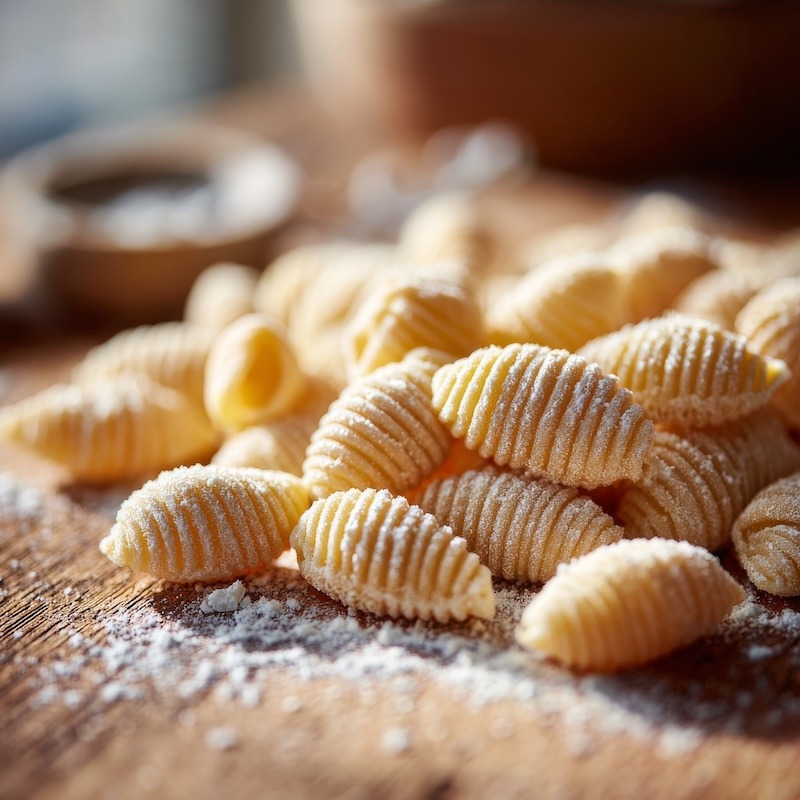
Uncooked cavatelli pasta, small ridged shell-shaped pasta pieces

What is Cavatelli Pasta?

Cavatelli [cah-vah-TELL-lee]   They are called shell pasta; if you spend any time at the beach, you may find some shells with their shape. I have. For the Soprano fans out there, they were called ‘gavadeels’ [gah-vah-deels] on the show.

The name translated means little hollows, coming from the verb ‘cavare’ or ‘to hollow’. When you look at cavatelli you may think of gnocchi, but they are completely different animals.

Gnocchi is made with potatoes or cheese, while cavatelli is prepared with durum wheat semolina flour and water, no egg.

I’m finding cavatelli at many of my local supermarkets, but if you can’t find them there, check out an Italian market or specialty store. If all else fails, you can purchase them online.

If you want to substitute another pasta for this dish, you can try orecchiette, conchigliette, or fusilli.

What is Pancetta?

Simple, pancetta is the Italian version of our bacon, but I think it is better. Unfortunately, it is harder to find and more expensive than bacon, but bacon is a good substitute if you can’t find pancetta.

Pancetta is prepared by seasoning and salt-curing meat from a pork belly. It is cured for about 3 weeks and is not smoked like bacon is. 

What does it taste like? Pancetta has a strong pork flavor and tastes slightly more salt than bacon.  I have used pancetta in a few of my posted recipes, including:


What About Mascarpone?

Mascarpone is a soft Italian “cream” cheese very similar to creme fraiche but milder and sweeter. It is heavenly when used to make sauces creamy. I’ve noticed Blue Apron uses mascarpone in a lot of their recipes.

Some people confuse mascarpone with cream cheese, but they are completely different. Mascarpone is not as firm as cream cheese and has a velvety texture and a much bigger rich and creamy mouthfeel. 

I would go with creme fraiche or plain Greek yogurt if you want a substitute.

Frequently Asked Questions

What is cavatelli pasta?

Cavatelli is a small Italian pasta shaped like a narrow shell or hollowed oval. Its ridges and curves help trap sauces, making it ideal for lighter preparations with olive oil, butter, or emulsified pasta water rather than heavy tomato sauces.

How do you cook cavatelli pasta properly?

Cook cavatelli in well-salted boiling water until just tender. Fresh cavatelli usually cooks faster than dried, so start checking early. Reserve some pasta water before draining, as it helps create a silky sauce.

Can I use dried cavatelli instead of fresh?

Yes. Dried cavatelli works well in this recipe, though it may take a few minutes longer to cook. Follow the package instructions and taste for doneness rather than relying only on time.

What is pancetta, and how is it different from bacon?

Pancetta is Italian cured pork belly that is not smoked. It has a cleaner, meatier flavor than bacon and melts beautifully into sauces. Bacon can be substituted, but it will add smokiness.

Can I substitute pancetta with something else?

You can use bacon, prosciutto, guanciale, or even sautéed mushrooms for a vegetarian option. Each substitution will slightly change the flavor profile.

Are fresh peas required?

Fresh peas offer the sweetest flavor and best texture, especially in spring. Frozen peas work well as a substitute and should be added directly to the pan without thawing.

Is this an easy weeknight pasta dinner?

Yes. The sauce comes together while the pasta cooks, and the entire dish can be finished in about 30–35 minutes with minimal prep.

Can I make this recipe ahead of time?

This pasta is best served immediately. If needed, you can prep ingredients in advance, but reheat gently with a splash of water to loosen the sauce.

What cheese works best with this dish?

Parmigiano-Reggiano is classic, but Pecorino Romano adds a sharper bite. Use a light hand so the cheese doesn’t overpower the spring flavors.

What makes this one of the best seasonal pasta dishes?

It relies on peak-season ingredients, simple technique, and balance. The dish feels light, fresh, and satisfying without unnecessary complexity, which is exactly what Italian spring pasta aims to achieve.

Leave a Reply

Your email address will not be published. Required fields are marked *

Recipe Rating


This site uses Akismet to reduce spam. Learn how your comment data is processed.