
Fast Answer
Marinate this chicken as long as you possibly can — up to 24 hours makes a real, noticeable difference, not just a marginal one. If you're short on time, 2 hours still works, but 24 is worth planning for.
The Marinade I Almost Didn't Have Time For
My wife asked me to make this on a Wednesday night and laid out the ingredients. It wasn’t until 5 o’clock that I actually read the recipe closely and saw it called for marinating the chicken for 2 to 24 hours.
That’s the Infamous Meanwhile — when a recipe assumes you’ve already read the whole thing before you start, and you haven’t. I marinated it as long as I could manage, and it changed how I think about this dish entirely.
Marinades Don’t Have to Be All Liquids
I’ve always thought of marinades as something your ingredients swim in. Marinate chicken or pork in a bottle of teriyaki sauce, sitting in a zip-top bag for a few hours, and it’s genuinely good — let it go a full 24 hours, and it’s even better.
This marinade breaks that assumption. There’s barely any liquid in it — a couple of tablespoons of lemon juice and honey, which I don’t really think of as a liquid either. It still works. Somewhere along the way, I’d assumed marinades needed volume to do their job. They don’t; they just need contact.
Start Here
- Read ahead: this recipe wants 2 to 24 hours of marinating time — read the whole thing before you start, or you'll hit the Infamous Meanwhile like I did.
- About the marinade: it's barely liquid — mostly zest, garlic, honey, and spice. Don't expect the chicken to be "swimming" in anything; that's normal.
- Equipment: one sheet pan, that's it.
- Before you start: if your plums are hard, give them a few days in a paper bag first — you want them a little soft, not rock-hard.
What Most Cooks Get Wrong
- Problem: skipping or shortchanging the marinade. Two hours works, but this is a genuinely different, better dish at 24 hours — not marketing exaggeration, an actual difference I noticed.
- Why it happens: most people don't read a recipe fully before starting, so the marinating window gets discovered too late to actually use.
- Fix: read the whole recipe the night before you plan to cook, and start the marinade then if you can.
Why This Works
- Toasting the fennel matters: raw fennel seeds are mild and a little bitter. Toasting them for 2 minutes brings out a warmer flavor before they're crushed into the marinade.
- The marinade barely has liquid, and that's fine: honey, zest, garlic, and spice cling directly to the chicken instead of diluting into a pool at the bottom of the bowl — more flavor stays on the meat.
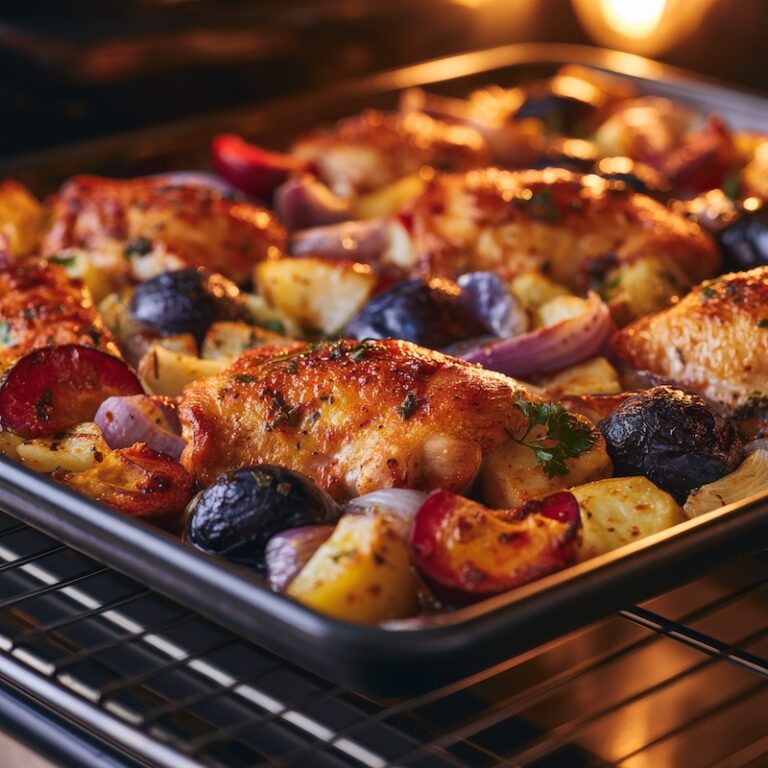
- The plums do double duty: they soften into something close to a sauce in the oven, coating the chicken while also seasoning the potatoes and onions around them.
Quick Fixes and Tips
- Short on time: 2 hours minimum still works. 24 hours is better, but don't skip this recipe just because you don't have a full day.
- No mortar and pestle: a spice grinder works — that's what I use. In a pinch, crush the toasted seeds under a heavy pan or the flat side of a knife on a cutting board.
- No fresh plums: peaches or nectarines work as a substitute stone fruit.
- Want more next time: I'd use a bigger pan and more chicken so everyone gets two pieces. It's that good.
What to Serve With This
- Crusty bread: to catch the pan juices, which are worth not leaving behind.
- Simple green salad: something fresh and acidic against the roasted sweetness.
- One bottle to keep it simple: a light Pinot Noir echoes the roasted plums without overpowering the chicken.
- Serving guests: a dry rosé bridges the fruit and savory sides of this dish nicely. Full pairing options are in the wine table below.
Explore More About This Topic
- Want to understand the Infamous Meanwhile better? My piece on how to start a recipe covers this exact problem.
- Looking for another chicken dinner? My Coq au Vin Recipe is a heavier, wine-braised version worth trying.
- Curious about a different approach to chicken? My Pollo Guisado Recipe takes it in a completely different direction.
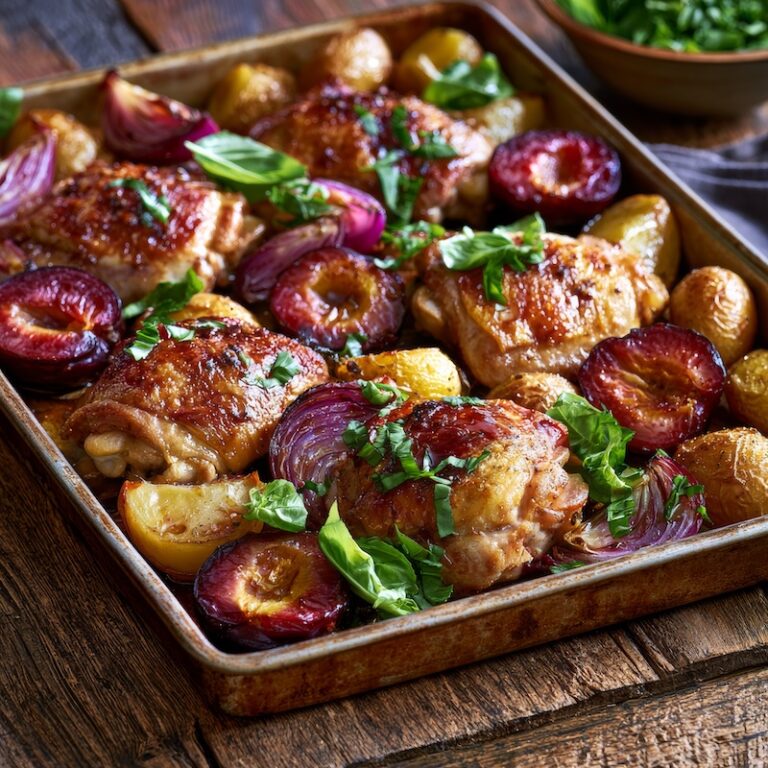
Sheet Pan Chicken with Roasted Plums, Potatoes and Onions
Equipment
- Sheet Pan
Ingredients
- 2 teaspoons fennel seeds
- juice from orange or 2 tablespoons fresh lemon
- 1 teaspoon grated orange zest or lemon
- 2 teaspoons honey
- 4 cloves garlic grated
- hot red pepper flakes to taste
- ¼ teaspoon ground allspice
- 4 chicken thighs skin on, with bone
- salt and pepper to taste
- 2 ripe plums cut into 1/2 inch slices
- 6 sprigs thyme
- 1 medium red onion peeled and cut into ½ inch wedges
- 8 small new potatoes
- olive oil extra virgin - for drizzling
- ⅔ cup basil leaves torn
Instructions
- Heat a small skillet over medium heat. Add the fennel seeds and toast until fragrant, about 2 minutes — don't let them burn.
- Crush the toasted seeds coarsely using a mortar and pestle. No mortar and pestle? A spice grinder works well, or crush them under a heavy pan or the flat side of a knife on a cutting board.
- Add the crushed fennel to a large bowl, big enough to hold all the chicken. Stir in the orange juice, orange zest, garlic, allspice, red pepper flakes, and honey.
- Season the chicken with salt and pepper, then add it to the bowl. Turn the pieces with a spatula to coat them evenly in the marinade.
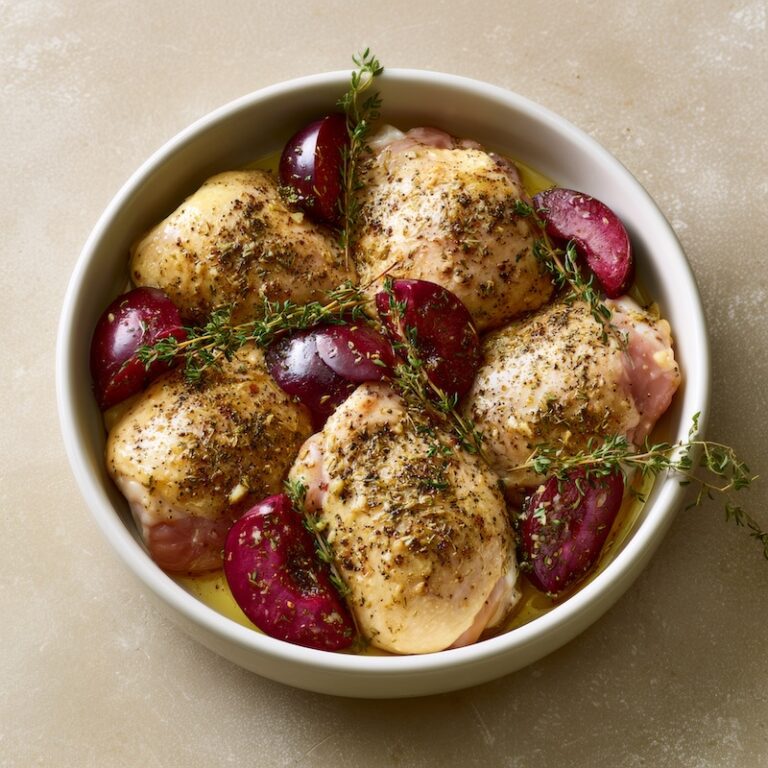
- Add the plum slices and thyme sprigs. Give everything a quick stir, cover, and refrigerate for at least 2 hours, up to 24.
- When ready to cook, preheat the oven to 425°F.
- Arrange the chicken on a rimmed sheet pan coated with oil. Tuck the plums, onion wedges, and potatoes in between the pieces.
- Spoon any remaining marinade liquid evenly over the chicken.
- Drizzle with a little more olive oil and season with salt and pepper.
- Roast 45 minutes, or until the chicken thighs are done.
- To serve, plate the chicken and spoon the plums, onions, and potatoes around it.
- Spoon any pan juices over the top, garnish with torn basil, and serve.
Storage and Make-Ahead
- Refrigerator: leftovers keep 2–3 days, airtight.
- Reheat: gently, in a low oven — the potatoes and chicken skin both lose their texture in a microwave.
- Marinating ahead is the real make-ahead move here: go the full 24 hours if your schedule allows it.
Frequently Asked Questions
Do I really need to marinate this for 24 hours?
No, 2 hours is the minimum, and it still works. But 24 hours made a real, noticeable difference for me — this isn’t just recipe-writer exaggeration.
What if I don’t have a mortar and pestle?
A spice grinder works well, which is what I use. You can also crush the toasted fennel seeds under a heavy pan or the flat side of a knife on a cutting board.
Can I use a different fruit instead of plums?
Yes — peaches or nectarines both work as a substitute stone fruit if plums aren’t available or aren’t ripe.
My plums are hard — what do I do?
Put them in a paper bag for a few days at room temperature. It speeds up ripening and gets you the soft texture this recipe needs.
Can I add other vegetables to the pan?
Yes. I plan to add carrots and mushrooms next time. Beets, asparagus, and leeks would all work too — just watch cook times for anything that roasts faster or slower than potatoes.
What does “the Infamous Meanwhile” mean?
It’s my shorthand for the moment a recipe assumes you’ve already read the whole thing, and you haven’t — like realizing at 5 o’clock that dinner needed to marinate all day. Reading a recipe fully before you start is the actual fix.
What wine goes best with this?
A light Pinot Noir nicely echoes the roasted plums. For guests, a dry rosé pairs well with the dish’s sweet and savory sides — see the full pairing table below for more options.
| Wine | Type | Description | Why it works |
|---|---|---|---|
| Pinot Noir Light red |
Red (cool-climate) | Bright cherry and red-berry fruit with gentle earth and soft tannins. Often elegant and moderately acidic. | The red fruit echoes the roasted plums while the gentle tannins won’t overpower the chicken. Acidity lifts the richness of the potatoes and caramelized onions. |
| Grenache / Garnacha Medium red |
Red (warm-climate) | Ripe red fruit, subtle spice, and plush texture. Lower tannins, juicy finish. | Its ripe, jammy fruit pairs nicely with the sweetness of roasted plums, while moderate structure stands up to roasted potatoes without masking delicate chicken flavors. |
| Dry Rosé Rosé |
Rosé (Provence-style or Grenache rosé) | Crisp, floral notes with strawberry and citrus hints. Refreshing acidity and light body. | Rosé bridges fruit and savory. It refreshes the palate between bites and matches the fruity roast-plum character while keeping the meal bright. |
| Viognier Aromatic white |
White (aromatic, medium body) | Stone-fruit aromas (apricot, peach), floral lift, and a round mouthfeel—can be lightly oily but balanced. | Viognier complements the jammy plums and caramelized onions with its stone-fruit notes and weight, without clashing with the chicken's savory profile. |
| Unoaked Chardonnay White |
White (crisp, medium body) | Citrus and green apple flavors, moderate body, clean finish (no heavy oak influence). | The wine’s acidity and clean fruit keep the dish fresh. It complements roasted potatoes and brightens the plum sauce without adding heavy oak flavors. |
| Off-dry Riesling White (off-dry) |
White (aromatic, slightly sweet) | A mix of stone-fruit and citrus with a hint of sweetness and lively acidity. | A touch of residual sugar balances the plums’ tartness while the acidity cuts through richness—great if you lean sweeter on the fruit or glaze the chicken. |
| Sparkling Wine Sparkling |
Sparkling (Brut or Extra Dry) | Fine bubbles, crisp acidity, and a toasty or brioche note (depending on style). | Bubbles refresh the palate and the bright acidity pairs well with both savory and sweet elements—an elegant match for a dinner with guests. |
We did a virtual wine tasting from Alexander Valley, California, and learned about the Alexander Valley Merlot. It was excellent and priced well, so we picked up a few bottles. It went exceptionally well with this meal.
The Alexander Valley Merlot is 100% Merlot. I haven't had a pure Merlot in a long time, but I will order more of this again.