
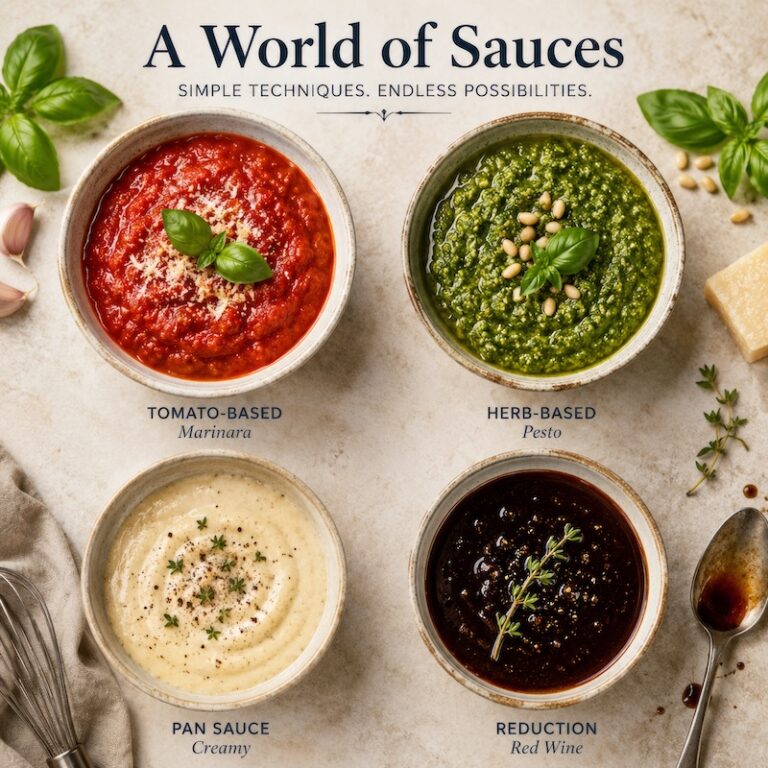
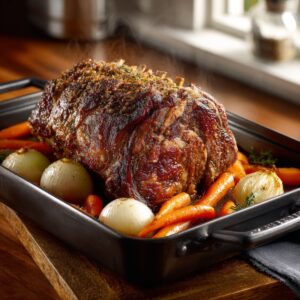
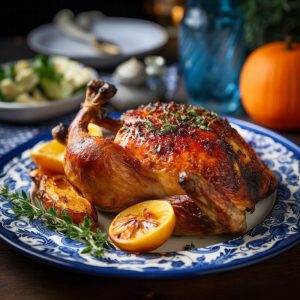
Once you understand a few simple techniques, you can make incredible sauces at home.
Sauces have a reputation for being complicated, but most great sauces are built from a surprisingly small set of techniques.
This guide explores the foundations of sauce-making, including pan sauces, reductions, stocks, pasta sauces, and flavor-building methods to help home cooks create richer, more balanced meals.
Whether you’re cooking steak, chicken, seafood, or pasta, learning sauces can completely transform the way you cook at home.
Fast Answer
Great sauces are usually built from a few simple techniques like reductions, pan sauces, emulsions, and stock-based flavor building. Once you understand how fat, acid, seasoning, and heat work together, making restaurant-quality sauces at home becomes much easier than most people think.
Start Here to Learn About Making Sauces
- Learn how stocks create flavor foundations
- Master quick pan sauces for chicken, steak, and fish
- Understand reductions and sauce thickening
- Explore pasta sauces from simple tomato to rich cream sauces
- Fix common sauce problems before dinner hits the table
Sauce Foundations
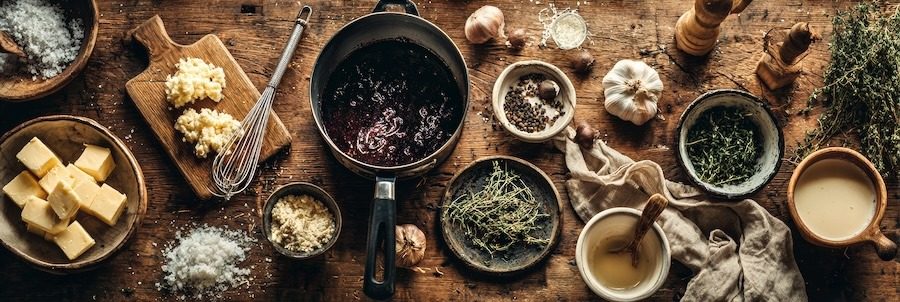
Most great sauces are built from a surprisingly small set of foundational techniques. Once you understand how stocks, reductions, pan sauces, and flavor-building methods work together, sauces become far less intimidating and much more intuitive to make at home.
Why Sauce Foundations Matter
- Stocks create depth and richness
- Reductions naturally intensify flavor
- Pan sauces turn browned bits into liquid gold
- Understanding these basics makes hundreds of sauces easier
Cooking Stocks
Homemade stocks give sauces depth, body, and richness. Learn why stock is the quiet backbone behind pan sauces, reductions, soups, and braises.
Reduction Sauces
Reduction sauces concentrate flavor naturally by slowly simmering liquids like stock, wine, or pan juices. Learn how this simple technique creates richer, deeper, more balanced sauces.
Sauce Techniques
Learn the foundational methods behind great sauces, including emulsions, thickening, mounting with butter, and balancing flavor. Understanding these techniques makes sauces far less intimidating.
Simple Pan Sauces
Turn the browned bits left in a skillet into quick, restaurant-style sauces for steak, chicken, pork, and seafood. Pan sauces are one of the fastest ways to elevate everyday cooking.
Pasta Sauces
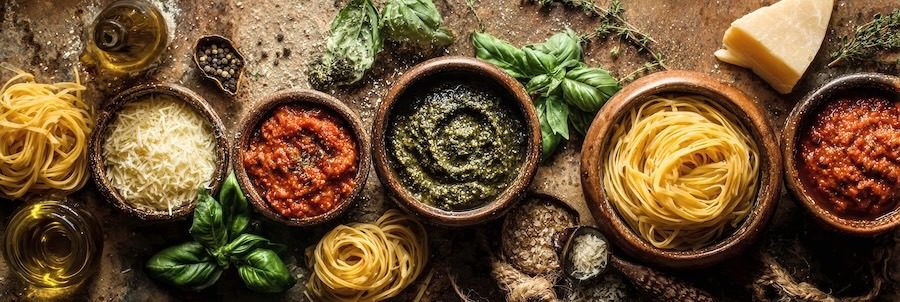
Great pasta sauces balance richness, acidity, texture, and timing. From slow-simmered Bolognese to bright pesto and silky carbonara, learning a few core pasta sauces can dramatically improve everyday home cooking.
Restaurant Quality Pasta Sauces
Learn the techniques and flavor-building methods that give restaurant pasta sauces their richer texture, balance, and depth.
Regional Italian Sauces
Explore the regional traditions behind Italy’s most iconic pasta sauces, from rich meat ragùs to lighter tomato and herb-based classics.
Marinara Sauce
Simple, bright, and deeply versatile, marinara is one of the foundational pasta sauces every home cook should know how to make well.
Bolognese Sauce
Rich, hearty, and deeply comforting, Bolognese develops its flavor slowly through layering, simmering, and patience.
Carbonara
Carbonara proves that a few ingredients and proper technique can create one of the creamiest, most satisfying pasta sauces imaginable.
Vodka Sauce
Vodka sauce balances tomato acidity with creaminess and subtle richness, creating a smooth, comforting pasta sauce with restaurant-style appeal.
Pesto Sauce
Fresh basil, garlic, olive oil, cheese, and nuts combine to create one of the brightest and most aromatic sauces in Italian cooking.
Pan Sauces
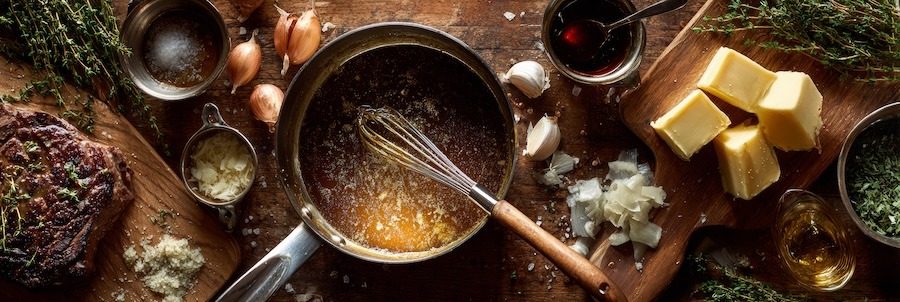
Pan sauces are one of the fastest ways to make home cooking taste more polished and restaurant-quality. By using the flavorful browned bits left in the pan along with stock, wine, butter, citrus, or aromatics, you can create quick sauces that add richness, balance, and depth to everything from steak and chicken to seafood.
Simple Pan Sauces
Learn the foundations of building quick pan sauces from fond, stock, wine, butter, and aromatics. This guide explains the simple techniques behind restaurant-style sauces.
Steak Diane
Steak Diane combines pan-seared steak with a rich, dramatic sauce built from pan drippings, aromatics, stock, and brandy for classic steakhouse flavor.
Portuguese Cod
This Portuguese-inspired cod dish shows how tomatoes, garlic, olive oil, and pan juices can come together to create a light but deeply flavorful seafood sauce.
Simple Pan Sauce Chicken
Turn an ordinary skillet chicken dinner into something far more memorable with a quick pan sauce built directly in the same pan.
Simple Reduction Sauces
Reduction sauces concentrate flavor naturally by simmering liquids until they become richer, smoother, and more balanced.
Bigarade Sauce
Bigarade sauce balances citrus brightness with savory richness, showing how acidity can completely transform a pan sauce.