
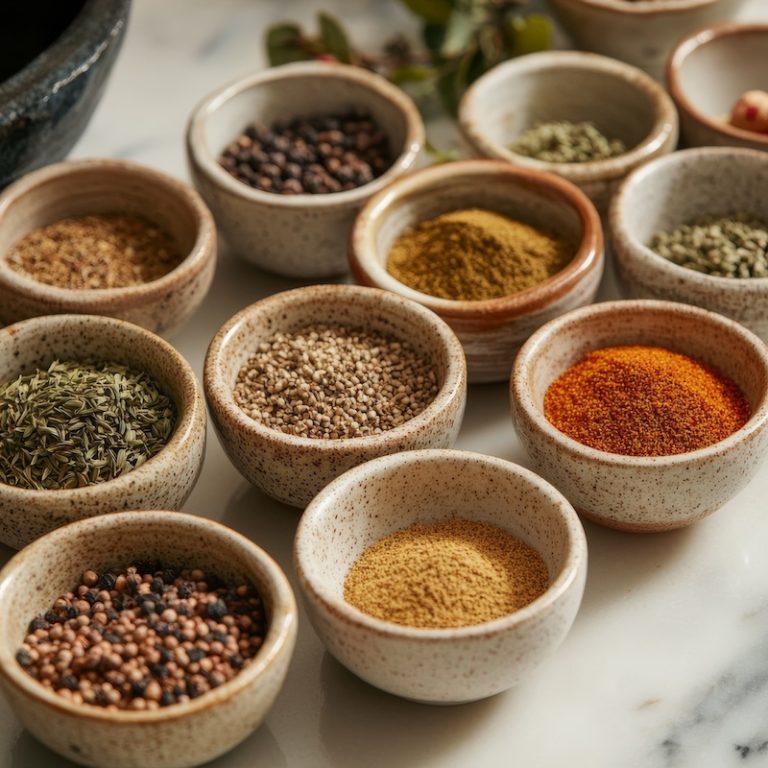

The general rule: 1 tablespoon fresh spice = 1 teaspoon dried = ½ to ¾ teaspoon ground.
The ratio I use for almost every spice swap: 1 tablespoon fresh equals 1 teaspoon dried equals about ½ teaspoon ground. It holds for most spices. The exceptions are in the chart below.
How to Convert Fresh Spices to Ground Spices
Whether you’re converting whole nutmeg to ground, figuring out how much ground cinnamon equals one cinnamon stick, or swapping fresh ginger for ground ginger, getting the ratio right matters. Fresh and whole spices are more aromatic but require a little math — ground spices are more concentrated, so you almost always need less.
Use the chart below as a quick reference, or try the interactive converter for an instant answer.
| Spice | Whole / Fresh | Ground Equiv. | Type | Best use |
|---|
Print & Save
There’s no way I will remember all these conversions, so I’ll make a copy of the chart below and print it out, then tape it to the inside of one of my cabinet doors so it’s handy when needed. It sits next to my Fresh Herbs to Dried Herbs Conversion Chart and Meat Doneness Chart.
| Spice | Whole / Fresh Form | Ground Equivalent | Shelf Life (ground) | Best Used As | Type | Notes & Tips |
|---|
How Long Do Spices Last?
Ground spices stay potent for 1–3 years — whole spices last 2–4 years. Storage conditions matter more than the date on the jar.
Key Considerations
- Aromatic spices (cinnamon, nutmeg, clove): 1–2 years flavor retention
- Ground seeds (cumin, coriander): best within 6 months–1 year
- Chili powders & paprika: color and heat may fade after 1 year
Tips to Extend Shelf Life
- Store in an airtight container in a cool, dark place
- Avoid storing near the stove or heat sources
- Check potency: rub a pinch between fingers; if aroma is faint, replace
- For freshest flavor, buy whole spices and grind as needed
Frequently Asked Questions — Spice Conversions
How much ground spice equals fresh?
The standard rule: 1 tablespoon fresh spice = 1 teaspoon dried = ½ to ¾ teaspoon ground. Ground spices are the most concentrated form, so you need the least.
How do I convert whole spices to ground?
As a general rule, whole spices yield slightly less volume when ground — 1 teaspoon whole spice equals about ¾ teaspoon ground for most seeds like cumin and coriander.
How much ground cumin equals 2 teaspoons of cumin seeds?
2 teaspoons of cumin seeds equals about 1½ teaspoons of ground cumin. Seeds lose a small amount of volume when ground.
What is the ratio to replace fresh herbs with dried herbs?
For herbs specifically, use 1 tablespoon fresh = 1 teaspoon dried. This is a different conversion from spices — see the Fresh Herbs to Dried Herbs chart for a full breakdown by herb.
How much ground ginger equals 1 tablespoon of fresh ginger?
1 tablespoon of fresh grated ginger equals 1 teaspoon of ground ginger. Fresh ginger has more moisture and a brighter flavor — ground ginger is warmer and more concentrated.
How much ground garlic equals one clove?
One fresh garlic clove equals ⅛ teaspoon of garlic powder. Garlic powder is significantly more concentrated than fresh — start with less and adjust.
Can I substitute ground spices for whole spices?
Yes — use the chart above for exact ratios. As a rough guide, ½ to ¾ teaspoon of ground spice replaces 1 teaspoon of whole seeds for most spices. Add ground spices earlier than you would whole spices since they bloom faster.
Do dried spices expire?
Ground spices stay potent for 1 to 3 years. Whole spices last 2 to 4 years. Test potency by rubbing a pinch between your fingers — if the aroma is faint, replace them.
Why does my dish taste different when I use ground spices instead of fresh?
Ground spices are more concentrated and have already lost some of the volatile oils that make fresh spices bright. Use less than the chart ratio suggests the first time, then adjust — especially with strong spices like cloves, cardamom, and cinnamon.
Is it better to use fresh, dried, or ground spices?
It depends on the dish and the cooking time. Fresh is best for raw preparations or quick-cooked dishes where brightness matters. Dried and ground work better in long-cooked dishes like braises and stews where the heat has time to draw out flavor.
Advantages of Grinding Your Spices
Grinding your spices can elevate your cooking and improve dish quality. Key benefits include:
1. Enhanced Flavor and AromaFreshly ground spices release essential oils, giving a more intense and vibrant flavor than pre-ground varieties. Ideal for dishes where spices are the star.
2. Longer Shelf LifeWhole spices last longer (2–4 years). Grinding as needed ensures you always use the freshest spices.
3. Custom BlendsCreate personalized spice blends tailored to your taste and recipes for unique, enjoyable cooking.
4. Better Control Over TextureAdjust the grind from fine powders for baking to coarser textures for rubs and marinades.
5. Cost SavingsWhole spices are often cheaper and last longer. A good grinder can save money over time.
6. Reduced AdditivesGrinding your own ensures pure spices, free from fillers, anti-caking agents, or preservatives.
While grinding takes a little extra effort, the superior flavor and freshness make it worth it for home cooks.