

How to Make an Indian-Style Sauce Base — And Why the Smell Tells You Everything

My youngest daughter grew up eating at her friend's house — a family from India where the cooking was nothing like ours. Years later, she brought home a cookbook. The first time we made this base together, the smell alone told us we were onto something.

Fast Answer

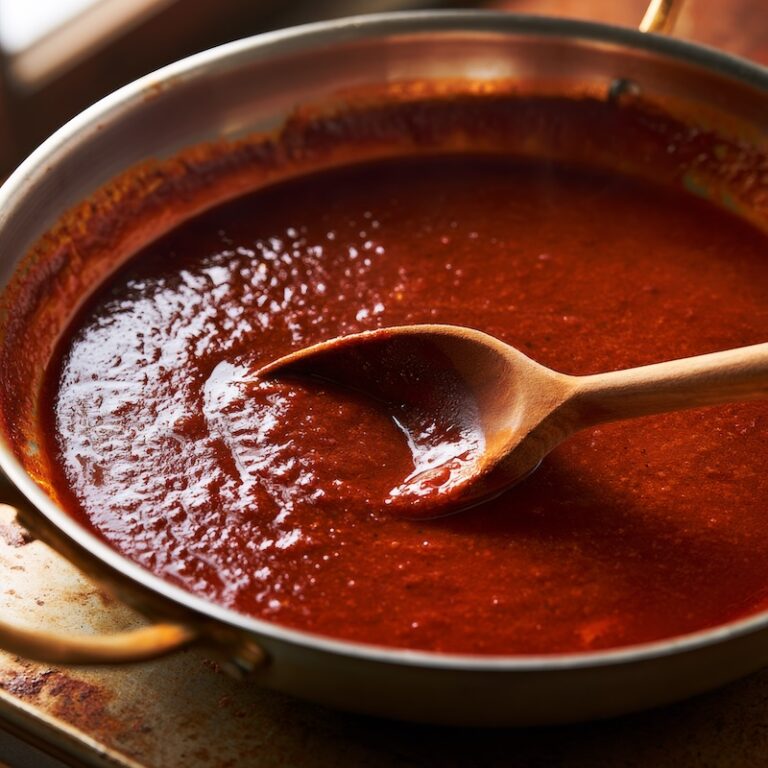
This Indian-style sauce base takes about 25 minutes and comes together in one skillet. The most important step is frying the onion and tomato purees long enough that the oil visibly separates from the mixture — that's when you know the raw flavor is gone and the base is ready to build on.

What My Daughter's Friend's Family Taught Us About Indian Cooking

The Indian-Ish cookbook my daughter picked up turned out to be a useful entry point — not because it simplified things, but because it kept explaining why. And the why in Indian cooking almost always comes back to the same answer: the spices.

What we figured out, making recipes from that book, is that the base — onions, tomatoes, ginger, garlic, and a careful pile of ground spices — is where most of the work happens. Get that right, and almost anything you add to it will taste like the food my daughter had been eating at her friend’s house for years. Get it wrong, and no amount of good chicken or lamb will save it.

This is the base I come back to now whenever we cook Indian at home.

Before You Start

  • Use a food processor. The onion and tomato need to be pureed separately — not chopped, not diced. The puree is what allows the moisture to cook out properly and the base to develop the right texture.
  • Give it time. The recipe says 15 minutes cook time. That's accurate if your heat is right, but don't rush either frying stage. Undercooked onion puree tastes raw and harsh and no amount of spice covers it.
  • Have your spices measured before you start. Once the onion and tomato are in the pan, things move. You don't want to be hunting for turmeric mid-fry.
  • This is a base, not a finished sauce. You'll extend it with stock or coconut milk when you're ready to use it. Made on its own, it's thick and concentrated — that's correct.

Indian Style Sauce Base

A starter sauce for many different Indian dishes
Prep Time10 minutes
Cook Time15 minutes
Total Time25 minutes
Course: Sauces
Cuisine: Indian
Keyword: sauce
Servings: 4 people

Ingredients

  • 2 large onions peeled and cut into quarters
  • 2 medium tomatoes peeled, seeded and chopped
  • ½ teaspoon salt
  • 2 teaspoons garlic paste or 2 cloves of garlic minced
  • 1 teaspoon fresh ginger mince or grated with a Microplane
  • 2 teaspoons ground coriander
  • 1 teaspoon ground cumin
  • 1 teaspoon cayenne pepper
  • ½ teaspoon ground turmeric
  • 2 teaspoons garam masala
  • 3 tablespoons vegetable oil

Instructions

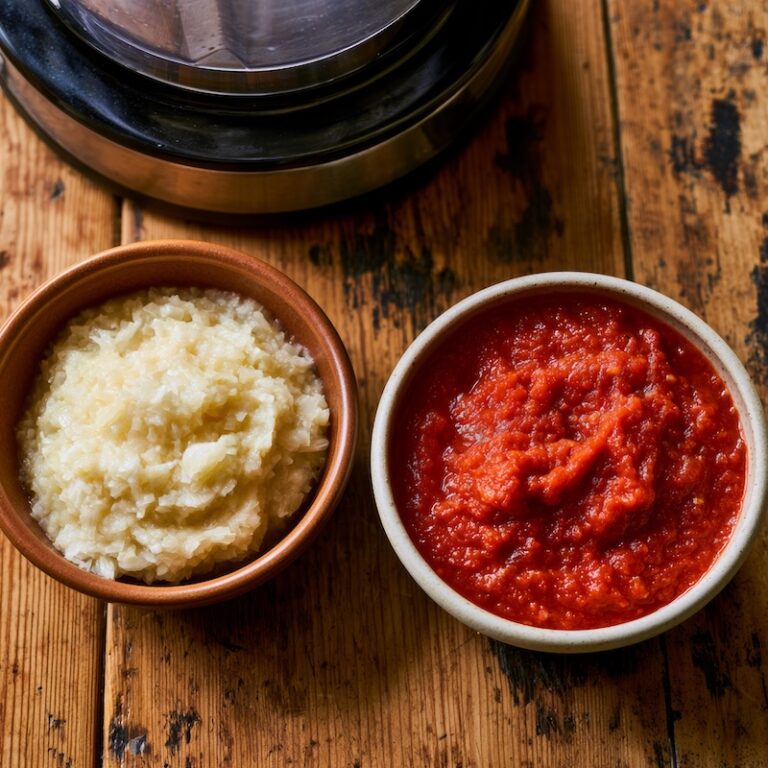
  • In the bowl of a food processor fitted with the metal blade, process the onion and tomato separately into fairly smooth purees.
    Keep them in separate bowls — they go into the pan at different times.
  • Heat a large skillet over medium-high heat and add the oil. When the oil shimmers and moves easily across the pan, add the onion puree.
  • Fry the onion puree for about five minutes, stirring regularly, until it deepens in color and most of the liquid has cooked off.
    You're not looking for browning — you're looking for the puree to tighten and dry out.
  • Add the tomato puree and fry for another five minutes, until most of the moisture has cooked out of that as well. The mixture will look thick and concentrated.
  • Add the salt, garlic, ginger, and all remaining spices.
    Continue frying, stirring constantly, until the oil begins to visibly separate from the mixture — you'll see it pooling at the edges of the pan.
    This is the cue that the base is ready. It usually takes another 2–3 minutes.
  • To finish into a sauce: for each cup of base, add about ½ cup of stock and/or coconut milk and bring to a boil.
  • Toast your curry powder in a dry skillet until fragrant and stir it in. Reduce the heat, add your meat or vegetables, and simmer until cooked through.

Notes

Garam masala — "mixed spice" — is available at Indian grocery stores and most well-stocked supermarkets. The blend varies by region and brand. If you want to make your own, there are good recipes available; just know that every version will be slightly different.
What Most Cooks Get Wrong

  • Not frying the purees long enough. This is the single most common mistake. Both the onion puree and the tomato puree need to be cooked down until most of the moisture is gone. If you pull them too early, the base tastes sharp and unfinished — and there's no fixing it later.
  • Missing the oil separation cue. The recipe says to fry until "the oil begins to separate from the vegetables." Here's what that actually looks like: as the moisture cooks out, the oil that was absorbed by the puree gets released back into the pan and you'll see it pooling visibly at the edges. That's your signal — not a timer, not a color. When the oil separates, the base is ready for the spices. I'll be honest: I had to look that up myself the first time I saw it written in a recipe.
  • Adding spices too early. The spices go in after the moisture has cooked out, not before. Added too early, they steam rather than fry — and frying is what blooms their flavor into the oil.
Two small bowls of separately pureed onion and tomato

Why This Works

  • Pureed onion and tomato behave differently than chopped. Pureeing breaks down the cell walls completely, which means the moisture releases faster and more evenly when you fry. You get a smoother, more cohesive base — closer to what you'd find in a restaurant kitchen.
  • Frying the spices in oil carries their flavor. Most of the aromatic compounds in Indian spices — the ones responsible for the smell that fills your kitchen — are fat-soluble, not water-soluble. Cooking them in oil distributes that flavor through the entire dish in a way that adding them to a watery sauce never would. That's why the smell when this base hits the pan is so immediate. It's not an accident.
  • Concentration now means flexibility later. Because this base is cooked down and concentrated, you can extend it with whatever liquid fits your dish — stock for something savory and lean, coconut milk for something richer and sweeter. One base, several directions.

Quick Fixes and Tips

  • Base tastes harsh or raw? Keep cooking. The fix is almost always more time in the pan, not more spice. If the onion puree hasn't fully cooked down, the sharpness won't go away on its own.
  • Toast your curry powder separately. The recipe suggests toasting your curry powder in a dry skillet before adding it to the finished sauce. Do this — 60 seconds in a dry pan over medium heat, just until fragrant. It makes a noticeable difference.
  • Make a larger batch and freeze it. This base freezes well in one-cup portions. If you're going to dirty a food processor and spend 25 minutes at the stove, make enough for three or four future meals.
  • Garam masala varies. There's no single correct blend. If yours is heavy on clove or cardamom, start with a little less than the recipe calls for and adjust. You can always add more at the end.
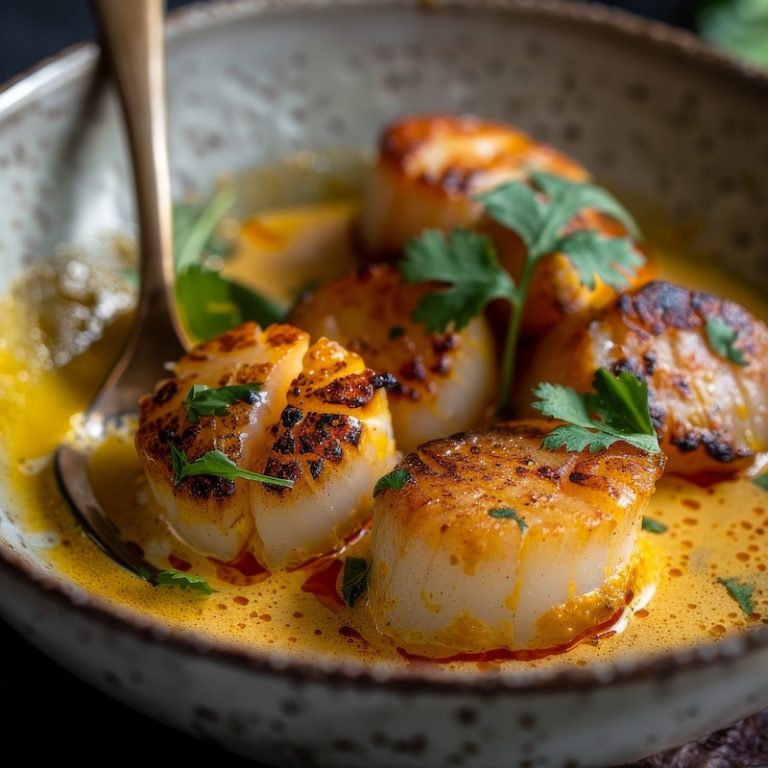
Seared Scallops in Curry Sauce

What to Serve With This

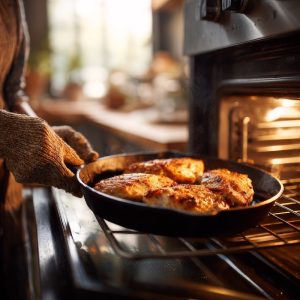
  • Chicken thighs. More forgiving than breast meat during the final simmer — they stay moist and absorb the base well. Cut into chunks before adding.
  • Lamb shoulder. The richness of the meat holds up against the spice level here. Braise it low and slow in the extended sauce.
  • Chickpeas or cauliflower. Both work well if you're going vegetarian. Cauliflower especially picks up the color and flavor of the base quickly.
  • Basmati rice. Not optional, practically. Cook it plain — the base has enough going on without competing aromatics in the rice.
  • Naan or roti. For getting every last bit of sauce out of the bowl. Store-bought naan, warmed in a dry skillet, is fine.
  • To drink: A cold Indian lager (Kingfisher is the obvious choice) or a dry Riesling, which handles the heat and spice better than most reds.

Storage and Make-Ahead

  • Refrigerator: Keeps well for up to 5 days in a sealed container. The flavors actually settle and improve after a day.
  • Freezer: Freeze in one-cup portions for up to 3 months. Thaw overnight in the refrigerator or in a saucepan over low heat with a splash of water.
  • Make-ahead note: This base is worth making in double or triple batches. The active time is the same whether you're making one cup or four.
If you've made this base, I'd like to know what you added it to — and whether you caught the oil-separation moment or just guessed at the timing. That step confused me too when I first read it written out in a recipe.

Explore More

  • All About Cumin — what it tastes like, where it comes from, and why it matters in Indian cooking.
  • All About Curry — if you want to go deeper on Indian curries and how to build them, start here.
  • Chicken Korma — one of the first Indian-inspired dishes we made at home. A good next step after you have this base down.
  • Chicken Curry — a straightforward place to put this base to work.
  • Spicy Shrimp and Red Lentils — another dish built around the same spice logic as this base.
  • Cooking Onions at Home — understanding how onions behave when cooked helps explain why the pureed version here needs as much time in the pan as it does.

Frequently Asked Questions

Q: What is an Indian sauce base made of?
The core of most Indian sauce bases is onion, tomato, garlic, and ginger — pureed and fried down until the moisture is gone — combined with fat-bloomed spices like cumin, coriander, turmeric, cayenne, and garam masala. The specific spice ratios vary by dish and region, but the method is consistent across a wide range of Indian cooking.

Q: What’s the difference between an Indian sauce base and a curry paste?
Curry paste — particularly Thai curry paste — is typically made with fresh aromatics like lemongrass, galangal, and fresh chiles, then processed into a wet paste. An Indian sauce base is cooked. The frying process is the whole point: it drives off moisture and blooms the spices in oil, which builds a depth of flavor you can’t get from a raw paste.

Q: Can I make this ahead and freeze it?
Yes, and it’s worth doing. The base freezes well for up to three months in one-cup portions. Thaw it in the refrigerator overnight or warm it gently in a pan with a splash of water. Make a larger batch while you’re at it — the active time is the same.

Q: How do I know when the base is done cooking?
Watch for the oil to separate. As moisture cooks out of the onion and tomato puree, the absorbed oil is released and pools visibly at the edges of the pan. That’s the signal — not a timer or a color. When you see the oil separating, the base is ready for whatever comes next.

Q: What can I make with this base?
Chicken curry, lamb curry, chickpea dishes, vegetable curries — anything that calls for an Indian-style gravy. Extend it with stock for a leaner sauce or coconut milk for something richer. Toast the curry powder separately and stir it in to shift the finished dish’s flavor profile.

Q: Does the spice level stay the same no matter what I add it to?
Roughly, yes — though adding coconut milk will soften the heat noticeably. If you want more heat in the finished dish, add it at the end rather than increasing the cayenne in the base itself. That gives you more control.

Q: Can I use this base for vegetarian dishes?
Completely. Cauliflower, chickpeas, potatoes, and spinach all work well. Use vegetable stock instead of chicken stock when you extend the base to make a fully vegetarian sauce.

Q: What is garam masala and can I substitute something else?
Garam masala is a spice blend — the name roughly translates to “warm spice mix” — typically including cinnamon, cardamom, cloves, cumin, coriander, and black pepper, though the exact blend varies by brand and region. There’s no single-spice substitute that’s perfect, but you can approximate it with a combination of cinnamon, cumin, and a small amount of cloves. Indian grocery stores carry several varieties worth trying.

Leave a Reply

Your email address will not be published. Required fields are marked *

Recipe Rating


This site uses Akismet to reduce spam. Learn how your comment data is processed.