
Fast Answer
There's no single right way to buy or cook a Thanksgiving turkey — fresh or frozen, whole or deconstructed, stuffed or not. What matters is buying with enough lead time for safe thawing, checking doneness by temperature instead of guessing, and picking a method that fits how much control you want over the result.
Thirty Years of Ice Cubes, Grills, and Other People's Advice
My wife and I have been doing this together for more than thirty years, and neither of us has ever treated a Thanksgiving turkey as a solved problem. We’ve picked up tips from family, friends, and a few decades of cooking magazines — one year it was icing the breast meat before roasting; another year, it was a whole turkey on the grill.
This page is everything from that experimenting that’s actually held up, organized the way we wish someone had organized it for us the first time.
Start Here
- Fresh, frozen, or somewhere between: the label matters less than buying with enough lead time to thaw and cook it safely. See the buying table and timeline below before you decide.
- Never cooked a turkey before? Start with a straightforward whole-bird roast. The deconstructed method and grilling a whole turkey are both worth trying — just not on your first attempt.
- Cooking for two or twenty? Turkey size is really a math problem. Plan roughly 1 to 1.5 pounds per person for a standard bird, more if you want leftovers.
- Considering a new trick this year? Test it on a smaller cut or a practice run before committing your whole Thanksgiving turkey to it — that's exactly how we've learned what's worth keeping and what isn't.
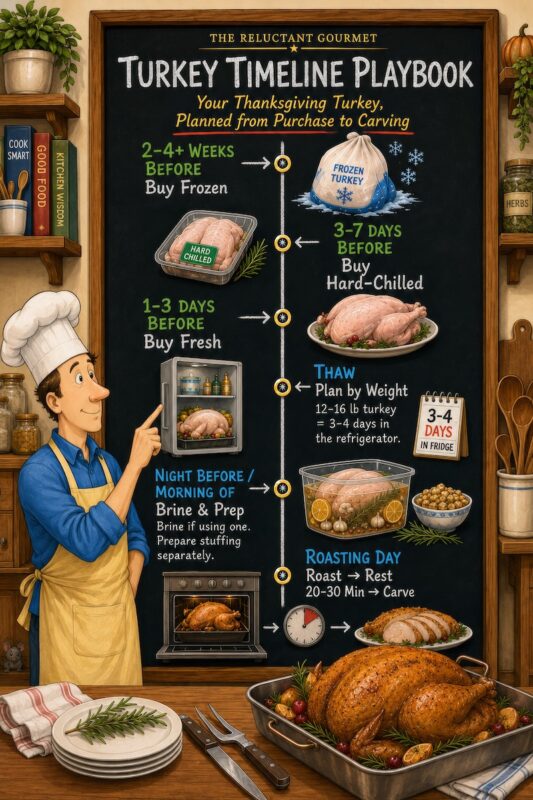
The Turkey Timeline
- 2–4+ weeks before: buy a frozen turkey. It's the easiest window to hit and gives you the most flexibility on thawing later.
- 3–7 days before: buy a hard-chilled / not-previously-frozen turkey if you want a middle ground between fresh and frozen.
- 1–3 days before: buy a fresh turkey. Any earlier and you're pushing its shelf life.
- Once you've bought it, count backward using the thawing chart below. A 12–16 lb frozen turkey needs 3–4 days in the fridge — worth knowing before you buy, not after.
- Night before or morning of: brine if you're brining, prep any stuffing separately (see below), and let the turkey come toward room temperature before it goes in the oven.
- Roast per the chart below, then rest 20–30 minutes before carving. Resting isn't optional — it's part of the cook, not a step you can skip when you're short on time.
| Purchase Type | Description | Advantages | Disadvantages | When to Buy |
|---|---|---|---|---|
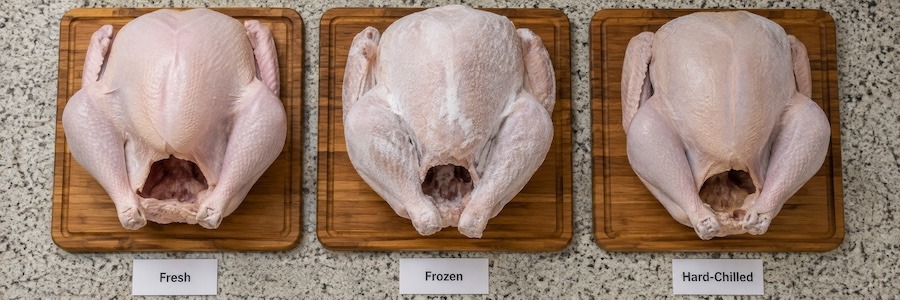
| Fresh | Never chilled below ~26°F (never frozen). Sold refrigerated with a short "use by" window. | No thawing required - ready to cook. Often marketed as premium quality. | Short fridge life; must cook quickly. Higher cost and limited availability around the holiday. | Buy 1-3 days before Thanksgiving. |
| Hard-Chilled / Not Previously Frozen | Kept below the "fresh" cutoff but above 0°F. May have been cold-stored longer. | More shelf life flexibility than fresh. Good compromise on quality and timing. | Labeling can be confusing for shoppers. Still needs careful handling and timely cooking. | Buy 3-7 days before Thanksgiving. |
| Frozen | Stored at 0°F or below; sold solidly frozen. Thawing required. | Budget-friendly and easy to purchase early. Stores well for months. | Requires multiple days to thaw safely. Needs freezer space. | Buy 2-4 weeks (or more) before Thanksgiving. |
| Kosher | Prepared according to Jewish dietary laws, usually salted and drained of blood. | Complies with religious requirements; often firmer meat; can have consistent flavor. | Higher cost; requires careful rinsing before cooking; salt may affect seasoning. | Follow the fresh or frozen timing above, depending on which you find. |
| Organic | Raised without antibiotics or synthetic hormones; fed certified organic feed. | Perceived as healthier; often better flavor and texture; supports sustainable farming. | More expensive; limited availability; can be smaller in size. | Follow the fresh or frozen timing above, depending on which you find. |
| Heritage | Traditional breeds raised slowly for flavor and texture. | Rich, complex flavor; firmer meat; ideal for gourmets. | Expensive; smaller availability; longer cooking time required. | Order well ahead - heritage birds are often preorder-only and sell out earlier than standard turkeys. |
| Free-Range / Pasture-Raised | Turkeys with outdoor access, allowed to forage naturally. | Lean meat with developed flavor; more humane farming practices. | Can be pricier; "free-range" definitions vary; sometimes smaller birds. | Follow the fresh or frozen timing above, depending on which you find. |
| Enhanced / Self-Basting | Injected with brine, broth, or flavorings to maintain moisture. | Juicier meat; easier to cook without drying out; consistent results. | Added sodium; flavor may not be natural; may not suit all diets. | Follow the fresh or frozen timing above, depending on which you find. |
Quality and Taste Considerations
The quality and taste of a Thanksgiving turkey depend far more on the bird’s age and how it is handled than whether it’s labeled fresh or frozen. A younger turkey brings naturally tender meat. Proper handling before freezing locks in moisture and preserves flavor. Safe, slow defrosting keeps the texture juicy and prevents bacteria from growing. Most importantly, how you cook the turkey—temperature control, seasoning, and resting—determines whether it turns out dry or delicious. With the proper care from start to finish, any turkey can taste incredible at your holiday table.
| Turkey Type | Age Range | Description | Taste & Texture |
|---|---|---|---|
| Fry Roaster | Usually under 16 weeks old | Very young and small birds, often weighing 4–9 pounds. Sold most often for roasting or smaller family meals. | Very tender meat with mild flavor; delicate texture but can dry out quickly if overcooked. |
| Young Hen (Female) | Typically 5–7 months old | Smaller female turkeys, usually 8–14 pounds; common choice for standard Thanksgiving gatherings. | Mild flavor with naturally tender white and dark meat; easy to cook evenly. |
| Young Tom (Male) | Typically 5–7 months old | Larger male birds, often 14–24+ pounds; ideal for big groups or leftovers. | Stronger turkey flavor with slightly firmer texture; can remain juicy when cooked properly. |
| Yearling | Up to 1 year old | Older, larger turkeys that have more developed muscles and flavor. | Richer taste but firmer, denser meat; benefits from marinades, brining, or slower cooking methods. |
Defrosting a Turkey
Defrosting a frozen turkey is a crucial step for a safe and juicy Thanksgiving bird. Plan—thawing takes time. How you defrost affects texture, flavor, and cooking safety.
| Step | Description | Why It’s Important |
|---|---|---|
| Plan Ahead | Determine the turkey’s weight and calculate thawing time. | Ensures the turkey is fully thawed before cooking and avoids last-minute stress. |
| Refrigerator Thawing | Place the turkey in its original packaging on a tray in the fridge. Allow 24 hours per 4–5 pounds. | Safest method; keeps the turkey at a consistent, safe temperature to prevent bacterial growth. |
| Cold Water Thawing | Submerge the turkey in cold water, changing water every 30 minutes. Allow 30 minutes per pound. | Faster than refrigerator thawing while maintaining food safety; prevents bacteria from multiplying. |
| Check for Ice | Ensure no ice remains in the cavity or under the skin before cooking. | Prevents uneven cooking and ensures proper seasoning penetration. |
| Keep It Wrapped | Leave the turkey in its original packaging until ready to cook. | Prevents contamination and retains moisture during thawing. |
| Cook Promptly | Cook the turkey immediately after it is fully thawed. | Reduces the risk of bacterial growth and ensures optimal texture and taste. |
| Turkey Weight | Refrigerator Thawing Time | Cold Water Thawing Time |
|---|---|---|
| 4–8 lbs | 1–2 days | 2–4 hours |
| 8–12 lbs | 2–3 days | 4–6 hours |
| 12–16 lbs | 3–4 days | 6–8 hours |
| 16–20 lbs | 4–5 days | 8–10 hours |
| 20–24 lbs | 5–6 days | 10–12 hours |
| 24–28 lbs | 6–7 days | 12–14 hours |
My Argument For Not Stuffing the Turkey
Cooking the stuffing separately from the turkey is safer and often results in a tastier dish. When you stuff a turkey, the interior cooks more slowly than the outside. This uneven cooking can leave the stuffing undercooked while you wait for the bird to reach a safe temperature.
Undercooked stuffing poses a food safety risk, especially with ingredients like eggs, meat, or broth. Cooking the stuffing in a separate dish ensures it reaches the proper temperature and is safe to eat. It also gives you more control over flavor and texture. You can brown the top, add extra butter, or adjust seasonings without worrying about the turkey.
Meanwhile, the turkey cooks evenly, preserving moisture in both white and dark meat. By keeping the stuffing separate, you reduce stress on cooking day and achieve a golden, flavorful dish that everyone can enjoy. Safety, flavor, and texture all improve when you cook stuffing outside the bird.
My Argument For Deconstructing the Turkey
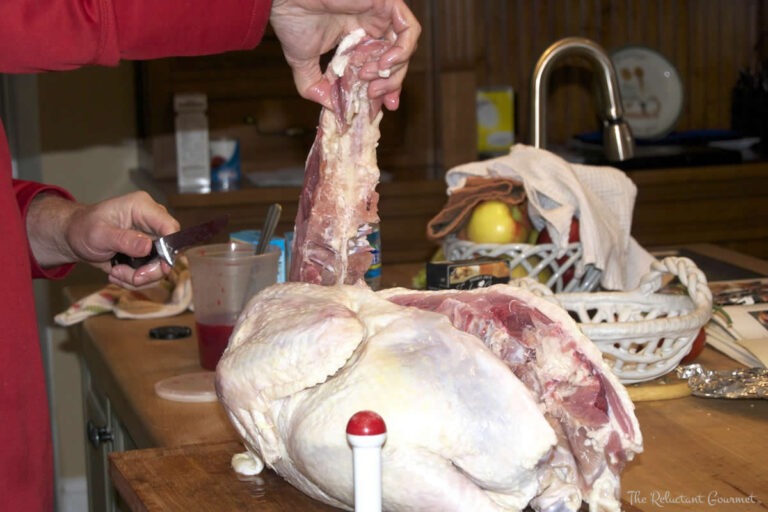
Deconstructing the turkey—removing the backbone, separating the legs and thighs, and cooking each part individually—gives you complete control over the cooking process. The white meat breast cooks faster than the dark meat legs and thighs.
If you cook the bird whole, you often face a dilemma: the breast can dry out while waiting for the thighs to reach a safe temperature. By cooking each section separately, you ensure every piece is perfectly cooked and juicy. You can roast the breast to golden perfection while giving the legs and thighs the time they need to tenderize.
Yes, you won’t have the traditional Norman Rockwell-style whole turkey centerpiece, but in reality, most families carve the bird in the kitchen and serve slices. Deconstructing the turkey also makes carving easier, reduces stress, and allows for creative presentation.
Each part can be seasoned and cooked for maximum flavor. The result is a moist, flavorful turkey every time—no guessing or overcooking required.
Roasting a Turkey
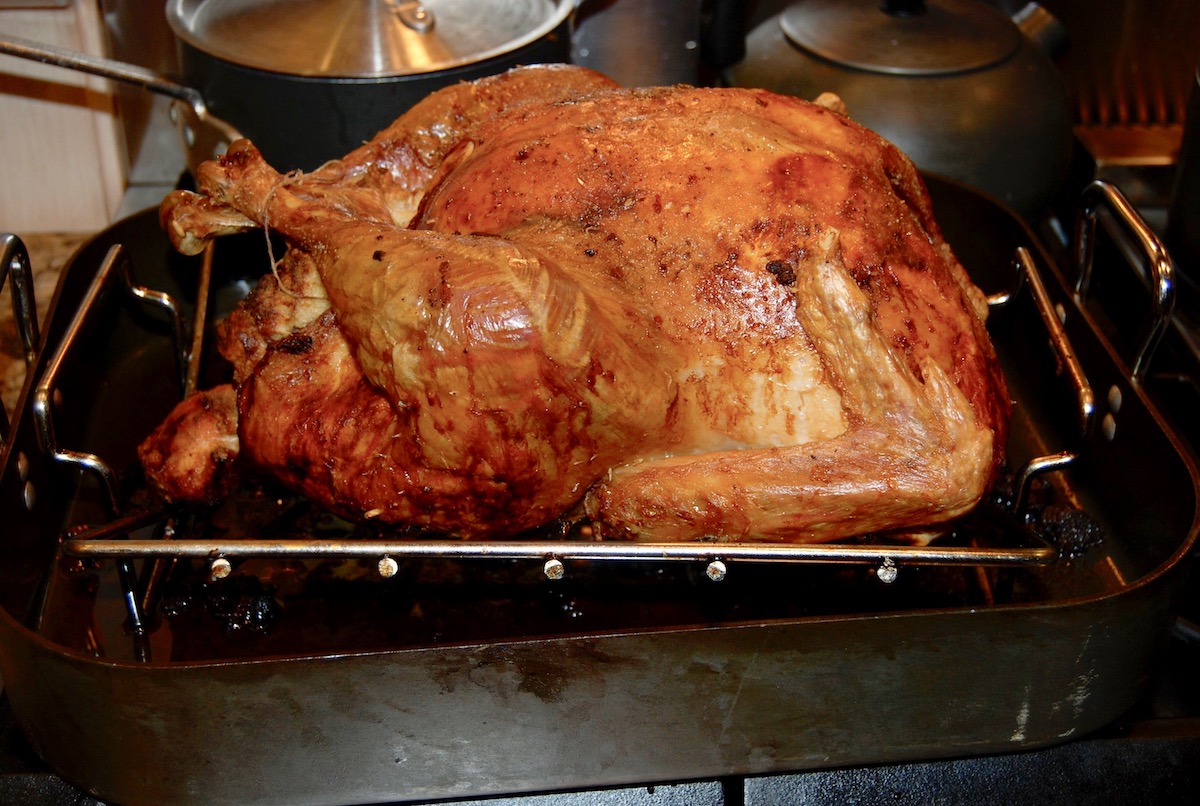
This chart shows estimated roasting times for both whole turkeys and deconstructed turkey parts, based on weight. Cooking a whole turkey requires balancing the faster-cooking breast with the slower-cooking legs and thighs. If you roast the bird whole, you risk drying out the breast while waiting for the dark meat to reach a safe temperature.
Deconstructing the turkey—removing the backbone and separating the legs, thighs, and breast—allows you to cook each piece according to its ideal timing. The chart provides a clear guide for both approaches, showing the time required to roast a whole bird versus individual parts in a 325°F oven.
Use it to plan your cooking schedule, ensure perfectly cooked meat, and keep every bite juicy and flavorful. Whether you stick with tradition or take the deconstructed approach, this chart helps take the guesswork out of Thanksgiving turkey roasting.
| Turkey Weight | Whole Turkey Roasting Time (Oven at 325°F) | Deconstructed Turkey Roasting Time (Breast) | Deconstructed Turkey Roasting Time (Legs & Thighs) |
|---|---|---|---|
| 8–12 lbs | 2.5–3 hours | 1.25–1.5 hours | 1.75–2 hours |
| 12–16 lbs | 3–4 hours | 1.5–2 hours | 2–2.5 hours |
| 16–20 lbs | 4–4.5 hours | 2–2.25 hours | 2.5–3 hours |
| 20–24 lbs | 4.5–5 hours | 2.25–2.5 hours | 3–3.5 hours |
Internal Roasting Temperatures
| Turkey Part | Remove from Oven Temp | Resting Time | Ideal Finished Temp |
|---|---|---|---|
| Whole Turkey | 160°F (breast), 170°F (thigh) | 20–30 minutes | 165°F (breast), 175°F (thigh) |
| Breast (Deconstructed) | 160°F | 15–20 minutes | 165°F |
| Thigh (Deconstructed) | 170°F | 20–25 minutes | 175°F |
| Leg (Deconstructed) | 170°F | 20–25 minutes | 175°F |
Turkey Pop-Up Thermometers
Those “pop-up” thermometers that come with many store-bought turkeys might seem convenient, but they are notoriously unreliable. They are designed to pop up when the internal temperature reaches a certain point—usually around 165°F—but they often give a false sense of security. Here’s why:
- Placement Issues – The thermometer is usually inserted in the thickest part of the breast, but if it’s off-center or in a fat pocket, it may register a higher temperature before the meat is fully cooked.
- Inconsistent Calibration – Pop-up thermometers are mass-produced cheaply and aren’t precisely calibrated. Two birds from the same store may have slightly different popping points, so relying on the pop-up can be hit or miss.
- Delayed Reaction – The pop-up mechanism reacts to heat, not exact temperature. It can lag behind the actual internal temperature of the meat.
- Dark Meat Difference – These thermometers are usually in the breast, so they say nothing about the thighs and legs, which take longer to cook.
Because of these factors, depending solely on a pop-up thermometer often leads to overcooking the breast while waiting for the thighs to reach a safe temperature, resulting in dry, less flavorful meat. A proper instant-read meat thermometer inserted in the thickest part of the breast and the thigh is the only reliable way to ensure the turkey is safe and juicy.
Frequently Asked Questions
Does a Tom turkey take longer to cook than a Hen? Yes. Toms are larger, often 14–24+ pounds versus 8–14 for Hens, so heat takes longer to reach the center, and the denser muscle in male birds cooks slightly slower. Budget 30–60 minutes more in the oven than a Hen, depending on weight, and confirm with a thermometer rather than the clock — 165°F in the breast, 175°F in the thighs.
Should I stuff the turkey? I don’t, and the full reasoning is above — the interior cooks more slowly than the exterior, which risks undercooked stuffing while you wait for the bird to reach a safe internal temperature. Cooking stuffing separately is safer and gives you more control over flavor and texture.
Are pop-up thermometers accurate? Not reliably. They’re inconsistently calibrated, react to heat rather than exact temperature, and only measure the breast — telling you nothing about the thighs, which take longer. An instant-read thermometer in both spots is the only reliable check.
How far ahead should I buy my turkey? It depends on the type: 2–4+ weeks for frozen, 3–7 days for hard-chilled, and 1–3 days for fresh. Buying earlier than that risks freezer space issues with frozen birds or shelf-life issues with fresh ones.
What’s the fastest safe way to thaw a turkey? Cold water thawing — submerged, with the water changed every 30 minutes, at roughly 30 minutes per pound. It’s faster than thawing in the refrigerator and still food-safe, but it requires active attention rather than the hands-off overnight approach of a fridge thaw.
TURKEY HOT LINES:
Butterball Turkey Talk‑Line: 1‑800‑BUTTERBALL (1‑800‑288‑8372). You can also text 844‑877‑3456
Perdue Consumer Information Line: 1‑800‑4‑PERDUE (1‑800‑473‑7383)
United States Department of Agriculture (USDA) Meat & Poultry Hotline: 1‑888‑MPHotline (1‑888‑674‑6854).
U.S. Food and Drug Administration (FDA) For general food safety inquiries: 1‑888‑SAFEFOOD (1‑888‑723‑3366)
United States Department of Agriculture (USDA) Main number for broader issues: 1‑833‑ONE‑USDA (1‑833‑663‑8732)or 202‑720‑2791.


6 Responses
Thank you! I appreciate your wonderfully written article, especially the way that you included little “bits” from your childhood. Very interesting. I personally have to disagree with one of the comments you made- about the turkey being a mere vessel for gravy or cranberry sauce. NO!!!! If a turkey is cooked properly, with lots of love and lots of basting, and not rushed to “get it out of the way”, as my mother would say, it can be a delicious item all by itself. A true contender on the Thanksgiving menu.
While I appreciate your well-written and interesting article, I also feel that I must add that you are mis-spelling “diner”. Turkey DINNER. Not Turkey DINER. You are implying that there is a restaurant (a diner) which serves or specializes in Turkey. 🙂
Thank you! I’m saving this one!
Hi Em, thanks for pointing out the spelling errors. I guess I’m an even more “reluctant” writer than cook. Have a wonderful Thanksgiving celebration with your family and friends.
I bake my turkeys inside a large brown grocery bag closed with wooden clothespins. I slice a large onion and layer the bottom of the paper bag with it to prevent it from sticking to the bag, plus it adds flavor. I never have to guess how it will turn out. I use a butter knife to loosen the skin on the breast and slide 1/4 inch slivers of real butter under the skin. I tip it on it’s neck and sprinkle salt and pepper inside. No dressing. 15 minutes per pound, then let it rest. Comes out golden brown and crispy every time. I use the bottom of a large roasting pan, no aluminum. Too dangerous. It’s always done, delicious, no matter the brand or size. Happy cooking!
Hi Victoria, thanks for sending me your turkey method. Never tried this but looks interesting and love that you never have to guess.
Hi does it take longer to cook a Tom turkey than a Hen turkey?
Roasting a Tom turkey usually takes longer than roasting a Hen turkey because Toms are larger, often weighing 14–24+ pounds compared with 8–14 pounds for Hens. The extra size means heat takes longer to reach the center, and the denser muscle in male birds can slow cooking slightly.
Larger birds also make it harder to cook the breast and thighs evenly without overcooking one part. As a result, a Tom may require 30–60 minutes more in the oven than a Hen, depending on weight. For best results, always use a meat thermometer to check the internal temperature—165°F in the breast and 175°F in the thighs—rather than relying solely on estimated roasting times.