
Pan Roasting – the Pro’s Technique Not Talked About
Pan roasting is one of the most reliable and flavorful cooking techniques you can master. It combines two methods: searing food in a hot pan on the stove, then finishing it in the oven. This technique gives you the best of both worlds.
The stovetop sear creates a golden, caramelized crust, while the oven gently cooks the inside to perfection. Pan roasting is perfect for meats, poultry, and even vegetables, making it a versatile method for everyday cooking.
At its core, pan roasting means you start in a skillet, usually cast iron or stainless steel, to lock in flavor and texture. After a quick sear, you transfer the pan directly into a preheated oven.
This controlled heat prevents overcooking and ensures juicy, tender results every time. The transition from high heat to steady oven roasting is what makes this method stand out.
Home cooks love pan roasting because it’s simple, efficient, and delivers professional-quality meals without complicated steps. Whether you’re cooking pan roasted chicken, steak, or salmon, this technique works beautifully.
Once you learn how to pan roast, you can elevate everyday dinners into restaurant-worthy plates. Mastering this method will give you confidence and consistency in the kitchen.
Step-by-Step Guide to Pan Roasting
Read the recipe and pick the right cut.
Choose pieces about ¾–2 inches thick (steaks, bone-in chicken thighs, pork chops, firm fish).Bring to room temperature.
Sit the protein out 20–30 minutes. This helps it cook evenly.Preheat the oven.
Set to 400°F (204°C) as a reliable default. Use 425°F (218°C) for very thick or bone-in pieces.Pat the food dry.
Use paper towels. Dry surfaces sear better.Season well.
Salt and pepper both sides. Add other spices or a light rub if you like.Choose an oven-safe pan.
Use cast iron or heavy stainless steel. Don’t use a flimsy or nonstick pan at high heat.Heat the pan and add oil.
Warm the pan over medium-high. Add a high-smoke-point oil (canola, avocado). Heat until the oil shimmers.Don’t crowd the pan.
Cook in batches if needed. Crowding steams instead of sears.Sear the first side.
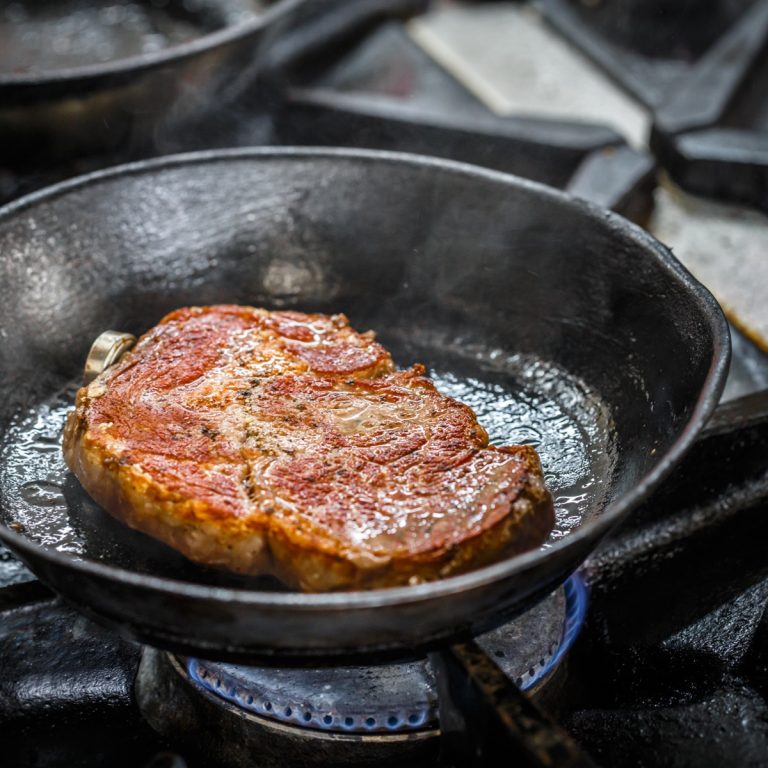
Lay food away from you. Let it sit without moving until a deep golden crust forms (1–4 minutes depending on thickness).Flip and sear the second side.
Sear briefly. For extra flavor, add a knob of butter, smashed garlic, and herbs now and spoon the butter over the food for 30–60 seconds.Transfer the pan to the oven.
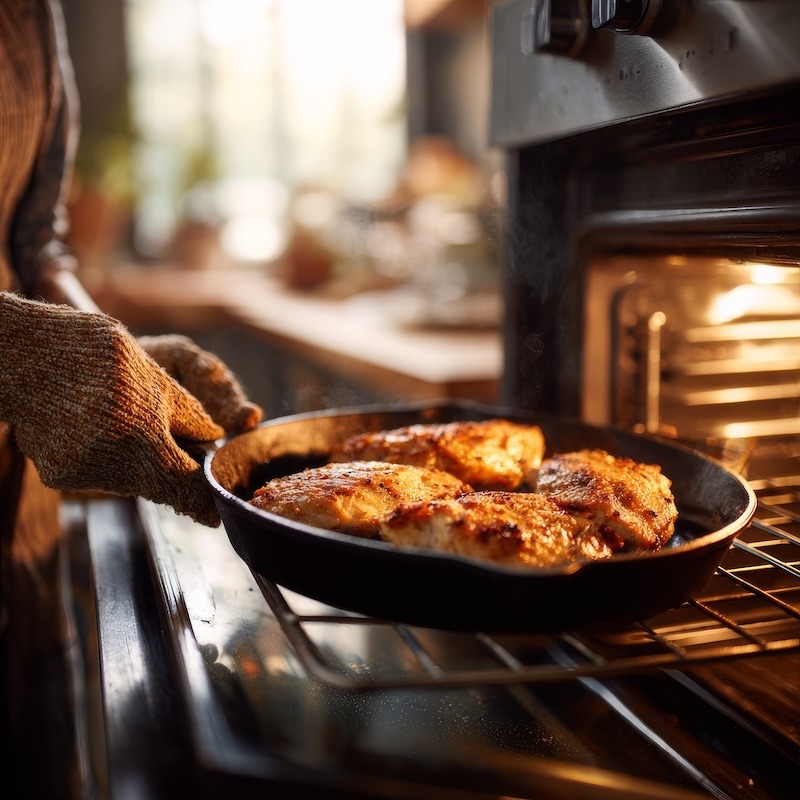
Use oven mitts. Put the pan on the center rack to finish cooking.Cook to temperature, not time.
Use an instant-read thermometer in the thickest part. Targets: chicken 165°F (74°C); pork 145°F (63°C) then 3-minute rest; beef — rare 120–125°F (49–52°C), med-rare 130–135°F (54–57°C), medium 140–145°F (60–63°C); fish 125–130°F (52–54°C).Remove and rest.
Tent loosely with foil. Rest 5–10 minutes for steaks/small cuts; 10–15 for larger pieces. Carryover heat will finish cooking.Make a quick pan sauce (optional).
While it rests, put the pan back on medium heat. Deglaze with wine or stock, scrape browned bits, reduce, and finish with butter or a splash of cream.Slice and finish.
Add a pinch of finishing salt. Slice against the grain and serve.
Troubleshoot: no crust = pan not hot enough. Too much smoke = lower heat or less oil. If unsure, trust the thermometer. Enjoy — pan roasting gives a great crust and juicy interior every time.
How Much Heat?
I wrote an article called How Much Heat To Use When Sauteing or Pan Frying, describing how I determine when the pan is hot enough. Please check it out. I also want to share with you a warning I have in that article:
WARNING: Hot oil is hazardous and can burn you. Most home cooks rarely get their pans and the fats they cook with to the proper temperature, so if you do start heating your pans and fats to optimum levels, be very careful not to burn yourself. You should start at slightly lower levels than discussed here until you are comfortable, then take them a little higher.
Pro Tips For Pan Roasting
| Tip | Description | Why it matters |
|---|---|---|
| Choosing the right cut of protein | Select cuts ¾–2" thick (steaks, bone-in chicken thighs, pork chops, firm fish). Thin pieces overcook; very thick cuts need longer oven time. | Proper thickness ensures you get a deep crust on the stovetop while the oven finishes the interior without drying it out. |
| Bring protein to room temperature | Let protein sit 20–30 minutes before cooking (longer for very large cuts). Pat dry before seasoning. | Even starting temperature promotes uniform cooking and avoids overcooked edges with an undercooked center. |
| Use the right pan | Use an oven-safe heavy pan: cast iron or thick stainless steel. Avoid thin nonstick at high heat. | A heavy pan holds and distributes heat evenly, giving a reliable sear and safe transfer to the oven. |
| Heat the pan before cooking | Preheat the pan over medium-high until hot, then add a high-smoke-point oil and wait until it shimmers. | A properly heated pan prevents sticking and creates the Maillard crust that locks in flavor and texture. |
| High Heat | Use high stovetop heat for the sear. Control smoke by ventilating and using the right oil. | High heat produces a quick, flavorful crust without overcooking the interior; it’s the difference between browned and steamed. |
| Cook quickly | Sear without moving the piece until a deep crust forms. Flip once or twice; keep the process brisk. | Quick, decisive cooking preserves juices and gives the contrast between a crisp exterior and tender interior. |
| Pre-heated oven | Preheat oven to 400°F (204°C) or 425°F (218°C) for thicker cuts. Transfer the hot pan directly to the oven. | A hot oven continues cooking evenly and quickly, preventing the seared crust from softening and ensuring proper doneness. |
Great Examples of Pan Roasted Dishes
| Dish | Description | Why Pan Roasting Works |
|---|---|---|
| Pan Roasted Chicken Breasts | Juicy chicken breasts with a golden brown, crispy skin. Often finished with herbs and garlic butter. | Locks in moisture while creating a flavorful crust, preventing the breast from drying out. |
| Pan Roasted Sea Bass | Tender sea bass with crisp skin and delicate, flaky flesh. Often paired with a light pan sauce or citrus. | Quick sear followed by oven finish preserves the delicate texture while giving a perfectly crispy skin. |
| Pan Roasted Rabbit | Tender rabbit legs or loins seared to golden brown, often cooked with aromatic herbs and vegetables. | Adds rich flavor and seals juices, while oven cooking ensures even doneness without toughness. |
| Pan Roasted Butter Fish | Rich, buttery fish with a crisp exterior and soft, flaky interior. Often complemented by lemon or herb butter. | Highlights the fish's natural richness, while the oven finish ensures even cooking without breaking apart. |
| Pan Roasted Duck Breast | Crispy-skinned duck breast, juicy inside, often finished with a fruit-based sauce. | Oven finish ensures the interior stays tender while maintaining a crisp, flavorful skin. |
| Pan Roasted Pork Chops | Bone-in or thick-cut chops with a caramelized crust, often paired with apples or mustard sauce. | High heat sear locks flavor; oven ensures even cooking without drying out. |
| Pan Roasted Salmon | Crispy-skinned salmon, tender and flaky inside; often finished with herbs or a glaze. | Sear preserves skin crispiness while oven finish cooks fish evenly without overcooking. |
| Pan Roasted Lamb Chops | Lamb chops seared with rosemary and garlic; juicy, tender, and perfectly cooked inside. | Pan roasting ensures a flavorful crust while finishing in the oven guarantees even doneness. |
| Pan Roasted Scallops | Golden-brown scallops with tender, juicy centers; finished gently in the oven. | Quick sear adds flavor and color; oven ensures the delicate centers remain tender. |
| Pan Roasted Turkey Cutlets | Lean turkey cutlets with a crisp exterior and juicy interior; often finished with pan sauce. | Pan roasting locks in moisture while the oven finish prevents toughness. |
| Pan Roasted Veal Chops | Tender veal with a rich, caramelized crust and evenly cooked interior. | Pan roasting ensures flavorful browning while the oven cooks the veal evenly without drying. |
| Pan Roasted Tilapia or Cod | Firm white fish with a crispy exterior and tender, flaky inside; often served with light sauce or lemon. | Pan roasting preserves texture and flavor while cooking the fish evenly. |
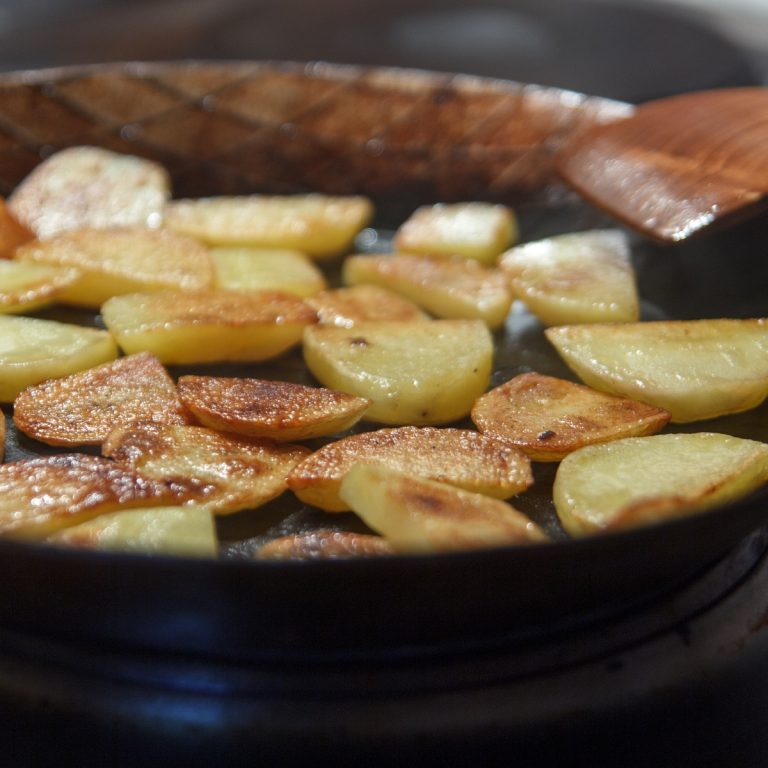
| Pan Roasted Vegetables | Thick-cut carrots, potatoes, squash, or root vegetables caramelized on the outside, soft inside. | Pan roasting enhances natural sweetness and texture while creating a lightly crisp, flavorful exterior. |

7 Responses
Thanks for the tips! 🙂 Wondering – where’s the video you reference? Cheers!
FB
Seems to have been lost in the update but it should be there now. Thanks for letting me know. — RG
Any comments on finishing not in the oven, but right on the stove top? Any benefits/drawbacks? Particularly for something like chicken breasts. I suppose it may dry the outside more, but makes also makes for easier basting (just add butter, etc, and spoon over the meat).
Hi Ben, sure you can finish in the pan but then I wouldn’t call it pan roasting but pan frying. Saying that, I have read in one cookbook that pan frying is done completely on the stove-top and not in the oven so there is a difference in what people call it. This is why I find cookbooks sometimes confusing but in the end you can call it what you like as long as you understand the different techniques. – RG
Hi! Your recipe says – 350 degrees F, chef Ming says – 450. Which is it?
I personally like 350 degrees F because I can control the heat more. It may take a little longer but I would rather take the extra time than worry about it overcooking especially if I’m not paying as close attention as I should. I suggest you try 350, 400 and 450 on different occasions and decide what temp works best for you.
Thank you for posting this information. I am teaching myself!
Hi – this is one of my favorite techniques! I use a heavy cast iron pan for my filets – the trick to it for me is to put the cold pan in the cold oven and turn the heat to 400 degrees. The pan gets good and hot, (don’t forget your oven mitts!!!!), and i then transfer to stove top on high heat to keep it hot until i throw in the steaks on med-high. I sear the first side for a few minutes, then flip and sear for another few minutes, then place the entire pan back into the oven. We like medium-rare, so depending on thickness, i cook for 3-5 minutes on this side, then flip and do other side for 3-5 minutes. Let them rest in the pan, outside of the oven for a few minutes before serving. Perfect! And by the way, i usually marinate my steaks in the fridge for at least 30 minutes (several hours is ideal) in a bag with a bit of olive oil, S&P, worchestershire sauce, and any other seasonings of choice (herbes de provence is good; also, “Forward” seasoning from Penzeys!) I let them come to room temp for another 20-30 min.
Love your helpful hints and recipes and FB page!!
Best,
Tari
Tari, thanks so much for sharing your preferred method of getting your cast iron pans ready for filets. Great tips.