Fast Answer
Accurate measuring comes down to using the right tool for the ingredient and leveling or weighing properly. Dry ingredients should be spooned and leveled, liquids measured at eye level, and precision improves dramatically when you use a scale.
Accurate Ingredient Measurement: The Skill That Fixes Your Recipes
Originally published: August 2025 | Updated: May 5, 2026
Measuring ingredients correctly is one of the most overlooked cooking skills. It directly affects texture, flavor, and consistency in everything from baked goods to sauces.
Once you understand how to measure dry and liquid ingredients properly, your results become more predictable and repeatable. This guide breaks down the exact techniques, explains why they work, and helps you start thinking like a cook instead of just following instructions.
Why Measuring Actually Matters
- Better texture: Too much flour = dense. Too little = weak structure.
- Balanced flavor: Small changes in salt, sugar, or acid shift the entire dish.
- Consistent results: You can repeat a recipe and get the same outcome.
- Baking depends on it: Ratios must stay exact for proper rise and structure.
- Less guesswork: You fix problems faster because your inputs are controlled.
Start Here
- Who this is for: Home cooks frustrated by inconsistent results.
- When to use it: Any time you follow a recipe, especially baking.
- What success looks like: Recipes turn out the same way every time.
- Key shift: Measure with intention, not habit.
Why This Technique Works
- Cooking is ratios: Recipes rely on balance between ingredients.
- Volume vs weight: Cups can vary, but grams stay consistent.
- Air matters: Packed flour vs fluffed flour changes texture.
- Liquid accuracy: Eye-level measuring prevents overpouring.
Why a Cup Isn’t Always a Cup
- Flour vs water: Both measure as 1 cup, but flour weighs ~120g while water weighs ~240g.
- Why it matters: Flour traps air. Water doesn’t. That makes flour inconsistent by volume.
- Real impact: Extra flour = dense, dry baked goods.
- Liquids are stable: A cup of water is always the same. Flour is not.
- Think like a cook: Volume measures space. Weight measures reality.
Why a Kitchen Scale Changes Everything
- Accuracy: Volume changes. Weight doesn’t. Flour can vary wildly depending on how you scoop it.
- Consistency: You get the same result every time because the ratios stay exact.
- Baking advantage: Small differences in flour or sugar can ruin texture. A scale removes that risk.
- Simpler workflow: Weigh directly into one bowl. Fewer tools, less cleanup.
- Global recipes: Many recipes use grams. A scale lets you follow them without converting.
- Pro mindset: Cooks estimate. Bakers measure. Pros weigh.
How to Use a Scale (30 Seconds)
- Place your bowl: Set it on the scale first.
- Hit tare: Resets the scale to zero.
- Add ingredient: Pour until you hit the target weight.
- Repeat: Tare again for the next ingredient.
Dry vs Liquid: Use the Right Tool
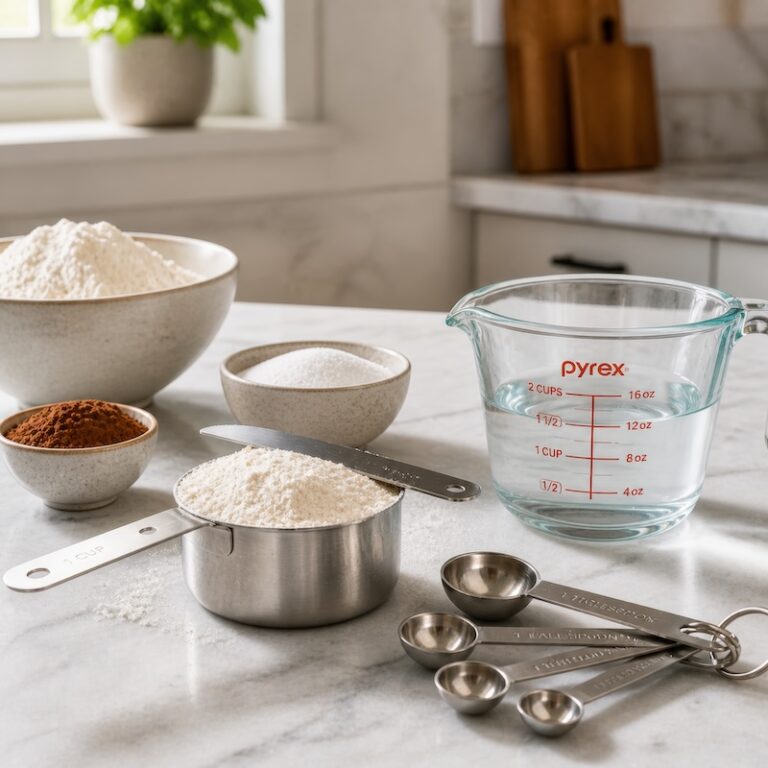
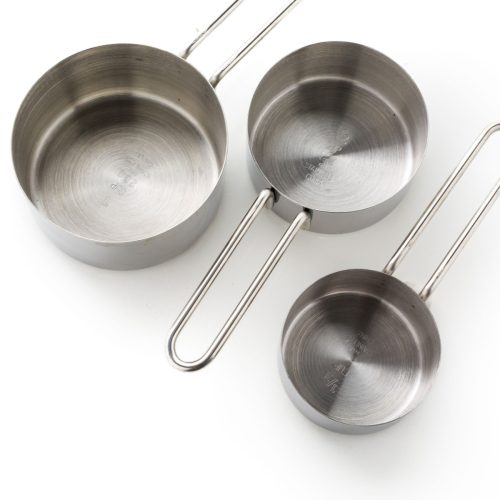
- Dry ingredients: Use dry measuring cups. Fill, then level off for accuracy.
- Liquids: Use clear measuring cups with a spout. Check at eye level.
- Measuring spoons: Use for small amounts of both dry and liquid ingredients.
- Do not swap: Liquid cups for dry = overfill. Dry cups for liquid = spills and guesswork.
- Best option: Use a scale when precision matters, especially for baking.
Step-by-Step Technique Guide
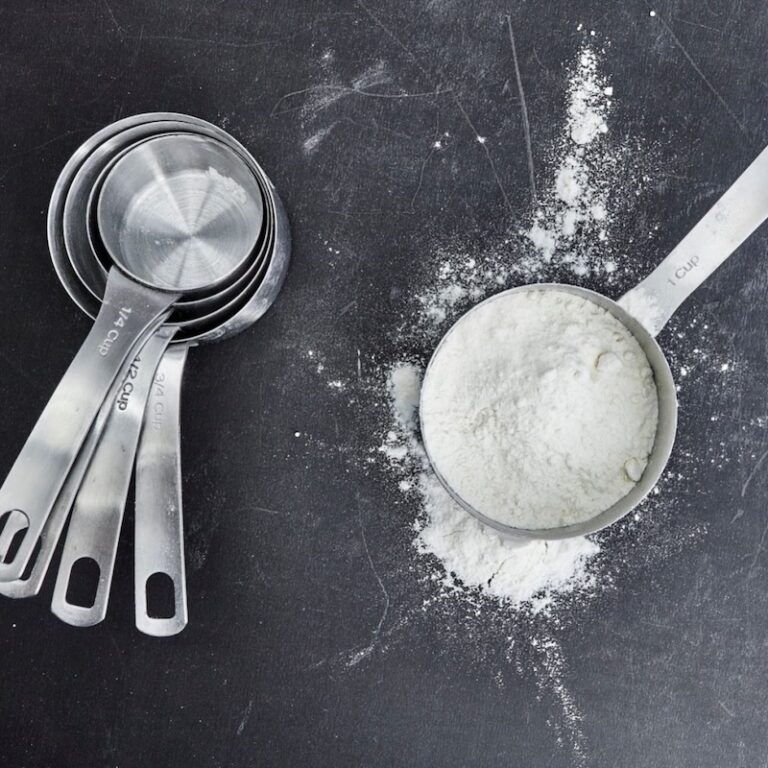
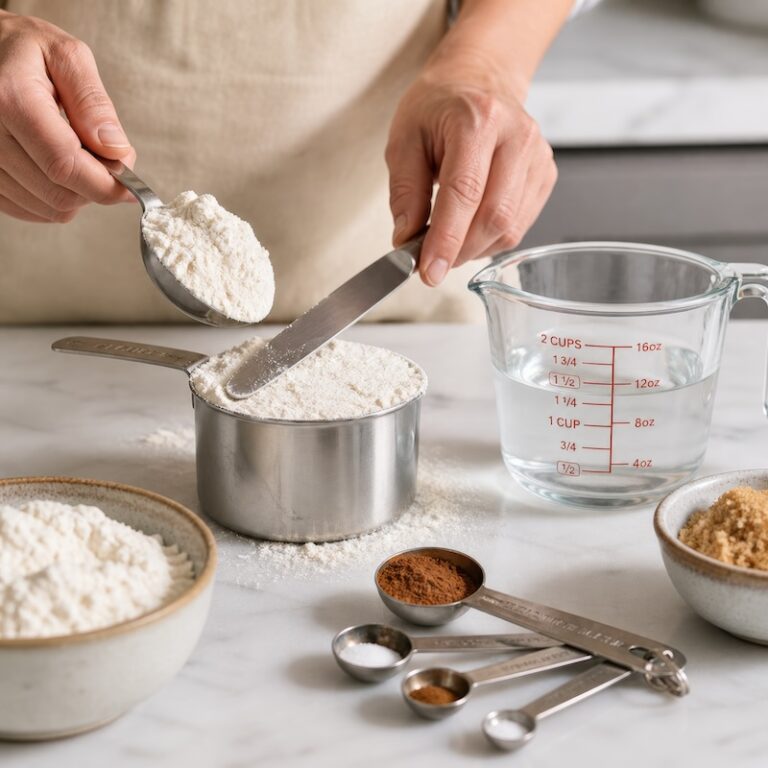
- Dry ingredients: Spoon into the cup, don’t scoop directly.
- Level it off: Use a straight edge for accuracy.
- Brown sugar: Pack firmly unless stated otherwise.
- Liquids: Use a clear measuring cup on a flat surface.
- Check at eye level: Prevents over or under measuring.
- Use a scale: Weigh when precision matters most.
The Measuring System (Everything in One Place)
- Dry ingredients: Use dry cups. Spoon in, then level off.
- Liquids: Use clear cups with a spout. Measure at eye level.
- Measuring spoons: Use for small amounts. Level dry, fill liquids to the brim.
- Brown sugar: Pack firmly. Flour: never pack.
- Use a scale: Weigh for best accuracy, especially in baking.
- Tare between ingredients: Reset the scale or use clean tools.
- Stay consistent: Same tools + same method = repeatable results.
Pack, Sift, or Fluff?
- Flour: Never scoop. Spoon and level or weigh after fluffing. Scooping packs too much flour.
- Brown sugar: Pack firmly unless the recipe says otherwise. Packing removes air and ensures proper sweetness and moisture.
- Cocoa & powdered sugar: Sift if lumpy. Clumps throw off accuracy and texture.
- Fine powders: Break up clumps before measuring to avoid uneven results.
- Consistency rule: Measure ingredients in the state the recipe expects—packed, sifted, or loose.
- Best practice: When weighing, prep the ingredient first, then measure.
Visual Cues That Tell You It’s Working
- Flour: Light, fluffy surface before leveling.
- Liquids: Meniscus lines up exactly with measurement mark.
- Sugar: Even, flat top when packed or leveled.
- Batter: Smooth consistency, not too thick or runny.

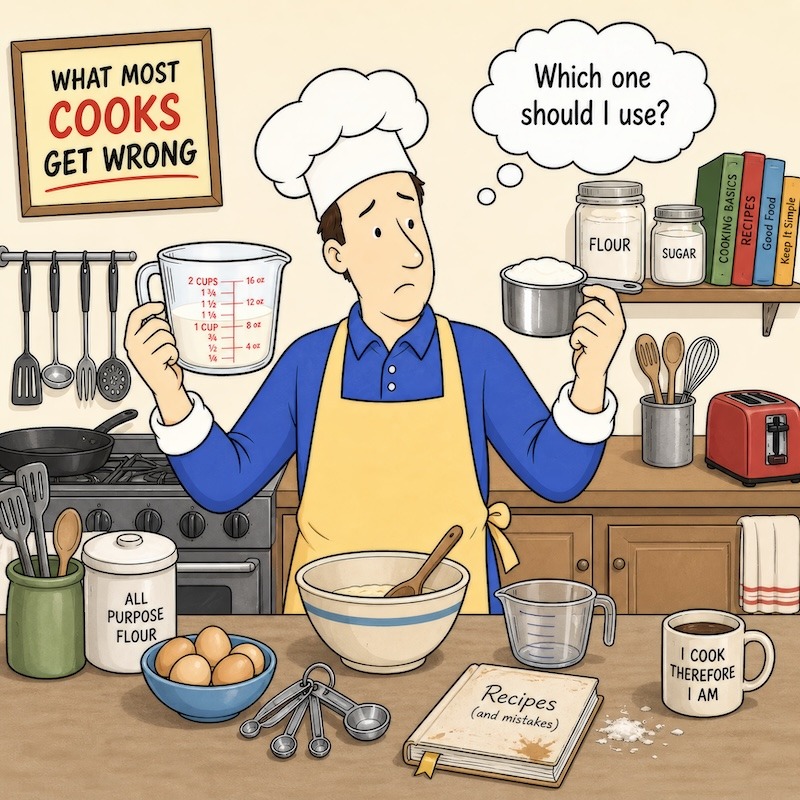
What Most Cooks Get Wrong
- Scooping flour: Packs too much into the cup.
- Not leveling: Leads to inconsistent amounts.
- Measuring liquids in dry cups: Causes overfilling.
- Guessing: “Close enough” adds up over time.
Quick Diagnosis Strip
- Problem: Dense baked goods → Cause: Too much flour → Fix: Spoon and level.
- Problem: Flat flavor → Cause: Under-measured seasoning → Fix: Use proper spoons.
- Problem: Runny batter → Cause: Too much liquid → Fix: Measure at eye level.
- Problem: Inconsistent results → Cause: Different measuring habits → Fix: Standardize your method.
Quick Fixes & Pro Tips
- Switch to grams: Especially for baking.
- Use one set of tools: Reduces variation.
- Fluff flour first: Prevents packing.
- Double-check liquids: Eye-level every time.
Control the Variables
- Density: Flour compresses, affecting volume.
- Moisture: Humidity can change ingredient weight.
- Tool size: Measuring cups vary slightly.
- Technique: Scooping vs spooning changes outcomes.
Before You Measure: Quick Checklist
- Use the right tool: Dry cups for dry, liquid cups for liquids.
- Flour: Spoon and level, don’t scoop.
- Brown sugar: Pack firmly unless told otherwise.
- Liquids: Measure at eye level on a flat surface.
- Be consistent: Use the same tools and method every time.
- Weigh when it matters: Especially for baking.
- Check the recipe: Look for words like sifted, packed, or room temperature.
- Clean between ingredients: Prevents cross-contamination and errors.
When to Use This Technique
- Baking: Always critical for structure.
- Sauces: Helps maintain consistency.
- Seasoning blends: Keeps flavor balanced.
- Not as critical: Rustic cooking where flexibility works.
FAQ
Why does measuring flour correctly matter so much?
Flour is easy to overpack, which can lead to dense baked goods and dry textures.
Should I always use a kitchen scale?
For baking, yes. For general cooking, consistency matters more than exact precision.
What’s the difference between dry and liquid measuring cups?
Liquid cups allow you to check at eye level. Dry cups are meant to be leveled off.
Why do recipes fail even when I follow them exactly?
Small measuring differences can throw off ingredient ratios.
Do I need to sift flour before measuring?
Only if the recipe calls for it. Otherwise, spoon and level.
Is packing brown sugar really necessary?
Yes, it ensures the correct amount for sweetness and moisture.
Can I eyeball measurements?
For experienced cooks, sometimes. For consistency, measuring is better.
Does humidity affect measuring?
Yes, especially for flour and sugar, which absorb moisture.