

Fast Answer
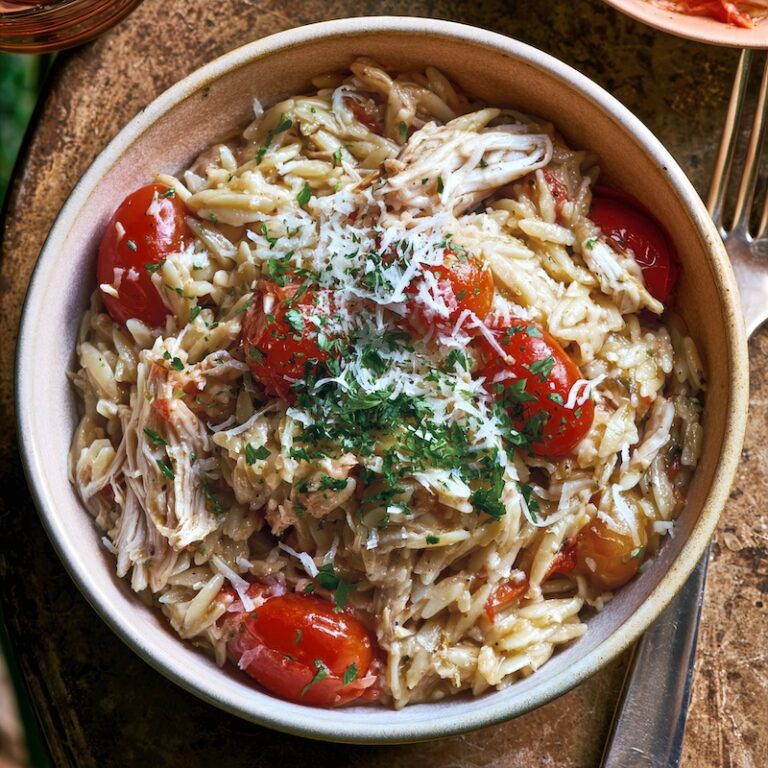
Orzo pilaf is the pilaf technique — toast in fat, then simmer in broth — applied to orzo pasta instead of rice. With shredded chicken it's a full meal; without it, a fast side dish that takes about 30 minutes total.
A Backyard Summer Dinner That Turned Into a Regular Recipe
I’m fairly sure my wife built this one on the fly, working from what was already in the kitchen rather than a shopping list. That’s still the appeal of it: butter, orzo, onion, garlic, stock, tomatoes, parmesan — things most people already have on hand.
Add shredded chicken and it’s dinner. Leave it out and it’s the side dish you make when you don’t want to think too hard about what else is on the plate.
Start Here
- Pantry check: butter, orzo, onion, garlic, chicken stock, tomatoes, parmesan — most kitchens already have these on hand.
- Orzo goes in raw: don't pre-boil it. It's toasted uncooked in the butter, the same way rice works in a pilaf.
- Warm the stock before adding it: cold stock into a hot pan slows everything down for no reason.
- Decide main or side up front: add the shredded chicken for a full meal, skip it for a side dish — nothing else about the method changes.
Orzo vs. Pilaf — What's Actually Different
- Orzo is the ingredient: a rice-shaped pasta made from wheat, not rice itself.
- Pilaf is the technique: toast the grain — or in this case, the pasta — in fat first, then cook it in seasoned broth instead of water.
- This recipe is that technique applied to orzo instead of rice, which is why it's called orzo pilaf rather than orzo boiled like plain pasta.
- Nutritionally, orzo and white rice land in a similar range — both are refined-carbohydrate bases. The real differences come from what you cook them in and add, not the grain or pasta itself.
What Most Cooks Get Wrong
- Boiling the orzo first: it goes in raw and gets toasted in the butter — cooking it separately first defeats the method.
- Guessing the liquid ratio: orzo boxes usually say 2:1 stock to orzo, but readers of this recipe — including me — have found 2½ to 3:1 gives a more forgiving result.
- Walking away during the simmer: orzo sticks to the bottom of the pan faster than rice does. Stir more often than you think you need to.
- Adding cold stock: it cools the pan and undoes the toasting you just did — warm it first.
Why This Works
- Toasting the orzo in butter coats each piece in fat, which keeps it from clumping once the stock goes in.
- Cooking it in stock instead of water is the entire difference between "orzo pasta" and "orzo pilaf" — same ingredient, different technique.
- Tomatoes and chicken go in near the end so they hold their texture instead of cooking down into the orzo.
- Parmesan goes in off the heat, at the very end, so it doesn't turn stringy or clump in the pan.
Quick Fixes and Tips
- Making chicken stock from a leftover rotisserie carcass: cover the bones with water and simmer down — no other ingredients required, though carrots and celery deepen it if you have them on hand.
- Orzo stuck to the pan? Lower the heat next time and stir more often once most of the liquid's absorbed.
- Cooking a bigger batch? A reader has made this successfully in a rice cooker, the same way you'd cook rice.
- Don't like tomatoes? Swap in broccoli florets, added at the same point in the recipe — a real reader substitution.
What to Serve With This
- With the chicken, it's the whole meal — no sides needed beyond some bread.
- Without the chicken, it pairs well with grilled chicken, lamb, or a simple piece of fish.
- A green salad cuts the richness of the butter and parmesan.
- Wine: a crisp Sauvignon Blanc or dry rosé — especially if you're eating this outside in summer, the way it started.
Quick Orzo Pilaf Recipe
Ingredients
- 2 tablespoons butter
- 8 ounces orzo uncooked
- 1 clove garlic minced
- 1 small onion chopped fine
- 2½ cups chicken stock
- 12 grape tomatoes cut in half
- 1 chicken breast cooked & boneless, meat shredded or cut into pieces
- salt & pepper to taste
- ½ cup Parmesan cheese. freshly grated
- 2 tablespoons fresh parsley chopped
Instructions
Build the Base
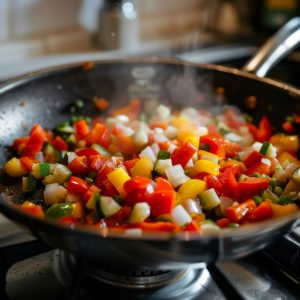
- Heat a large sauce pot or fry pan over medium high heat. Add the butter and melt. Add the onions and cook for a couple of minutes.
Toast the Orzo
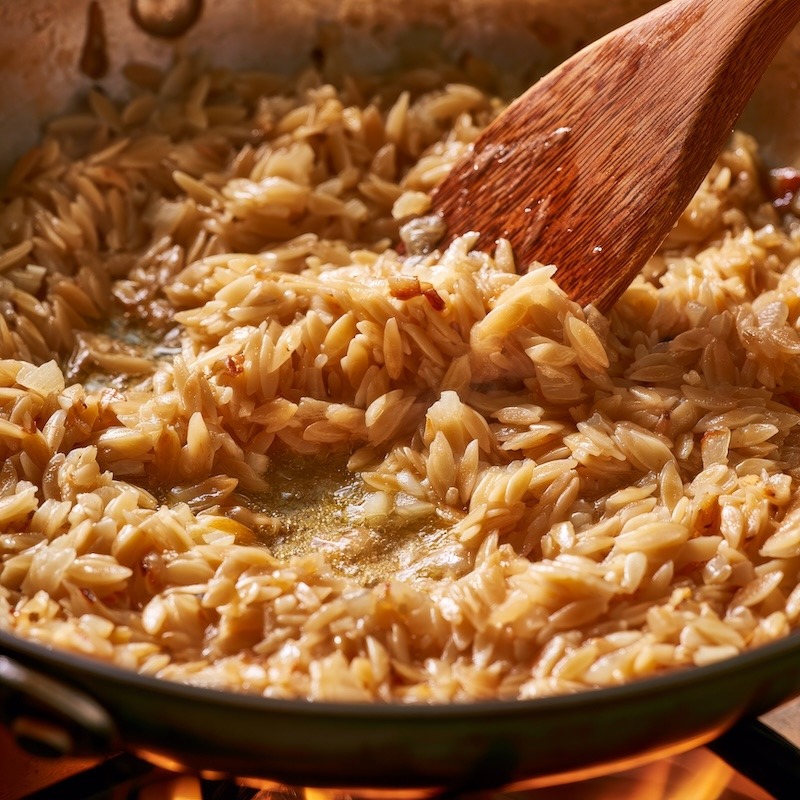
- Add the orzo and cook with the onions and garlic for 3 to 4 minutes, stirring frequently so the orzo doesn't burn. If the pan seems too hot, turn down the heat to medium.
Warm the Stock
- While this is going on, I like to heat up the chicken stock so I'm not adding cold stock to the hot pan with the orzo. No reason to slow down the cooking process by cooling down a hot pan.
Add the Stock and Simmer
- Add the chicken stock to the pan and bring it to a boil. Lower heat and simmer uncovered for about 10 minutes while the orzo absorbs the stock. Be sure to stir every so often.
Add the Rest
- Add the grape tomatoes, chicken and parsley.
Season & Finish Cooking
- Season with salt and pepper, then cover and cook for a few more minutes until all the stock has been absorbed into the orzo. Be sure to stir so the orzo doesn't stick to the pan.
Finish
- I like stir in the grated Parmesan cheese at the end just before serving. You can add a sprig of fresh parsley to the plate to make it look nice. I always forget.

| Original Ingredient | Swap or Addition | Why It Works |
|---|---|---|
| Chicken breast | Leave it out | Turns this into a side dish instead of a main — nothing else about the method changes. |
| Chicken breast | Shrimp, added in the last few minutes | Cooks fast and won't overcook if it goes in near the end, same timing as the chicken. |
| Chicken stock | Vegetable stock | Makes the dish vegetarian with no other changes needed. |
| Grape tomatoes | Broccoli florets reader tip | For anyone who doesn't like tomatoes — added at the same point, keeps its texture and color. |
| Parmesan cheese | Feta + chopped black olives reader tip | A Greek-style version — briny instead of nutty. Stir in the same way, at the end. |
| Plain stock | Add parsnips, carrots, and celery while it simmers reader tip | Builds a deeper, more savory backbone before the orzo ever hits the pan. |
| Stovetop pan | Rice cooker reader tip | Orzo cooks fine in a rice cooker on the same setting you'd use for rice. |
| Butter | Olive oil | Leans the dish more Mediterranean and works just as well for toasting the orzo. |
| Fresh parsley | Fresh dill or basil | A different herbal note, added at the same point, right at the end. |
| Regular orzo | Whole wheat orzo | Same method, more fiber, a slightly nuttier flavor — may need a couple of extra minutes to fully absorb the stock. |
Storage and Make-Ahead
- Keeps in the refrigerator up to 4 days in an airtight container.
- Orzo firms up as it cools — reheat with a splash of stock or water to loosen it back up.
- Freezes reasonably well for about a month, though the texture is best fresh or within a few days.
Frequently Asked Questions
What’s the difference between orzo and pilaf? Orzo is the ingredient, a rice-shaped pasta made from wheat; pilaf is the technique of toasting a grain or pasta in fat before cooking it in broth. This recipe applies the pilaf technique to orzo instead of rice.
What makes a pilaf a pilaf? Toasting the grain or pasta in fat before it touches any liquid — that step defines a pilaf more than any specific ingredient does.
Is orzo healthier than rice? Not meaningfully. Both are refined-carbohydrate bases in a similar range — the real nutritional differences come from what you cook them in and add, not the orzo or rice itself.
Do I cook the orzo before adding it to the pan? No. It goes in raw and gets toasted in the butter, the same way rice does in a traditional pilaf.
What’s the right liquid-to-orzo ratio? About 2½ to 3 cups of stock per 8 ounces of orzo works better than the 2:1 most boxes suggest — add more if it looks dry before the orzo’s tender.
Can I make this without chicken? Yes — leave it out and it works as a side dish instead of a main.
Can I make it vegetarian? Yes, swap the chicken stock for vegetable stock and skip the chicken.
Can I make this ahead? Yes, though orzo firms up as it cools — reheat with a splash of stock to loosen it.
- The technique here is the same one behind my rice pilaf recipe — same toast-then-simmer method, different grain.
- Homemade stock is worth the small effort — see how to make homemade chicken stock, including the quick carcass method a reader asked about below.
- Toasting the orzo is a sauté technique at heart — see my sauté, pan-fry, and stir-fry guide.
- Want orzo cold instead of hot? Try my seafood orzo salad.
- Good Parmesan makes a real difference in a dish this simple — see everything about parmesan cheese.
- If onions are doing more work in your cooking than you realize, cooking onions at home is worth a read.


13 Responses
Avi wrote me and asked, “you mention making chicken stock from the carcass of of a store-bought roasted chicken. What did you use in addition to the water?”
Thanks for the email. Actually, I didn’t add anything else. I just placed the carcass with any leftover bones into a pot, covered them with water and cooked them down until it had a nice chicken broth flavor. Could I have done more to make a classic chicken stock? Of course, but I just wanted a simple way to use the carcass instead of throwing it away and this gave me exactly what I needed. You can add chopped carrots and celery to the pot and it will have even more flavor but this is a great way to make a quick broth for rice dishes.
You mentioned above in the 1st paragraph Add the orzo and cook with the onions & garlic for 3 to 4 minutes, stirring frequently so the orzo doesn’t burn. – Are you adding the uncooked orzo or is it cooked when you add it to this.
The orzo is uncooked at this point. I like to saute it for a few minutes to add a little extra flavor. RG
Is there a standard ratio of liquid to orzo, like there is for rice? For rice I use twice as much water as rice, or 2 to 1.
Hi Victor,
I have read that you use the same ratio for orzo as you would for preparing rice but we all know that varies depending on the type of rice.
I think most orzo boxes will tell you 2 – 1 but in the recipe above, I added a little more liquid. When I did some research on the ratio, I found many cooks go 2 1/2 or 3 to 1.
You can always make adjustments while you cook. If the orzo has absorbed all the liquid and doesn’t appear to be done, just add a little more liquid.
If there appears to be too much liquid, you can drain some off and cook the rest down. You just want to be careful not to overcook the orzo. – The Reluctant Gourmet
There is nothing like a good Chicken Recipe, Chicken is quite simply the best food in the world because of it’s versatility. You can make thousands of chicken recipes and every one of them will be different and taste great. ENJOY!!
Curry chicken salad.
Just read this recipe sounds delicious… Only I will be replacing the tomatoes for broccoli as I do not like tomatoes. I can’t wait to try it!
Sounds like a great idea. Please let me know how it turns out for you. – RG
Orzo is a pasta, so you drain it. Just cook like regular pasta, enough water to cook and drain off excess. Hope this helps.
I also add some parsnips, garlic, fresh spices, onion and carrots to the stock water and don’t even have to peel anything but do clean it all along with celery. I put it all in a cooking bag with the chicken and it is sooooo good!
So y’all know, orzo cooks up great in the rice cooker as well as in a pot or pan.
Hi Shannon, didn’t know but it makes sense. Thanks for the tip. – RG
I am vacationing in western Florida and having a dinner party this evening. Unfortunately San Giorgio products are unavailable in this area. There is a recipe on the back of the orzo box for Mediterranean orzo that is fabulous. I am desperately searching for that particular recipe, no deviations from the exact. Can anyone help me ?
Hi Melissa, not sure what you are asking for. Do you have the box of orzo or do you know the name of the brand of orzo? That would help. – RG
RG,
I added feta and black olives to this for an excellent Greek style deal. Thanks for the base recipe!