
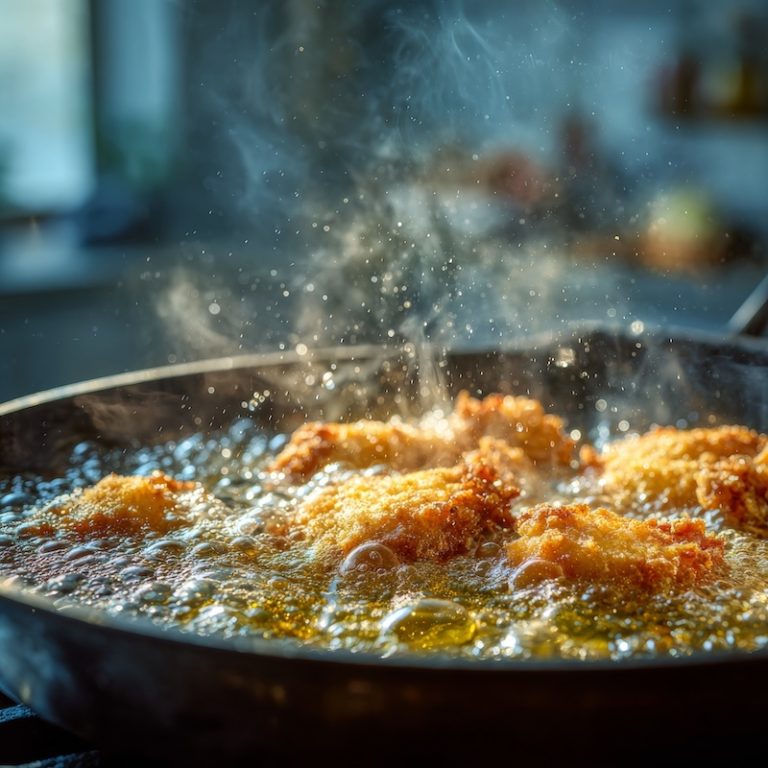
Foaming oil isn't just messy — it's a sign something has gone wrong, and if it spills over onto a burner it can go wrong fast. I learned this the hard way early in my cooking. Understanding why oil foams, why temperature control matters more than most cooks realize, and how to fix it when things start heading south makes deep frying and pan frying considerably less stressful.
Fast Answer
Foaming happens when steam from moisture in your food gets trapped at the oil's surface by proteins, starches, or breakdown products in the oil. It's usually a sign the oil is too cold, contaminated, or past its prime — not too hot.
What I Got Wrong About Foaming for Years
Most cooks assume foaming oil means the temperature’s too high, so they turn down the heat — and the foam often gets worse. Foaming is actually a chemistry problem: it’s about what’s in the oil and what’s coming off your food, not just how hot it is.
This post walks through why foaming happens, what it’s telling you about your oil and your ingredients, and the specific moves that stop it — plus how to handle it when it’s already happening mid-fry.
Is This For You?
- This is for you if: your oil has ever foamed up unexpectedly, climbed the sides of the pot, or you've found yourself reaching for the heat dial without knowing why.
- Use this: before you fry, as a reference while you're frying, and right after a foaming incident to figure out what happened.
- Success looks like: oil that bubbles steadily around your food and settles back down between batches — not a foam layer that climbs toward the rim.
Why Oil Foams in the First Place
- Water turns to steam the instant it hits oil that's hundreds of degrees hotter than water's boiling point — that's where the bubbles come from.
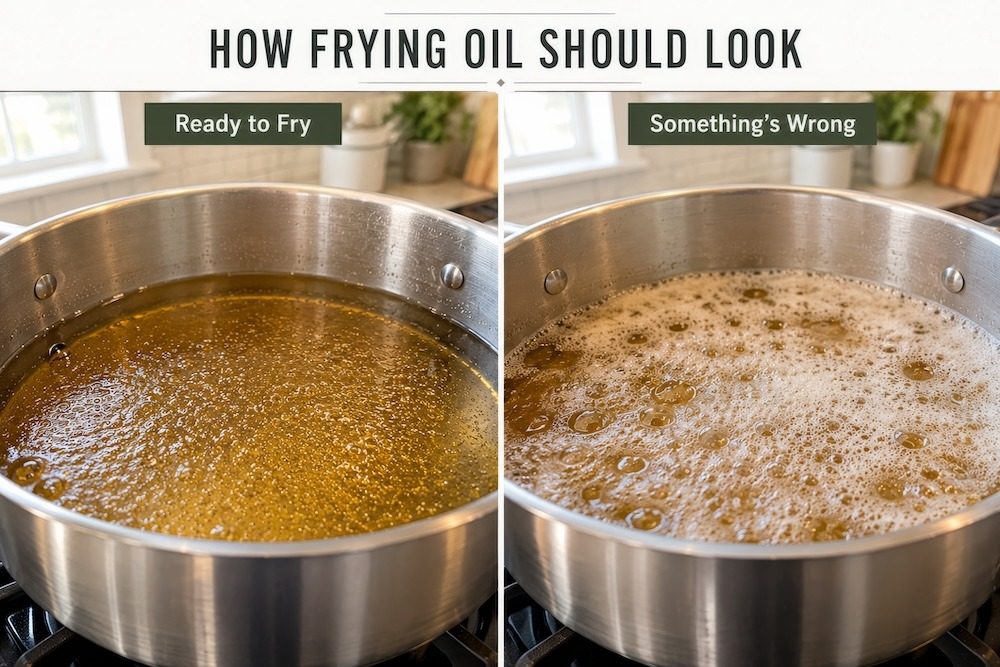
- In clean, fresh oil, those steam bubbles rise and pop quickly. In oil that contains proteins, starches, or breakdown products, those compounds act like a thin film of soap, trapping the steam at the surface instead of letting it pop.
- That trapped layer of steam bubbles is foam. The more of that surfactant-like material in the oil — from batter, breading, or oil that's broken down with age — the more stable the foam layer becomes.
Foam Is Information, Not a Malfunction
- Foam is your oil telling you something about its condition and what's in it — it's not primarily a heat problem, even though it looks like one.
- Once you see it that way, the first question when oil foams isn't "is it too hot?" It's "what's wet, what's old, and what's in this oil that shouldn't be?"
- That question applies well beyond frying — any time something in the kitchen reacts unexpectedly, the more useful question is usually about composition, not temperature.
How to Fry Without Triggering Foam
- Fill the pot to the right level. Oil should come no more than halfway up the sides. Look for: a few inches of clearance above the surface. Adjust: if you're frying a lot, use a wider or taller pot rather than filling it higher.
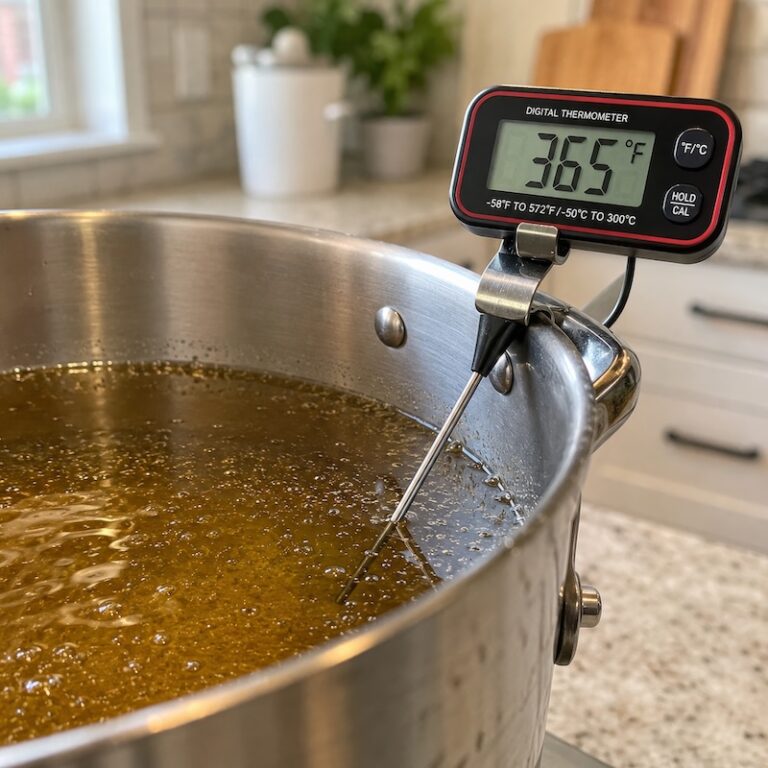
- Heat the oil to 350–375°F using a thermometer. Look for: a slight shimmer and more fluid movement, with no visible smoke. Adjust: if you see smoke, pull it off the heat — it's already starting to break down.
- Pat your food completely dry. Look for: a paper towel pressed to the surface should come away dry. Adjust: if it still feels cool or damp, let it sit a few more minutes and pat again.
- Test with a small piece first. Look for: steady, vigorous bubbling that pops quickly around the food — not a layer that climbs and holds. Adjust: if one piece produces sustained foam, something's off with the oil itself — address that before frying a full batch.
- Add food gradually, in batches. Look for: the temperature dipping slightly, then recovering within 30–60 seconds. Adjust: if it doesn't recover, or bubbling turns into a rising foam layer, stop adding food until it settles.
- Listen as much as you watch. Look for: a sizzle that suddenly goes quiet (oil's gotten too cool) or escalates into a hiss with rising foam (too much moisture hit at once). Adjust: raise the heat slightly for the first; pull food and let it settle for the second.
- If foam starts climbing, act immediately. Look for: the foam dropping back within a minute once the heat is off. Adjust: skim any debris before continuing.
- Drain and check the result. Look for: even browning, a crisp exterior, and oil that drips off clear, not cloudy. Adjust: cloudy, slow-dripping oil means it's picking up more debris than usual — strain before the next batch.
What Went Wrong (and Why)
- Oil foamed up so high you couldn't see the food → the food was too wet going in (condensation, filling moisture) → let it come closer to room temperature and pat the surface dry; if it's already happening, pull the pot off the heat and let it settle.
- Oil foams and leaves a lingering odor → it's broken down from repeated heating, or has a naturally lower smoke point → switch to a higher smoke point oil like peanut or avocado, and don't push past 375°F.
- Foam appears the moment battered food goes in → batter residue and surface starch hit the oil all at once → shake off excess batter, fry in smaller batches, and strain between batches.
- Oil foams a little more every time, even though you strain it → oxidation and free fatty acids build up with each use → retire the oil sooner — darker color or an "off" smell means it's done regardless of how clean it looks.
- Foam appears right after you salt food near the pot → salt landing in the oil accelerates its breakdown → salt food away from the stove, not directly over it.
- Oil foams the next time you use it, even though it seemed fine when stored → it wasn't strained well, or picked up moisture in storage → strain hot oil through a fine mesh or cheesecloth and store it sealed somewhere dry.
Control the Variables
- Oil temperature: controls how fast steam forms and how the oil reacts. Useful range is 350–375°F — below that, oil absorbs more moisture slowly; above that, the oil itself starts breaking down.
- Oil age and condition: controls how stable any foam becomes. Fresh oil lets steam bubbles pop quickly; oil heated many times holds onto them. Judge by smell, color, and how a test piece behaves — not by a fixed number of uses.
- Moisture on the food: controls how much steam hits the oil at once. Drying food, or letting it come up from fridge temperature first, spreads that release out instead of dumping it in all at once.
- Batch size: controls how much the temperature drops and how much steam hits at once. Smaller batches keep temperature stable and give foam less chance to build.
- Oil depth: controls how much room foam has before it's a problem. Filling no more than halfway gives a rising foam layer somewhere to go besides over the side.
- Oil type: controls how much heat and reuse the oil tolerates before breaking down. Higher smoke point oils — peanut, avocado, refined vegetable oils — give you more margin on every variable above.
When This Applies — and When It Doesn't
- Applies when: you're frying in a couple inches of oil or more — deep or shallow frying — especially with battered, breaded, or marinated foods, or oil you've used before.
- Applies when: you notice a bubble layer that holds and climbs, rather than popping quickly at the surface.
- Doesn't apply when: your oil is bubbling vigorously around food that just went in — that's normal frying, not foaming, and doesn't need intervention.
- Doesn't apply when: your oil is smoking. That's a different problem — too hot or already breaking down — and needs the heat turned down immediately.
- Doesn't apply when: you're cooking with a thin layer of oil for sautéing. There's not enough oil for a foam layer to form; moisture issues there show up as splattering instead.
Apply It to Real Food
- French fries: raw potatoes carry a lot of surface moisture and starch. Rinse and dry thoroughly, and consider a two-stage fry — a lower-temperature blanch followed by a hotter finish — to spread out the steam release.
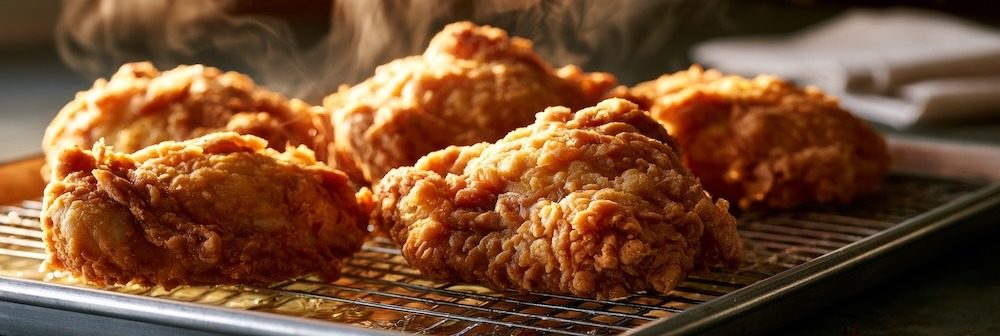
- Battered or breaded chicken: loose coating sheds into the oil and foams it up fast. Shake off excess batter before frying, and don't crowd the pot — see our crispy chicken wings guide for batch sizing.
- Frozen foods: ice on the surface means a sudden hit of moisture the instant it touches the oil. Expect more vigorous initial bubbling, and let the oil recover fully between additions.
- Stuffed or filled items like arancini: moisture from the filling can seep out as the exterior heats. Let chilled items sit at room temperature for a few minutes and pat the outside dry before frying.
- Thin cuts of meat like cube steaks: surface moisture and released juices hit the oil quickly because there's so much surface area. Pat dry thoroughly, and if foaming or odor persists, try a higher smoke point oil like avocado or peanut.
Frequently Asked Questions
Is foaming oil dangerous?
It can be. The real risk isn’t the foam itself — it’s foam that climbs high enough to spill over the side onto a burner. With gas or electric coils, that’s hot oil meeting an ignition source. Keep oil filled to no more than half the pot and never walk away while frying.
What’s the difference between foaming and normal bubbling?
Normal frying produces lots of small bubbles that pop quickly at the surface — that’s steam escaping as it should. Foaming is when those bubbles get trapped in a layer that holds, builds height, and looks like a head on a glass of beer. If the bubble layer is climbing the sides rather than popping at the surface, that’s foam.
Can I keep using oil that foamed?
It depends on why it foamed. If it foamed because the food was wet or you overcrowded the pot, the oil is probably fine — strain it and it’ll behave normally next time. If it foamed because the oil itself smells off, looks darker than usual, or has been heated many times, that’s the oil telling you it’s broken down.
Why does my oil foam more every time I use it?
Oil breaks down a little every time you heat it — oxidation creates free fatty acids that act a bit like soap, making foam more likely and more stable. Progressively worse foaming from the same batch is a sign it’s near the end of its useful life, regardless of how clean it looks.
Does the type of oil matter for foaming?
Yes. Oils with higher smoke points — peanut, avocado, refined vegetable oils — hold up to repeated heating better and foam less as they age than oils with lower smoke points.
My oil foamed and overflowed — what do I do right now?
Turn off the heat immediately and don’t move the pot. Let it sit until the foam settles before touching it. Once it’s calm, skim off debris and check whether the cause was obvious — too much food added at once, or food that wasn’t dry — before frying again.
Can I store used frying oil, and does that affect foaming next time?
Yes, and how you store it matters. Strain hot oil through a fine mesh strainer or cheesecloth once it’s cooled, then keep it in a sealed container. Oil stored unstrained, or somewhere it picks up condensation, tends to foam more the next time it’s heated.
Does salt cause foaming?
Salting food directly over the fryer can. Salt that falls into hot oil breaks it down faster, which contributes to foaming over time. Salt food away from the pot.
Will a thermometer prevent foaming?
Not by itself, but it removes one major cause. A lot of foaming that looks like a temperature problem is actually a moisture or oil-age problem that gets worse when the temperature swings too low or too high. A thermometer keeps you in the 350–375°F range, giving moisture and breakdown products less chance to cause trouble.
8 Responses
Hey RG, I forgot to mention one very important thing, when you add salt to food after frying, (french fries, chicken, fish or what ever, do so away from the oil, the salt brakes down the oil fast.
frying cube steaks and never had canola oil foam, and don’t like the lingering odor!!! any suggetions?
If canola oil is foaming and leaving an odor, you might try these alternatives for frying cube steaks:
Use a Different Oil – Try oils with higher smoke points and milder odors, such as:
Avocado oil (neutral flavor, high smoke point)
Peanut oil (slightly nutty, high smoke point)
Ghee (clarified butter) (adds a buttery flavor, high smoke point)
Beef tallow (rich flavor, traditional for frying)
Light olive oil (not extra virgin, which has a lower smoke point)
Check Oil Temperature – Overheating oil can cause foaming and off-odors. Aim for 350–375°F for frying.
Avoid Contaminants – Water, food particles, or old oil residue can cause foaming. Make sure your pan and oil are clean before frying.
Use Fresh Oil – Reusing oil too many times can lead to foaming and lingering smells.
Ventilation – Use a range hood, open windows, or turn on a fan to reduce lingering odors.
Please tell me how to keep deep frying oil properly. I know of people who keep the fryer, with oil, out in the garage until the next fry. That does not seem safe at all to me however no one died at my neighbor’s yet.
Hi Terry, great question. We don’t leave the oil in the fryer but we do strain it and put it back into a sealed container and store that in the garage. I’m not sure if this is safe or not but now I’m curious and will do a little research and see what others say. If you have alternative ways for storing the oil, please let me know.
I have exactly the same problem. Just this last year my oil polymerizes after just one batch of anything I cook. I have run into companies that change their processing methods in extreme ways without notice. I believe we should all be complaining to the companies.
I have been making Arancini for years and this is the first time I had a problem. I had corn oil about 2″ deep in my cast iron skillet as usual. Shortly after adding the arancini the oil foamed so high I couldn’t even see the balls and of course overflowed on y cooktop even after I removed it from the burner. I can’t figure out what happened. Now I’m afraid to fry the rest of them. Any suggestions?
Possible Causes:
Moisture Contamination – If your arancini were too wet (from excess filling moisture or condensation from refrigeration), the water content could cause rapid foaming.
Fix: Let them sit at room temp for a bit before frying, and pat them dry with a paper towel if needed.
Old or Contaminated Oil – Used oil with residual starch, breading particles, or water can cause excessive foaming.
Fix: Strain oil between uses or use fresh oil.
Oil Overheating – If the oil got too hot, it might break down and foam.
Fix: Use a thermometer to keep the temp around 350-375°F.
Too Many Arancini at Once – Crowding the pan can cause a rapid temperature drop and excessive bubbling.
Fix: Fry in smaller batches.
Corn Oil Breakdown – Some batches of corn oil might have impurities or be prone to foaming after repeated use.
Fix: Try switching to peanut oil, light olive oil, or vegetable oil, which might be more stable for deep frying.
If you’re worried about frying the rest, you can test a small piece of rice or one arancini first to see if it foams again before committing to a full batch. Let me know if you want alternative cooking methods!