Fast Answer
Sage is a woody, slightly bitter herb best known for pairing with butter, pork, and squash — and for turning nutty and crisp when fried briefly in butter. One tablespoon fresh equals about one teaspoon dried.
The Smell That Made Me Pay Attention
That desert smell came back to me years later at Osteria in Philadelphia, where Marc Vetri served a dish finished with sage brown butter. I went home and tried to reproduce it, half-expecting to ruin it. I didn’t.
The butter went nutty, the sage went crisp, and I finally understood what sage is actually for — not as a Thanksgiving formality, but an ingredient with real range. Ratios, substitutions, and the mistakes worth avoiding are below.
Start Here
- What it is: A woody, slightly bitter, faintly piney herb — closer in character to rosemary than to soft herbs like basil or parsley.
- What it does: Cuts through fat, especially in pork, sausage, and butter-based sauces. It doesn't add brightness — it adds an herbal weight that balances rich food.
- When to reach for it: Pork dishes, stuffing, brown butter sauces, winter squash, and anything that needs an herbal counterweight to fat.
- When to skip it: Delicate fish, most vegetable sautés, anything where you want a clean, bright finish — sage will dominate it.
Flavor and Function
- Flavor profile: Raw sage is bitter and slightly medicinal, almost eucalyptus-like. Cooked briefly, the bitterness fades into something earthy and savory. Fried in fat, it turns nutty and loses the bitterness almost entirely.
- Role in cooking: Sage doesn't disappear into a dish the way thyme does — it sits on top of the flavor. Use it as an accent, not a background note.
Think Like a Cook
- Sage's bitterness isn't a flaw — it's there to cut fat. Cook it in fat (butter, sausage, olive oil) and the bitterness converts to a nutty savoriness. Add it late to a lean dish with nothing to balance, and it just tastes bitter. The question isn't "how much sage?" — it's "what's it cooking in?"
How to Choose It
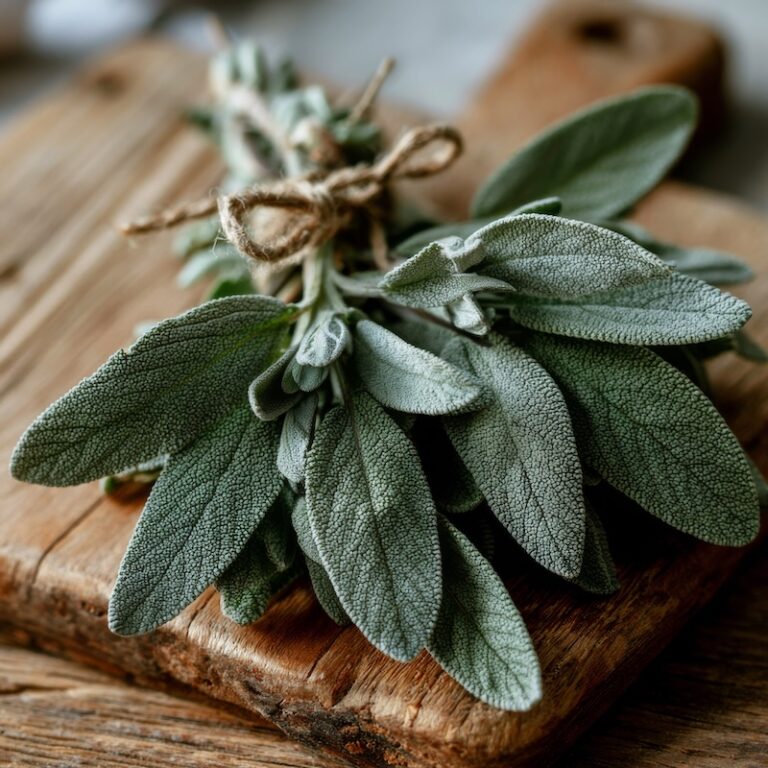
- Fresh: Leaves should be dusty gray-green and firm, with no dark or slimy spots. Rub one between your fingers — if you don't smell anything, it won't do anything in the pan either.
- Dried: Whole dried leaves hold flavor far longer than rubbed or powdered sage, which fades fast.
- Avoid: Fresh sage with blackened edges or a wet, bruised look — it's already turning.
Types and Variations
- Common (garden) sage: What every recipe means by "sage" unless stated otherwise. The standard for pork, stuffing, and brown butter.
- Purple sage: Milder, mostly ornamental. Substitutes 1:1 for common sage.
- Pineapple sage: Sweeter and fruitier — used more in desserts and drinks than savory cooking. Not a swap for common sage.
- Clary sage: Grown mainly for oil and tea, not for the kitchen.
What Most Cooks Get Wrong
- Treating sage like a background herb the way you'd use thyme — too much turns a dish soapy.
- Adding chopped fresh sage early in a long braise, where it goes bitter and grassy instead of mellowing.
- Assuming fresh and dried swap 1:1 — dried is roughly three times stronger by volume.
What Went Wrong (and Why)
- Dish tastes bitter and soapy → too much sage, added raw or too early → use less, and add whole leaves late or fry them in butter instead.
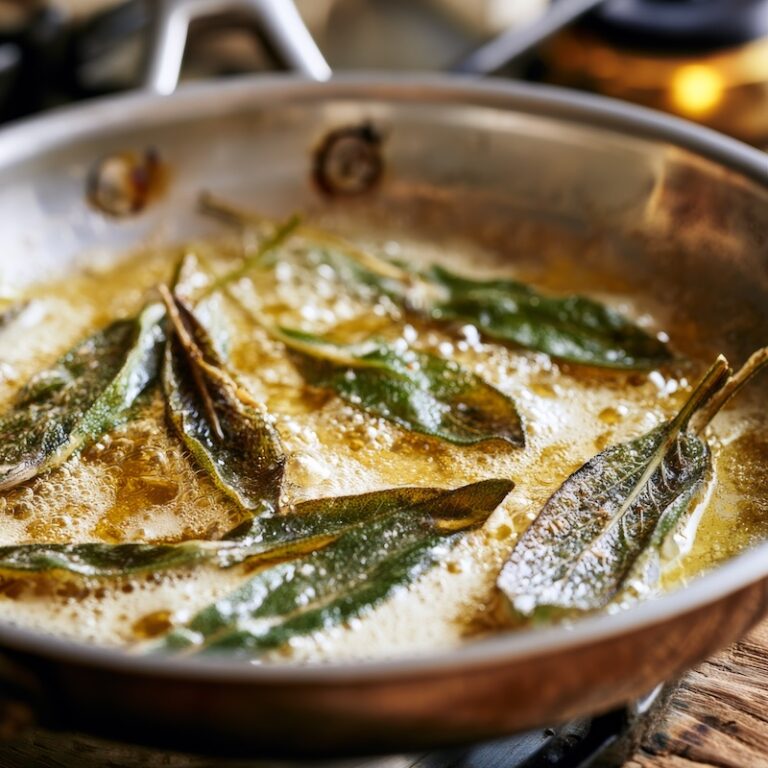
- Fried sage turned limp instead of crisp → butter wasn't hot enough, or the leaves were wet → pat leaves fully dry, add them just past the point where the butter starts to foam.
- Stuffing tastes like dust → dried sage was old → dried herbs lose potency after about a year; smell it before you use it.
- Sage flavor disappeared in a slow-cooked dish → added too early and cooked out → add half at the start for depth, hold the rest back for the last few minutes.
- Brown butter sauce turned bitter, not nutty → butter scorched past nutty into burnt → pull it the second the butter smells nutty and the sage stops sizzling.
Substitutions That Work
- Fresh for dried: Use three times the amount, chopped — dried is more concentrated.
- Dried for fresh: Use about a third of the amount.
- No sage on hand: Rosemary works for pork and butter sauces, but it's sharper and more piney — use less than the recipe calls for in sage.
- For stuffing in a pinch: Poultry seasoning already contains sage — check the label before adding more separately.
How to Use It
- Timing: Add early, with the aromatics, for a background savory note in braises and stocks. Add late, or fry it separately, for the crisp, nutty version.
- Quantity: Start with 1 teaspoon dried or 1 tablespoon chopped fresh per pound of meat or 2 cups of sauce, then adjust. It's easy to add more, hard to fix too much.
- The technique worth knowing: Fried sage in browned butter. Whole leaves, patted dry, added the moment the butter starts to foam, out of the pan in under a minute.
Flavor Pairing Ideas
- Proteins: Pork, sausage, duck, chicken, veal.
- Vegetables: Winter squash, sweet potato, mushrooms, onions.
- Fats: Butter above all — brown butter especially — plus olive oil and duck fat.
- Other: Brown sugar, apple, parmesan, cream, white beans.
Explore More About This Topic
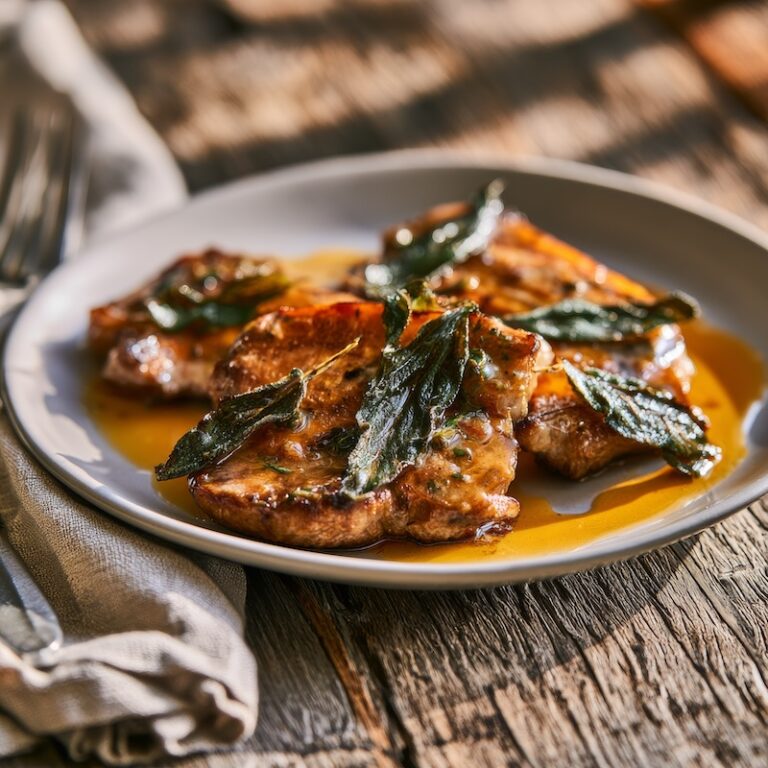
- Cooking with sage: Try it in veal saltimbocca, where sage is layered right into the meat instead of used as a garnish.
- The technique: See sage butter in action — this is the browned butter method described above, written out step by step.
- A close cousin: If you're weighing sage against rosemary, rosemary and sage together shows how the two play off each other in one dish.
- Substituting rosemary: For ratios and notes on swapping rosemary fresh for dried, the herb conversion chart covers it directly.
- Pairing with pork: Pork tenderloin is one of the best places to put sage's fat-cutting bitterness to work.
Storage and Shelf Life
- Fresh: Wrap loosely in a damp paper towel and refrigerate in a bag — good for about a week. Or freeze whole leaves in a single layer, then bag them.
- Dried: Store sealed, away from light and heat. Whole dried leaves hold flavor up to a year; rubbed or powdered sage fades within about six months.
- How to tell it's done: Fresh leaves go dark and slick. Dried sage that smells like nothing when crushed between your fingers isn't doing anything in the dish either.
Worth the Upgrade?
- Worth it: Fresh, whole-leaf sage if you're frying it — the technique depends on leaf texture and quality.
- Not worth it: Paying more for a specialty dried sage blend when whole dried leaves you crumble yourself do the same job for less.
Frequently Asked Questions About Sage
How much dried sage do I use instead of fresh? Use about a third of the amount — dried sage is more concentrated than fresh. If a recipe calls for a tablespoon of chopped fresh sage, start with a teaspoon of dried and taste from there.
What does sage taste like? Woody, slightly bitter, and a little piney, with something almost medicinal about it raw. Cooking mellows the bitterness; frying it in butter removes most of it, leaving a nutty, savory flavor instead.
Can you eat sage raw? Yes, but it’s strong and bitter, so it’s used in small amounts — finely chopped into a dressing, or torn into a salad where a little bitterness works. Most recipes cook it specifically to soften that edge.
Why does my sage taste bitter? Usually, too much was used, or it was added raw or too early in a dish without enough fat to balance it. Cook it in butter or alongside pork, and it mellows; in a light dish, it can take over.
Is sage good for you? Sage has a long history in traditional medicine, and some small studies point to benefits for memory and inflammation, though the research is limited. In the kitchen, treat it as a flavor ingredient first.
Can I substitute rosemary for sage? In a pinch, yes — especially in pork dishes or brown butter sauces. Rosemary is sharper and more resinous, though, so use less than the recipe calls for in sage. It’s a reasonable stand-in, not a match.
Does sage go with fish? Rarely. Sage is strong enough to overwhelm most fish and is traditionally paired with the fattier meats and vegetables that can stand up to it — pork, duck, squash. Reach for something lighter with fish.
How do I know if my dried sage has gone bad? It won’t spoil in a way that’s unsafe, but it loses flavor. Crush a pinch between your fingers — if you can’t smell anything, it isn’t contributing anything to the dish either.




4 Responses
Hi, I’m Chanie. I’ve been looking through your blog and find the information is so resourceful and a great read. Thanks.
Hi Chanie, you are welcome and thanks for visiting my site. Please tell all your cooking friends about it and visit me on Facebook, Twitter, Instagram and all the other fun social networks.
very nice lesson. and videos. like to know pasta marechiara.
Hi Nando, is this the sauce made with garlic, oil, and clam juice? Let me see what I can come up with.