
Fast Answer
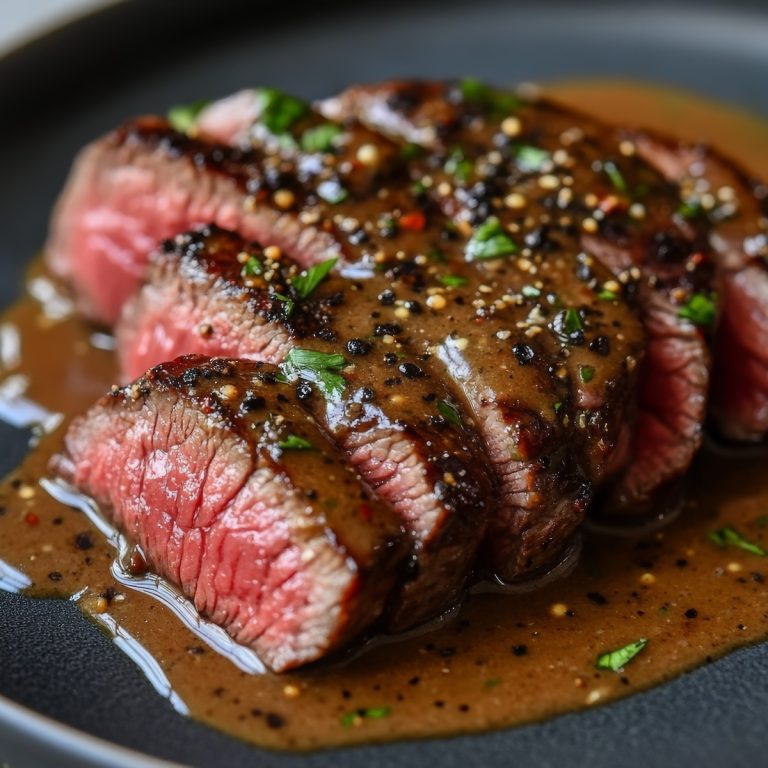
Steak au poivre is a peppercorn-crusted steak finished with a pan sauce built on demi-glace — this version uses port wine instead of the classic cognac to deglaze, a substitution that works just as well and keeps for months once opened. Ready in about 25 minutes.
The Sauce That Started My Sauce Education
I was teaching myself to cook seriously around then, focused mostly on sauces, and I’d found a good commercial demi-glace to work with.
Au poivre was one of the first sauces I taught myself to make with it — simple enough to get right quickly, impressive enough that it became one of my go-to dishes whenever I was cooking for friends. It’s stayed in the rotation for years because it’s genuinely hard to mess up.
Start Here
- Demi-glace is the backbone: use a good commercial one or homemade — this isn't a sauce you build from scratch in 20 minutes.
- Crack the peppercorns coarsely, not fine — a mortar and pestle or the bottom of a heavy skillet works better than a pepper mill for this.
- Let steaks come toward room temperature before searing — about 30 minutes out of the fridge.
- Use a heavy-bottomed skillet — cast iron or stainless steel retains heat better and gives you a better crust than a thin pan will.
- Have the demi-glace measured and ready before the steaks hit the pan — this sauce comes together fast once they're searing.
Grilled Steak with Peppercorn Sauce Recipe
Equipment
- heavy skillet
Ingredients
- 2 filet mignon or New York strip steaks (about 1.5 inches thick)
- 2 tablespoons whole black peppercorns coarsely cracked
- Kosher salt to taste
- 1 tablespoon oil canola or grapeseed
- 2 tablespoons butter unsalted
- ¼ cup port or red wine
- ½ cup prepared demi glace homemade or high-quality store-bought
- 3 tablespoons heavy cream optional for a softer finish
Instructions
Prep the Steaks
- Pat steaks dry. Press cracked pepper onto both sides. Season lightly with kosher salt.
Sear the Steaks
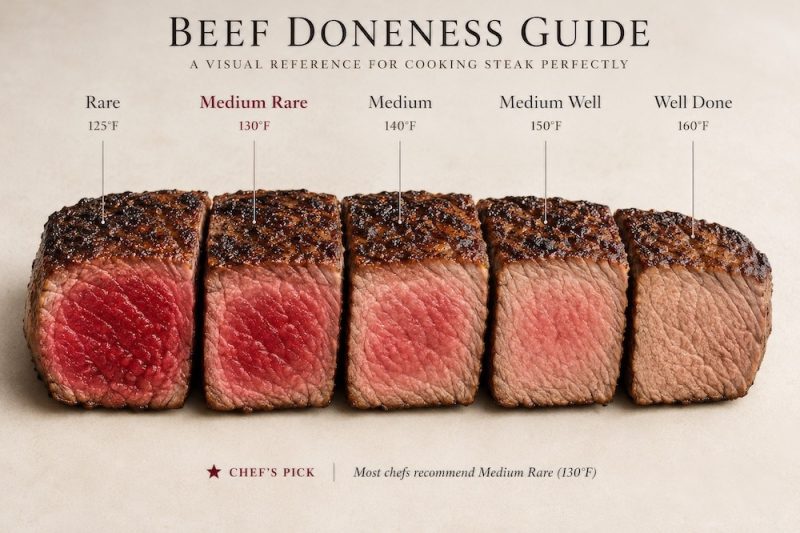
- Heat oil and 1 tablespoon butter in a heavy skillet over medium-high heat. When hot, sear steaks 3–4 minutes per side for medium-rare, adjusting for thickness. Remove to a plate and tent with foil.
Deglaze the Pan
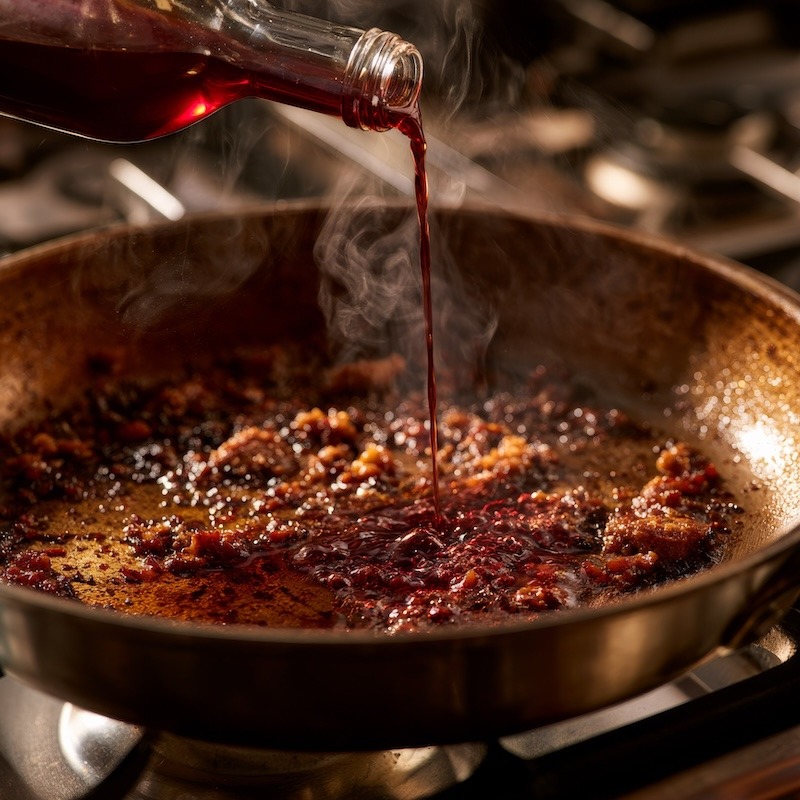
- Turn heat to medium. Add the port — pull the pan off the heat first if you're working over a gas flame — and scrape up the browned bits.
Build the Sauce
- Stir in the demi-glace and simmer 3–5 minutes until it thickens enough to coat the back of a spoon. Stir in the cream now if you want a softer finish.
Finish
- Stir in the remaining tablespoon of butter. Return the steaks to the pan briefly to warm through and coat with sauce.
Serve
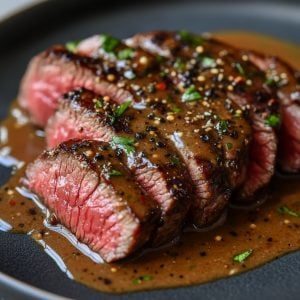
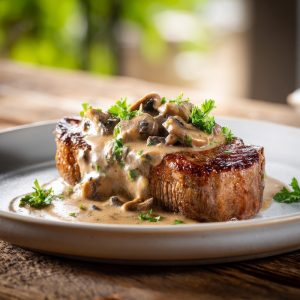
- Spoon the sauce over the steaks and serve immediately, with pommes purée or haricots verts.
Notes
What Most Cooks Get Wrong
- Overcrowding the pan: cook the steaks one at a time if your skillet's on the smaller side — too close together and they steam instead of sear.
- Deglazing over high heat: pull the pan off the heat before adding the port, especially over a gas flame — it can flare.
- Skipping the rest: steaks need 5–10 minutes off heat before going back into the sauce, or they overcook.
- Using a thin, watery demi-glace substitute: quality matters more here than almost anywhere else in the recipe — a weak demi-glace makes a weak sauce.
- Cooking with wine you wouldn't drink: cheap, off wine reduces into cheap, off sauce. It doesn't cook away the flaws.
Why This Works
- Demi-glace instead of a quick cream reduction gives the sauce real body and depth without relying on dairy to thicken it — the difference between a sauce that tastes assembled and one that tastes cooked.
- Port stands in for cognac because both add a concentrated, slightly sweet backbone that plays against the pepper's heat — cognac isn't doing anything unique that a good port can't.
- Searing first and deglazing after means the sauce picks up everything left in the pan — a lot of the flavor comes from there, not just the demi-glace itself.
- The pepper crust and the sauce are built to balance each other: crack the pepper too fine and it disappears into the crust instead of standing up to the richness of the sauce.
Quick Fixes and Tips
- Don't drink wine? Use a non-vintage ruby or tawny port — it keeps for months once opened, unlike a bottle of red you'd need to finish in a day or two.
- Sauce too thin? Simmer it a little longer before adding the butter — it should coat the back of a spoon.
- Want it milder? Stir in the optional cream at the end — it softens the pepper's bite without changing the technique.
- No demi-glace on hand? A rich beef stock reduced hard will get you partway there, though it won't have the same body.
What to Serve With This
- Pommes purée or another mashed potato: the sauce wants something to pool into.
- Haricots verts or another simple green vegetable — cuts the richness without competing with it.
- A glass of what you cooked with: if you used port, a small pour alongside the meal echoes the sauce.
- Crusty bread, for the sauce you don't want to leave on the plate.
Storage and Make-Ahead
- The sauce keeps refrigerated up to 3 days — reheat gently over low heat, whisking in a splash of water or stock if it's thickened too much.
- Cook the steaks fresh each time; they don't reheat well without overcooking.
- Extra demi-glace freezes well for months — worth having on hand for this or any pan sauce.
Frquently Asked Questions
What is steak au poivre? A peppercorn-crusted steak, seared and finished with a pan sauce built on the browned bits left in the pan — classically French, and simpler than it sounds.
What cut of steak is best for steak au poivre? Filet mignon or New York strip, about 1.5 inches thick — both hold up well to a hard sear and a heavy pepper crust.
Do I need cognac for the sauce? No. The classic version uses cognac, but this recipe swaps in port, which keeps for months after opening and adds a similarly concentrated sweetness. Cognac works too if you have it.
Can I use red wine instead of port? Yes — a good Cabernet Sauvignon or Merlot works well. Just don’t cook with anything you wouldn’t want to drink.
Do I have to make demi-glace from scratch? No, a high-quality store-bought demi-glace works fine — making it from scratch is a serious project most home cooks won’t want to take on for a weeknight sauce.
Can I add cream to the sauce? Yes, it’s optional — a few tablespoons soften the pepper’s bite. Leave it out for a more traditional, robust finish.
What is the 3-3-3 rule for steaks? A rough guideline: searing for about 3 minutes per side, then resting for a few minutes before serving — a starting point, not a strict rule, since actual timing depends on thickness and heat.
What if I don’t want to use wine at all? Substitute a splash of beef stock, though you’ll lose some of the depth the wine reduction adds.
- Good demi-glace is the backbone of this sauce — see my demi-glace recipe for homemade and store-bought options.
- Deglazing is the technique this whole sauce depends on — see deglazing: what it is and why you do it.
- For pan sauce basics beyond this one, see my guide to simple pan sauces.
- For more on building a sauce arsenal around demi-glace, see the secret to great sauces.
- Freshly cracked pepper matters more here than in almost any other dish — see my guide to pepper.
- Not sure when your steak is actually done? See my steak doneness guide.


10 Responses
Can you add cream or half and half?
Either but I would use less cream than half and half but it really is more to taste.
You placed an * next to demi-glace. Are you suggesting to purchase it or did you have a recipe to make your own?
Hi Arlene, thanks for point this out. Lost the * and ** when the site converted but I’ll get them right back in and updated. Making demi-glace from scratch is a big effort and although a fun process to try, I don’t think most home cooks will want to spend the time and effort preparing it. Check out my post Secret to Great Sauces is Demi Glace for a link to a good demi recipe plus some of my favorite commercial products.
I just came across your site looking for a good peppercorn steak sauce. Wow! I love your site! I have a question regarding this sauce. I am not a wine drinker, I know, I know what cook doesn’t drink wine lol Can you recommend a good red wine to make this sauce with? Thank you and I look forward to trying your recipes!
Hi Heather, there are so many good wines available, I wouldn’t know where to start. I typically use one of my maintenance wines that cost between $12 – $15. I don’t like to use an expensive wine that I may be drinking that night because I’m going to cook it off to an essence. I also love to make this sauce with a non vintage port like a Ruby Red or Tawny port that you can pick up in any liquor store for a decent price. The advantage of using a port wine is it will last for weeks if not months after it is opened. If you open a red wine, $10 or $30, you need to drink it that day or by the next day. So if you are not serving this sauce to wine drinkers who may enjoy the rest of the wine, try using a port. – I like Sandeman Fine Ruby Port, Fonseca Ruby Port, Taylor Fladgate Fine Tawny to name a few.
You said to use a port wine– they tend go be sweet. How would a cab taste with this recipie?
Stephanie, I don’t think of these Port wines being that sweet, not like a Marsala wine. There are some cheap Ports that may be sweet. A Cabernet Sauvignon would be excellent as well as a Merlot or blend of wines. I like to say, only cook with wines that you would drink alone which means try to stay away from really cheap wine that you would not serve your guests.
Delicious recipe… Cooked it this evening with my husband and brother and we had a lovely evening by the fire having picanha steak with your delicious sauce recipe, carrots, broccoli and potatoes. It was delicious and will definitely be doing it again. Thanks so much for sharing!
Hi Ash, glad your meal was enjoyed and thanks for letting me know. Much appreciated.