How to Wow Guests with a Butter Turkey This Thanksgiving
Thanksgiving is a feast, a frenzy, and occasionally, a little bit of fine art. This year, I want to talk about the unsung hero of the holiday table: the butter-sculpted turkey. Yes, you read that right.
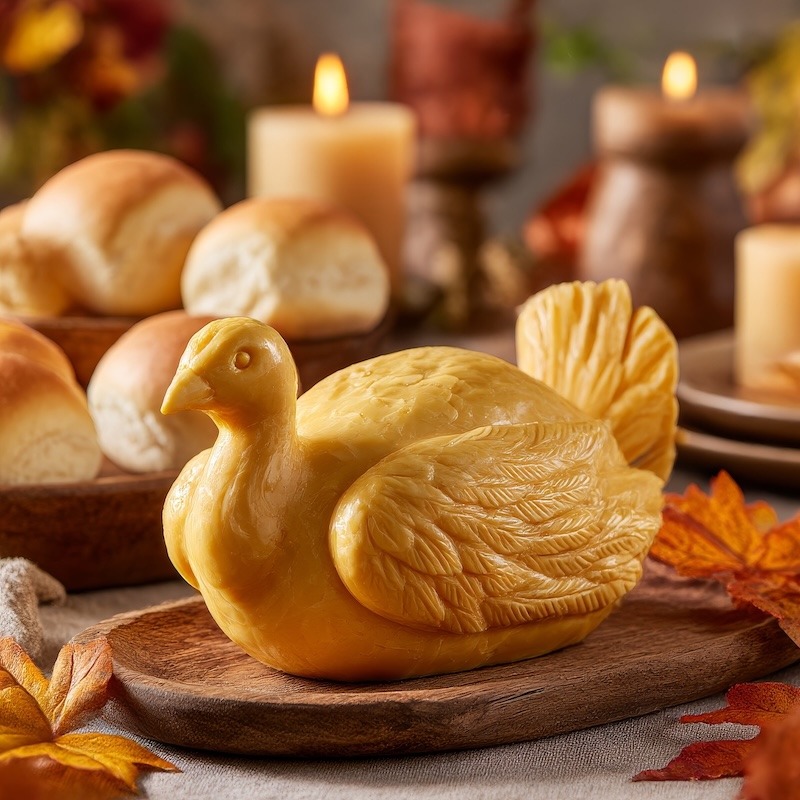
Someone, somewhere, decided that plain old butter wasn’t enough and began carving it into miniature birds that could rival the real thing. These golden, glossy masterpieces sit on your table, glistening under the overhead light, daring guests to admire them before slathering them onto rolls.
Making a butter turkey is part sculpture, part performance art, and all chaos if you forget to keep it cold. Your fingers get slippery, your carving knife threatens mutiny, and before you know it, your turkey looks more like a confused duck.
Yet, somehow, the result is magical. People snap photos, ooh and aah, and then proceed to smear it all over mashed potatoes without a second thought.
In this post, I’ll explore the quirky world of butter turkeys. I’ll share tips, tricks, and a few war stories from the front lines of dairy-based artistry. By the end, you’ll see that Thanksgiving isn’t just about eating—it’s about making butter behave like a bird and surviving the experience with a smile.
The Start of It All
Ah, the origin story of the butter turkey is a mix of culinary ambition and a dash of pure madness. The idea originated in the 1940s, in the heart of America’s Midwest.
A clever—or possibly slightly unhinged—dairy farmer named Eugene “Gene” F. M. Wunderlich (yes, someone actually had time for four initials) decided that butter shouldn’t just sit quietly on the table. It should strut.
Gene grabbed a block of butter, a paring knife, and a dream, and voilà—the first butter turkey waddled onto a Thanksgiving table somewhere in Wisconsin. His goal? To impress relatives and maybe get a little attention from the local dairy co-op.
The turkey was small, glossy, and probably a little lopsided, but it sparked a trend that butter lovers and perfectionists alike have carried forward ever since.
From that moment on, butter became more than a condiment—it became a canvas. People everywhere started carving turkeys, cornucopias, even pumpkin shapes, all from cold dairy.
So, next time you admire a butter turkey at Thanksgiving, tip your hat to Gene Wunderlich—the man who dared to say, “Why just eat it when you can sculpt it first?”
Just the Beginning of the Story
After Gene Wunderlich rolled out his first buttery masterpiece, the idea caught on faster than gravy on mashed potatoes. Suddenly, Midwest kitchens transformed into miniature dairy workshops.
Housewives and home cooks started carving turkeys, cornucopias, and even tiny pilgrim hats—all from sticks of butter. It was like the Olympics of Cold Dairy Art.
By the 1950s, butter sculptures had graduated from humble dinner tables to county fairs. People weren’t just admiring them—they were competing. “Bigger! Shiner! More realistic!” became the unofficial motto of the butter elite.
Sculptors wielded knives like sabers, eyes glinting in fluorescent fairground lights, turning a simple stick of butter into an epic, golden battle of artistry versus melting point.
Eventually, the craze spread to professional chefs and high-end restaurants, where butter turkeys strutted across buffet tables, posing for Instagram decades before Instagram existed.
And yet, despite all the fame and glory, at the end of the day, a butter turkey’s fate remains the same: it gets smeared on rolls, dunked in cranberry sauce, and devoured without a second thought. Ah, the glamorous life of a butter turkey—born for admiration, destined for digestion.
The Butter Turkey Timeline
1940s – Gene Wunderlich Waddles In:
A Midwestern dairy farmer carves the first butter turkey. Relatives applaud. Butter gains confidence.
1950s – County Fair Showdowns:
Butter turkeys hit fairs. Judges demand realism, shine, and “life-like waddle.” Kids wonder why dessert is moving.
1960s – TV Fame:
Butter sculptures star in commercials. Housewives panic: can their butter compete with the one on screen?
1970s – Butter Goes Big:
Chefs and ambitious hobbyists create mammoth butter birds. Some collapse under their own buttery egos.
1980s – Thanksgiving Tables Glow:
Butter turkeys appear at restaurants and hotels. Guests photograph them before slathering on rolls. Artistic integrity negotiates with digestive reality.
1990s – Pop Culture Brilliance:
Cartoons, magazines, and cooking shows celebrate buttery brilliance. Sculptors begin secretly naming their creations: “Sir Butterlot” and “Lady Goldenwing.”
2000s – Internet Era:
Butter turkeys dominate social media. Likes and shares replace applause. Some are edible; some are just for clout.
2010s–Today – The Art and the Meme:
Butter turkeys are everywhere: competitions, foodie blogs, and Instagram feeds. They still melt under pressure—literally and figuratively—but we love them anyway.
Keller's Creamery Butter Turkey Contribution
Origins and Brand Background
The Kellers’ story begins in 1906, when Harvey and Florence Keller bought their first creamery. Later, they created the Keller’s Creamery label by purchasing Indian Creek Creamery near Telford, Pennsylvania, in 1920.
Keller’s Creamery
Keller’s expanded significantly between 1940 and 1962, acquiring multiple local dairies and egg companies. The brand changed hands a few times (sold to Beatrice Foods in 1964, then Borden in 1982) and today operates as a 100% farmer‑owned label under Dairy Farmers of America (DFA).
Enter Butter Sculptures: 1958 Onwards
Keller’s first venture into butter sculpture was in 1958, starting with a lamb shape for Easter. Over time, the lineup expanded to include:
- a turkey‑shaped butter for Thanksgiving
- a Christmas tree‑shaped butter for the winter holiday season
- Each of these sculptures is approximately 4 oz (roughly eight tablespoons of butter) in size.
Packaging & Production Evolution
Initially, the butter sculptures were molded in wooden, hand-pressed molds (for example, the Easter lamb) and then placed into a container that supported the base only.
By 2013‑14, Keller’s introduced more advanced packaging: a molded plastic casing that encases the entire sculpture, allowing greater detail (feathers on the turkey, branches on the tree) and improved durability.
The new packaging also helped the company respond to increased demand and streamline its manufacturing process.
The Turkey Butter Phenomenon
The turkey‑shaped butter is intended as a fun holiday dialogue piece: your dinner roll gets buttered by something shaped like the main dish. One article quipped: “Your Thanksgiving table will not be complete until we get the turkey‑shaped butter that is making waves this holiday season.”
Retail reports indicate that it is sold in many major chains during the Thanksgiving season, including Kroger, Walmart, Publix, Harris Teeter, and Food Lion.
A key marketing line: “Family and friends will love Keller’s Creamery Turkey Shaped Butter at your Thanksgiving Dinner. Use the butter as a tasty, creamy accompaniment on bread rolls and many other Thanksgiving dishes.”