

Quick Reference: Why Recipes Fail
- Braised pork chops came out dry and tough: the recipe's cook time was written for a much thicker chop than the one actually used. Lesson: a recipe's time is only right for the exact thickness it was tested on — adjust for yours.
- Homemade meatballs fell apart in the pan: a substitution (breadcrumbs for day-old bread) skipped a step the original recipe never spelled out for that swap. Lesson: substituting one ingredient for another can silently change a step you still need to do.
- Recipe times never seem to match your oven: most home ovens run 25 to 50 degrees off whatever the dial says. Lesson: treat recipe times as a starting estimate, not a guarantee — check for doneness, not the clock.
- Same recipe, different pan, different result: glass, dark nonstick, and light stainless bakeware all conduct and hold heat differently. Lesson: a recipe assumes one specific pan — yours may need a few minutes more or less.
- Followed it exactly and it still didn't work: ingredients themselves vary — baking powder loses strength over time, flour scooped versus spooned can differ by 20% or more. Lesson: an ingredient's age and how you measure it are part of the recipe, even when nobody says so.
- Instructions were technically followed but something felt off: vague language like "cook until done" assumes the reader already knows what done looks like. Lesson: if a recipe doesn't tell you what to look for, trust what you're seeing and smelling over the written time.
How Not to Braise Pork Chops
I had purchased some fresh pork chops on the bone at the farmers market and wanted to braise them rather than grill them in the freezing cold. So, I searched the Internet for braised pork chop recipes and found one that looked good on a reputable site. It was for braised pork chops with apples.
Now I realize that center-cut loin pork chops may not be the best cut of pork to braise because they are lean and tender, but I have been served braised pork chops in restaurants, and they have been fine. This recipe had me start by seasoning the chops with a few seasonings, searing them in a hot pan, removing the chops, deglazing the pan, and braising the apple wedges in some cider and rum.
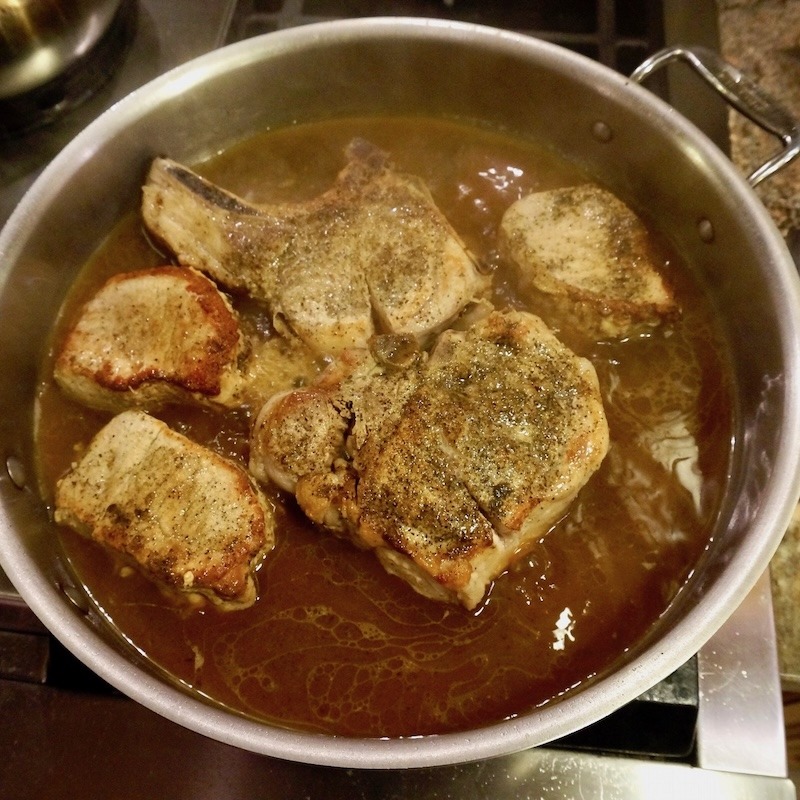
I added the pork chops back to the pan, covered them with the apples, then covered the pan and stuck it into a 350 degrees F preheated oven for “10 – 15 minutes until the pork chops are juicy and succulent.” The problem was the pork chops came out dry and tough as nails. Not inedible, but not the juicy, succulent results I was hoping for.
Trust Your Gut
When I was preparing this dish, my instincts told me something wasn’t right, but I didn’t trust my own experiences and figured the professional who posted this recipe must be right. If something doesn’t feel right when preparing a dish from a recipe, trust your gut and do more research. Unfortunately, I was in a hurry and didn’t stop to check out several recipes before deciding on this one.
What Went Wrong?
I immediately emailed Chef Todd Mohr the recipe and what happened and asked him what went wrong. Here’s what Chef Todd Mohr said:
“Keep in mind that you’re asking the chef who thinks we should all burn our recipes because of their inherent flaws and variables to analyze a recipe. Cooking is most enjoyable and often successful when you combine creativity with basic cooking methods. Following someone else’s opinion about how something should be cooked is no fun. You’re naturally set up for disappointment when you try to duplicate someone else’s rigid set of instructions.
With that in mind, the basic braising cooking method is to cook in a small amount of liquid, usually after browning. The protein product is only partially covered in liquid, so it steams in a covered pot. Braising is most often used for tougher cuts of meat that will benefit from long, slow, moist heat. More tender cuts of meat aren’t the best candidates for braising, nor are thinner cuts. The combination cooking process can ultimately make the product moist but over-coagulate proteins, making it tough.
As for your pork chop, I think you have two possible issues with this recipe. The first exception I take to a recipe is anything that mentions time: “…about 4 minutes each side.” I get the feeling that this recipe is made for a 2-inch thick chop. If your pork chop is a 1/2-inch cut from the local grocery store, it’ll be fully cooked after 8 minutes.
Next, I always think of braising as “low and slow.” I would never braise something above 300 degrees F, usually about 275 degrees F. But, again, the times mentioned in recipes can be fatal to the cook. With variations in oven temperatures, thickness and makeup of pans, and types of heat, I can’t imagine how anyone can tell you exactly how long something will take to cook in your kitchen. Also, “…10 to 15 minutes” of braising is an oxymoron. ANY braising dish I know of is for about an hour. Braising for 15 minutes is called poaching.
So, what I think might have happened with your chops is that you have a thinner cut of pork than the recipe was written for; the chop was fully cooked in a saute method, then cooked in liquid that was at too high a temperature for too short an amount of time.
I’d remedy the recipe by using a thicker chop, searing it until it browns slightly and the fat reaches the smoke point in a VERY hot pan, then deglaze and braise at 275 degrees for an hour or more.
Ultimately, I’d stick with veal shank, oxtail, or tongue for braising. A nice pork chop should probably be sautéed with pan sauce anyway. That’s my opinion.”
The Lesson
- A recipe's cook time is only accurate for the exact thickness and cut it was tested on — not every version of that cut sold at every store.
- Vague or short time windows ("10-15 minutes") are a warning sign, not a promise.
- If your gut says something's off mid-recipe, that instinct is data — don't override it just because the recipe is from a "reputable" source.
Spaghetti and Meatballs – Well, sort of
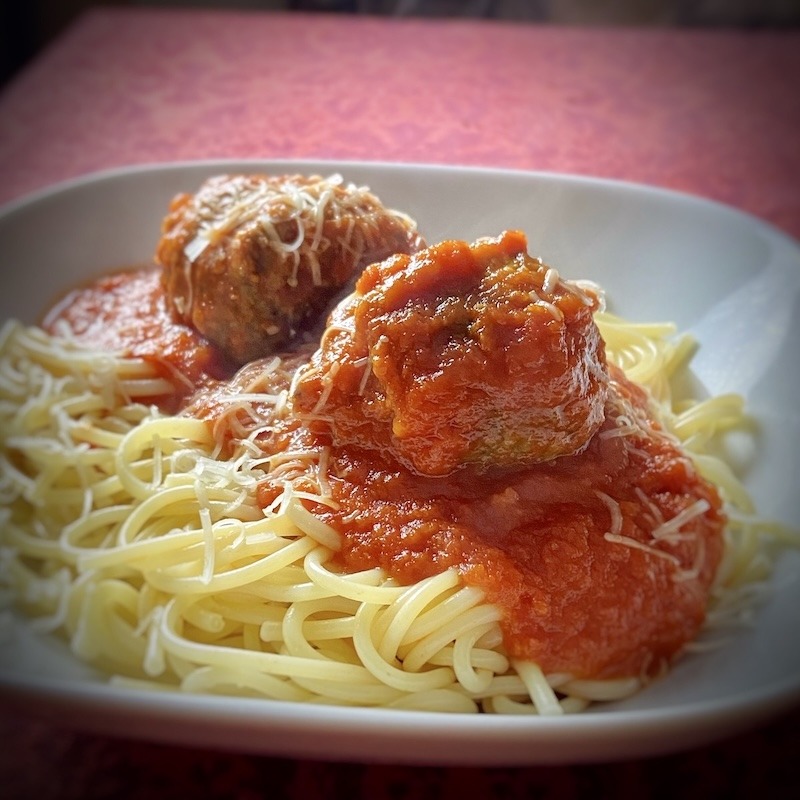
We were having friends over for dinner this weekend, and we thought it would be fun to make homemade fresh pasta and serve it with homemade meatballs. We have a great recipe from the mom of one of my wife’s best friends. Whenever we go to her friend’s house, we always ask her to ask her mom to make some of her fabulous meatballs for us to take home.
One weekend years ago, her friend visited Philly with her mom, and we asked her to show us how she makes these tasty delights. My wife quickly wrote down every step so we could duplicate the recipe ourselves. So what happened when we tried to make the meatballs this weekend?
First, we discovered that a critical step in the process needed to be included. The method includes browning the meatballs in olive oil and letting them cook in the sauce until done.
Our problem was that the meatballs fell apart while we were browning them. It was a disaster. They flattened out, stuck to the pan, and then pulled apart when we tried to turn them. It was a mess, and we were so disappointed with what was happening.
We managed to salvage more than half the meatballs and get them into the sauce, but the first time we stirred the sauce, we knew they would only hold up a little bit.
What Went Wrong
I immediately called my wife’s friend, who I knew had made these meatballs with her mom many times and asked her what she thought went wrong. We went through every step of the recipe only to discover we needed a small but consequential step.
One of the ingredients for the meatballs is day-old crusty Italian bread that you cut up into small cubes and soak in milk. Unfortunately, we didn’t have any day-old bread on hand, so I figured we could use breadcrumbs. And that would be fine if you complete the missed step: squeezing the excess milk out of the bread (crumbs) before adding the rest of the ingredients and combining them with the meat.
Our meatballs looked good, but since they were loaded with so much moisture, they fell apart when we started to brown them. So we were left with these great globs of chopped meat and other delicious ingredients that were half-browned and didn’t look like meatballs.
The Show Must Go On
We decided to cook our non-meatballs in the sauce anyway and make a meat sauce to go with our fresh pasta, and it was the best meat sauce I’ve ever made. Combining the other ingredients with the browned meat produced a wonderfully thick and delicious meat sauce that our guests couldn’t get enough of. I can’t wait to have leftovers tonight now that the flavors in the sauce have had time to meld. It’s going to be amazing.
The Lesson
- Swapping one ingredient for another (breadcrumbs for day-old bread) can quietly remove a step that was only necessary because of the swap.
- A hand-copied recipe is only as complete as what got written down in the moment — easy to lose a small step that felt obvious at the time.
- A failed dish isn't always a failure. This "mistake" became a better dish than the one that was planned.
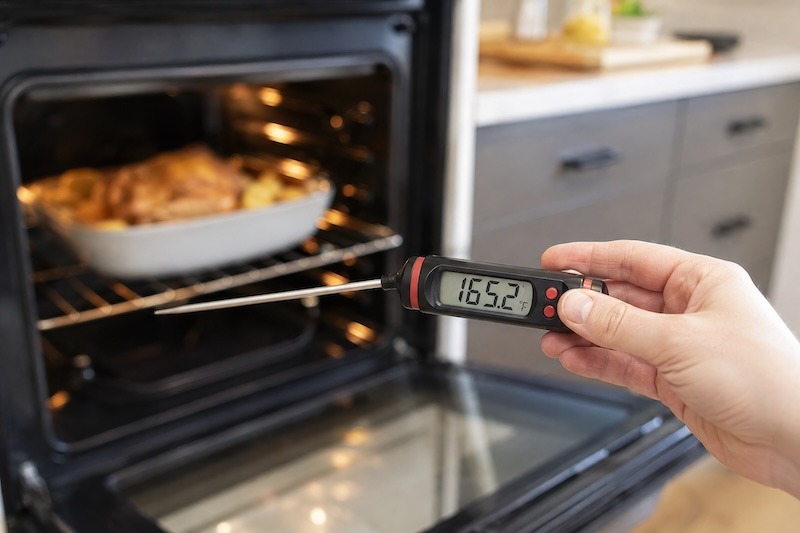
Your Oven Isn't as Accurate as You Think
- Most home ovens run 25 to 50 degrees hotter or cooler than the temperature you set — even brand-new ones.
- A recipe writer tested their version in their oven, at their oven's actual temperature, which may not match yours at all.
- The lesson: use an oven thermometer if a recipe keeps disappointing you, and treat recipe times as a range to check, not a countdown to trust blindly.
The Pan You Use Changes the Recipe
- Glass bakeware holds heat and keeps cooking after you pull it from the oven. Dark metal pans absorb and radiate heat faster than light-colored ones. Thin pans heat unevenly compared to heavy-gauge ones.
- A recipe assumes one specific pan — the one it was developed in — and rarely says so.
- The lesson: if a recipe browns too fast or too slow compared to what's described, the pan is often the actual variable, not your technique.
Ingredients Aren't as Consistent as Recipes Assume
- Baking powder loses potency sitting in the cabinet. Flour scooped straight from the bag can pack in 20-25% more than flour spooned in and leveled. Different brands of the same ingredient carry different salt, acid, or fat content.
- The lesson: if a recipe fails and you followed every step, check the age of your leaveners and how you're measuring before assuming you did something wrong.
Some Recipes Were Never Actually Tested Twice
- A recipe that worked once, in one kitchen, gets published — and the writer may never have made it again in a different kitchen to see where it breaks.
- Vague instructions ("cook until done," "season to taste") are often a sign the writer knew what they meant but never had to explain it to someone who didn't already know.
- The lesson: if a recipe's instructions feel like they're skipping something, they might genuinely be incomplete — not just unclear to you.
Conclusions
So here are two instances in which the recipes I started with didn’t work, but the results were completely different. Although the pork chops were dry, they could still be eaten and nourished. On the other hand, the disaster with the meatballs turned out to be a new way for me to make meat sauce in the future.
So don’t give up if a recipe doesn’t work out. It’s like that old saying – If life gives you lemons, make lemonade.
Frequently Asked Questions
What are the most common reasons a recipe doesn’t turn out right? Cook times not matching your ingredients’ actual thickness or size, oven temperatures that run hotter or colder than the dial says, pan differences, ingredient substitutions that skip a hidden step, and instructions that assume knowledge the reader doesn’t have yet.
Does my oven’s actual temperature really make that much of a difference? Yes. Most home ovens run 25 to 50 degrees off the set temperature, which is enough to turn a recipe’s stated cook time from accurate to wrong in either direction.
Why did a recipe work for someone else but not for me? Often it comes down to variables the recipe never mentions — the exact thickness of a cut of meat, the pan used to test it, or an ingredient swap that quietly changes a step.
Should I trust a recipe or my own instincts if something feels off while cooking? Trust your gut. If something doesn’t feel right mid-recipe, that instinct is worth pausing for — a recipe from a reputable source isn’t a guarantee it’s right for your exact ingredients and equipment.
Is it normal for a recipe to fail even when you follow it exactly? Yes. Recipes are written and tested under one specific set of conditions — a specific cut, pan, oven, and set of ingredients — and small differences from those conditions are enough to change the outcome.
What should I do when a recipe doesn’t work out? Figure out what was actually different between your kitchen and the one the recipe was tested in, and don’t be afraid to salvage the dish into something else — sometimes the result is better than what was planned.


2 Responses
I love this post! It helps others feel better about their kitchen mistakes. Besides, it sounds like the meatball Fail was actually a huge success. As for the pork chops, as long as it was edible and you learned something, that wasn’t a failure, either. Often, we can get away with mistakes by just being confident and saying, “This is exactly what I was going for!”
Its always worth having a go