
Fast Answer
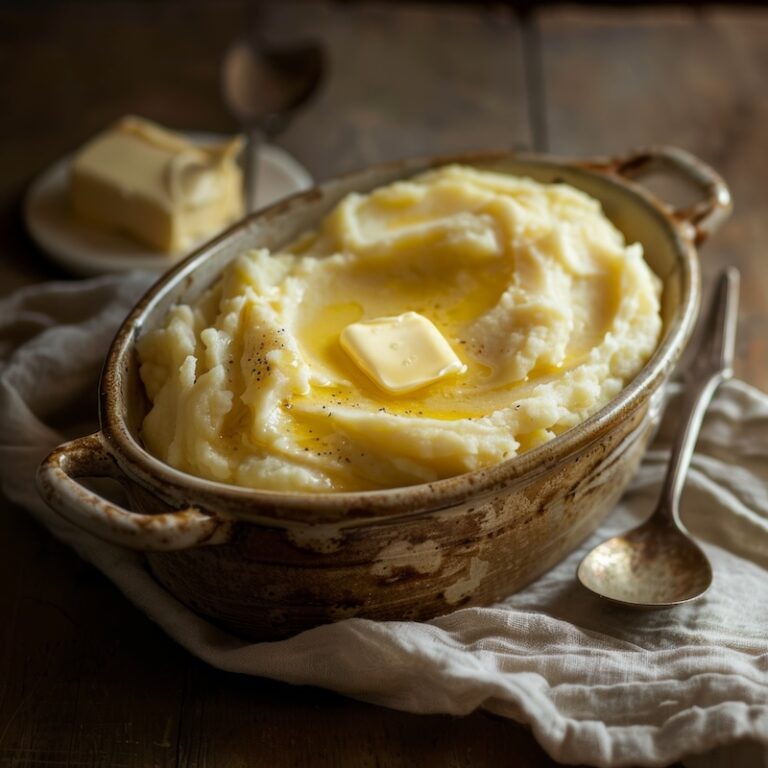
Great mashed potatoes come down to four decisions: the right potato (Yukon Gold for creamy, Russet for fluffy), the right technique (cold water start, steam off moisture after draining, butter before milk), the right tool (masher for texture, ricer for smoothness, never a food processor), and the right style for the occasion. The butter-before-milk rule alone will change how yours turn out. Everything else builds from there.
Best Mashed Potatoes Recipe (Creamy, Fluffy, Never Gluey)
Originally published in 1998 • Fully updated July 2026
Mashed potatoes are one of the great side dishes — full stop. Thanksgiving is not Thanksgiving without them. A Sunday roast isn’t complete without them. And yet most home cooks make them on autopilot, the same way they learned, without ever questioning whether the technique is right.
This post covers the potato, the tools, the technique, and the style debate — so you understand what you’re making and why it turns out the way it does.
The style of mashed potatoes you grew up with is the style you’ll defend forever. That’s not a food opinion — it’s just how memory works. If your mother made chunky mashed potatoes with the skins left on, that’s what comfort tastes like to you. If she made them smooth and buttery, anything with lumps feels unfinished.
My mother made great mashed potatoes. Never added garlic — not once — and I spent years wishing she had. But the texture, the consistency, the way they sat on the plate — that was right. That was what mashed potatoes were supposed to be.
The butter-before-milk rule I discovered on my own, years later, through research. I’d been making mashed potatoes for a long time before I understood what that one rule was actually doing. Once I did, everything clicked — and they’ve been better ever since.
That’s really what this post is about. Not a recipe so much as an understanding of the dish. Because mashed potatoes reward the cook who thinks about them, and they’re worth thinking about.
The Style Debate — and Why It Starts With Your Mother
Ask ten people how they like their mashed potatoes and you’ll get ten different answers. Most of those answers trace directly back to how they were made at home when the person was a child. The style of mashed potatoes you grew up with is the one you’ll spend the rest of your life measuring everything else against.
Here’s an honest breakdown of the four main styles:
Smooth and creamy — the workhorse. Fully mashed with butter and warm milk or cream until uniform and silky. No lumps, no texture variation. This is what most people mean when they say mashed potatoes. It’s the right call for holiday tables, for serving under gravy, for anything where the potatoes are playing a supporting role to a serious main.
Chunky — a legitimate style and an honest one. Partially mashed with some potato pieces left intact, sometimes with skins on. Rustic, textural, and more forgiving to make than smooth. Good for casual dinners and for cooks who want the potato to announce itself rather than disappear into the plate.
Whipped — here’s where I have to be honest. I understand the appeal. Light, airy, almost cloud-like. But whipped potatoes are largely what restaurants serve when they want to add volume without adding ingredients. A stand mixer or hand mixer whips air into the potatoes and breaks down the starch in a way that produces quantity over quality. You get more potatoes on the plate and less flavor in each bite. I’ll eat them. I just know what I’m eating.
Instant — no. I don’t have a gentle version of this opinion. Instant mashed potatoes are a different product entirely. They’re a convenience item for a specific situation — camping, emergencies, a dorm room with no stove — and they have their place. That place is not at a table where someone went to the trouble of making a real meal.
The right style is the one you want to eat. But now you know what each one is actually doing and why — which puts you in a better position to choose intentionally rather than by habit.
Start Here: The Four Decisions That Matter
- Choose your potato. Yukon Gold for creamy and buttery. Russet for fluffy and light. Red for chunky with skins on. The potato determines the ceiling of what's possible — you can't make a silky smooth mash from a waxy red potato.
- Choose your style. Smooth, chunky, or whipped — decide before you start because the tool and technique follow from the style. See the style section above.
- Start in cold salted water. Potatoes added to cold water cook evenly from outside to inside. Hot water start cooks the exterior before the interior catches up and you get mealy edges.
- Steam off moisture after draining. Return drained potatoes to the hot pot over low heat for 60 to 90 seconds before mashing. The steam rising out of the pot is moisture that would thin your mash if it stayed in.
- Butter before milk — always. Fat coats the starch granules before water-based liquid can make them sticky. Reverse the order and you get gluey potatoes regardless of how carefully you mash.
- Warm your liquid. Cold milk or cream added to hot potatoes drops the temperature and creates uneven texture. 60 seconds in the microwave first.
Which Potato for Which Style
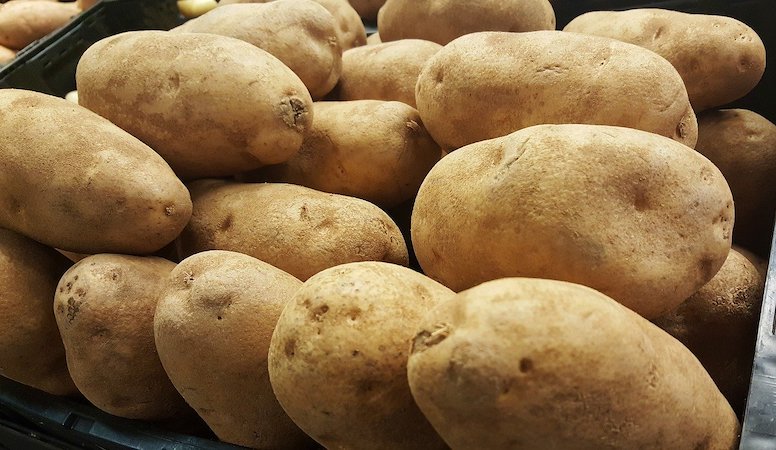
- Yukon Gold — creamy and buttery. Medium starch, naturally buttery flavor, golden color. The best all-purpose mashing potato and the right call for smooth, creamy mashed potatoes. Holds butter and cream well without going gluey. This is the potato most serious home cooks default to.
- Russet — fluffy and light. High starch, dry interior, neutral flavor. Absorbs more butter and cream than Yukon Gold and produces a fluffier, lighter result. The right call if you want mashed potatoes that are more cloud than cream. Needs more fat to taste rich — don't hold back on the butter.
- Red potato — chunky with texture. Low starch, waxy, holds its shape under pressure. Don't try to make smooth mashed potatoes from red potatoes — they'll resist and then go gluey if you overwork them. Use them for chunky mashed potatoes with skins on where the texture and color are part of the point.
- Sweet potato — a different dish. High sugar, dense, and distinctly flavored. Works well mashed with butter and a touch of cream but competes with savory mains rather than supporting them. Treat it as its own dish rather than a substitution.
- The rule: starch content determines texture potential. High starch (Russet) means fluffy. Medium starch (Yukon Gold) means creamy. Low starch (red, fingerling) means chunky. You can't override the starch — work with it.
The Right Tool for the Job
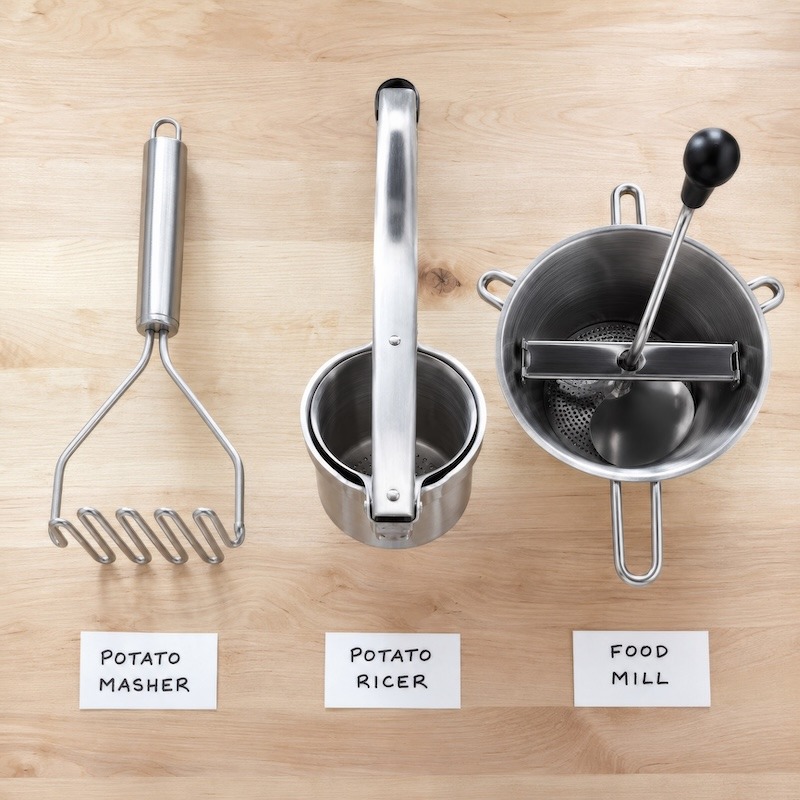
- Potato masher — best for chunky and rustic. Fast, low cleanup, and gives you control over texture. Easy to stop when you want some lumps remaining. The most forgiving tool because it's the hardest to overuse. If you're making mashed potatoes on a Tuesday and don't want to think about it, this is the tool.
- Potato ricer — best for smooth and creamy. Forces potato through small holes producing a uniform, lump-free result without overworking the starch. Produces the smoothest possible texture short of a food mill. More cleanup than a masher but worth it when texture matters. The tool serious home cooks eventually buy and don't regret.
- Food mill — best for silky and refined. Produces an exceptionally smooth result and removes skins automatically if you cook them on. More equipment and more cleanup than a ricer. Worth it for a holiday table or when you're cooking unpeeled potatoes for a more rustic-to-refined result.
- Hand mixer — use with caution. Fast and convenient but easy to overwork the starch. If you use one, lowest speed, stop early, and accept that some air is going in. Better than a stand mixer for control.
- Stand mixer — for whipped potatoes only. If whipped is the style you want, a stand mixer with the paddle attachment is the right tool. For any other style it overworks the starch reliably and produces a gluey result.
- Food processor or blender — never. Both overwork the starch so aggressively and so quickly that there's no recovery. The result is a thick, gluey paste with the texture of wallpaper adhesive. Not a style — a mistake.
The Three Non-Negotiable Techniques
Cold Water Start
Put the potato pieces in the pot first, then cover with cold water. Bring everything up to temperature together. The potato cooks evenly from the outside in when the water heats gradually with it. Starting in already-boiling water cooks the exterior of each piece before the interior has a chance to catch up — you get mealy, slightly mushy edges around an undercooked center. Cold start, every time.
Salt the water generously. The potato absorbs the seasoning as it cooks. Water that tastes noticeably salty produces a seasoned potato from the inside out — water that doesn’t taste of anything produces a potato that needs salt added after the fact, which never distributes the same way.
Steam Off the Moisture
After draining, the potatoes still hold surface moisture that draining doesn’t remove. Return them to the hot pot — no water, no liquid — and set over low heat for 60 to 90 seconds. Shake the pot gently. The steam you see rising out is water leaving the potato. Let it go. Wet potatoes produce thin mashed potatoes regardless of how much butter you add afterward. This step takes under two minutes and it matters.
Butter Before Milk — The Rule I Didn’t Know
This is the technique I didn’t know until I went looking for it, and it’s the one that changed how my mashed potatoes turned out.
When you break down a cooked potato, you expose the starch granules inside the cells. Those granules are reactive — they absorb liquid and when they absorb water-based liquid they swell and turn sticky, which is where gluey mashed potatoes come from.
Butter is fat, not water. Fat coats the starch granules without triggering that reaction. Add butter first — to hot, steamed-dry potatoes — and toss until every piece is coated and the butter is fully melted. The fat creates a barrier. Then add your warm milk or cream in stages and the liquid coats the already-protected starch rather than making it sticky.
Add milk before butter and you’ve already lost the battle. The starch has absorbed water and the texture is set. More butter won’t fix it.
This is why restaurant mashed potatoes have that specific silky texture. It’s not that they use more butter — it’s that the butter goes in first.
Why This Works
- Cold water start produces even cooking. The potato and water heat together, cooking the exterior and interior at the same rate. Hot water start produces mealy edges and undercooked centers.
- Steaming removes the moisture draining leaves behind. Surface moisture left in the pot after draining thins the finished mash. Two minutes on low heat drives it off before any fat or liquid goes in.
- Butter before milk protects the starch. Fat coats the exposed starch granules before water-based liquid can make them sticky. This is the single technique decision that separates silky mashed potatoes from gluey ones.
- Warm liquid keeps the texture even. Cold milk added to hot potatoes drops the temperature unevenly — some starch reacts differently than others. Warm liquid distributes smoothly and consistently.
- Stopping before smooth keeps the texture right. Every extra pass of the masher or ricer breaks more starch cells. Past a certain point the texture is unrecoverable. Stop when the potatoes look just right — a few small lumps are better than overworked starch.
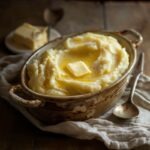
Best Mashed Potatoes Recipe
Ingredients
- 2 pounds potatoes either starchy - waxy or a mix of both
- 1 teaspoon salt
- 7 tablespoons unsalted butter
- 1 cup half and half
- freshly ground black or white pepper - to taste
Instructions
Prep the Potatoes
- Peel and cut into even chunks.
Start in Cold Water
- Place potatoes in a pot and cover with cold, salted water.
Boil Gently
- Bring to a simmer, not a rolling boil. Cook until fork-tender, about 15–20 minutes.
Drain & Dry
- Drain well, then return to the pot over low heat for 1–2 minutes.
Mash While Hot
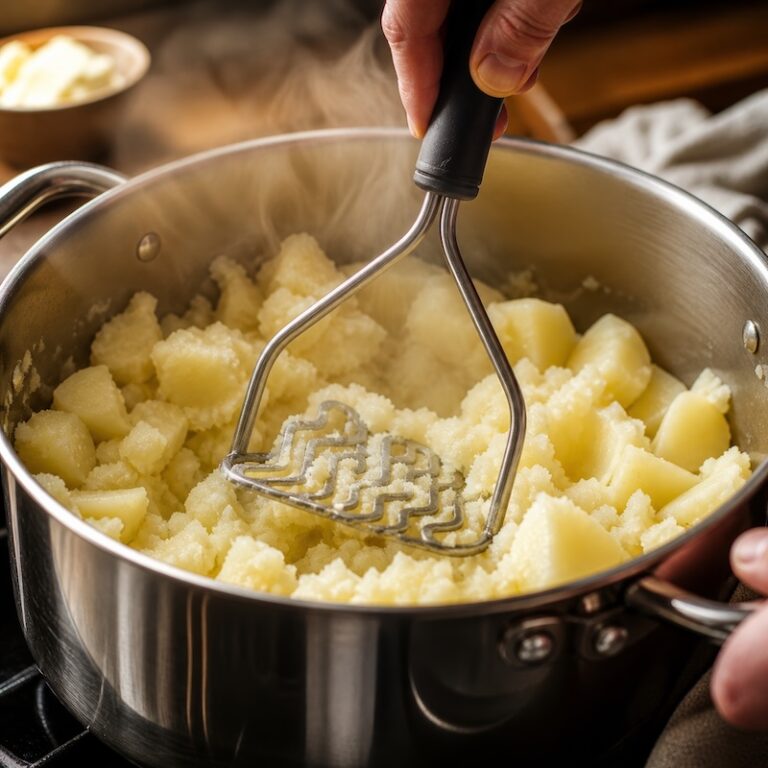
- Use a potato masher or ricer. Mash just until smooth. Stop early to avoid overworking.
Add Warm Butter First
- Stir in warm butter before adding liquid. Fat coats the starch and improves texture.
Add Warm Cream or Milk
- Pour in gradually while stirring gently. Adjust to your desired consistency.
Season & Taste
- Add salt and pepper. Taste and adjust. This is where good becomes great.
Serve Immediately
- Mashed potatoes are best hot, creamy, and fresh.
Nutrition
What Most Cooks Get Wrong
- Adding milk before butter. The most consequential mistake in mashed potato technique. Milk hits the exposed starch granules first, they absorb water and turn sticky, and no amount of butter added after will fix it. Butter always goes in first.
- Skipping the steam step. Draining removes most water but not all. The 60 to 90 seconds back on low heat after draining removes the rest. Skip it and the finished mash is always thinner than it should be.
- Using cold milk or cream. Cold liquid hits hot potatoes unevenly. The temperature drop affects both texture and absorption. Warm it first — 60 seconds in the microwave is enough.
- Overmashing. Past a certain point, broken starch cells produce a sticky, gluey texture that doesn't recover. Mash until just done and stop. If you're not sure, stop earlier than you think — you can always mash more, you can't unmash.
- Under-salting the water. Potatoes cooked in unsalted water taste flat regardless of how much seasoning you add at the end. The water should taste noticeably salty before the potatoes go in.
- Using the wrong potato for the style. Trying to make silky smooth mashed potatoes from waxy red potatoes, or trying to make chunky skin-on potatoes from Russets. The potato determines what's possible — work with its starch content, not against it.
Quick Fixes & Pro Tips
- Too thick? Add warm milk a splash at a time, stirring gently between additions. Never add cold liquid to hot potatoes — the texture turns uneven. Add slowly and stop before you think you need to.
- Too thin? You added too much liquid or didn't steam long enough. Return to low heat and stir gently for a minute — some moisture will evaporate. Next time steam longer and add liquid more gradually.
- Turned gluey? Overmashed or milk went in before butter. There's no full recovery — but stirring in a generous amount of warm butter can improve the texture slightly. Next time stop earlier and get the order right.
- Holding for an hour? Cover tightly and set the pot over barely simmering water. Stir occasionally and add a splash of warm milk if they tighten. Don't put them in a low oven — the dry heat dries them out unevenly.
- Reheating leftovers. Add a splash of warm milk or cream and reheat gently on the stovetop over low heat, stirring constantly. The microwave works — stir every 30 seconds and add liquid as needed. Reheated potatoes absorb moisture and tighten as they sit.
- Partially freezing the potato before slicing isn't a thing here — but cutting pieces to even size before boiling is. Uneven pieces mean uneven cooking. Cut to roughly the same size and everything finishes together.

Variations Worth Knowing
- Garlic mashed potatoes. The most common and most rewarding variation — either simmer peeled garlic cloves with the potatoes for a mild, integrated flavor, or roast a whole head first for deeper caramelized complexity. Full technique in the garlic mashed potatoes post.
- Cream cheese. A few ounces of room-temperature cream cheese added with the butter produces a richer, slightly tangy result with a denser texture. Works well for make-ahead mashed potatoes because the cream cheese helps them hold their consistency after reheating.
- Sour cream. Similar effect to cream cheese but lighter and more acidic. A tablespoon or two adds tang and creaminess without the density. Works well with chives or scallions stirred in at the end.
- Brown butter. Cook the butter in a light-colored pan over medium heat until the milk solids turn golden and smell nutty — about 4 to 5 minutes. Use it in place of regular butter for a deeper, nuttier flavor profile that works well with roasted meats.
- Olive oil in place of butter. For a dairy-free version or a lighter result, good quality olive oil in place of butter produces a Mediterranean-style mash. Use the same technique — oil before liquid — and choose a mild-flavored olive oil so it doesn't compete with the potato.
What to Serve With Mashed Potatoes
- Pan gravy. The natural companion — whatever liquid is left in the roasting pan or skillet, deglazed and reduced, poured over. Don't overthink it. The best gravy for mashed potatoes is always the one made from whatever you just cooked.
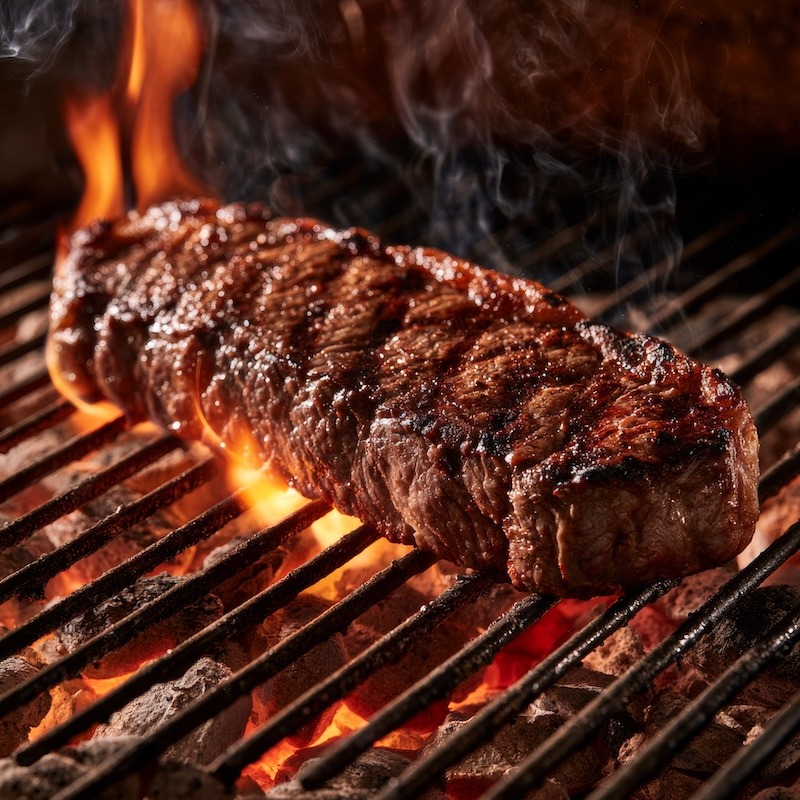
- Grilled or pan-seared steak. Mashed potatoes are one of the few sides that can hold their own next to a serious piece of beef. Use the roasted garlic version for a steak dinner.
- Roasted pork tenderloin. A leaner main that benefits from the richness of the potatoes alongside it. The contrast works.
- Baked salmon. An underrated pairing — the butteriness of Yukon Golds echoes the richness of the fish without competing with it.
- Roast chicken. The most classic combination. Pan drippings from a roasted chicken make the best possible gravy for mashed potatoes — use every drop.
- Thanksgiving turkey and gravy. Thanksgiving is not Thanksgiving without mashed potatoes. This is not a preference — it's a fact.
Storage & Make-Ahead
- Hold for up to one hour. Cover tightly and set the pot over barely simmering water. Stir occasionally and add a splash of warm milk if they tighten. Better than a low oven which dries them unevenly.
- Refrigerator. Store in an airtight container for up to 3 days. They'll absorb liquid and firm up — that's normal. Reheat with warm milk stirred in over low heat, stirring constantly.
- Make-ahead strategy. Cook and mash up to 24 hours ahead, slightly undercooking the potatoes. Reheat gently with extra butter and warm milk — they finish as they warm. Adding cream cheese to the recipe helps them hold their consistency after reheating.
- Freezing. Possible but not ideal. Texture changes on thawing — they can become slightly grainy. If freezing, add extra butter before freezing and reheat slowly with warm cream. Cream cheese in the recipe helps them freeze and reheat more successfully than plain mashed potatoes.
How Much Potato Per Person
- Side dish. ½ pound (8 oz) of unpeeled potatoes per person — yields roughly ¾ cup mashed.
- Main course or holiday table. ¾ to 1 pound per person — people take more when mashed potatoes are the centerpiece.
- Cooking for a crowd. Round up, not down. Mashed potatoes reheat well and leftover mashed potatoes are never a problem.
- The rule: potatoes lose roughly 20–25% of their weight after peeling and cooking. Start with more than you think you need.
"Whether to peel depends on the style. Smooth mashed potatoes need peeled potatoes — the skin disrupts the texture. Chunky skin-on potatoes are a legitimate style on their own, especially with red or Yukon Gold potatoes. Russet skins are too thick and too tough to leave on."
Frequently Asked Questions
Q: What’s the best potato for mashed potatoes?
Yukon Gold for most people most of the time — naturally buttery, medium starch, produces a creamy result without going gluey. Russets for a fluffier, lighter mash that absorbs more butter and cream. Red potatoes for chunky skin-on versions where texture is the point. The potato determines what’s possible — you can’t make a silky smooth mash from a waxy red potato no matter what you do to it.
Q: Why do restaurant mashed potatoes taste different from homemade?
Two reasons. First, butter before milk — fat coats the starch granules before water-based liquid can make them sticky. Second, restaurants use significantly more butter than most home cooks are comfortable adding. Both matter. The order matters more than the quantity — get the order right first and then adjust the amount to taste.
Q: What does butter before milk actually do?
When you break down a cooked potato, you expose starch granules that are reactive — they absorb liquid and when they absorb water they swell and turn sticky. Butter is fat, not water. Fat coats those granules without triggering that reaction, creating a barrier before any milk or cream goes in. Add milk first and the starch absorbs it immediately — no amount of butter added after will fix the texture.
Q: Can I use a hand mixer or stand mixer for mashed potatoes?
A hand mixer on the lowest speed, stopped early, produces acceptable results. A stand mixer is only appropriate for whipped potatoes — for any other style it overworks the starch reliably. A food processor or blender is never appropriate — both produce a gluey paste almost instantly.
Q: How do I keep mashed potatoes warm without them drying out?
Cover the pot tightly and set it over barely simmering water — the gentle steam keeps them warm without continuing to cook. Stir occasionally and add a splash of warm milk if they tighten up. A low oven dries them out unevenly and isn’t recommended for more than 20 minutes.
Q: Can I make mashed potatoes ahead of time?
Yes — up to 24 hours ahead. Cook and mash them slightly undercooked, then reheat gently over low heat with extra butter and warm milk stirred in. Adding cream cheese to the recipe improves make-ahead results significantly — it helps the potatoes hold their consistency after reheating.
Q: Why do my mashed potatoes always turn out gluey?
Almost certainly milk before butter, overmashing, or both. Add butter first, stop mashing before you think you need to, and make sure you’ve steamed off the excess moisture after draining. If all three are right and the potatoes are still gluey, you may be using a waxy potato like red or fingerling — switch to Yukon Gold or Russet.
Q: What’s the difference between mashed and whipped potatoes?
Technique and air. Mashed potatoes are broken down with a masher or ricer — the starch cells are ruptured minimally and the result is dense, creamy, and flavorful. Whipped potatoes are beaten with a mixer, which incorporates air and breaks down more starch — the result is lighter and airier but with less potato flavor per bite. Restaurants often serve whipped potatoes because the added air produces more volume from the same amount of potato. Make of that what you will.

52 Responses
My addition to how to make great mashed potatoes, is to leave the skins ON, cut them in half or quarters, and cook until tender. Then, drain, add butter, salt to taste, and pepper, and about 1/4 to 1/2 cup of milk, depending on how many potatoes you have used. Then, add 1/2 tsp. of Baking Powder, and mix with mixer until fluffy. I, also, add minced onion, on occasion–yum! The baking powder is a French way of doing things, but it does make a difference, and “vive la difference!” Leaving the skins on adds a terrific texture, plus added vitamins–plus, you don’t have to peel the potatoes that way!
Everyone’s suggestions have been great (especially the pickled walnut one) but I find that instead of milk, using a combination of condensed milk, and regular milk makes mashed potatoes AMAZING! Especially if you use a mixer to blend them.
Here are 2 alternative ways I like to enhance my mashed potato:
1. Crush a clove or 2 of garlic in while mashing.
2. Stir in a few teaspoons of black olive paste.
I visited the Idaho Potato web site for tips on mashing potatoes. They suggest placing a quarter of a lemon in the cooking water to prevent potatoes from breaking up. Cook them in their skins to prevent water logging. After cooking, pull the skin from the end of the potato to remove easily. While mashing, add WARM milk to the potatoes gradually to gauge consistency; then add any other favorite condiments.
Hello! My addition to how to make great mashed potatoes, is to leave the skins ON, cut them in half or quarters, and cook until tender. Then, drain, add butter, salt to taste, and pepper, and about 1/4 to 1/2 cup of milk, depending on how many potatoes you have used. Then, add 1/2 tsp. of Baking Powder, and mix with mixer until fluffy. I, also, add minced onion, on occassion–yum! The baking powder is a French way of doing things, but it does make a difference, and “vive la difference!” Leaving the skins on adds a terrific texture, plus added vitamins–plus, you don’t have to peel the potatoes that way! Christie Chiomento
Once My potatoes are softened,I remove them from the saucepan, strain them, then put them in the food processor with a pinch of nutmeg, a hunk of mature cheddar cheese, and a dash of Worcestershire sauce.
Wow, they drive my husband wild…yeahhh.
I’m here at your web page and I’m going to take a couple of swipes at your mashed potatoes, but not TOO many!
1) I think that if you are using Yukon golds or Finns, it is better to leave them whole. My theory is that when you quarter them they loose starch into the water.(I am assuming you have fist size or slightly larger).
2) I use a masher but I cook them a bit longer and they never a lump. I think people undercook their mashed potatoes. they should not be falling apart, but on the other hand I notice no flavor degradation by cooking until VERY soft. I think this is a better way to get rid of lumps, then ricing.
3) and NOW for the most controversial part: I use half and half rather than milk. I am bad and evil, but it tastes so GOOD!
4) Also, if you want to pique the sweetness, try throwing in one small quartered parsnip or add more if you like the flavor.
I saute 2-3 carrots & 1 onion in butter – make a puree – add a couple of slices of american cheese and mix in mash potato mixture top with parmesan shredded cheese, a bit of drizzled butter and place under broiler until golden.
Great Web site!!! Regarding your mashed potatoes – my preference is more butter, less milk. Lea Curry’s suggestion of some parsnips is good – as an alternative piquanter I like a heaped teaspoon of hot English mustard. Regards Harry Ventriss
More butter = more fat
Less milk = reduction in bone density
Hi Reluctant Gourmet — from Allan Taylor in Adelaide, Australia
I admit that sometimes I add cream to them when, after mashing, I convert the potato into a puree with a hand-held electric blender. Yummy The next step is presentation, which you neglect to mention. On the dinner plate, if served as such, upon a white cone of potato I add on top half a pickled walnut. These are jet black and have a striking flavor contrast to the potato. If the mashed potato is served in a large bowl at a dinner party I use a surrounding ring of pickled walnuts (which go well with roast meats) to provide a culinary sight worthy of a king. Regards Allan Taylor
You’re missing a key ingredient! Cream Cheese! You’ll be licking your masher clean!
Also, to the person who suggested half & half, try using fat free evaporated milk. You’ll get that wonderful creamy “fat” flavor, but. . . . . the grams of fat just aren’t there! Try it, you’ll love it! “The Trotting Gourmet”
Mashed potatoes are my favorite food, and I?ve recently found a great source of information on mashed potato preparation when I came across your mashed potato recipe on ReluctantGourmet.com. I?m writing to you to suggest ideas to further develop your mashed potato recipe found on your site. You show a thorough understanding of the art of cooking mashed potatoes, without being condescending, and the recipe along with your bottom line could benefit from a few adjustments.
The recipe?s audience is composed of anyone interested in making excellent mashed potatoes. You succeed in helping people make perfect mashed potatoes by pointing out that the preferences of the reader will alter what they perceive as the perfect bowl of mashed potatoes.
The recipe is divided into three sections: a theoretical explanation of mashed potato preparation, a basic recipe, and comments from visitors. Each section serves an important function and enhances the reader?s ability to make perfect mashed potatoes. Anyone interested in making perfect mashed potatoes will be interested in the theoretical explanation of mashed potato preparation. This section helps the reader identify the nuances of the process and encourages the reader to experiment with these nuances in their pursuit of perfect mashed potatoes.
It is clear that you have a great deal of knowledge on how to make perfect mashed potatoes, and a knack for explaining to others how to do so themselves. This is an excellent recipe, and I plan on taking full advantage of it in my quest for perfect mashed potatoes.
If you REALLY like mashed or smashed ‘tators—add a tablespoon of mayo!
Never heard of that Alice and will give it a try.
Apparently, individual tastes, when it comes to mashed potatoes, can vary widely. I disagree mostly with your contributors. Their results are what we in the Midwest would term ‘whipped potatoes’, something that is to be studiously avoided.
I would only use mashed potatoes with gravy – never with butter – and they should be slightly dry and textured. (My ex-wife, however, always said that my ‘perfect’ potatoes were ‘lumpy’. (Hers were like library paste!)) This is probably a subject that no one will completely agree on.
First, I only use peeled, quartered, Idaho baking potatoes. (I have never found any use for red potatoes. And that includes potato salad.) Often I include a piece of rutabaga or parsnip with the potatoes, but it will need a bit of a head start. When they are fork-tender I drain them and return them to the pot, but not under any heat. (I reserve some of the starch water for the gravy which is a simultaneous operation.)
I crush the potatoes once with a masher, add the milk or half & half, and then let them sit for a couple of minutes so we’re not mixing cold with hot. The ensuing mashing is comprised of a few quick strokes so as not to gum things up. (Much like the care one would take in the delicate mixing of a meatloaf by keeping things aerated.) All other seasonings are in the gravy.
If I ever crave butter/parsley/garlic/sour cream/ or anything like that on a potato, I would either bake them in hot resin or boil new potatoes in the spring. Mashed is not where that stuff belongs. Sorry.
At least you’re not being condescending about somebody else’s preference for a mashed potato. Oh wait…
I like to add a half cup of cream cheese to my recipe and season with garlic salt and pepper. That’s my input.
try to add a little garlic powder little bit white pepper and a drizzle of nutmeg / and make it even fancier mix some cooked cauliflower and fried bacon pieces/ mix all together and put casserole for 5 minutes or so in oven on 350/ good luck good eating
Your recipe is wonderful. Another suggestion: I sautee’d shallots until crisp and add them to mashed potatoes with a dash of olive oil – Yum!
People think you made something special. The shallots are very flavorful.
i like potatoes. And this font.
That was cute & funny.
Mashing potato…we were both right…
expert 🙂
Hi. I am enjoying your recipes. It’s a little harder for me because I am lactose intolerant, diabetic, celiac and have diverticulitis. Anyway, I add turnips to my mashed potatoes – makes them very tasty and more healthy. If you try this, I’d love to know how you liked it.
I just wish to say that your blog post is well written.
Hopefully I can follow up with your other forthcoming post if I have time.
Thanks and stay sharp to carry on with the writting.
Consider this recipe, where the ratio of potato to butter is 2 to 1. I tried it, but felt it was just too much butter (and I love butter). Now I go with 3 to 1 or 4 to 1 (depending on how much butter I have) and they are the best mash potatoes I have ever had.
Great advice and so thorough. I appreciate the thought behind your post. Thanks!
I love garlic mashed potato. I boil russet with about 3-4 cloves of garlic and then mashed. The garlic is soft and yummy in the potato add your butter and milk according to the consistancy you want and yum. So easy and you can add more or less garlic cloves depending on taste.
Sounds delicious Tammy. Thanks for sharing.
The point about ‘with the skins on’ is not simply about taste and texture. Nearly all the ‘goodness’ (Vitamin C, particularly) in a potato is right under the skin, so when you peel potatoes (and whether you put the peels in a bag with the potatoes or not), you lose most of the nutrition.
If you like smooth mashed potato (without the skins), the most nourishing method is to cook the potatoes with the skins on (it’s best to use medium-sized and uniform potatoes) and then peel off just the brown/red skin with the aid of a knife. It often slips right off, especially if it’s the thicker kind of skin you find on a russet.
Gary, you left nothing unturned in this thorough, comprehensive post. Excellent work!
Thank you very much Brooks.
Hi, I grew up in farmland ,ontario and We were taught that the general rule for cooking veggis is this.
If it grows below the ground you start it in cold water then bring to a boil. If it grows above the ground, you start to cook in boiling water. I don’t know why but if it worked for my granny in the early 1900’s there must be something to it.
What a great general rule. Thanks
I’m in my 60’s and married 40 some years. During my time of cooking I used Instant Mashed Potatoes which tasted pretty good… I worked full time and raising chiildren with hubby working shift work and I worked around his schedule… I just started making Home Cooked mashed potatoes and followed this recipe leaving some skins on for flavor and vitamins… YUMMMO Missed out on this flavor since a kid where I had a stay at home mom. THANKS… I’m feeling special again
Thanks for letting me know Spikey.
mash and rutabaga, try it, cook the rutabaga with your potato and mash just as you would with out, love it, gives it a flavor.
I steam my potatoes whether I eat them whole or mashed. Wonderful!
Firstly, thank you so much for sharing your amazing and creative knowledge regarding “The Art of Perfect Mashed Potatoes”, you have provided me with all of the information I was seeking in one shot! I’ll be attempting to create a nice fluffy dish for our Thanksgiving meal. Love your site and look forward to discovering more of your culinary tips.
Thanks Shelly for your kind words. Have fun with those potatoes and Happy Thanksgiving.
I make my mashed potatoes just the way the chefs recipe, I have done this since the age of 12 with no problem.
I’m going to try mashing Yukon or russet potatoes with some sweet potatoes; in a ratio of 25% sweet potatoes. I will also add plenty of butter, cream and seasonings. Hope it turns out the way I expect it to! 🙂
Sounds good Rose. Let us know how you like your results.
I like to cook my potatoes (No matter which kind) with 2/3 Potatoes and about a 1/3 of the amount with chopped up cauliflower cooked together then I use a old fashioned masher and Carnatian can milk, butter and some crushed garlic,salt, ppepper, and of course real butter. Mix it all with a mixer. Delish!!! And you get veggies with the starch but not as much starch and a lot healthier. I do like to try other root veggies. But I make my potatoes soup except I keep some chunks of potatoes out and add.them back as I warm them back up to serve
I have really enjoyed reading all the ideas and comments. Thank you.
You are welcome Charlie and thank you for your great tips.
I was surprised to see that no one said you must HEAT THE MILK before adding
it. Makes all the difference. Amount is to taste.
I have never tried this but I will. thanks for sharing Joyce.
In a recent TV program on Norwegian television a chef told that you should
avoid salt until you are adding spices (so, no salt in the water). After
draining, you should let the potatoes rest in the pot for a minute or two to
dry up a bit. And you should minimize the work you do on the potatoes. This
is to avoid the mash becoming sticky and “glue like”. I think chefs like to
use a lot of double cream as well as butter in mashed potatoes.
Hi I have a recipe for mashed potatoes to die for!
I roast a whole head of garlic for 30-45 minutes. Once the pototoes are
cooked I add garlic, warm milk and butter, salt and pepper to taste and
mash until desired consistency. Your guest and family will ask for
seconds I promise!
Great tip Bernice. Thanks for sharing.
Really delicious recipe. I love it yummy!!! It’s really awesome. Will surely try this.
I’ll try if this recipe would make my mashed potatoes better. I also add lion’s mane mushroom powder from for the extra protein and health boost