
Agedashi Tofu: Get the Crust Right, However You Cook It

My wife orders agedashi tofu every time we eat at a Japanese restaurant. Every single time. After watching her do this for years, I finally figured I should learn how to make it at home. What I discovered is that the dish is simpler than it looks — but only once you understand two things: what the starch coating is actually doing, and why the broth is poured around the tofu, not over it.

Fast Answer

Agedashi tofu is starch-coated tofu fried until the crust turns golden, then served in warm tentsuyu broth that softens the crust from the bottom up. Deep frying is traditional, but air fryer and steam oven versions get close — all three are covered here.

Agedashi Tofu: Three Ways to Get the Crust Right

Agedashi tofu shows up on nearly every Japanese restaurant appetizer menu, and most people who love it have never tried making it at home. That’s mostly a confidence problem — the dish looks technical but isn’t.

The technique is straightforward once you understand what the starch coating is doing and how the broth is meant to interact with it. This post covers the full method in three ways, with the reasoning behind each step.

Choose Your Method Before You Start

  • Deep frying — the traditional method. Produces the most authentic result: deeply golden crust, maximum crispness, and the richest flavor as the tofu absorbs the hot oil briefly before draining. Requires a thermometer and enough neutral oil to submerge the cubes. Best for: anyone who wants the restaurant experience at home.
  • Air frying — the practical alternative. Less oil, faster cleanup, and a genuinely good crust — just paler and slightly thinner than deep-fried. The interior stays soft. Best for: small batches, weeknight cooking, or anyone who doesn't want to deal with a pot of hot oil.
  • Convection steam oven — the even-heat method. Steam in the first phase keeps the interior silky while the dry convection heat in the second phase develops an even, all-over crust without the hot spots you can get in an air fryer. Less golden than deep-fried but more consistent. Best for: batch cooking or anyone with the equipment who wants a hands-off approach.
  • The honest comparison: Deep frying wins on texture and authenticity. Air frying wins on speed and convenience. Convection steam wins on consistency and batch size. None of them produces a bad result — choose based on what you have and how much you care about the traditional outcome.

Where I First Learned About Agedashi Tofu

My wife has a reliable order at every Japanese restaurant we’ve ever been to. It doesn’t matter what else is on the menu — agedashi tofu is coming to the table. For years, I watched her eat it and figured it was one of those restaurant-only dishes that required equipment or ingredients I didn’t have at home.

I was wrong on both counts. The ingredient list is short. The technique, once you understand it, is logical. And making it at home means you can serve it the way it’s meant to be eaten — immediately, while the crust is still intact and the broth has just begun to work at the edges.

Potato Starch vs Cornstarch — This Is Not a Minor Swap

Most Western adaptations of agedashi tofu call for cornstarch because it’s what home cooks have on hand. It works. But it’s not the same thing, and understanding why it helps you make a better decision.

Potato starch (katakuriko in Japanese) produces a thinner, more translucent coating with a slightly chewy, almost gelatinous texture once it hits the warm broth. That texture — crisp on the outside, with a tender, yielding layer where the crust meets the tofu — is specific to potato starch. Cornstarch produces a thicker, more opaque crust that stays crisper longer in the broth but has a slightly heavier mouthfeel and doesn’t develop the same delicate chew.

For the most authentic result, use potato starch. It’s available at Asian grocery stores and increasingly at well-stocked supermarkets. If you’re using cornstarch because that’s what you have, the dish will still be good — just slightly different in texture and appearance.

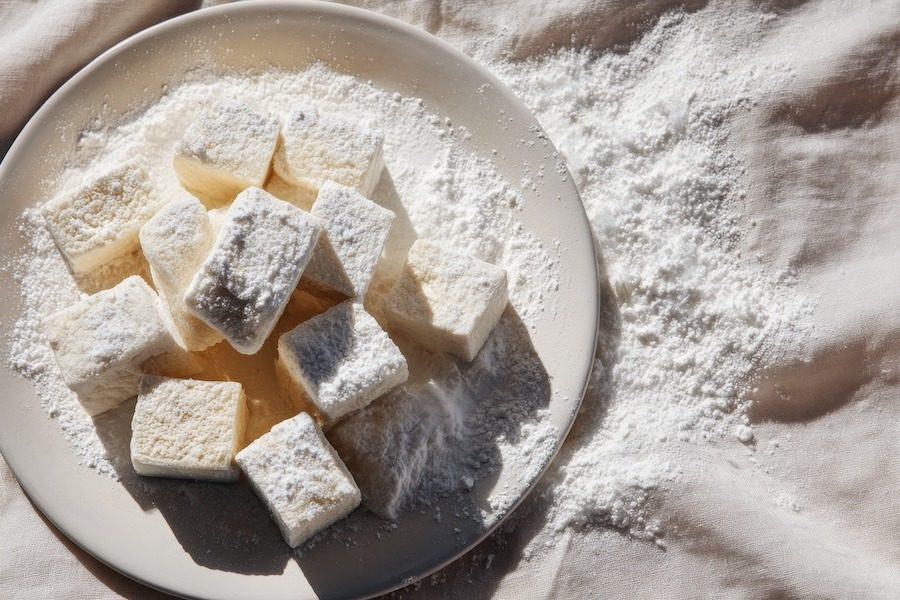
One rule that applies to both: coat the tofu as close to cooking time as possible. Starch sitting on wet tofu for more than a few minutes starts to absorb moisture and turn gummy. Coat it, cook it.

Pressed medium-firm tofu cubes being dusted in white potato starch

Why the Broth Goes Around the Tofu, Not Over It

Every agedashi tofu recipe tells you to pour the tentsuyu broth around the tofu, not directly on top. Most don’t explain why.

The crust on agedashi tofu is not meant to stay crisp through the entire eating experience. It’s meant to start crisp and slowly soften from the bottom as it sits in the broth — creating a gradient from the crunchy top to the yielding, broth-soaked base. That gradient is the point of the dish. Pouring the broth over the top collapses the crust immediately and you lose the contrast.

This also explains why agedashi tofu needs to be served and eaten immediately. The longer it sits in the broth, the softer the crust becomes — which is not necessarily a bad thing, but it is a different dish at the 2-minute mark versus the 10-minute mark. At a restaurant, it arrives at your table already in transition. At home, you control the timing.

The tentsuyu broth itself — dashi, soy sauce, and mirin — is deliberately understated. It’s not trying to be the star. It’s there to provide umami depth, a touch of sweetness from the mirin, and enough liquid to interact with the crust. Don’t over-season it. Taste it before serving — it should be savory, slightly sweet, and light enough that the tofu still does most of the work.

Start Here: What to Know Before You Cook

  • Choose your method first. See the comparison FSBox above. The method you choose affects which tofu texture works best and how much prep time you need.
  • Medium-firm tofu is the standard here. It holds together through coating and cooking while keeping a silky interior. Soft or silken tofu is more authentic to the traditional dish but breaks easily — use it only if you're comfortable handling delicate tofu. Firm tofu is the easiest to work with but the interior will be less creamy.
  • Potato starch is worth finding. Asian grocery stores carry it. The crust it produces is more authentic than cornstarch — thinner, more translucent, slightly chewy in the broth. Cornstarch works as a substitute but produces a different result.
  • Coat tofu right before cooking. Starch sitting on pressed tofu absorbs moisture and turns gummy within minutes. Press first, cut, then coat immediately before the oil or oven is ready.
  • Make the broth before you cook the tofu. It only takes 3 minutes and needs to be warm and ready when the tofu comes out. Cold broth on hot tofu collapses the crust faster.
  • Serve immediately. Agedashi tofu is a dish of minutes, not hours. The crust-to-broth transition is the experience — the longer it sits, the more it changes.

Why This Dish Works

  • The starch coating creates a living crust. Unlike a breadcrumb coating that stays static, potato starch absorbs the warm broth slowly and transforms — crisp at first, then yielding and slightly gelatinous as it soaks. That transformation is the design, not a flaw.
  • Dashi is the right broth base. Its flavor is clean, subtle, and purely umami — it amplifies the tofu without competing with it. A chicken or vegetable broth substitution changes the dish's character significantly.
  • Mirin adds sweetness without sugar. The natural sweetness of mirin rounds out the soy sauce's saltiness and keeps the broth balanced. Sugar is optional and should be used sparingly if at all.
  • The toppings are functional, not decorative. Grated daikon adds a mild, clean bitterness that cuts through the oil. Fresh ginger adds brightness. Scallions add a light allium note. Shichimi togarashi adds heat and complexity. Each one has a job.
  • Medium-firm tofu handles all three cooking methods. Silken would fall apart in an air fryer or steam oven. Firm would lose the silky interior that defines the dish. Medium-firm is the reliable middle ground across all three methods.

Traditional Agedashi Tofu Preparation

The air fryer version of agedashi tofu — smaller cubes, a preheated basket, and a thinner crust than deep-frying produces, but still pale gold and set, with the same silky interior.

Traditional Agedashi Tofu (Deep-Fried)

Deep-fried recipe summary: Agedashi tofu — pressed medium-firm tofu, dusted in potato starch, deep-fried until the crust turns pale gold, and served immediately in warm tentsuyu broth. The traditional method, is the one that gets closest to the restaurant version.
Prep Time20 minutes
Cook Time7 minutes
Assembly Time3 minutes
Total Time30 minutes
Course: Appetizer
Cuisine: Japanese
Keyword: Agedashi Tofu, tofu
Servings: 3 servings
Calories: 73kcal

Equipment

  • Deep Fryer

Ingredients

Tofu

  • 14 ounce block medium-firm tofu
  • 3 tablespoons potato starch (katakuriko)
  • neutral oil for deep frying
  • pinch of salt

Tentsuyu Broth

  • 1 cup dashi homemade or instant
  • 2 tablespoons soy sauce
  • 2 tablespoons mirin
  • 1 teaspoon sugar optional - taste first

Toppings

  • grated daikon
  • thinly sliced scallions
  • grated ginger
  • Shichimi togarashi optional

Instructions

Prepare the Tofu

  • Remove the tofu from its package and set it on a double layer of paper towels. Cover with more paper towels and place a light weight on top — a small plate or cutting board is enough.
    Press for 15 to 20 minutes.
    The tofu should feel noticeably firmer, and the paper towels should be visibly damp when done.

Make the Broth

  • While the tofu presses, combine dashi, soy sauce, and mirin in a small saucepan over low heat. Warm until just below a simmer.
  • Taste — it should be savory, slightly sweet, and clean. Add sugar only if needed to round. Keep warm on the lowest heat setting.

Cut & Coat the Tofu

  • Cut the pressed tofu into 6 even cubes.
    Season lightly with salt on all sides.
  • Working quickly, dust each cube in potato starch on all surfaces, shaking off any excess. The coating should be thin and even — not thick or clumped.
    Move directly to frying.

Heat the Oil & Fry

  • Pour neutral oil into a deep, heavy saucepan to a depth of 2 to 3 inches.
    Heat to 320–340°F — use a thermometer. This temperature range is deliberate: hot enough to set the crust quickly without overcooking the delicate interior.
  • Carefully lower the tofu cubes into the oil one at a time using a slotted spoon or spider.
    Fry for 2 to 4 minutes until the crust is lightly golden and set.
    The color will be pale gold, not deep brown — that's correct for this dish.
  • Remove and drain on a wire rack, not paper towels, to maintain airflow under the crust.

Assemble & Serve Immediately

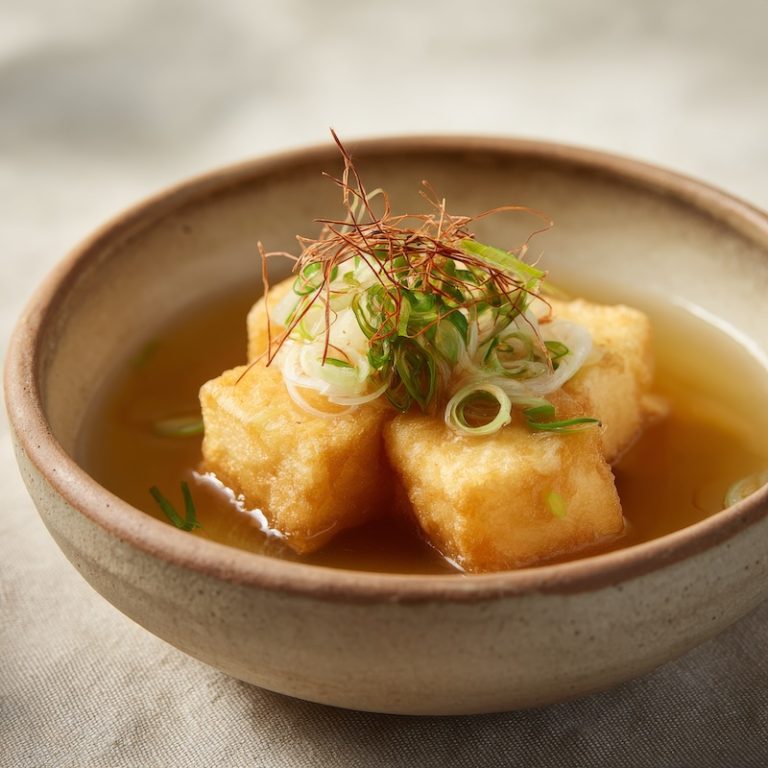
  • Place 2 tofu cubes in each shallow bowl. Ladle warm tentsuyu broth around the base of the tofu — pour alongside, not over the top.
  • Add a small mound of grated daikon, a few scallion slices, a pinch of grated ginger, and bonito flakes.
  • Add shichimi togarashi if you want heat.
  • Serve within 2 minutes.

Notes

Nutritional information is automatically calculated using the WP Recipe Maker nutrition database and should be considered only an estimate. Actual values may vary depending on ingredient brands, product variations, substitutions, and portion sizes.

Nutrition

Calories: 73kcal | Carbohydrates: 14g | Protein: 3g | Fat: 1g | Saturated Fat: 0.1g | Polyunsaturated Fat: 0.2g | Monounsaturated Fat: 0.1g | Sodium: 1035mg | Potassium: 178mg | Fiber: 1g | Sugar: 5g | Vitamin A: 3IU | Vitamin C: 0.3mg | Calcium: 32mg | Iron: 1mg
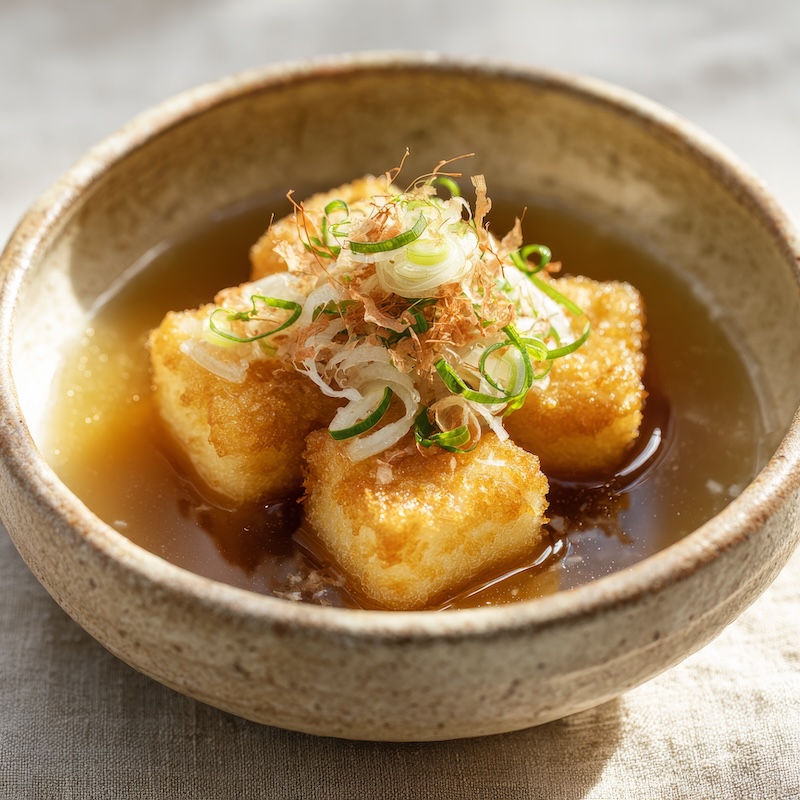
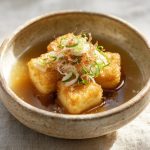
Agedashi Tofu in a bowl with toppings

Air Fryer Agedashi Tofu

Air Fryer Agedashi Tofu delivers crispy, golden tofu without deep-frying. The starch-coated cubes stay soft inside while the exterior turns perfectly crisp. Served in warm tentsuyu broth with classic toppings, this healthier version is quick, easy, and full of flavor.

Air Fryer Agedashi Tofu

Air fryer recipe summary: Agedashi tofu — pressed medium-firm tofu, dusted in potato starch, air-fried in smaller cubes until the crust sets, and served immediately in warm tentsuyu broth. Less oil, faster cleanup, a slightly thinner crust.
Prep Time20 minutes
Cook Time12 minutes
Total Time32 minutes
Course: Appetizer
Cuisine: Japanese
Keyword: Agedashi Tofu, air fryer, tofu
Servings: 3 servings
Calories: 73kcal

Equipment

  • Air Fryer

Ingredients

For the Tofu

  • 14 ounce block medium-firm tofu
  • 3 tablespoons potato starch or cornstarch
  • 2 teaspoons neutral oil optional for extra crispiness
  • pinch salt

For the Tentsuyu Broth

  • 1 cup dashi instant is fine
  • 2 tablespoons soy sauce
  • 2 tablespoons mirin
  • 1 teaspoon sugar optional

Toppings

  • grated daikon
  • thinly sliced scallions
  • grated ginger
  • bonito flakes
  • Shichimi togarashi optional

Instructions

Press the Tofu

  • Remove the tofu from its package and set it on a double layer of paper towels. Cover with more paper towels and place a light weight on top — a small plate or cutting board is enough.
  • Press for 15 to 20 minutes. The tofu should feel noticeably firmer and the paper towels visibly damp when done.

Make the Broth

  • While the tofu presses, combine dashi, soy sauce, and mirin in a small saucepan over low heat. Warm until just below a simmer.
    Taste — it should be savory, slightly sweet, and clean.
    Add sugar only if needed to round. Keep warm on the lowest heat setting.

Preheat & Prepare

  • Preheat the air fryer to 375°F for at least 5 minutes.
    A properly preheated air fryer produces a significantly better crust than one started cold.
  • Lightly mist the basket with neutral oil.

Cut Coat, & Arrange

  • Cut tofu into 8 to 10 smaller cubes than the deep-fry version — smaller pieces get more surface area exposed to the circulating heat, which compensates for the lower fat content.
  • Season with salt, dust evenly with starch, and shake off excess.
    Arrange in a single layer in the basket with space between each cube. Do not stack.

Air Fry

  • Lightly mist the top of the coated cubes with oil.
    Air fry for 10 to 12 minutes, flipping carefully at the halfway through.
  • After flipping, add a second light mist of oil.
    The finished cubes should be pale golden — not deep brown. The crust will be thinner than that of deep-fried, but should feel set and dry to the touch.

Assemble & Serve

  • Same assembly as the deep-fry version. The air-fried crust is slightly more delicate — serve within 2 minutes of plating.

Notes

Nutritional information is automatically calculated using the WP Recipe Maker nutrition database and should be considered only an estimate. Actual values may vary depending on ingredient brands, product variations, substitutions, and portion sizes.

Nutrition

Calories: 73kcal | Carbohydrates: 14g | Protein: 3g | Fat: 1g | Saturated Fat: 0.1g | Polyunsaturated Fat: 0.2g | Monounsaturated Fat: 0.1g | Sodium: 1035mg | Potassium: 178mg | Fiber: 1g | Sugar: 5g | Vitamin A: 3IU | Vitamin C: 0.3mg | Calcium: 32mg | Iron: 1mg

Convection Steam Oven Agedashi Tofu

Convection steam recipe summary: Agedashi tofu — pressed medium-firm tofu, dusted in potato starch, steamed then dry-roasted in a convection oven for an even, all-over crust, and served immediately in warm tentsuyu broth. The most consistent of the three methods, and the best for batch cooking.
Prep Time20 minutes
Cook Time17 minutes
Total Time37 minutes
Course: Appetizer
Cuisine: Japanese
Keyword: Agedashi Tofu
Servings: 3

Equipment

  • convection steam oven

Ingredients

Tofu

  • 14 ounces block of medium-firm tofu
  • 3 tablespoons potato starch
  • 1 tablespoon neutral oil
  • pinch of salt

Tentsuyu Broth

  • 1 cup dashi homemade or instant
  • 2 tablespoons soy sauce
  • 2 tablespoons mirin
  • 1 teaspoon sugar optional - taste first

Toppings

  • grated daikon
  • thinly sliced scallions
  • freshly grated ginger
  • bonito flakes
  • Shichimi togarashi optional

Instructions

Press the Tofu

  • Remove the tofu from its package and set it on a double layer of paper towels.
    Cover with more paper towels and place a light weight on top — a small plate or cutting board is enough.
  • Press for 15 to 20 minutes. The tofu should feel noticeably firmer, and the paper towels should be visibly damp when done.

Make the Broth

  • While the tofu presses, combine dashi, soy sauce, and mirin in a small saucepan over low heat. Warm until just below a simmer.
    Taste — it should be savory, slightly sweet, and clean. Add sugar only if needed to round. Keep warm on the lowest heat setting.

Preheat Oven & Prepare Tofu

  • Preheat convection steam oven to 400°F. Set to combination mode: steam + convection if your oven has it, or plan to manually introduce steam in the first phase (see Step 4).
    Line a rimmed baking sheet with a wire rack and brush or spray lightly with neutral oil.
  • Cut tofu into 6 to 8 cubes per block.
    Season with salt.
  • Coat evenly in potato starch, shake off excess.
    Arrange on the wire rack with space between each piece — the rack allows air circulation underneath, which is critical for an even crust.

Steam Phase (5 minutes)

  • Place the baking sheet in the oven. If your oven has a steam injection function, activate it for the first 5 minutes. The steam sets the starch coating without drying it out, keeping the interior silky.
    If your oven doesn't have steam injection, place a small oven-safe pan of boiling water on the rack below the tofu for the first 5 minutes, then remove it.

Dry Convection Phase (12 minutes)

  • Switch to dry convection heat at 400°F.
    Cook for 10 to 12 minutes until the crust is set, dry to the touch, and very lightly golden.
    The crust will be paler than deep-fried but more even — no hot spots, consistent color across all surfaces. No flipping required.

Hold If Needed

  • For serving guests, finished pieces can be held on the wire rack in the oven at 200°F for up to 10 minutes without significant loss of quality — an advantage this method has over deep- or air-frying.

Assemble & Serve

  • Same assembly as the other methods. The convection steam crust is the most even of the three but slightly less golden.
    Serve within 2 to 3 minutes of plating.
What Most Cooks Get Wrong with Agedashi Tofu

  • Not pressing the tofu enough. Even medium-firm tofu has more surface moisture than it needs. A minimum 15-minute press with paper towels and a light weight removes enough moisture for the starch to adhere cleanly and the crust to form properly.
  • Coating the tofu too early. Starch on moist tofu that sits for more than a few minutes becomes a gummy paste rather than a light dusting. Coat immediately before cooking.
  • Oil temperature too high or too low. Too high — the crust browns before the tofu has a chance to heat through. Too low — the tofu absorbs oil before the crust sets, producing a greasy result. 320–340°F is the window. Use a thermometer.
  • Pouring broth over the top of the tofu. The broth goes around the tofu, not over it. Pouring directly over the crust collapses it immediately — you lose the texture contrast that defines the dish.
  • Letting it sit too long before eating. Agedashi tofu is a dish of minutes. Ten minutes in the broth produces a very different result than two minutes. Serve it fast and eat it faster.
  • Using instant dashi without tasting it first. Instant dashi varies enormously in quality and saltiness. Always taste the broth before serving and adjust soy sauce accordingly — the balance of the dish depends on it.

Quick Fixes & Pro Tips

  • Crust not sticking? The tofu surface is still too wet. Pat it dry again with fresh paper towels and let it sit uncovered for 5 minutes before coating. Surface moisture is the enemy of adhesion.
  • Tofu falling apart during handling? You're either using too soft a tofu or handling it before it's properly pressed. Use medium-firm and give the press a full 20 minutes. Use a wide spatula for transfers.
  • Crust going soggy too fast? Either the broth was too hot when poured, or too much was added. Pour warm — not boiling — broth and use just enough to surround the base of the tofu, not submerge it.
  • Broth too salty? Dilute with a splash of plain dashi or water. Add mirin a half teaspoon at a time to rebalance the sweetness. Taste again before serving.
  • Want a vegan version? Use kombu-only dashi — steep a 4-inch piece of dried kombu in cold water for 30 minutes, then remove. The flavor is cleaner and lighter than bonito-based dashi but works well in this broth. Skip the bonito flake garnish.
  • Batch cooking for guests? The convection steam method is your best option — it handles more pieces at once with more consistent results than frying in batches. Keep finished pieces on a wire rack in a low oven (200°F) for up to 10 minutes while you finish the batch.
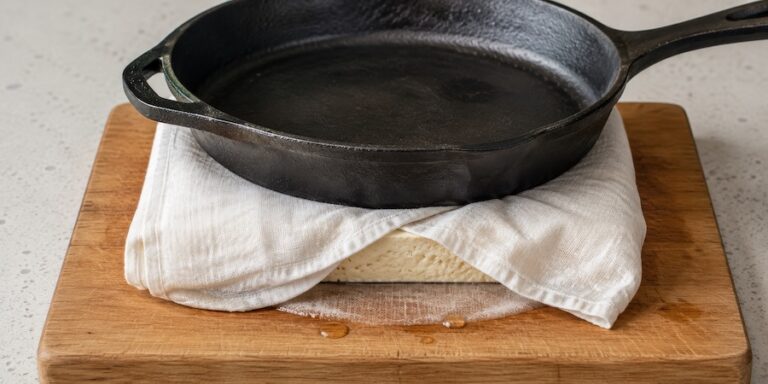
A cloth covered block of tofu being pressed with a cast iron pan

What to Serve With Agedashi Tofu

  • As an appetizer. This is its natural role — served before miso soup, grilled fish, or a donburi rice bowl. Keep portions to 2–3 pieces per person so it functions as a starter, not a main.
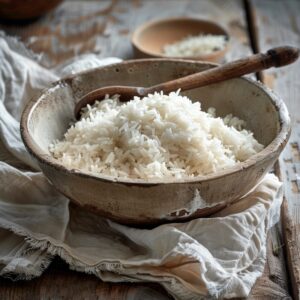
  • Alongside steamed rice. Plain steamed jasmine or Japanese short-grain rice absorbs the extra broth well and turns the dish into a light meal.
  • With miso soup. The classic pairing — the miso's depth complements the delicate tentsuyu broth without competing with it.
  • Wine — dry junmai sake. Served warm or at room temperature. The clean, slightly savory profile of junmai sake is the natural match for dashi-based dishes.
  • Wine — unoaked white. A dry Pinot Gris or Albariño if sake isn't available. Both have enough acidity to cut through the oil and enough restraint to let the broth lead.

Storage & Make-Ahead

  • This dish is best made and eaten immediately. The crust-to-broth dynamic is time-sensitive — there's no version of agedashi tofu that stores well fully assembled.
  • Prep ahead instead. Press and cut the tofu up to 24 hours ahead and refrigerate uncovered on paper towels. The extended air-drying actually improves the surface for coating. Coat and cook just before serving.
  • Make the broth ahead. Tentsuyu keeps in the fridge for up to 5 days. Reheat gently before serving — do not boil.
  • Leftover cooked tofu. Store separately from the broth for up to 2 days. Reheat in a 375°F air fryer or oven for 5 minutes to restore some crispness. It won't be the same as fresh but it's still worth eating.
  • Freeze uncooked tofu only. After pressing and cutting, tofu can be frozen before coating and cooking. Thaw completely and pat dry before the starch coating step.
Made this? I'd like to know which method you used and how the crust held up — especially if you're working with potato starch for the first time, or if the broth went in a little too hot. Happy to help troubleshoot.

Frequently Asked Questions about Agedashi Tofu

Q: What does agedashi mean? Agedashi (揚げ出し) translates roughly as “deep-fried and dashi-dipped.” Age means to deep fry; dashi refers to the broth base. The name describes the technique and the sauce in two words, which is more than most dish names accomplish.

Q: What type of tofu should I use? Medium-firm is the standard here — silky enough to give you the creamy interior the dish is known for, firm enough to survive pressing, coating, and cooking without falling apart. Silken tofu is the traditional Japanese choice and produces a more delicate result, but it requires careful handling and is more likely to break. Firm tofu is the most forgiving but the least creamy. Start with medium-firm.

Q: What is potato starch, and where do I find it? Potato starch (katakuriko) is a fine white starch made from potatoes. In agedashi tofu it produces a thinner, more translucent crust with a slightly chewy texture when it contacts warm broth — more delicate than cornstarch. Find it at any Asian grocery store, online, or at well-stocked supermarkets near the Asian cooking ingredients. Bob’s Red Mill also makes it if you need a mainstream option.

Q: Can I use cornstarch instead of potato starch? Yes, but the result is different. Cornstarch produces a thicker, more opaque crust that stays crisper longer in the broth and has a slightly heavier texture. For a first attempt, it’s a perfectly reasonable substitute. For the most authentic result, find potato starch.

Q: What is tentsuyu broth? Tentsuyu is a dipping sauce and broth used across several Japanese dishes. It’s built on dashi — the foundational Japanese stock made from kombu and bonito flakes — seasoned with soy sauce and mirin. In agedashi tofu, it’s served warm around the tofu rather than as a dipping sauce on the side. It’s deliberately light — umami-rich but not heavy.

Q: What is dashi, and can I use instant? Dashi is a Japanese stock made by steeping kombu (dried kelp) and katsuobushi (bonito flakes) in water. It has a clean, subtle umami flavor unlike any Western stock. Instant dashi (dashi powder or dashi packets) works fine for this dish — but quality varies significantly by brand. Taste it before using and adjust the soy sauce in the broth accordingly. For a vegan version, use kombu-only dashi.

Q: Which cooking method is best? Deep frying for the most authentic texture and the richest crust. Air frying for speed, less oil, and easy cleanup. Convection steam for even, consistent results and batch cooking. All three produce a good dish — the differences are in crust depth, color, and texture rather than overall flavor. See the method comparison FSBox for a side-by-side.

Q: Why is my crust soggy? Three likely causes: the tofu wasn’t pressed and dried enough before coating; the broth was poured directly over the top rather than around the sides; or the tofu sat in the broth for too long before eating. Address all three, and the dish works.

Q: Is this dish vegan? Not as traditionally made — both dashi and bonito flake garnish come from fish. To make it vegan, use kombu-only dashi for the broth and skip the bonito flakes. Everything else in the recipe is plant-based.

Explore More on This Topic

  • How pressing works in a stir fry context: The same moisture-removal technique that makes agedashi tofu work applies directly here — this is what pressing looks like when the goal is a sear rather than a fry.
  • Choosing the right soy sauce for the broth: Tentsuyu is a simple broth and every ingredient shows — here's what to know about soy sauce quality and saltiness before it goes into your dashi.
  • The same dry-heat crust principle: The reason the air fryer works on starch-coated tofu is the same reason it works on chicken wings — here's how circulating dry heat builds a crust without oil.
  • Seasoning a delicate broth: Tentsuyu is light by design — here's how to think about salt and seasoning balance when the goal is amplifying rather than overpowering.
  • What fresh ginger is doing as a garnish: It's not decoration — fresh ginger adds a sharp aromatic brightness that cuts through the richness of the fried crust in a way that ground ginger can't replicate.
  • The right rice alongside agedashi tofu: Plain steamed short-grain rice is the natural companion — here are 18 tips for cooking rice that actually comes out right every time.
  • The wok technique that applies to both dishes: High heat, dry protein, and not crowding the pan — the same principles that make agedashi tofu work in a wok context, applied to Korean beef and kimchi.

Leave a Reply

Your email address will not be published. Required fields are marked *

Recipe Rating


This site uses Akismet to reduce spam. Learn how your comment data is processed.