What Is the Cure for a Crispy Top Layer of Lasagna?

A reader wrote in about her lasagna top turning hard and crunchy. I called Chef Ricco — a guy who's probably made more lasagnas than anyone I know — and between the two of us, we figured out exactly where it goes wrong.

Fast Answer

Already crispy? Cover it loosely with foil, add a little extra sauce or milk over the top, and reheat gently at 325–350°F until it softens back to creamy.

The Question That Sent Me to Chef Ricco (Who's Made More Lasagnas Than Anyone I Know)

A reader wrote in describing exactly this — a lasagna that looked perfect out of the oven, then hardened into something closer to a cracker by dinner. I ran it by Chef Ricco, who’s talked me through more lasagna trouble than anyone I know.

Between his answer and years of reader comments here, a clear picture emerged of what causes it, and how to fix it whether you catch it before or after baking.

Chef Ricco’s Tip

A layer of parchment paper works perfectly as a non-stick barrier and moisture trap. When you place it under foil over your lasagna, it creates a tiny steam chamber: the parchment won’t stick to the cheese, and it helps retain moisture, keeping the top layer soft and golden rather than overly crisp.

Just make sure your parchment is rated for high heat (around 450°F is safe for most brands) and that it doesn’t touch the oven’s heating element.

Start Here

  • This is for you if: your lasagna came out with a top that's gone hard, crackly, or borderline burnt — or you're trying to stop it from happening on the next bake.
  • Also for you if you're the opposite: some people love a crispy top and want more of it. See the note in "When to Use This" below before following the rest of this page.
  • Success looks like: a top layer that's golden and holds its shape, not one that shatters like a cracker when you cut into it.

Why This Technique Works

  • The top of the lasagna sits closest to the oven's heat with nothing above it to buffer the temperature, so it dries out and browns faster than every layer underneath.
  • Once the moisture at the surface evaporates, there's nothing left to keep the cheese and noodle edges soft — they harden the way any food does once the moisture cooks out of it.
  • Foil, extra sauce, and a slightly lower oven temperature all do the same job: keeping enough moisture at the surface, for long enough, that the top finishes cooking without drying out first.

Think Like a Cook

  • A crispy top isn't really a lasagna problem — it's a moisture-and-time problem that shows up on anything baked uncovered with something exposed on top: mac and cheese, baked ziti, a gratin.
  • Once you see it that way, the fix stops being "a lasagna trick" and becomes a rule: whatever's most exposed to the heat needs either a barrier or less time in direct contact with it.
  • I called Chef Ricco for this one because he's talked me through more lasagna trouble than anyone I know, and his answer wasn't really about lasagna at all — it was about protecting whatever's on top of anything you bake.
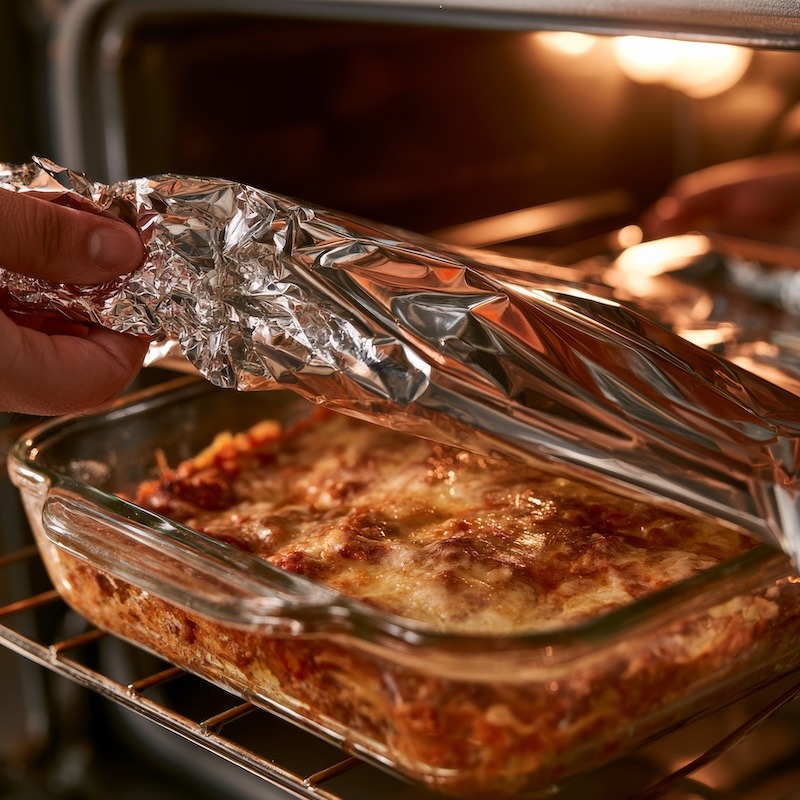
aluminum foil being tented loosely over a baking dish of lasagna

Step-by-Step: Rescuing a Crispy Top

  • Check how far gone it is. If it's golden and firm but still gives slightly when pressed, it's borderline. If it cracks like a cracker, it's fully hardened.
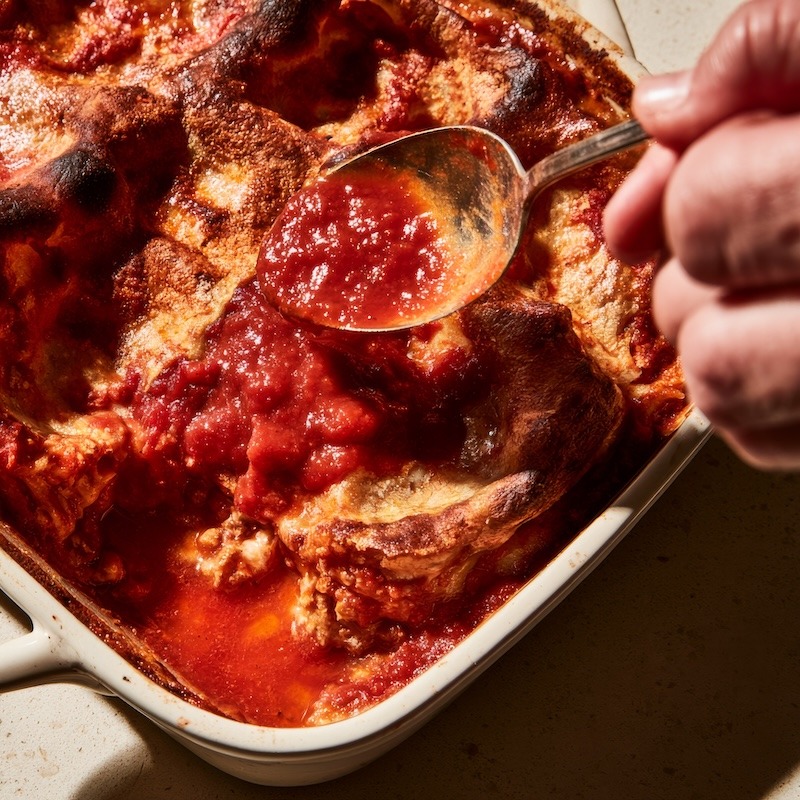
  • Spoon a little extra sauce or a splash of milk over the driest spots. The liquid should pool slightly rather than run straight off — that means the top can still absorb it.
  • Cover the pan loosely with foil, tenting it so it doesn't touch the cheese.
  • Return it to a 325–350°F oven for 10–15 minutes. Watch for steam building under the foil — that's what's softening the top back down.
  • Uncover and check. The top should give slightly under a fork again instead of cracking. If it's still hard, repeat with a little more moisture and a few more minutes covered.
  • Let it rest 5–10 minutes before serving. This is where the extra moisture finishes settling into the top layer instead of just sitting on the surface.

What Most Cooks Get Wrong

  • They leave the lasagna uncovered for the entire bake because they want it to brown, not realizing the top is browning long before the center is fully cooked.
  • They try to fix a crispy top by cutting straight into it, discovering only then that it comes away hard and separate — instead of testing it gently with a fork first.
  • They cover the whole dish in plastic wrap and foil to store it, not realizing plastic wrap melts under oven heat — a reader here found this out the hard way and lost a pan of lasagna to it.
  • They add so much extra sauce trying to fix a dry top that they turn the whole dish soupy instead of just addressing the surface.

What Went Wrong (And Why)

  • Top layer cracked like a cracker when cut → baked uncovered the whole time with too little moisture up top → next time, cover for at least half the bake and add a thin layer of sauce under the final cheese.
  • Reheated lasagna came out hard even though it was fine the night before → reheated uncovered and dry → cover loosely with foil and add a spoonful of sauce or milk before reheating.
  • Plastic wrap melted onto the lasagna in the oven → a recipe called for wrapping in plastic and foil before refrigerating, and it went straight from fridge to oven still wrapped → remove all plastic wrap before anything goes in the oven, foil only.
  • Top layer stayed pale and never browned → covered the entire bake time with no uncovered finish → uncover for the last 10–15 minutes to let it color.
  • Reheated in the microwave and the top went rubbery instead of hard → moisture trapped with no way to escape → cover loosely rather than tightly, or reheat in short intervals rather than one long one.

Control the Variables

  • Foil timing: controls how much of the bake happens under cover versus exposed. Cover roughly the first half to two-thirds, then uncover to brown.
  • Sauce under the top cheese layer: controls how much moisture the surface has to lose before it dries out. A thin layer here buys real time.
  • Oven temperature: controls how fast the surface reaches a hard, dry state relative to the center finishing. 350°F is a reasonable middle ground for most lasagna.
  • Cheese type and amount: controls how much insulation sits on top. A generous layer of a higher-moisture cheese like mozzarella holds up better than a thin, low-fat topping.
  • Total bake time: controls how long the top sits exposed to heat, whether covered or not. Longer isn't better once the center's done — it's just more time for the top to dry out.

When to Use This Technique

  • Use it any time you don't want the top layer to harden — most standard bakes, reheating leftovers, or anything you're bringing somewhere and want to stay soft until served.
  • Skip all of it if you're actually after a crispy top: bake uncovered the whole time, use a thinner cheese layer, and don't add extra sauce on top. Several readers here have said outright that the crispy top is their favorite part — there's no wrong answer, just different goals.
  • Also skip the moisture-heavy fixes if the real problem is undercooked noodles rather than a hard top. That's a different issue with a different fix — more sauce and liquid throughout, not just on the surface.
A spoon drizzling extra tomato sauce over the dry, hardened top layer of a baked lasagna

Apply It to Real Food

  • Baked ziti: same exposed-top problem as lasagna — cover for part of the bake and keep a layer of sauce under the final cheese.
  • Mac and cheese: the crust on top dries out the same way; a foil tent partway through keeps it from hardening before the sauce underneath is fully heated.
  • Shepherd's pie: the mashed potato top can crack and dry the same way a lasagna top does — brushing it with butter or milk before baking does the same job as sauce does here.
  • Vegetable gratins: thinner and more exposed than lasagna, so they dry out even faster — cover for most of the bake and only uncover right at the end.
  • Any casserole reheated from the fridge: whatever's on top dries out fastest on the second pass through the oven — exactly the reheating problem this page opened with.

Frequently Asked Questions

How do you get a crispy top on lasagna, if that’s what you want? Bake uncovered the whole time, use a thin layer of cheese rather than a thick one, and skip any extra sauce on top — the opposite of everything else on this page.

How do you fix a lasagna top that’s already crispy? Spoon a little extra sauce or milk over it, cover loosely with foil, and reheat at 325–350°F until it softens back to creamy.

Why is my lasagna crispy on top? Usually a combination of baking uncovered too long, too little sauce under the top cheese layer, or an oven running a bit hot — all three dry out the surface faster than the rest of the dish cooks.

How do you make lasagna noodles not crunchy? That’s a different problem from a crispy top. Undercooked noodles need more sauce and liquid throughout the layers, or a few extra minutes covered, not a fix aimed at the surface.

Can I reheat lasagna in the microwave without it getting hard? Yes — cover loosely rather than tightly, add a small spoonful of sauce, and reheat in short intervals rather than one long stretch.

Is it safe to cover lasagna with plastic wrap before baking? No. Plastic wrap melts under oven heat. A reader here learned this firsthand after a recipe told her to wrap it in plastic and foil, then it went straight into the oven still wrapped. Foil only, once it’s actually baking.

Should I use foil the whole time I bake lasagna? No — cover for roughly the first half to two-thirds of the bake, then uncover so the top can actually brown.

Does the type of cheese affect whether the top gets crispy? Yes. Higher-moisture cheeses like mozzarella hold up better than a thin layer of a low-fat or aggressively aged cheese, which browns and hardens faster.
More On This Topic

This page has readers on both sides — some of you want the crispy top gone, some of you (looking at you, Vicki and Terry) said it's your favorite part. Which camp are you in, and if you're Team Crispy, what do you do differently to get more of it?

Two of My Lasagna Recipe

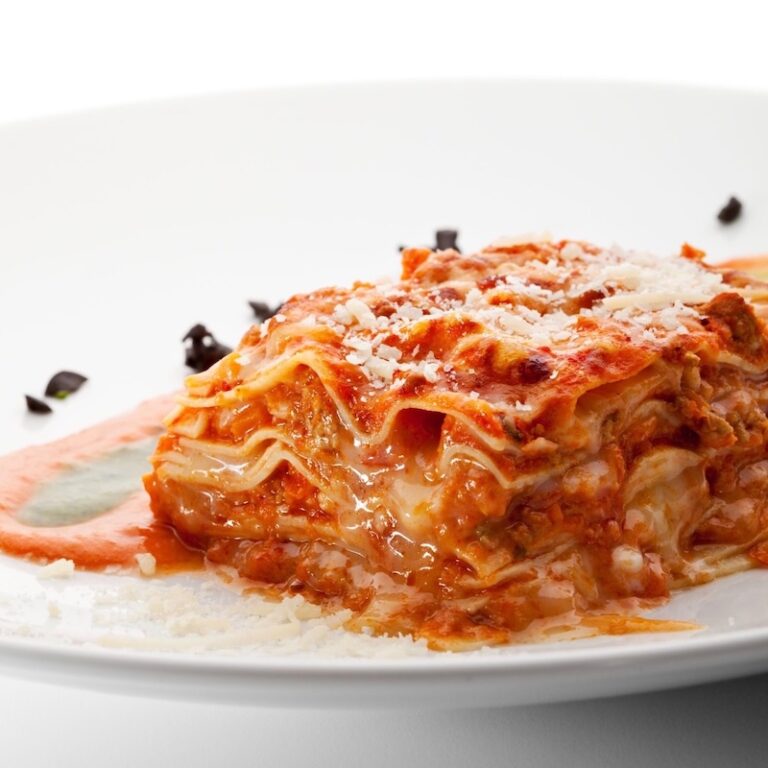
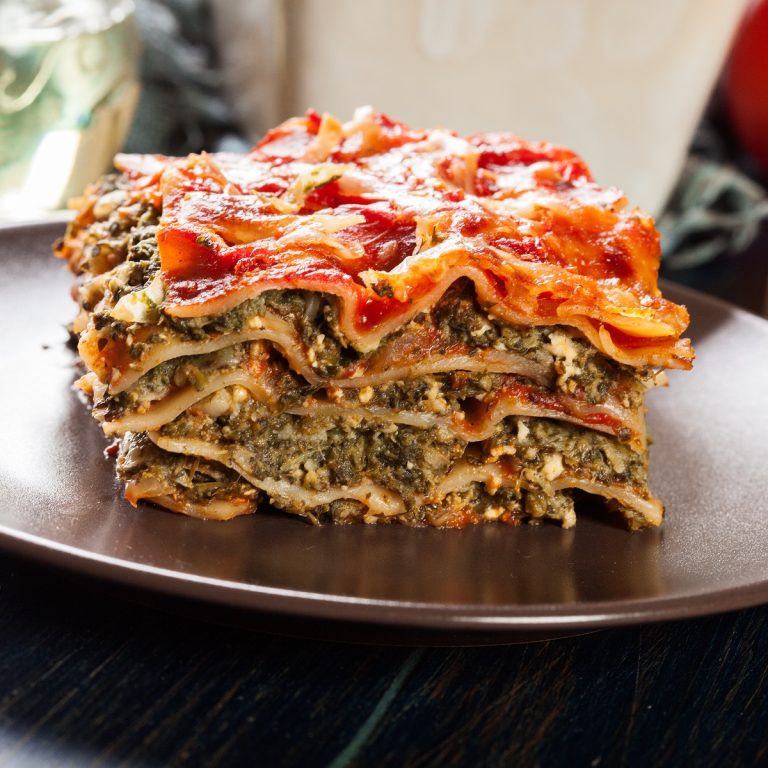
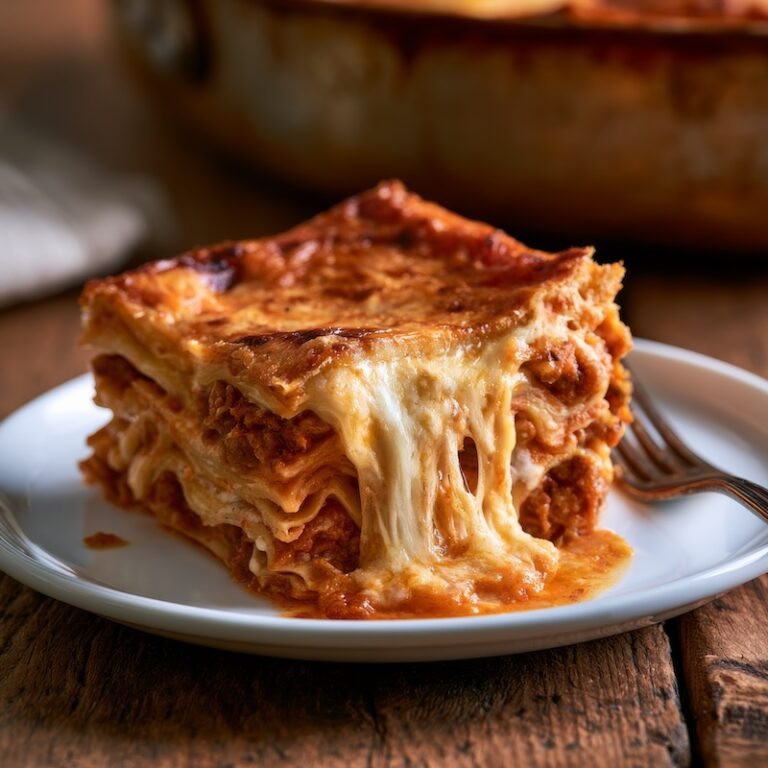
A cut of lasagna sitting on white plate
My Basic Lasagna Recipe
Spinach Lasagna Recipe
Spinach & Roasted Peppers Lasagna

17 Responses

  1. I thought aluminiun foils were not allowed in microwave,, Can we really use aluminiun foils in microwaves.pls reply…. my top layer got hard

  2. Do you think cooked or non cook lasagna noodles make for a better over all lasagna. And which would be better for a not hard top layer.

  3. Hi Reluctant Gourmet (is this the correct way to address you)?

    I too am having problems with crunchy brown lasagne top layer and macaroni cheese top layer. The meal looks ok when removed from the oven. I remove a portion for my husband to take to work. By the time he gets it there the top is crunchy and brown and totally inedible. He only has a microwave at work. How can I re-heat the pasta dish in the conventional oven and the microwave its is crusty already??? In otherwords how do I kill the crusty so it stays dead and remaians nice and en dente??? Your response would be so much appreciated. Marion

    1. Marion, the key is to reintroduce moisture and protect the top layer from direct heat. For the conventional oven, cover the pasta loosely with foil (you can also place a layer of parchment between the foil and cheese to prevent sticking) and bake at a moderate temperature, around 325–350°F, until heated through—this traps steam and softens the crust while keeping the pasta tender. For the microwave, place the portion in a microwave-safe dish, cover it with a microwave-safe lid or damp paper towel, and heat in short intervals, stirring or rotating if possible, so the steam softens the top without drying it further. Adding a small spoonful of extra sauce or a drizzle of milk over the top before reheating also helps “kill” the crispiness and restore a creamy texture.

      1. I honestly signed up for this because I couldn’t not say something. If a “Chef” is telling you to microwave anything, you should be questioning the validity of their expertise.

        Also, tinfoil over your pan and back into the oven for a bit will work. If its dry add a tiny ( very tiny) bit of water to the pan and then cover, etc. Adding extra tomato sauce to it will destroy the flavor combinations you’ve already tediously baked together.

        1. Hi Kevin, I’m not sure why you think anyone is suggesting cooking this in a microwave. Now, on that note, it’s true that many professional chefs rarely use microwaves in their kitchens, but that doesn’t mean microwaves are inherently bad—especially at home. Chefs often prioritize texture, browning, and precision, which microwaves can’t always deliver, but for reheating leftovers or quick prep, a microwave is incredibly practical. The key is understanding its limitations: it won’t crisp a crust or caramelize flavors, but it can gently reheat foods if you add a little moisture and cover the dish to prevent drying. In home cooking, it’s about balance—using the microwave strategically to save time while still maintaining flavor and texture, rather than trying to replicate professional plating standards.

  4. 5 stars
    Oh my gosh. It is all so clear now. The recipe I followed said to cover with shrink wrap, then foil, and store in the refrigerator overnight. I only kept mine in the refrigerator for an hour or so, but I took everything off to bake it. The top layer of noodles with sauce and cheese on top totally curled up and stayed hard (like eating raw noodles right out of the box). Yuck. I just pulled off the top layer and put on a new layer of cheese, but I will heat it up with the shrink wrap and the foil (although it scares me and stresses me out). I also used the oven-ready noodles (no boil), and with mine, the recipe says to use more water or milk with them and to cook them covered with foil. I didn’t do either of those things because I wasn’t following their recipe. It also cooked in half the time. Thanks for the advice. Live and learn.

  5. Well….I should have followed my instincts…..guess what…the plastic wrap melted 🙁 Please do not do this at home you will ruin all your hard work.

Leave a Reply

Your email address will not be published. Required fields are marked *

This site uses Akismet to reduce spam. Learn how your comment data is processed.