Fast Answer
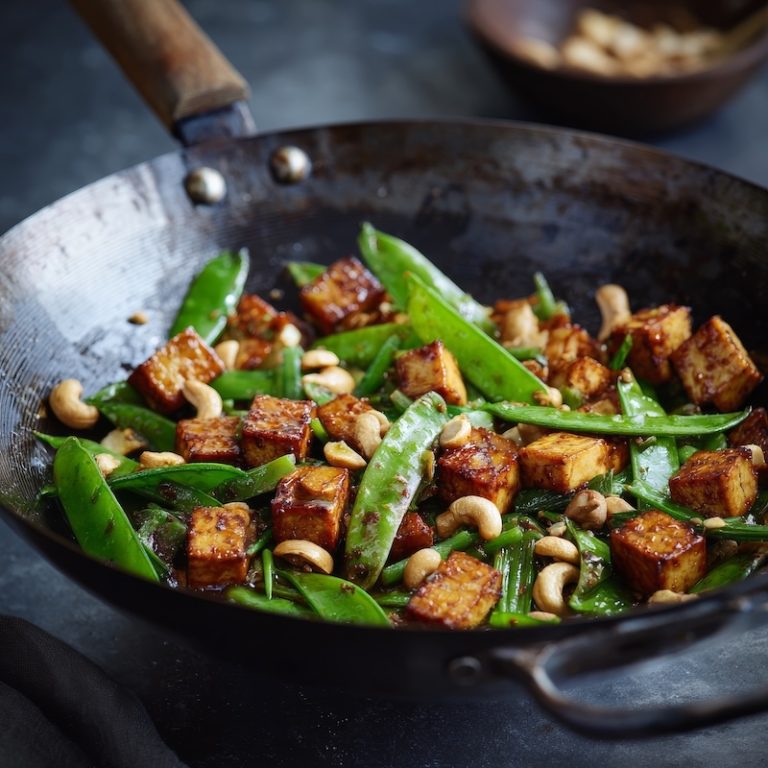
Tofu stir fry works when you remove enough moisture before the tofu hits the pan. Press firm or extra-firm tofu for at least 15 minutes, pat it dry, coat lightly in cornstarch, and sear in a hot wok with high smoke point oil without crowding the pan. The result is golden, crisp-edged cubes that hold their shape, absorb the sauce, and taste like something — not like nothing.
Tofu Stir Fry — The Technique Most Cooks Skip
Tofu has a reputation problem, and it’s mostly undeserved. The issue isn’t the ingredient — it’s that most home cooks skip the one step that makes tofu worth eating: getting the water out before it hits the pan.
This post covers the pressing technique, why it matters, how to build a stir fry around it, and how to customize the dish without losing the thread of what makes it work.
Why Pressing Tofu Isn’t Optional
A block of firm tofu straight from the package contains more water than most cooks realize — somewhere between 85 and 90 percent by weight. That water needs somewhere to go. In a hot pan, it goes everywhere: it steams the tofu from the inside, drops the pan temperature, and prevents any kind of crust from forming on the exterior. The result is the soft, gray, flavorless tofu that gives the ingredient its bad reputation.
Pressing is the fix. It’s not a suggestion buried in the prep notes — it’s the technique the entire dish depends on.
How to press tofu properly:
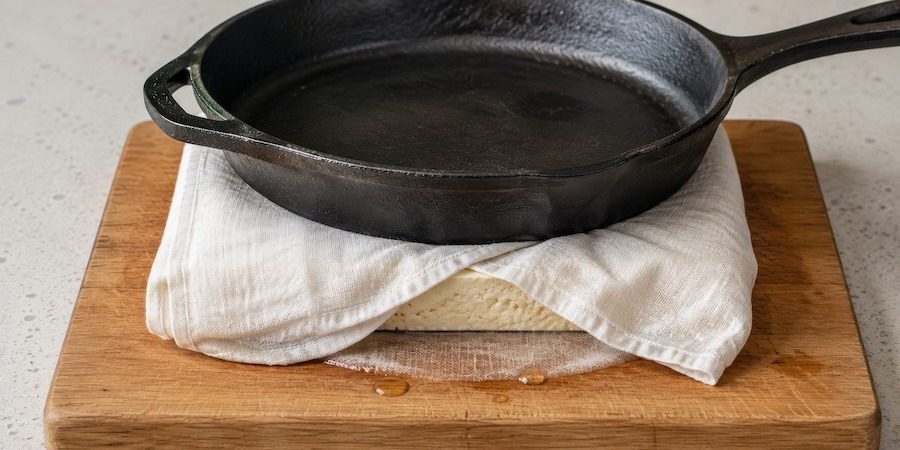
Wrap the block in a clean kitchen towel or several layers of paper towels. Set it on a flat surface and place something heavy and flat on top — a cast iron skillet, a heavy pot, or a cutting board weighted with canned goods. Leave it for at least 15 minutes. Thirty is better. The towel will absorb a surprising amount of liquid.
If you cook tofu regularly, a dedicated tofu press is worth the $15–20. It applies even pressure across the whole block and produces more consistently dry tofu than the improvised method. But the towel-and-weight method works fine.
What you’re looking for:
After pressing, the tofu should feel noticeably firmer and drier to the touch. When you cut it into cubes, the cut faces should look matte and slightly dense — not wet or glistening. If they’re still wet, press longer.
The cornstarch step:
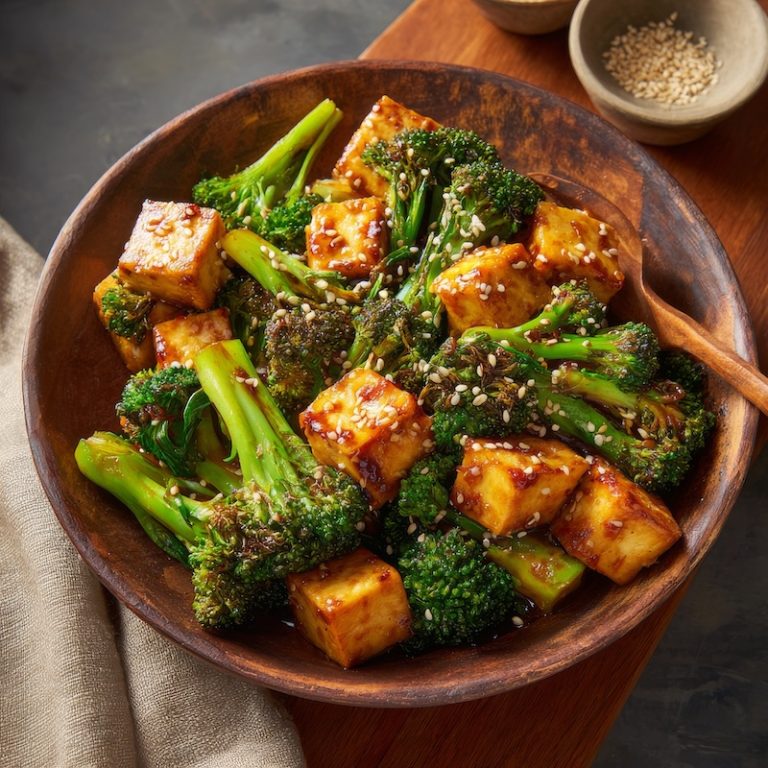
Once pressed and cut, toss the cubes lightly in cornstarch before they go into the pan. The cornstarch does two things: it absorbs any remaining surface moisture, and it creates a thin coating that crisps up on contact with hot oil. This is what gives you the golden, slightly crunchy exterior that makes tofu worth eating.
One more thing: pat the cubes dry with a paper towel right before they go into the pan, even after pressing. Any residual surface moisture causes splattering and steam. Dry tofu into hot oil is the move.
Tofu Stir Fry
Equipment
- 1 large wok or large skillet
Ingredients
Instructions
Press the Tofu First
- The moment you decide you're making this dish, start pressing. Unwrap the tofu block and set it on a clean kitchen towel or several layers of paper towels on a flat surface. Fold the towel over the top and place something heavy and flat on it — a cast iron skillet, a cutting board weighted with canned goods, or a heavy pot. Set a timer for 30 minutes.
- While the tofu presses, prep everything else: mince the garlic and grate the ginger, cut your vegetables, measure the soy sauce and sesame oil, and mix the sauce if you're making one. By the time the tofu is ready, you should have nothing left to do except cook.
Cut & Coat the Tofu
- Unwrap the pressed tofu. It should feel noticeably firmer and drier than it did out of the package — the cut faces should look matte, not wet or glistening.
- Cut into even cubes, about ¾ to 1 inch. Even sizing means even cooking.
- Spread the cornstarch on a plate and toss the cubes lightly to coat on all sides. You want a thin, even dusting — not a thick crust.
- Shake off any excess. Pat the coated cubes once more with a dry paper towel to remove any surface moisture before they go in the pan.
Heat the Pan Properly
- Set your wok or large heavy skillet over high heat and let it heat for 2 full minutes before anything goes in.
- Add 1 tablespoon of peanut, grapeseed, or avocado oil and swirl to coat. The oil should shimmer immediately — if it doesn't, the pan isn't hot enough yet.
Sear the Tofu in Batches
- Add the tofu cubes in a single layer — do not crowd the pan. If your pan isn't large enough for all the cubes with space between them, cook in two batches.
- Leave the tofu completely undisturbed for 3 to 4 minutes. Do not move it. It will initially stick and release cleanly once the crust has formed. Turn each cube and sear the remaining sides, 2 to 3 minutes per side. You're looking for deep golden-brown on at least two sides — not pale yellow.
- Transfer the seared tofu to a plate and set aside. It goes back in at the very end.
Cook the Aromatics
- Add a small splash of oil to the hot wok if needed. Add the minced garlic and grated ginger, then stir constantly for 30 seconds.
Cook the Vegetables in Order
- Add your dense vegetables first — broccoli, carrots, green beans. Stir fry over high heat for 3 to 4 minutes.
- Add medium vegetables next — bell peppers, mushrooms, snap peas, bok choy. Cook for 2 to 3 minutes more.
- Add any quick-wilting vegetables last — spinach, bean sprouts, scallions — and toss for 60 seconds. Everything should finish tender but with texture. Limp vegetables mean the heat was too low, or the pan was overcrowded.
Add the Sauce
- Pour the soy sauce and sesame oil over the vegetables and toss quickly to coat. If you're using a thickened sauce, add it now and stir over medium-high heat for 60 to 90 seconds until it coats everything and loses its raw soy smell.
Return the Tofu
- Add the seared tofu back to the wok and toss gently to combine — you want everything coated in sauce without breaking the tofu cubes. Cook together for 60 seconds just to heat the tofu through. Don't overwork it.
Plate Immediately
- Serve over rice or noodles. Finish with toasted sesame seeds, sliced scallions, and a pinch of chili flakes for heat, or a squeeze of lime, to brighten the sauce, if it needs brightening.
- This dish doesn't hold — serve it as soon as it's done.
Notes
Nutrition
Start Here: What to Know Before You Cook Tofu
- Firm or extra-firm only. Soft and silken tofu won't survive a stir fry. They're built for soups, sauces, and desserts — not high-heat cooking. Firm gives a tender interior with some bite. Extra-firm gives a chewier, meatier result.
- Press before everything else. As soon as you decide you're making this dish, start pressing the tofu. It needs at least 15 minutes — ideally 30. Everything else in the prep fits inside that window.
- Cornstarch is not optional. It's the difference between golden and crisp versus pale and soft. Toss the pressed, cubed tofu lightly before it goes in the pan.
- High heat, high smoke point oil. Peanut oil, grapeseed oil, or avocado oil. Not olive oil — its smoke point is too low and the flavor competes with the sesame and soy.
- Don't crowd the pan. Same rule as any stir fry. Too much tofu at once drops the pan temperature and you get steaming instead of searing. Cook in batches if needed.
- Mise en place matters. Everything cooks fast once you start. Have every ingredient prepped and within reach before the oil goes in the pan.
Why This Recipe Works
- Pressing removes the moisture that prevents browning. Water in the pan means steam, not sear. Dry tofu into hot oil produces the Maillard reaction — the same browning that makes seared meat taste the way it does.
- Cornstarch creates a crust that holds up in sauce. Without it, even well-pressed tofu can turn soft once the soy sauce goes in. The cornstarch coating acts as a moisture barrier that keeps the exterior crisp through the final toss.
- Searing tofu separately preserves the texture. Tofu cooked alongside the vegetables never gets hot enough to brown properly — there's too much moisture competition. Sear it first, set it aside, add it back at the end.
- Garlic and ginger go in after the tofu. They burn fast in a hot wok. Adding them after the tofu is out of the pan means they sizzle in clean oil at the right moment — fragrant without being bitter.
- Soy sauce goes in last. Added too early, it burns and turns acrid. Added at the end over everything, it coats and seasons without scorching.
- Vegetables cook in the right order. Dense vegetables (carrots, broccoli) go in first. Quick-cooking ones (snap peas, spinach, bean sprouts) go in last. Everything finishes at the same time with the right texture.
What Most Cooks Get Wrong with Tofu
- Skipping the press entirely. The single most common mistake. Unpressed tofu releases water in the pan, steams instead of sears, and comes out pale and soft. There is no workaround for this — you have to press it.
- Not pressing long enough. Fifteen minutes is the minimum. Thirty is better. If the tofu still feels wet and heavy after pressing, it needs more time. A quick squeeze isn't enough.
- Using the wrong tofu. Firm and extra-firm are the only options for stir fry. Medium and soft tofu have too much water and too little structure — they'll fall apart in the wok no matter how carefully you cook them.
- Cold tofu into a hot pan. Tofu straight from the fridge drops the pan temperature on contact. Let it come to room temperature while it presses — it sears more evenly and browns faster.
- Moving it too soon. Tofu needs time to release from the pan naturally. If you try to flip it before a crust has formed, it tears. Leave it alone for 3 to 4 minutes per side until it lifts cleanly.
- Adding sauce too early. Sauce added before the tofu has crisped turns the whole pan wet. Sear the tofu, set it aside, build the sauce, then return the tofu for the final toss.
Quick Fixes & Pro Tips
- Tofu still not browning? Either the pan isn't hot enough or there's still too much surface moisture. Crank the heat, pat the cubes dry again with a paper towel, and make sure they're in a single layer with space between them.
- Tofu sticking to the pan? It's not ready to flip yet. Leave it alone. Properly seared tofu releases cleanly from a hot pan — forcing it tears the crust and leaves half of it behind.
- Want even crispier tofu? Bake the pressed, cornstarch-coated cubes at 400°F for 25 minutes before the stir fry. You get an even, all-over crust that holds up better in sauce than pan-seared tofu alone.
- Sauce too thin? Mix half a teaspoon of cornstarch with a tablespoon of cold water and stir it in. Give it 60 seconds over medium-high heat — it tightens quickly.
- Want more flavor in the tofu itself? After pressing, marinate the cubes in soy sauce and sesame oil for 20 to 30 minutes before cooking. The pressed tofu absorbs marinade the way unpressed tofu never will.
- No wok? A large stainless steel or cast iron skillet works. Don't use nonstick — it can't handle the heat required for a proper sear and the coating degrades at high temperatures.
Vegetables and Add-Ins Worth Knowing
- Dense vegetables — add first: Broccoli florets, carrots (sliced thin), green beans, and baby corn need 4 to 5 minutes. Add these to the wok first.
- Medium vegetables — add mid-cook: Bell peppers, mushrooms, zucchini, snap peas, and bok choy need 2 to 3 minutes. Add when the dense vegetables are halfway done.
- Quick vegetables — add last: Spinach, kale, bean sprouts, scallions, and cabbage wilt or cook in under 2 minutes. Add in the final minute so they don't turn to mush.
- Flavor boosters: Crushed peanuts or cashews for crunch, fresh chili or gochugaru for heat, a squeeze of lime to brighten the sauce, fresh cilantro or basil at the end.
- Sauce variations: Hoisin adds sweet-savory depth. A spoonful of peanut butter stirred into the sauce creates a richer, nuttier profile. Coconut milk in place of some of the broth makes it creamy without dairy.
- The rule: Vegetables should finish with texture — tender but not limp. If everything goes in at the same time, everything comes out wrong.
What to Serve This On
- Steamed jasmine rice. The default and the right call for most versions of this dish. Mild, slightly sticky, absorbs the sauce without competing with it.
- Rice noodles. Thin and chewy, they catch the sauce well. Don't overcook — pull them while they still have some resistance.
- Brown rice. Adds a nutty, chewy texture that works well against the crisp tofu. Plan ahead — it takes 40 to 45 minutes.
- Udon noodles. Thick and substantial. Good when you want the base to have more presence than rice provides.
- Cauliflower rice. Low-carb and fast. Serve the stir fry on top rather than mixing it in — it doesn't absorb sauce the way rice does.
Storage & Make-Ahead
- Store tofu and rice separately. Rice left under the stir fry absorbs all the liquid overnight. Keep them in separate containers and combine when reheating.
- Refrigerator. The stir fry keeps for up to 3 days tightly covered. The tofu softens slightly but the flavor holds well.
- Reheating. In a wok or skillet over medium-high heat with a splash of water or broth to loosen the sauce. The tofu won't be as crisp as fresh but it's still good. Avoid the microwave — it makes tofu rubbery.
- Best make-ahead move. Press and cube the tofu, prep all vegetables, and mix the sauce the day before. Store separately in the fridge. Day-of cooking is under 20 minutes.
- Freezing. Not recommended. Tofu's texture changes significantly after freezing — it becomes spongy and grainy. Make this fresh or within 3 days.
Cooking Tips
| Tip | Description |
|---|---|
| Press the Tofu | Remove excess water by pressing tofu for 15-20 minutes to help it crisp up better when cooking. |
| Use Firm or Extra-Firm Tofu | Soft tofu won’t hold up well in stir fry. Choose firm or extra-firm for best texture. |
| Coat Tofu with Cornstarch | Lightly dust tofu cubes with cornstarch before frying to achieve a crispy exterior. |
| Cook on High Heat | Use high heat and a well-heated pan to quickly sear tofu and veggies for better flavor and texture. |
| Don’t Overcrowd the Pan | Cook tofu and vegetables in batches if needed to avoid steaming and ensure proper browning. |
| Use Fresh Aromatics | Add minced garlic, ginger, or green onions early in the stir fry for a flavor boost. |
| Add Sauce at the End | Add soy sauce or stir fry sauce toward the end of cooking to prevent it from burning. |
| Customize Your Veggies | Use any fresh or frozen vegetables you like — carrots, broccoli, bell peppers, snap peas, and mushrooms work well. |
Ingredient Options
A list of vegetables and ingredients you can add to your tofu stir fry to mix things up and keep it exciting. You can mix and match these based on what you have and your taste preferences. Want ideas for specific flavor combos?
| Vegetables | Additional Ingredients & Flavor Boosters |
|---|---|
| Broccoli florets – Adds crunch and soaks up sauces well. | Crushed peanuts or cashews – Provide nutty crunch and richness. |
| Snap peas or snow peas – Stay crisp with a sweet flavor. | Sesame seeds – Sprinkle for toasty flavor and garnish. |
| Bell peppers – Bright colors and natural sweetness. | Fresh chili or chili flakes – Add heat and kick. |
| Carrots – Sweetness and crunch when sliced thin. | Fresh basil, cilantro, or mint – Fresh herbal notes at the end. |
| Mushrooms – Earthy depth and meaty texture. | Lime or lemon juice – Brightens and balances richness. |
| Baby corn – Sweet, crunchy mini-ears of corn. | Hoisin or oyster sauce – Sweet-savory depth of flavor. |
| Zucchini or yellow squash – Light, mild, and tender. | Peanut butter or tahini – Creates a creamy, nutty sauce. |
| Green beans – Firm texture with mild sweetness. | Coconut milk – Adds creamy, rich body to sauces. |
| Bok choy – Crisp stems and tender leaves. | Fresh ginger – Spicy, aromatic brightness. |
| Water chestnuts – Crunchy even after cooking. | Scallions – Fresh, mild onion bite. |
| Cabbage (Napa or green) – Softens into sweet layers. | Bamboo shoots – Crisp, subtle flavor. |
| Spinach or kale – Wilts quickly, adding color and nutrients. | |
| Onions (red, yellow, or green) – Aromatic base with sweetness. | |
| Bean sprouts – Light crunch and freshness. |
Explore More on This Topic
- The same wok technique applied to beef: Everything you learned here about high heat, dry protein, and not crowding the pan applies directly — this is how the same method works with New York strip, kimchi, and a soy-sesame marinade.
- The gluten-free swap that actually works: Soy sauce contains wheat — here's why tamari is the right substitute and how the flavor profile compares so you know exactly what you're trading.
- The aromatic that burns fastest: Thirty seconds in a hot wok is all garlic needs — and all it takes to cross the line from fragrant to bitter. Here's how to keep it on the right side of that line.
- What fresh ginger is doing in the sauce: It's not just heat — fresh ginger adds brightness and a sharp aromatic edge that ground ginger can't replicate. Here's what to know before you reach for the jar.
- How different onions behave under stir fry heat: Red onion, scallions, and yellow onion all cook differently in a hot wok — here's which one to reach for and why it changes the final dish.
- How the air fryer produces a similar crust on protein: The same dry-surface, high-heat principle that makes pressed tofu crispy is what the air fryer does to chicken wings — here's how the technique translates.
- Vegetable timing principles apply here too: Dense vegetables need more time than delicate ones whether you're grilling or stir frying — this guide makes the logic clear and applies directly to building a better vegetable stir fry.
Frequently Asked Questions
Q: What’s the difference between firm and extra-firm tofu for stir fry? Firm tofu has a tender interior with enough structure to hold cube shapes through cooking. Extra-firm has less water, a denser texture, and a slightly chewier result — closer to meat in mouthfeel. Both work well. Extra-firm is more forgiving if your pressing time is short. Firm is better if you want a softer interior with a crisp exterior.
Q: How long should I press tofu? Fifteen minutes is the functional minimum. Thirty minutes produces noticeably drier, firmer tofu that browns faster and holds up better in sauce. If you have an hour and a proper tofu press, use it. The longer you press, the better the result — within reason. Beyond two hours the texture starts to become mealy.
Q: Can I press tofu overnight? Yes, in the refrigerator. Wrap it tightly, apply weight, and leave it overnight. This produces very dry, dense tofu with excellent structure — good for recipes where you want maximum crispness. Pat it dry again before cooking.
Q: Do I have to use cornstarch? No, but the result is noticeably different without it. Cornstarch absorbs residual surface moisture and creates a thin crust that stays crisp when sauce is added. Without it, the tofu can turn soft once the soy sauce goes in. Arrowroot powder works as a substitute with nearly identical results.
Q: Can I marinate the tofu before stir frying? Yes — and it’s worth doing. Pressed tofu absorbs marinade efficiently because you’ve created room for the liquid to enter. A 20 to 30 minute soak in soy sauce, sesame oil, and a little garlic makes a real difference to the flavor of the tofu itself rather than just the sauce around it. Pat it dry and coat in cornstarch after marinating, before it goes in the pan.
Q: Why does my tofu always stick to the pan? Two likely causes. Either the pan wasn’t hot enough when the tofu went in, or you tried to move it before the crust formed. A properly seared piece of tofu releases cleanly from a hot pan when it’s ready. If it’s sticking, it needs more time. Leave it alone.
Q: Is this dish vegan? As written, yes — provided you use a vegan-friendly soy sauce or tamari. Check any additional sauces you add (oyster sauce, for example, is not vegan; hoisin typically is). The base recipe contains no animal products.
Q: Can I use the same technique for other proteins? The high-heat, don’t-crowd, add-sauce-last principles apply across the board. The pressing technique is specific to tofu — but the wok technique we use here is the same one in the Korean beef stir fry. The two posts together give you a solid foundation for almost any stir fry you want to build.