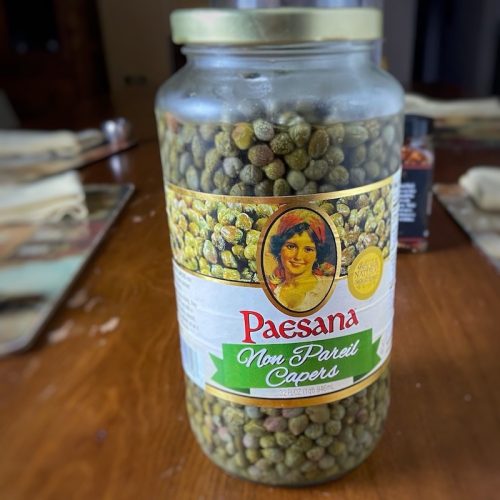
My household splits on capers — my wife and youngest daughter want nothing to do with them. My oldest daughter and I do. We used to buy the huge jar from Costco, and she'd bring it to the table most nights insisting capers went with anything. I never quite agreed.
Fast Answer
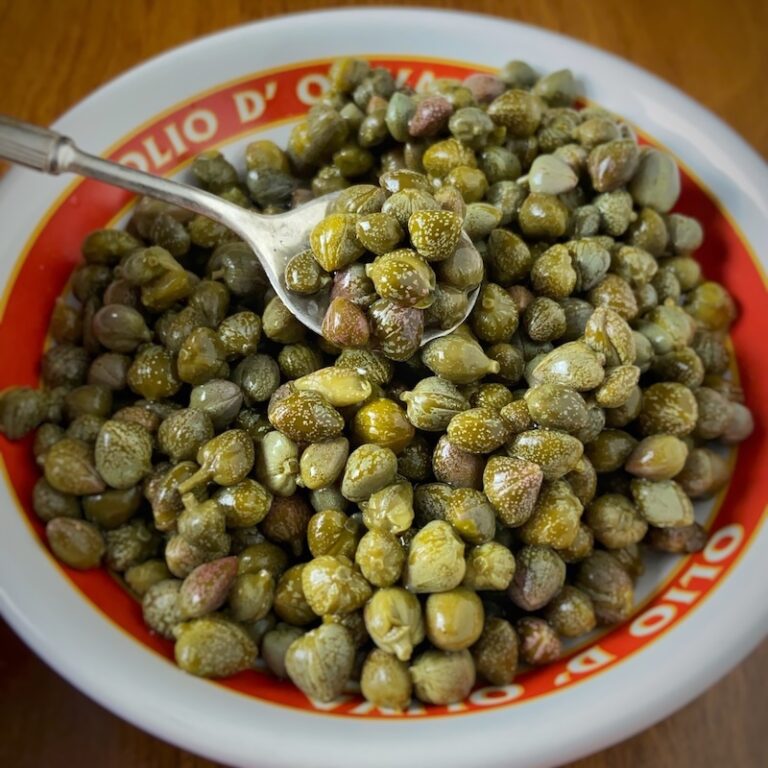
Capers are the pickled, unripened flower buds of the caper bush — small, briny, and salty, with a bright, almost floral tang. They don't belong in everything, despite what my oldest daughter will tell you, but the right pinch can wake up a dish that's gone flat.
Caper Types, Sizes, Texure & Flavor
Capers come in various sizes, ranging from 1/4 inch (approximately the size of a small pea) to over 1/2 inch, which is about the size of a small olive. Here are some sizes and their corresponding names.
| Name | Size | Texture & Flavor | Best For |
|---|---|---|---|
| Nonpareilles | 4–7 mm (smallest) | Delicate, tender; bright and tangy | Sauces, pasta, salads, dressings |
| Surfines | 7–8 mm | Slightly firmer; balanced briny taste | Chicken piccata, tapenade |
| Capucines | 8–9 mm | Mildly firm; subtle bitterness | Stews, braises |
| Capotes | 9–11 mm | Firm and meaty; earthy notes | Robust sauces, antipasti |
| Fines | 11–12 mm | Bold, chewier texture | Whole, in Mediterranean platters |
| Grusas | 13+ mm (largest) | Very bold, dense, chewy | Antipasto platters, garnish |
The Ingredient My Household Can't Agree On
My daughter wasn’t entirely wrong — capers do work in more dishes than people expect, which is probably why she treated that Costco jar like a pantry staple instead of a specialty item. But “anything” is still a stretch.
Capers are assertive; they can lift a sauce that’s missing something or completely take over a dish that didn’t need them. Here’s what they actually taste like, where they earn their place, and where I still hold the line.
Start Here
- What they are: Pickled, unripened flower buds of the caper bush (Capparis spinosa), cured in salt or brine.
- What they do: Add a concentrated hit of brininess, salt, and tang — a little goes a long way.
- When to reach for them: A dish tastes flat or one-note and needs a savory, acidic lift — sauces, fish, tomato-based dishes.
- When to skip them: The dish is already well-seasoned and bright, or you're feeding someone on team "no capers."
Flavor and Function
- Flavor profile: Briny, salty, and tangy, with a faint floral note underneath. Intensity depends on size and curing — small nonpareilles are delicate, larger ones get more pronounced and slightly bitter.
- Role in cooking: Capers work as a seasoning, not a vegetable. They punch up acid and salt rather than adding bulk or richness, which is why a small amount goes far and too much takes over.
Think Like a Cook
- Capers aren't a background seasoning — they're a decision. Every dish that gets them shifts toward brininess and acid, whether it needs it or not. Before adding a pinch, ask what the dish is missing: if it's brightness or salt, capers earn their place; if it's already balanced, they'll just get loud.
How to Choose It
- Look for: Firm, plump buds of a consistent size. Avoid soft, mushy, or discolored ones.
- Brined vs. salt-packed: Brined is more common and convenient. Salt-packed has a more concentrated flavor but needs rinsing or a brief soak before use.
- Size matters: Nonpareilles (the smallest) are genuinely more delicate and tender; larger sizes are firmer and more assertive.
- Check the label: A good jar lists capers, water, and vinegar or salt — skip ones padded with unnecessary additives.
Types and Variations
- For most everyday cooking, nonpareilles or surfines cover it — small enough to disappear into a sauce, assertive enough to matter.
- Reach for capucines, capotes, fines, or grusas when you want capers as a visible, chewy component — antipasti, garnish, or robust braises.
What Most Cooks Get Wrong
- Adding capers at the start of cooking instead of near the end — extended heat turns them muddy and dulls their pop.
- Skipping the rinse on brined capers, which makes the whole dish taste like straight brine instead of a balanced hit of salt.
- Treating capers like a garnish instead of a seasoning — a small chopped amount stirred into a sauce does more work than a spoonful dumped on top.
- Assuming more is better. Capers are concentrated — doubling the amount rarely doubles the flavor, it just makes the dish salty and one-note.
What Went Wrong (and Why)
- Dish tastes like straight brine → capers weren't rinsed first → rinse and pat dry before using.
- Sauce turned muddy and dull → capers cooked too long → add them in the last minute or two, off heat if possible.
- Dish came out too salty → capers added on top of an already well-seasoned dish → taste before adding extra salt, and hold the capers until the end.
- No real caper flavor came through → old or low-quality capers, or too few of them → use fresh, firm capers and don't be shy with the pinch.
- Half the table won't touch the dish → not everyone likes capers (fair) → keep a jar on the table and let people opt in, the way my daughter and I always did.
Substitutions That Work
- Chopped green olives (1:1 by volume): Milder, less sharply briny, adds a different but complementary savory note.
- Chopped cornichons or pickles (start with less): More sour than briny, a decent stand-in for pop and acid.
- Lemon juice plus a pinch of salt: Won't replicate the texture, but covers the brightness-and-salt role in a pinch.
- Green peppercorns in brine (smaller amount): A different flavor — peppery rather than floral — but a similar textural pop.
How to Use It
- Timing: Add near the end of cooking to preserve texture and brightness. No timing concerns if using raw, as a garnish or in a salad.
- Quantity: Start with a tablespoon for 2 to 4 servings and taste. Easy to add more, hard to walk back.
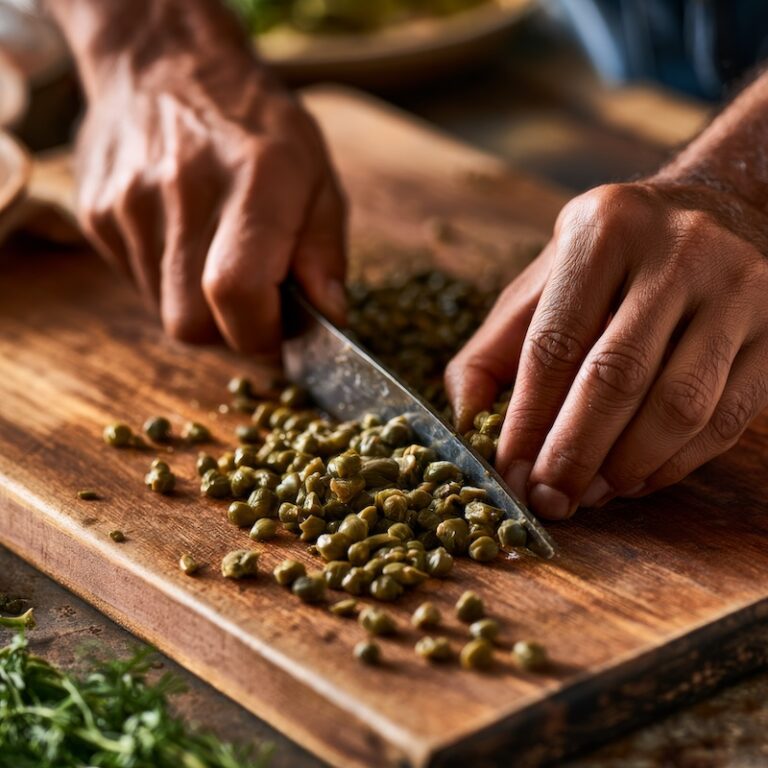
- Best moves: Chop before adding to sauces so the flavor distributes evenly. Leave whole for garnishing platters or salads where bursts of flavor are the point.
Classic Dishes Featuring Capers
| Dish | Description | Wine Pairing |
|---|---|---|
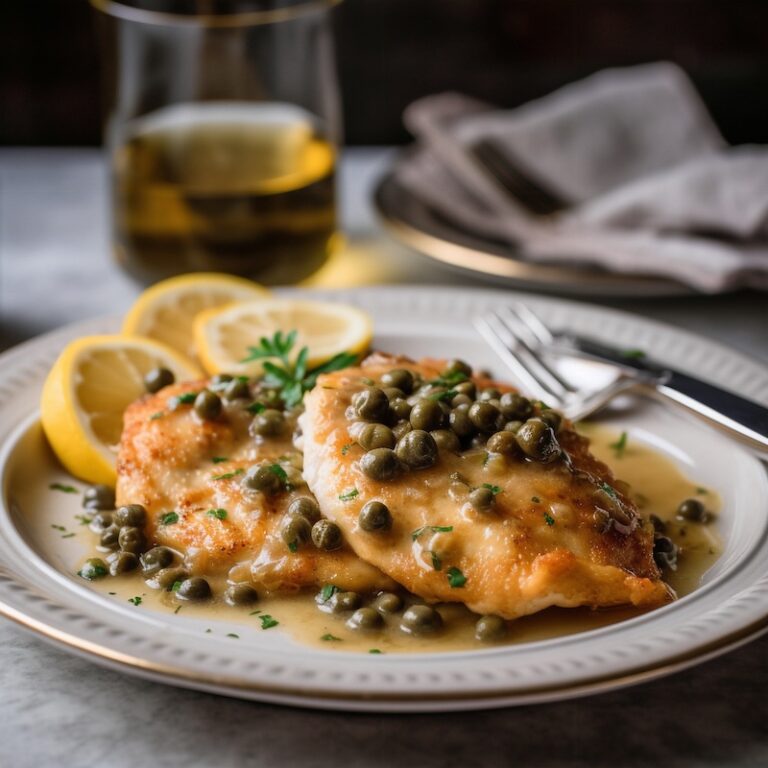
| Chicken Piccata | Sautéed chicken cutlets in a lemon-butter sauce with capers | Pinot Grigio, Sauvignon Blanc |
| Pasta Puttanesca | Pasta with tomato sauce, anchovies, olives, capers, garlic, and chili flakes | Chianti, Nero d’Avola |
| Vitello Tonnato | Chilled veal slices with creamy tuna and caper sauce | Gavi, Verdicchio |
| Bagels with Lox and Capers | Smoked salmon with cream cheese, red onion, capers on a bagel | Champagne, Dry Riesling |
| Sicilian Caponata | Sweet and sour eggplant stew with capers, olives, celery, and tomatoes | Frappato, Cerasuolo di Vittoria |
| Tuna Niçoise Salad | Salad of tuna, green beans, potatoes, olives, eggs, and capers | Rosé from Provence, Sauvignon Blanc |
| Sautéed Sole with Lemon and Capers | Delicate fish fillets with lemon-caper butter sauce | Chablis, Vermentino |
| Tapenade | Olive, caper, anchovy, and garlic spread | Côtes du Rhône, Garnacha |
| Lemon Caper Sauce | Versatile sauce of lemon, butter, capers, and parsley, used for fish, poultry, or vegetables | Vermentino, Pinot Bianco |
| Pan Roasted Sea Bass | Crispy-skinned sea bass with sautéed cherry tomatoes, capers, garlic, and herbs | Albariño, Verdicchio |
| Pork Tenderloin | Roasted pork tenderloin with a bright pan sauce of lemon, capers, and green olives | Pinot Noir, Grenache Blanc |
Flavor Pairing Ideas
- Acids: Lemon, white wine vinegar
- Fats: Olive oil, butter, cream sauces
- Proteins: Chicken, white fish, veal, smoked salmon
- Vegetables: Tomatoes, eggplant, potatoes
- Other: Olives, anchovies, garlic, fresh parsley
Storage and Shelf Life
- Unopened: Pantry-stable for about 6 months, or check the label date.
- Opened: Refrigerate, keep fully submerged in brine, and seal tightly. I'm not sure exactly how long they can go — our giant Costco jar typically lasts 6 to 9 months.
- Salt-packed capers: Keep dry and sealed; they last even longer than brined ones.
- Signs they're past their prime: Off smell, discoloration, or brine that's gone cloudy.
Worth the Upgrade?
- Worth it: Salt-packed capers (often French or Italian, like Pantelleria) for a dish where they're front and center — tapenade, a simple lemon-caper sauce. The flavor is noticeably more concentrated and less vinegary.
- Not worth it: Hunting down a specific premium brand for a background role in a big pot of sauce or a salad. A standard jarred brined caper does the job fine.
Caper FAQ
What are capers? Capers are the pickled, unripened flower buds of the caper bush (Capparis spinosa), cured in salt or brine until they turn briny, tangy, and slightly floral.
Do capers taste like pickles? Not quite — both are briny and tangy, but capers have a floral, almost herbal note pickles don’t, and they’re far more concentrated, so a little goes much further.
Is a caper an olive? No, though they’re often mistaken for one. Capers are flower buds, not fruit, and they’re smaller, saltier, and more intensely flavored than even a briny olive.
How do I use capers without overdoing it? Start with a tablespoon for 2 to 4 servings, rinse them first if they’re brined, and add them near the end of cooking — they turn muddy and lose their pop with too much heat.
Can I substitute capers if I don’t have any? Chopped green olives are the closest stand-in, or use a splash of lemon juice with a pinch of salt to cover the brightness, though neither fully replicates that floral tang.
How do capers differ from caperberries? Capers are the unopened flower bud; caperberries are the fruit that forms if the bud is left to mature and flower. Caperberries are larger, milder, and usually served whole.
Are capers healthy? Yes, reasonably — they’re low in calories and deliver a lot of flavor without added fat or sugar, though they are fairly high in sodium.
How do I store capers? Keep them fully submerged in their brine, tightly sealed, in the refrigerator once opened — a jar typically lasts 6 to 9 months that way.

- See capers doing exactly what they're built for in Lemon Caper Sauce.
- The classic pairing that made capers a pantry staple in this house: Chicken Piccata.
- For the bolder, more assertive side of capers, see Pasta Puttanesca.
- Capers and seafood are a natural match — see it in Pan Roasted Sea Bass with Tomato Capers.
- For capers cutting through richer meat, try Pork Tenderloin with Lemon, Capers, and Olives.
- Another small, briny ingredient with an outsized reputation: Anchovies.
Buying Capers
Why Capers: Small, pickled flower buds that add tangy, briny flavor to sauces, salads, pasta, and Mediterranean dishes. They provide a punch of umami and brightness.
Check Quality: Look for firm, plump buds with a consistent size. Avoid overly soft or discolored capers, which can indicate age or poor storage.
Where to Shop: Gourmet shops, specialty stores, and international markets often carry high-quality jarred or pickled capers.
Amazon Convenience: Amazon offers a wide range of capers, from nonpareil to larger sizes, in brine or salt. You can compare brands, reviews, and origins for easy delivery.
Storage Tip: Keep capers in their original brine in the refrigerator after opening to maintain flavor and texture.
🛒 Check Prices for Capers on AmazonAvailable on Amazon