

The first time I tasted real Jamón Ibérico — not the pre-sliced supermarket version but the proper stuff, hand-carved from a leg at a Spanish restaurant — I understood immediately why people make a fuss about it. It doesn't taste like ham. It tastes like something else entirely. Here's what you need to know before you buy it.
Fast Answer
Jamón Ibérico is dry-cured ham made from the hind leg of the black Iberian pig, aged anywhere from 24 to 48 months depending on grade. The best versions come from purebred, acorn-fed pigs — that's what "Bellota" on the label means.
Where a Luxury Ham Is Just Breakfast
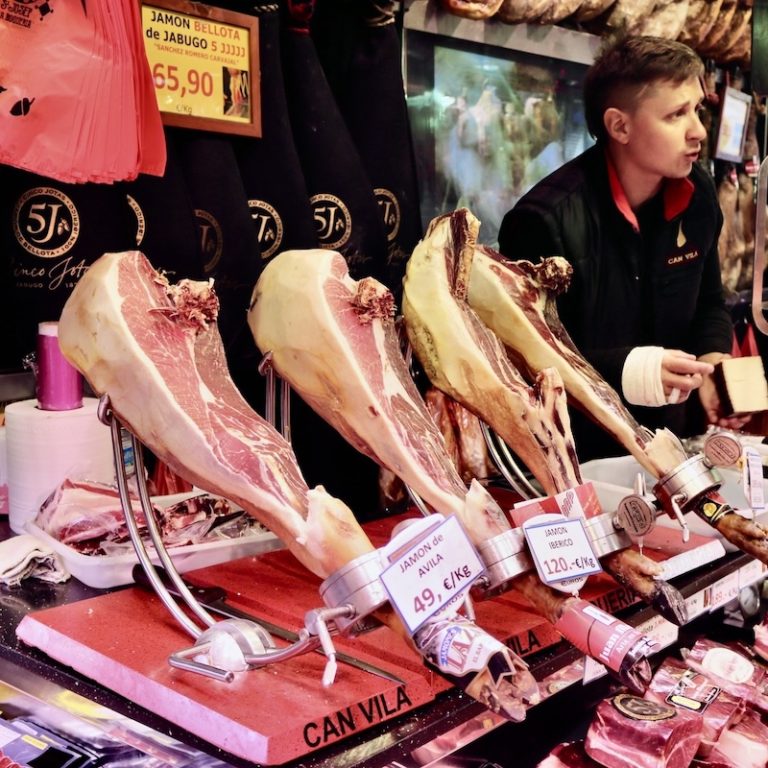
A few years ago we visited Spain, and jamón ibérico showed up everywhere — not as a special-occasion food, but as an ordinary one. Whole legs sat out at breakfast counters, lunch spots, and late-night tapas bars, ready to be sliced on demand.
Nobody treated it like a splurge. I still don’t understand why it hasn’t caught on that way here. This post covers what actually separates the grades (Bellota, Cebo de Campo, Cebo), how jamón ibérico differs from serrano and prosciutto, what a fair price looks like, and how to serve it once you’ve bought it.
Start Here
- What it is: Dry-cured ham from the hind leg of the black Iberian pig, salted and air-dried for two to four years.
- What sets it apart: The pig breed and diet — Iberian pigs, especially acorn-fed ones, produce intramuscular fat that melts at room temperature, giving the ham its silky texture.
- When you need it: Served thin and raw — charcuterie boards, tapas, wrapped around fruit. Not a cooking ingredient in the traditional sense.
Flavor and Function
- Flavor profile: Nutty, savory, faintly sweet, with a lingering umami finish. The higher the acorn content in the pig's diet, the more pronounced the nuttiness.
- Curing's role: Months of salting and slow drying concentrate the flavor and build the complexity that a shorter cure can't reach — this is why Bellota's extra aging time matters as much as the acorn diet.
- Role on the plate: It's rarely an ingredient you cook with — the fat is meant to melt from body heat and knife friction, not a stove. Heat mutes the aroma that's the whole point of buying it.
Think Like a Cook
- Jamón ibérico isn't one product — it's a spectrum defined by two things: how purebred the pig was, and what it ate. Everything else on the label (curing time, region, price) follows from those two facts. Read the label for breed and diet before you read anything else.
How Jamón Ibérico Compares
| Feature | Jamón Ibérico | Jamón Serrano | Prosciutto | Bacon |
|---|---|---|---|---|
| Origin | Spain | Spain | Italy | Many countries |
| Pig breed | Black Iberian pig | White pig (Landrace, Duroc) | Primarily Italian pigs | Standard pork breeds |
| Cut | Hind leg | Hind leg | Hind leg | Belly or side |
| Curing time | 24–48 months | 9–18 months | 9–24 months | 1–3 weeks |
| Flavor | Nutty, complex, umami-rich | Milder, slightly salty | Sweet, delicate, buttery | Salty, smoky |
| Fat content | High intramuscular marbling | Moderate | Moderate | High, in strips |
| Serving style | Thin, raw | Thin, raw | Thin, raw | Cooked |
| Price range | Very expensive | Moderate | Moderate to expensive | Inexpensive |
Types of Jamón Ibérico
| Type | Description | Best Uses |
|---|---|---|
| Jamón Ibérico de Bellota | Free-range, acorn-fed Iberian pigs. Aged 36–48 months. Rich, nutty flavor, intense marbling. | Thinly sliced on its own — charcuterie boards, gourmet tapas. |
| Jamón Ibérico de Cebo de Campo | Pasture-raised, fed a mix of grains and natural forage. Aged 24–36 months. Balanced flavor and texture. | Serve with manchego, olives, or in upscale sandwiches and salads. |
| Jamón Ibérico de Cebo | Farm-raised, fed cereals and legumes. Aged 24–30 months. Milder, less complex than bellota. | Everyday tapas, sandwiches, pairing with wine or cheese. |
| Jamón Ibérico 100% de Bellota (Pata Negra) | Purebred Iberian pigs, exclusively acorn-fed. Often aged 48+ months. Deep flavor, melt-in-your-mouth texture. | Savored alone with fino sherry or cava; luxury tasting menus. |
| Jamón Ibérico Reserva/Gran Reserva | Aged longer than standard cebo or cebo de campo (36+ months). Label varies by producer. Enhanced depth of flavor. | Thinly sliced as a centerpiece appetizer, paired with aged cheeses. |
How to Choose It
- Read the label, not the name: "100% Ibérico" refers to breed purity. "Bellota" refers to diet (acorn-fed). You want both if you're paying premium prices.
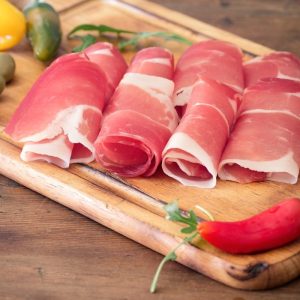
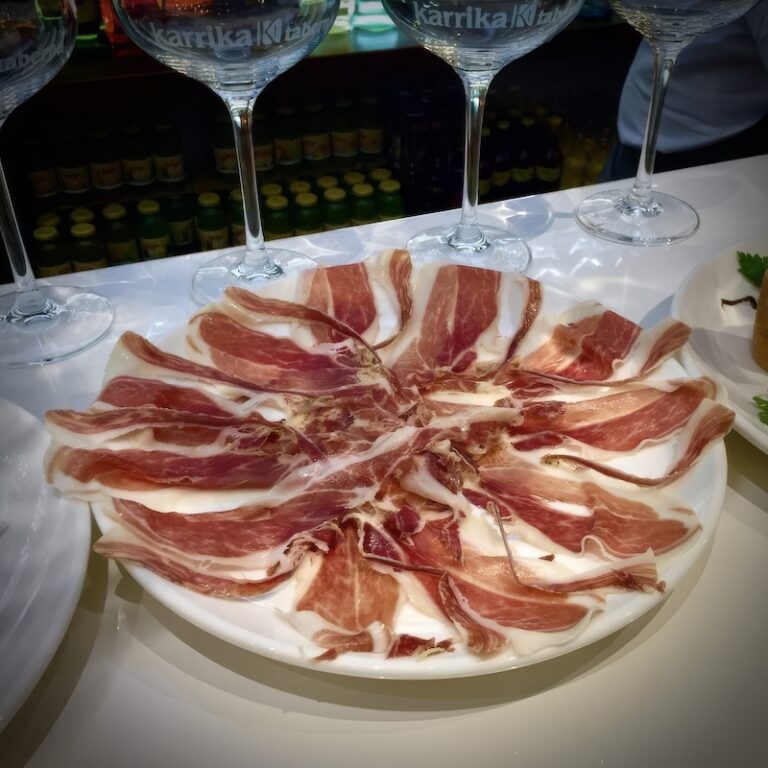
- Color and marbling: Good jamón shows visible white marbling running through deep red meat — the fat is where the flavor lives.
- Certification seals: Spain's regulatory councils (Denominación de Origen) mark authentic product — look for a seal, not just a Spanish-sounding name.
Worth the Upgrade?
- Worth it: Bellota, if you're serving it on its own as the centerpiece of a board — the difference in nuttiness and texture is genuinely noticeable, even to a casual palate.
- Not worth it: Bellota if it's going into a pasta dish, a sandwich, or anywhere it's competing with other strong flavors — Cebo de Campo does the job at a third of the price and nobody will notice the difference once it's mixed in.
What Most Cooks Get Wrong
- Cooking it: Heat mutes the aroma that's the entire reason to buy it — serve it raw and at room temperature, not warmed or pan-crisped.
- Slicing it too thick: Thick slices lose the melt-in-the-mouth effect; it should be nearly translucent.
- Refrigerating it cold and serving it cold: The fat needs to come to room temperature to soften and release its flavor — straight from the fridge, it tastes like nothing.
How to Use It
| Serving idea | Why it works |
|---|---|
| Charcuterie board, on its own | Fat melts at room temperature, releasing flavor without competition |
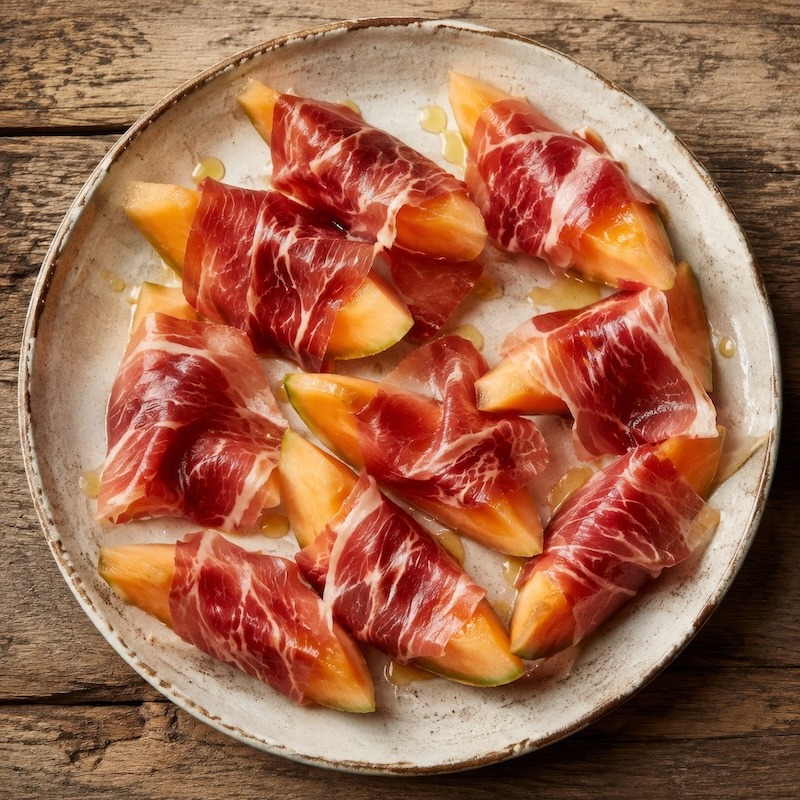
| Wrapped around melon or figs | Salt balances natural sweetness |
| Torn into warm pasta or risotto | Adds umami without overwhelming delicate sauces |
| On pizza or flatbread, added after baking | Preserves texture that direct heat would destroy |
| In scrambled eggs or omelets | Seasons the dish without needing extra salt |
| In soups or bean dishes | Adds richness without dominating |
Storage and Shelf Life
- Store a whole leg in a cool, dry place away from direct sunlight — not the refrigerator, which dulls the fat's texture.
- Once sliced or opened, wrap tightly and use within a few days for peak flavor; the cut surface dries out fast.
- Freezing isn't recommended for whole legs — it changes the texture. Pre-sliced portions can be frozen briefly in a pinch.
Frequently Asked Questions
Why is Jamón Ibérico so expensive?
The pigs are purebred, slow-growing, and acorn-fed, and the curing process takes up to four years — all of that cost gets baked into the price before it ever reaches a store shelf.
What does “Pata Negra” mean?
“Black hoof” — it refers to 100% purebred Iberian pigs, and strictly speaking should only be used for the acorn-fed Bellota grade, though it gets used loosely in marketing.
Can Jamón Ibérico be cooked?
Technically, yes, but heat mutes the aroma —the entire point of buying it— so it’s meant to be eaten raw, at room temperature.
Are there regional differences in Jamón Ibérico?
Yes — Guijuelo, Jabugo, and Los Pedroches are the most recognized regions, each with slightly different climate and curing traditions that show up in the final aroma and texture.
How do I slice it at home?
Secure the leg in a jamonero (ham holder), and use a long, flexible knife to cut thin, nearly translucent slices starting from the narrow end, rotating as you go.
Can Jamón Ibérico be frozen?
Not recommended for a whole leg — it changes the texture. You can briefly freeze pre-sliced portions if tightly wrapped.
- If you're building a full board around your jamón, this charcuterie board guide covers what to pair it with.
- For the other great Spanish import, see how smoked paprika fits into dishes like paella in this paprika guide.
- Cantaloupe and jamón is a classic pairing — the technique shows up in this cantaloupe post.
Jamon Iberico with Tomato Bread
Ingredients
Instructions
- Preheat the oven to 350°F (175°C).
- Slice the bread and place it on a baking sheet. Drizzle with olive oil and bake for 10-15 minutes until golden brown.
- While the bread is toasting, peel the garlic cloves and cut the tomato in half.
- Rub the garlic on the toasted bread, followed by the tomato halves, pressing down to release the juices onto the bread.
- Layer the jamón ibérico slices over the tomato bread and drizzle with a bit of olive oil.
- Serve immediately and enjoy!
Notes
Jamon Iberico with Melon
Ingredients
- 1 ripe cantaloupe or honeydew melon
- 14 thin slices jamón ibérico
- 1 tablespoon fresh lemon juice
- 2 tablespoons olive oil extra-virgin
- black pepper freshly ground
Instructions
- Cut the cantaloupe or honeydew melon in half, remove the seeds, and cut into 1-inch thick wedges.
- Carefully wrap each melon wedge with 1 or 2 slices of jamón ibérico.
- Arrange the wrapped melon slices on a platter.
- Whisk the lemon juice and olive oil together in a small bowl, then drizzle the mixture over the melon slices.
- Finish with a sprinkle of freshly ground black pepper.
- Serve immediately and enjoy!


One Response
This food is very delicious. Thank you for making this delicious recipe