
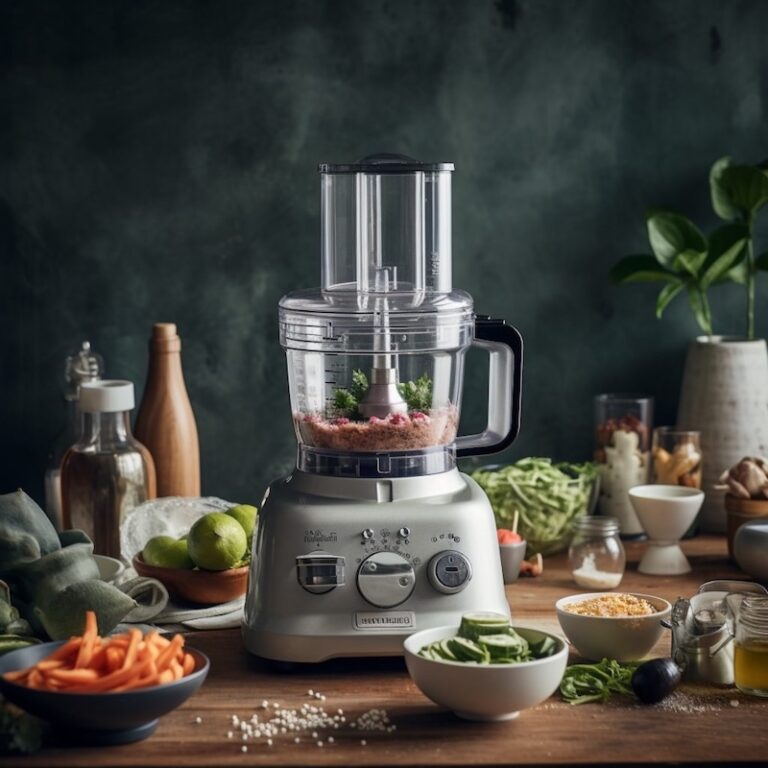

A food processor can transform the way you cook, handling everything from chopping vegetables to mixing dough in seconds. But with so many sizes, speeds, and features available, choosing the right one can feel overwhelming. The key is matching the machine to how you actually cook, so it becomes a tool you use often—not one that sits in the cabinet.
Here's How to Decide What Food Processor Is Right For Your
Food Processor Quick Guide: Choose the Right One in Seconds
Not sure which food processor to buy? Use this quick guide to match the right size and features to how you cook.
🥗 Small Households (1–2 People)
Size: 7–9 cup
Best for: Basic prep, sauces, small batches
Why it works: Compact, easy to store, and handles everyday tasks.
🍳 Everyday Cooking (3–4 People)
Size: 9–12 cup
Best for: Chopping, slicing, dough, general use
Why it works: The best balance of capacity and versatility.
🍲 Batch Cooking & Entertaining
Size: 12–16 cup
Best for: Large recipes, meal prep, big families
Why it works: Handles volume without slowing you down.
🥄 Quick Tasks & Small Jobs
Type: Mini processor (3–5 cup)
Best for: Herbs, nuts, dressings
Why it works: Fast, convenient, and minimal cleanup.
⚙️ Power & Features
Look for: 500–1000 watts, wide feed tube
Why it works: Strong motors handle tough ingredients with less prep.
🧰 Attachments
Essentials: S-blade, slicing disc, shredding disc
Why it works: Covers most kitchen tasks without extra clutter.
Bottom line: If you’re unsure, a 9–12 cup food processor offers the best mix of size, power, and versatility for most home cooks.
What to Look for When Buying a Food Processor
Capacity: Choose based on how you cook. A 9–12 cup model fits most home kitchens, while smaller units are great for quick tasks and larger ones work best for batch cooking.
Power: Look for 500–1000 watts for reliable everyday use. Higher power helps handle tougher ingredients like dough, nuts, and dense vegetables.
Feed Tube: A wider feed tube reduces prep time by allowing larger pieces of food to go in without pre-cutting.
Attachments: At minimum, look for an S-blade, slicing disc, and shredding disc. Extra attachments are nice but not essential for most home cooks.
Ease of Use: Simple controls and quick assembly matter more than advanced features you won’t use regularly.
Cleaning: Dishwasher-safe parts and fewer components make cleanup faster and encourage more frequent use.
Storage: Consider how much counter or cabinet space you have. Compact designs are easier to store and more likely to be used often.
Bottom Line: The best food processor is the one that matches your cooking habits—not the one with the most features.
Available on Amazon
Food Processor Comparison Guide
Use this quick comparison to match food processor size and power to how you cook.
| Category | Best For | Recommended Size | Why It Works |
|---|---|---|---|
| Mini Processor | Quick tasks, herbs, dressings | 3–5 cup | Fast, compact, and easy to clean for small jobs |
| Small Food Processor | Light prep for 1–2 people | 7–9 cup | Compact size with enough power for everyday use |
| Mid-Size Food Processor | Most home cooking tasks | 9–12 cup | Best balance of capacity, versatility, and storage |
| Large Food Processor | Batch cooking, large families | 12–16 cup | Handles bigger volumes without slowing down |
| High-Power Models | Dough, tough ingredients | Any size (700+ watts) | Stronger motors deliver smoother, more consistent results |
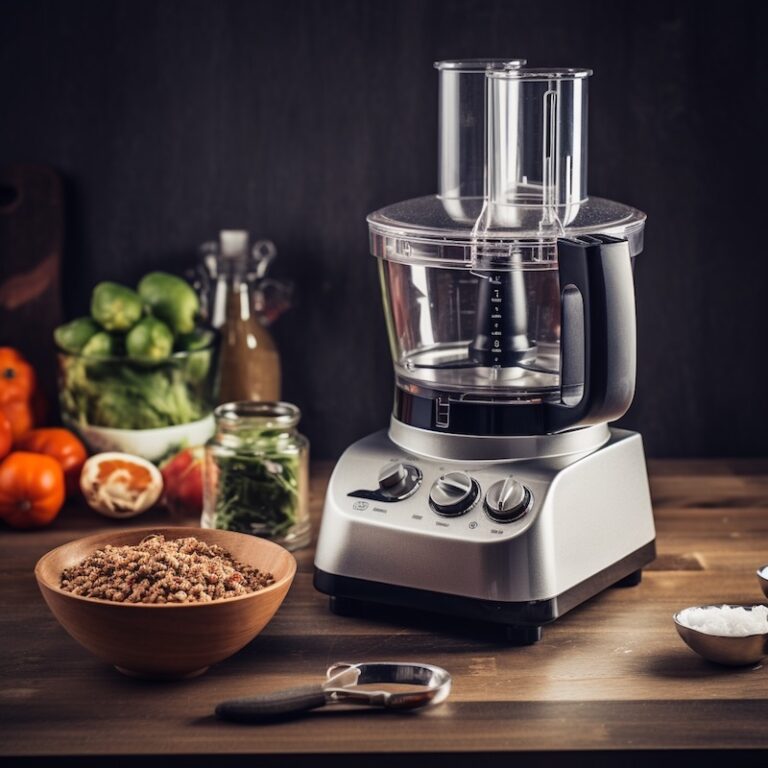
Food Processor: Pros and Cons
👍 Pros
Fast prep: Chops, slices, and mixes in seconds.
Consistency: Even cuts and uniform results.
Versatility: Handles sauces, dough, vegetables, and more.
Time saver: Reduces repetitive knife work.
👎 Cons
Storage space: Can be bulky in small kitchens.
Setup time: More parts than a simple knife.
Cleaning: Multiple components to wash.
Overkill for small tasks: Not always worth it for quick chopping.
Bottom line: A food processor is worth it if you cook regularly or prep in batches—but may be unnecessary for very simple kitchens.
Buying a Food Processor
Why It Matters: The right food processor saves time, improves consistency, and makes prep work faster and easier. The wrong one ends up underused or collecting dust.
Capacity: Choose based on how you cook. A 9–12 cup model is ideal for most kitchens, while smaller models work for quick tasks and larger ones are better for batch cooking.
Power: Look for 500–1000 watts for everyday use. Stronger motors handle tougher ingredients like dough and root vegetables without slowing down.
Feed Tube: A wide feed tube lets you process larger pieces with less pre-cutting, saving time and effort.
Blades & Attachments: At minimum, look for an S-blade, slicing disc, and shredding disc. Extra attachments can be useful, but most home cooks won’t need many.
Ease of Use: Simple controls and easy assembly make a big difference. If it’s complicated, you won’t reach for it as often.
Cleaning & Storage: Dishwasher-safe parts and a compact design make cleanup easier and storage less of a hassle.
Where to Shop: Kitchen stores and online retailers offer the best selection, from basic models to professional-grade machines.
Amazon Convenience: Amazon makes it easy to compare sizes, features, and reviews. You can quickly find models that match your cooking style and budget.
Bottom Line: For most home cooks, a 9–12 cup food processor with a strong motor and basic attachments is the sweet spot.
🛒 Check Prices for Food Processors on AmazonAvailable on Amazon
Food Processor FAQs
What size food processor do I need?
For most home cooks, a 9–12 cup food processor is the best choice. Smaller models (3–7 cups) work well for quick tasks, while larger 12–16 cup models are better for batch cooking or large families.
Can a food processor replace a blender?
Not completely. A food processor is better for chopping, slicing, and thicker mixtures, while a blender is designed for liquids like smoothies and soups. They complement each other rather than replace one another.
What is the most important feature in a food processor?
Capacity and motor power are the most important factors. A strong motor (500–1000 watts) and the right bowl size determine how well the machine handles everyday tasks and tougher ingredients.
Is a larger food processor always better?
No. Larger models take up more space and can be inconvenient for small tasks. The best size is the one that matches how often and how much you cook.
Can I use a food processor for dough?
Yes, many food processors can handle dough if they have a strong motor and a dough blade or appropriate attachment. Always check the manufacturer’s recommendations for capacity limits.
What attachments do I really need?
Most home cooks only need three basics: an S-blade for chopping, a slicing disc, and a shredding disc. Additional attachments can be useful but are not essential for everyday cooking.
Is it worth buying a food processor if I already have a blender?
Yes, if you do regular meal prep or cook from scratch. A food processor handles tasks a blender can’t, such as slicing vegetables, shredding cheese, or making pastry dough.
How do I choose between mini and full-size food processors?
Mini processors are best for herbs, dressings, and small jobs. Full-size models are better for general cooking, batch prep, and versatility in the kitchen.

19 Responses
thank you for your information on the food processor I found it very helpful
My Kenwood gourmet processor gave up the ghost after 42yrs. I am trying to find a food processor that has not got a blender. Money wise between 40.00- 130.00 . Can you help please.
I don’t think you were any help what so ever in choosing the best food processor which by the way is the title on the very top of this page. (in case you did not notice)
Salim, sorry you feel that way. – RG
Hey nice information…It helped me a lot…
Thanks, that’s great clear advice, which appears very hard to come by in the world of Food Processors ! I’ve been looking for a decent option since the start of December, and I think I’m closer to purchasing now, having read your piece.
I found the info you disclosed informational, but would’ve liked more detail about which processors were the best. Comparative features, price, etc. Your title made me think that was what was going to be discussed.
Donna, food processor models change so quickly that there is no way I could stay current with features and prices so I tried to offer what I look for when purchasing one. There are many other sites that offer the kind of information that you are looking for. Good luck. – RG
Took a class on food processors.
The chef used a Cuisinart. It
was wonderful.
Can you mix a cake in a food processor
Mike, I wouldn’t. You could get away with the pastry blade to mix and aerate your dry ingredients, but the action of a food processor is too fast and generates too much heat to get a good emulsion for a butter cake. Stick with a stand or hand mixer; you’ll be happier with the results.
Thanks Jenni
I thought the information was good. I was on the fence about the number of buttons/controls and feel more comfortable that an on/off/pulse button is acceptable.
I do want to know if there is a recommended wattage that is preferable. I wish to make coconut butter and i hear that everyone is saying it can take 10 mins in the food processor. Seems like a long time to run the machine and I wouldn’t want to burn up a new food processor.
Any recommendations?
I wonder if you could help, im looking to buy a food processor for my mum who
Has wrist problems and is struggling to cut and slice food like ptatoes carrots onions etc. Could you suggest one to me that puts the least amount of stress on the wrist please.
what do you recommend up to $600
Thanks for the info. I have read some of the comments. Let’s face it, “some people just want you to actually pick the right one for them; but as you said from the beginning, things changes so fast that it is not such a good idea to recommend any brand. ” People must learn to take research data and apply it with their common sense and their needs. I think that the info fitted the title. Thanks again! Now it is my turn to go into the store or online and buy with the info in mind.
No! Say Ro-Bo-Coop.
I had no idea that you should look for a food processor that can hold at least 9 cups. I have always wanted to get a good processor for our house, but I am really bad at knowing what to get. I will have to make sure that I choose one that can hold everything.
I think it depends on the personal requirement, based on that we should select food processor. Some people want to use daily some people use only on weekends. So it personal requirement. Big container or small container etc…
thanks for the information
I’m about to buy my first processor. I want to ask does the Hamilton 8-cup food processor grind meat well. It’s affordable but the motor doesn’t look that great. I’m trying to find more info for reference. Thanks in advance
Nice article! Thanks for sharing informative post Keep posting