Essential Kitchen Knives: Types Every Home Cook Should Know

Most kitchens don’t need a dozen knives—they need a handful of the right ones. The difference between a frustrating prep session and a smooth, confident rhythm usually comes down to knowing which knife does what. Once you understand the core types of kitchen knives and their jobs, everything in the kitchen starts to feel simpler, faster, and more intentional.

The Only Kitchen Knives Most Home Cooks Actually Need

🔪 The Only Three Knives You Really Need

You don’t need many knives to cook well.
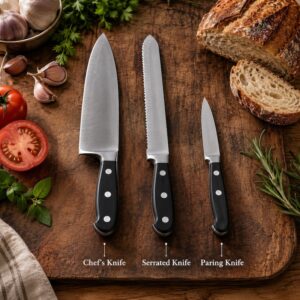
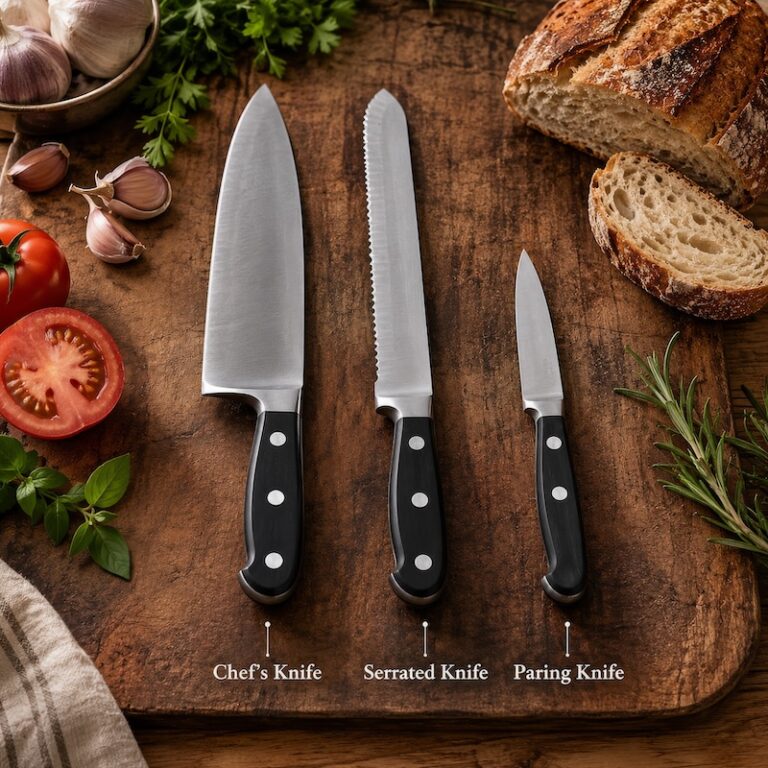
Most home kitchens run on just three essentials:

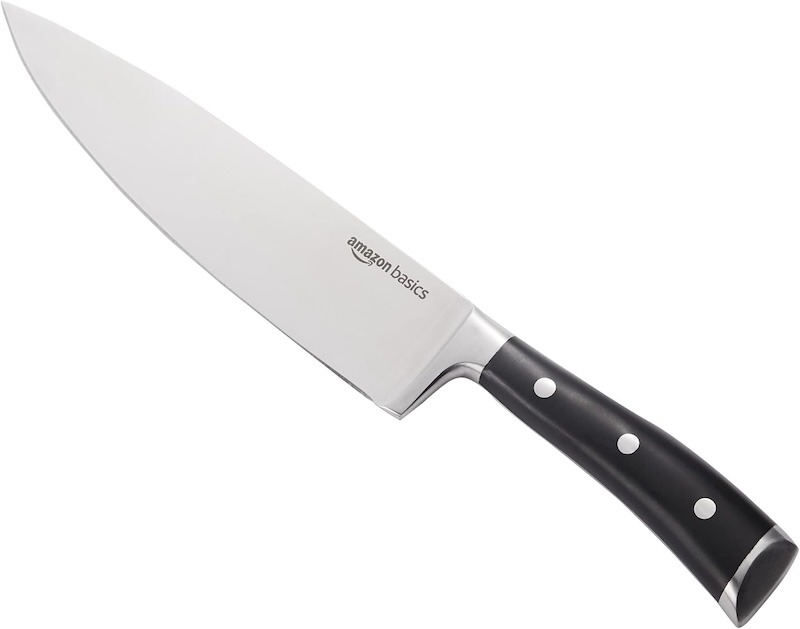
Chef’s knife: Your everyday workhorse

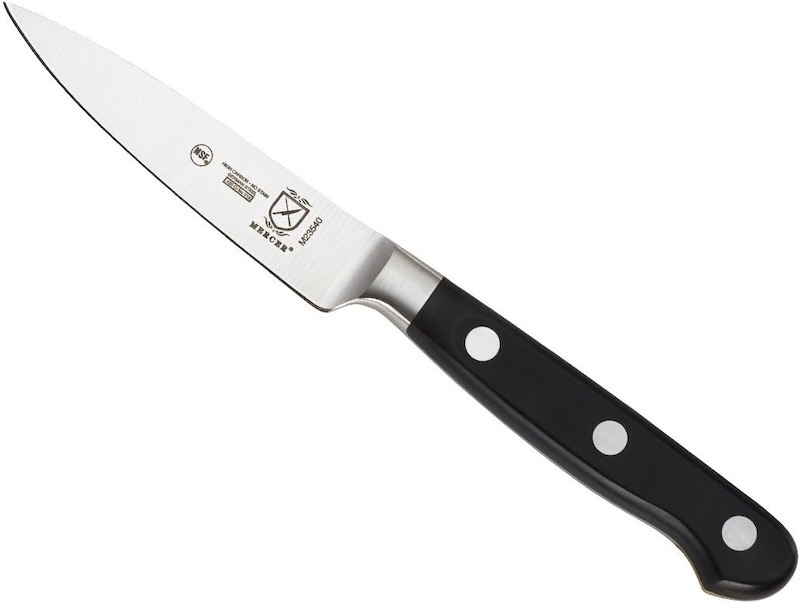
Paring knife: Precision tasks and small prep

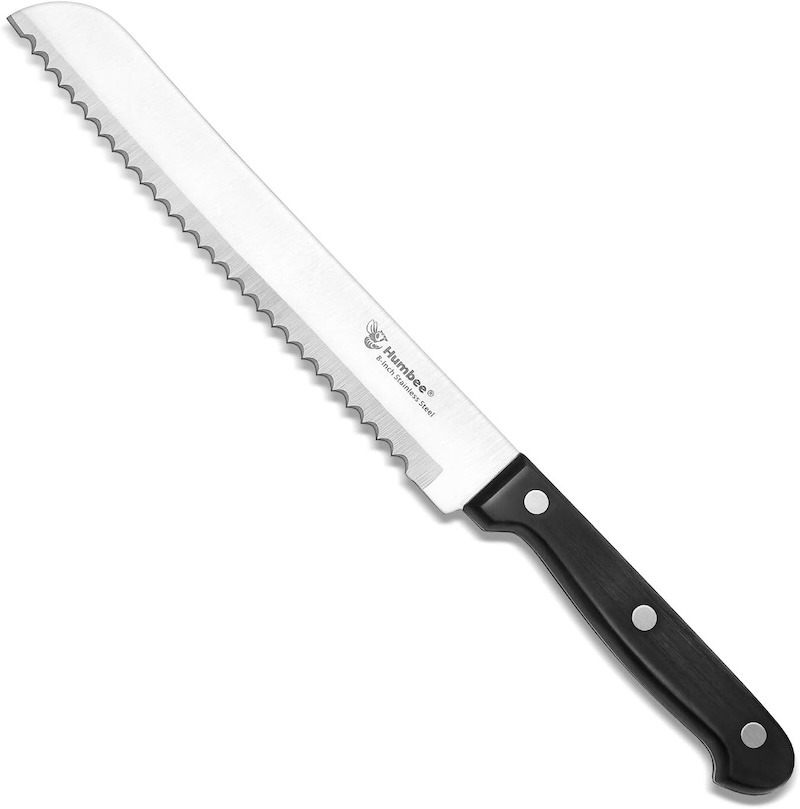
Serrated knife: Bread and soft foods

The rest are pure pleasure!

To learn how to choose and buy the best knife for your needs, check out my post Kitchen Knife Buying Guide

🔪 When to Use Each Kitchen Knife

Quick scan guide for everyday cooking decisions:

Chef’s Knife: Use for almost everything—chopping vegetables, slicing meat, mincing herbs.

Paring Knife: Use for peeling fruit, trimming, and detailed hand work like deveining shrimp or coring.

Serrated Knife: Use for bread, tomatoes, citrus, and anything soft on the outside but firm inside.

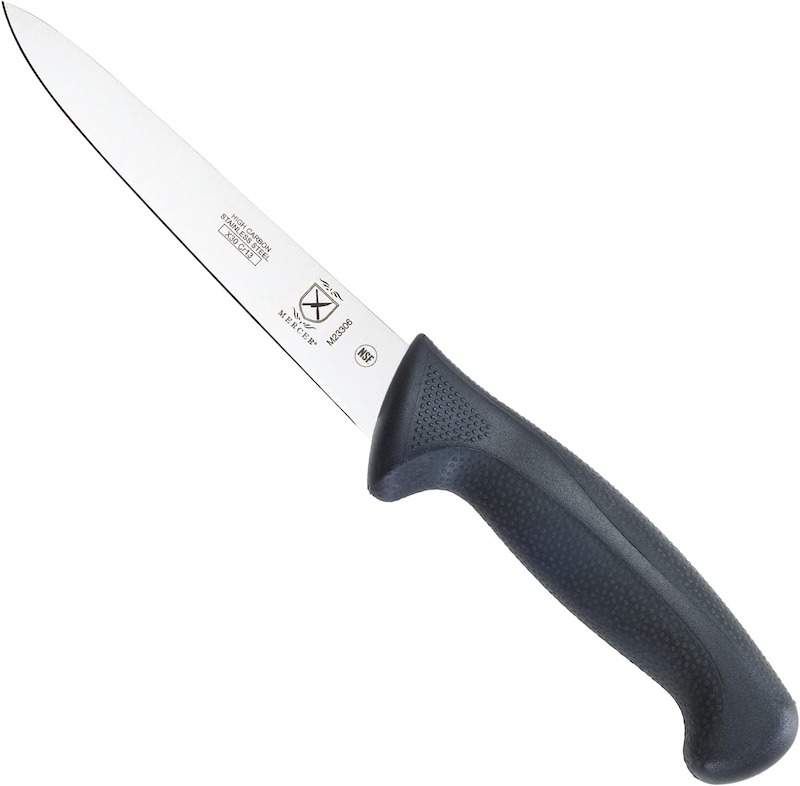
Utility Knife: Use for small sandwiches, quick slicing tasks, and in-between jobs where a chef’s knife feels oversized.

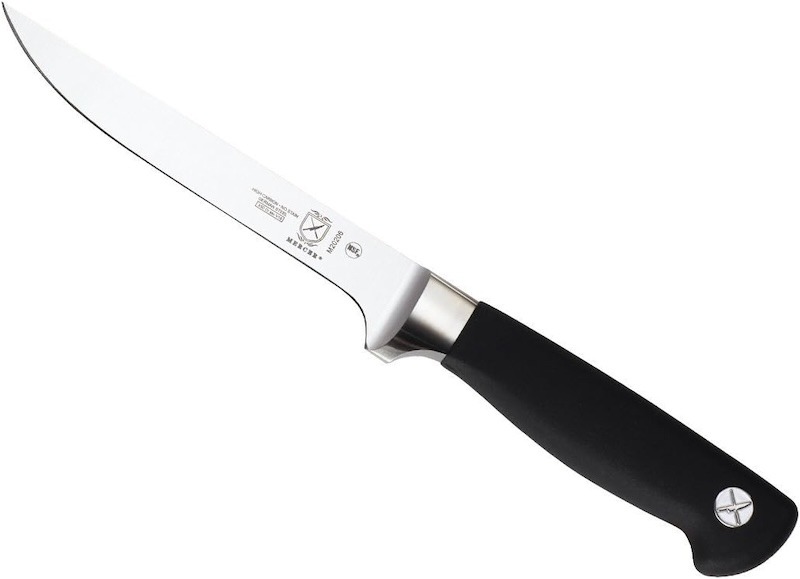
Boning Knife: Use when breaking down chicken, trimming fat, or working close to bones.

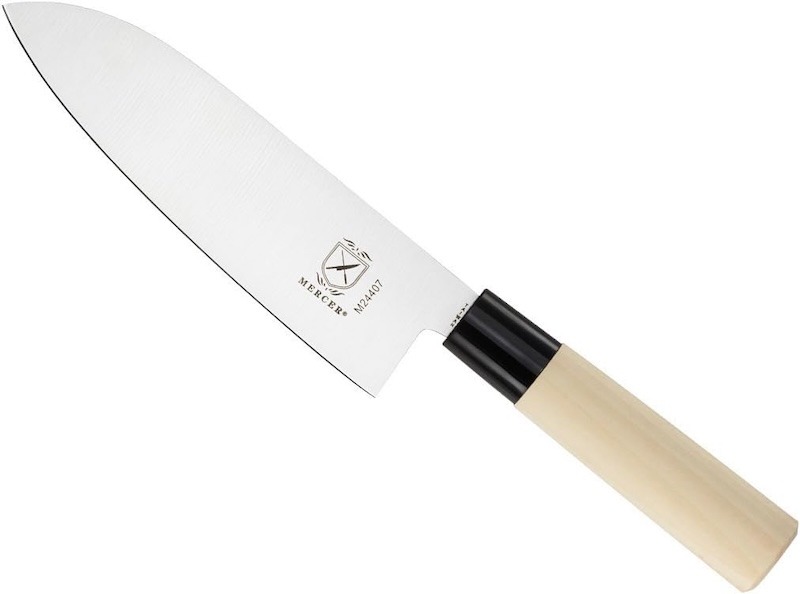
Santoku Knife: Use for fast chopping, dicing, and lighter prep when you want control over power.

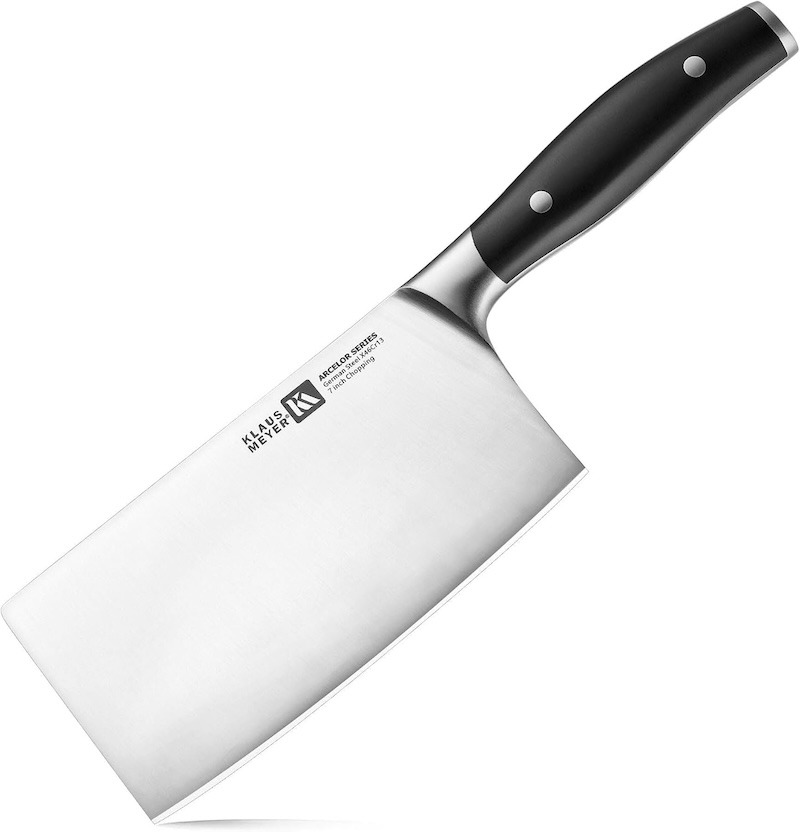
Cleaver: Use for heavy-duty chopping through dense vegetables or meat bones.

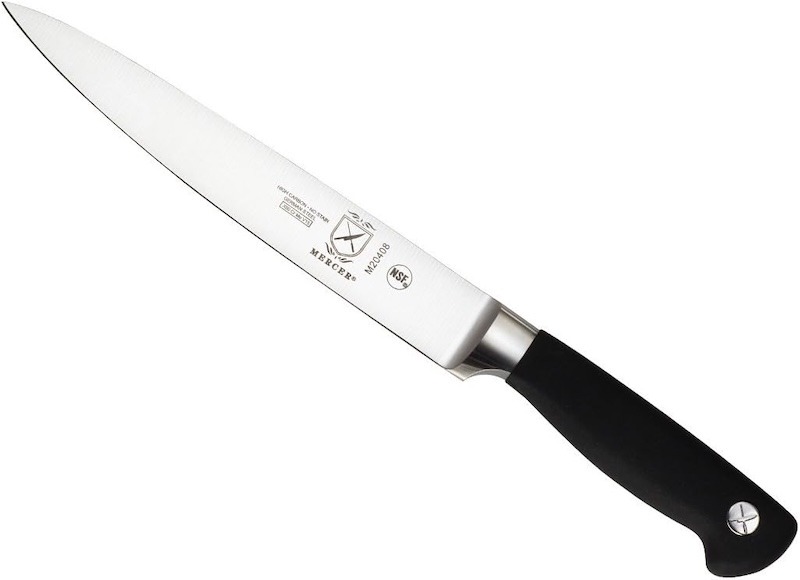
Carving Knife: Use for slicing cooked roasts, turkey, or large cuts of meat cleanly and evenly.

Buying Kitchen Knives

Why Knives Matter: A good kitchen knife is the foundation of efficient cooking. It improves speed, safety, and precision, and reduces fatigue during prep. Most home cooks only need a few well-chosen knives to handle almost everything.

Check Quality: Look for a comfortable handle, balanced weight, and a solid feel in the hand. A full tang adds stability and durability. The knife should feel controlled during chopping, not overly light or flimsy.

What to Buy First: Start with an 8-inch chef’s knife. Add a paring knife for precision work and a serrated knife for bread and soft foods. These three cover the majority of home cooking tasks.

Where to Shop: Kitchen specialty stores let you handle knives and test balance in person. This is the best way to understand comfort and fit before buying.

Amazon Convenience: Amazon offers a wide range of kitchen knives across all price points, with reviews and comparisons to help evaluate forged vs stamped, steel types, and blade lengths before purchasing.

Care Tip: Hand wash only, dry immediately, and store in a knife block, magnetic strip, or blade guard. Regular honing keeps the edge aligned and improves long-term performance.

🛒 Check Prices for Kitchen Knives on Amazon

Available on Amazon

3 Responses

  1. 5 stars
    Good points, Stephen. If I can add something to the discussion, then with knives, like with almost anything crucial which we buy, it really depends on a person’s budget and purpose of use. While I can’t give an opinion about Western-type knives, I know a lot about Japanese ones (I co-founded a shop with handcrafted Japanese knives, japana.uk). Within them, you can get a decent kitchen knife within the range of $150-$200. So for set of three knives, you are looking to spend around $450-$700.

    I agree with you: a person only needs 3-4 knives to have a well-balanced set for different purposes.
    As for knife types: Gyuto (chef’s knife) and Santoku are the most critical since you use them daily. Our clients who are professional chefs tend to choose R2/SG2 steel knives, Sakai Takayuki and Yu Kurosaki are their favorite blacksmiths. Next, you would need a petty knife (utility) and a Deba or Nakiri.

    Good luck and happy knife hunting!

  2. It sure was nice how you suggested checking the shop for knives and giving the items a test drive so as to be sure that I buy the right one that will match my hands perfectly. I never knew that buying a knife can be so complicated, but I will still take note of that. I am a beginner in the kitchen, so it’s paramount that I choose the right supplies for me so that the job will be a lot less problematic. Thank you for the tips!

  3. 5 stars
    As usual stephen! Your knowledge about kitchen knives is beyond from my thinking. Thanks dude for helping me to choose the J.A Henkels Knife for my kitchen. That’s match my hands and do work perfectly.

Leave a Reply

Your email address will not be published. Required fields are marked *

This site uses Akismet to reduce spam. Learn how your comment data is processed.