Meal Planning for Beginners Without the Stress

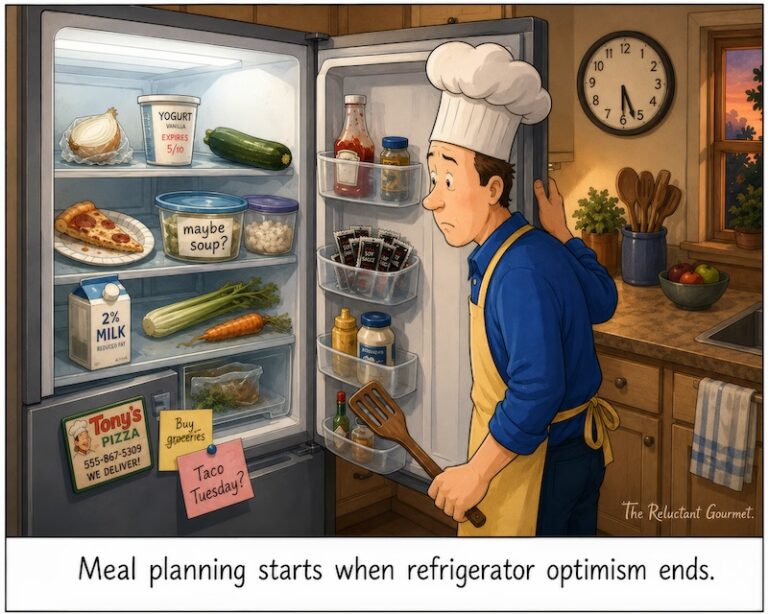
Most people don’t struggle with cooking. They struggle with deciding what to cook when everyone is hungry and tired. Meal planning removes that nightly pressure. It helps you waste less food, spend less money, and avoid the 5:30 panic of staring into the refrigerator hoping dinner magically appears.

Fast Answer

  • Meal planning works best when you start small.
  • Plan 3–4 dinners, not every meal.
  • Build meals around ingredients you already have.
  • Use leftovers intentionally.
  • Keep 2–3 “shortcut meals” ready for busy nights.

How to Start Meal Planning and Actually Stick With It

Meal planning doesn’t have to mean spending your entire Sunday chopping vegetables into matching containers like a contestant on a cooking show. A good meal plan is simply a flexible roadmap for the week ahead. It helps you avoid last-minute takeout, reduce food waste, save money at the grocery store, and make dinner feel less chaotic.

Whether you cook every night or rely on a few smart shortcut meals, a simple plan can make home cooking feel far more manageable and enjoyable. 🍝

Cartoon - looking into a mostly empty refrigerator

Start Here

  • Step 1: Check your refrigerator, freezer, and pantry first.
  • Step 2: Choose 3 easy dinners for the week.
  • Step 3: Reuse ingredients across multiple meals.
  • Step 4: Plan one leftover night.
  • Step 5: Keep one emergency “shortcut meal” available.

What Most People Get Wrong

  • Planning every meal for the week instead of starting small.
  • Choosing complicated recipes for busy weeknights.
  • Ignoring leftovers when building the plan.
  • Buying ingredients for only one recipe.
  • Trying to be “perfect” instead of flexible.

The Meal Planning System at a Glance

Strategy What It Helps You Do Biggest Benefit
Find Reliable Recipes Build a small collection of dependable meal ideas. Reduces decision fatigue.
Schedule Planning Time Spend 20–30 minutes organizing your week. Prevents last-minute dinner panic.
Track What You Have Use ingredients already in your kitchen first. Reduces waste and saves money.
Match Meals to Your Schedule Cook simple meals on busy nights. Makes meal plans realistic.
Use Weekly Themes Create structure with recurring meal ideas. Makes planning faster.
Stay Flexible Swap ingredients and repurpose leftovers. Keeps your plan practical.
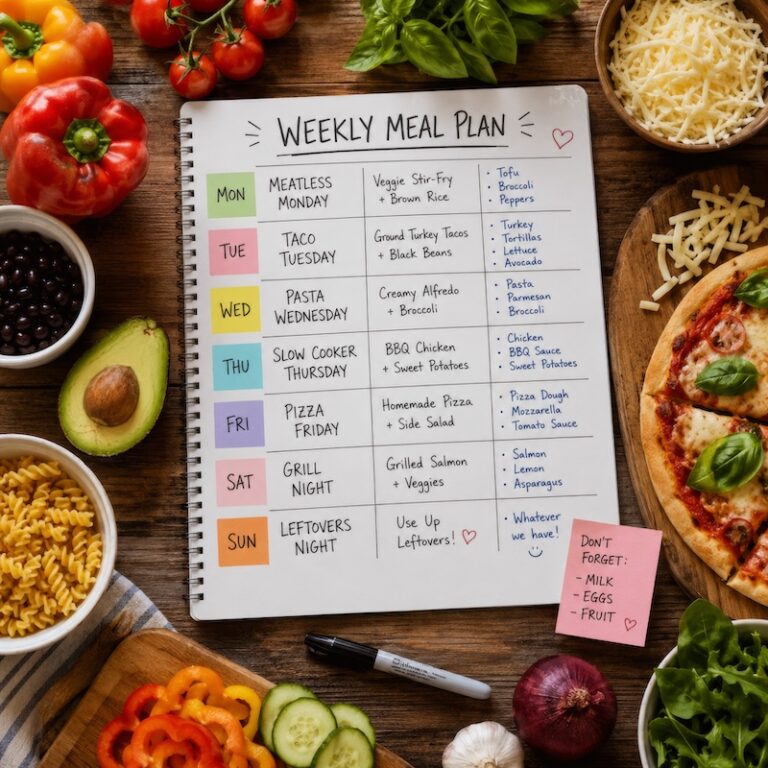
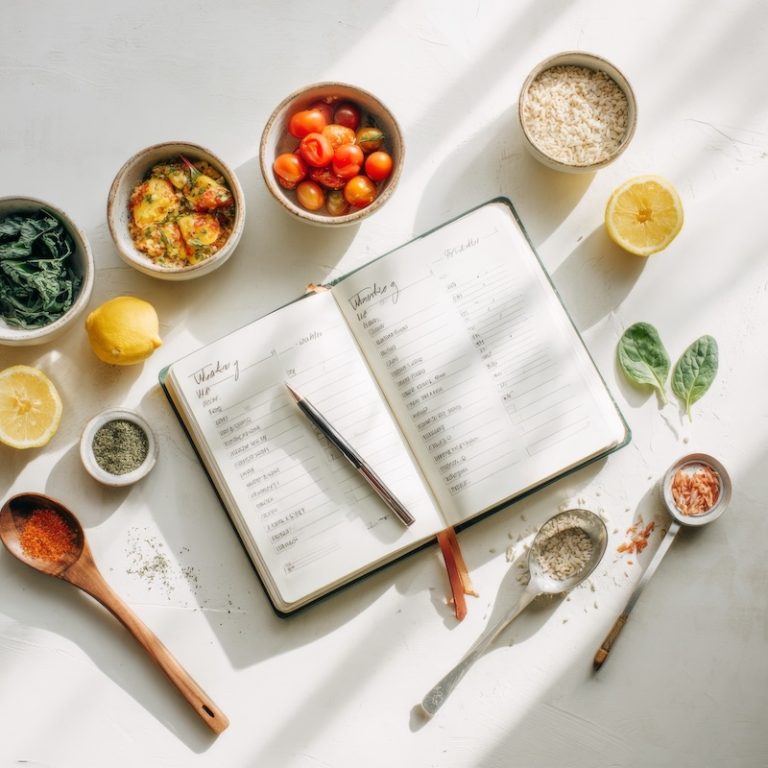
A weekly meal planner surrounded by foods

Build a Small Collection of “Repeat Meals”

  • You do not need 30 recipes.
  • Start with 8–12 dependable dinners.
  • Repeat meals reduce stress and simplify shopping.
  • Most successful meal planners rely on familiar meals.

Just Start Planning

  • Set aside 20–30 minutes once a week to plan simple meals.
  • Start with quick, familiar recipes instead of trying to impress yourself.
  • Write a short grocery list based on your plan and your schedule.
  • Expect changes during the week and adjust as needed.
  • Focus on consistency, not perfection.
  • Meal planning gets easier every week you practice it.
  • A simple weekly plan reduces stress, saves money, and cuts down on takeout.

Keep an Inventory List

  • Create a simple list of what’s in your pantry, refrigerator, and freezer.
  • Check your inventory before planning meals or shopping for groceries.
  • Use ingredients you already have to reduce waste and lower grocery costs.
  • Organize your list into categories like proteins, produce, frozen foods, and dry goods.
  • Update the list after shopping trips and cross items off as you use them.
  • A running inventory helps prevent duplicate purchases and forgotten ingredients.
  • Knowing what you already have makes meal planning faster and less stressful.

Plan Around Your Schedule

  • Check your calendar before planning meals for the week.
  • Choose quick dinners for busy nights and save longer recipes for slower days.
  • Use slow-cooker meals, batch cooking, or leftovers when time is tight.
  • Avoid planning complicated meals on exhausting days.
  • Balance your week with a mix of easy meals and more involved cooking projects.
  • Planning around real life makes meal planning easier to maintain.
  • A realistic plan reduces stress, cuts food waste, and helps you cook more often.
The best meal plan in the world still loses to soccer practice, traffic, and a Tuesday that suddenly feels like Thursday. 🍝

Why Theme Nights Work

Theme nights make meal planning easier because they remove the hardest part: deciding what to cook. Instead of starting from scratch every night, you begin with a category. That small amount of structure reduces stress, speeds up shopping, and helps families settle into a comfortable cooking rhythm.

  • They reduce decision fatigue during meal planning.
  • Shopping becomes easier because ingredients overlap.
  • Kids and families enjoy the predictability.
  • You can still vary recipes within each theme.
  • Themes create structure without making meals repetitive.
  • Planning becomes faster because you start with a direction.

Stay Flexible & Creative

  • Expect your meal plan to change sometimes and adjust without guilt.
  • Keep a few quick backup meals ready for busy or unpredictable nights.
  • Reuse leftovers in soups, wraps, tacos, salads, or pasta dishes.
  • Swap proteins, vegetables, or side dishes based on what you already have.
  • Stock pantry staples like pasta, rice, beans, and canned tomatoes for easy meal recovery.
  • Use your meal plan as a guide, not a strict set of rules.
  • Flexibility reduces stress, prevents food waste, and makes cooking more enjoyable.
Some weeks go exactly according to plan. Most weeks involve leftovers, schedule changes, and discovering a zucchini you forgot existed hiding behind the milk. 🥒

weekly meal planning scene on a rustic kitchen table

Beginner Meal Planning

Meal planning works best when it simplifies your life instead of trying to organize every minute of it. These beginner-friendly guides focus on reducing stress, saving time, minimizing food waste, and helping home cooks build practical kitchen habits that actually stick.

Start Here

Meal Planning Can Save You Money

Meal planning can transform how you shop, cook, and spend. When you plan your meals, you control your grocery list and your budget.

Best for beginner meal planners Start With a Budget
Explore How to Save Money →
Kitchen Organization

Pantry Staples Every Home Cook Should Keep

Stock your pantry with flexible ingredients that help you create quick meals, improvise dinners, and recover from chaotic weeknights.

Best for faster weeknight cooking Flexible pantry-building guide
Explore Pantry Staples →
Shortcut Cooking

Shortcut Meals for Busy Weeknights

Discover realistic meal shortcuts that help you get dinner on the table quickly without relying entirely on takeout or highly processed meals.

Best for busy schedules Low-stress dinner ideas
Explore Shortcut Meals →
Leftover Strategies

Creative Ways to Use Leftovers

Turn leftover chicken, vegetables, rice, and pantry ingredients into soups, wraps, tacos, salads, and easy second-night meals.

Best for reducing food waste Smart leftover transformations
Explore Leftover Ideas →
Cooking Confidence

How to Read a Recipe Before You Start Cooking

Learn how experienced cooks mentally prepare recipes before turning on the stove and why this one simple habit prevents countless kitchen mistakes.

Best for beginner cooks Confidence-building kitchen skill
Explore Recipe Reading Skills →
Real-Life Planning

Planning Meals Around Your Schedule

Create meal plans that fit your actual week, including busy nights, leftovers, slow-cooker meals, and low-energy evenings.

Best for reducing dinner stress Flexible real-life planning system
Explore Flexible Meal Planning →

4 Responses

  1. 5 stars
    Thank you for your site. It’s been very helpful. Also using supercook.com which allows me to prepare meals using only ingredients I have on hand.

  2. 5 stars
    Thank you for you tips and advise. This blog has helped me a busy housewife to assimilate my thoughts.
    It’s always a killer what to prepare for dinner intact every meal with the ever hungry kids and their different tastes.

Leave a Reply

Your email address will not be published. Required fields are marked *

This site uses Akismet to reduce spam. Learn how your comment data is processed.