
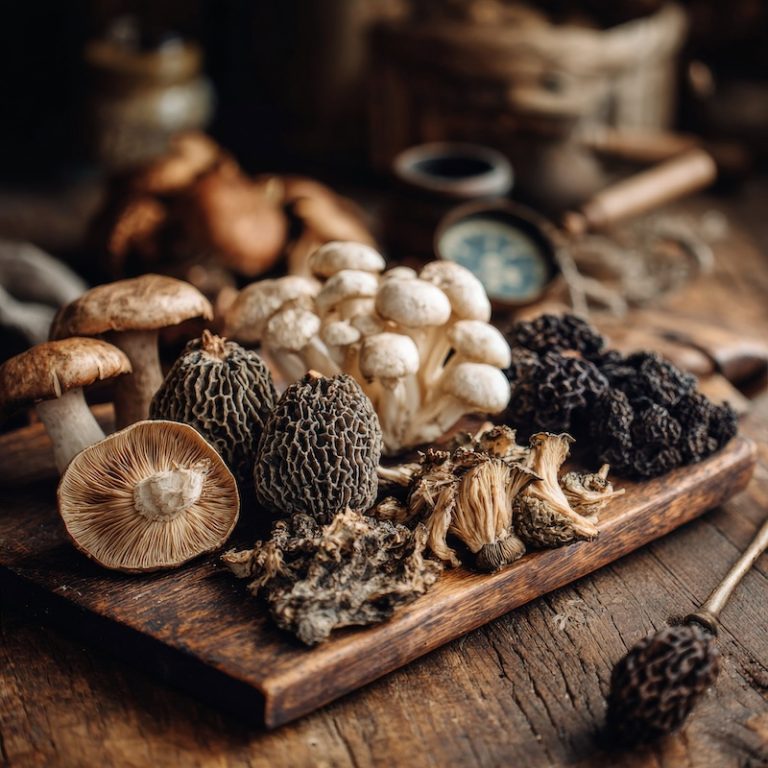


The practical rule: 1 ounce of dried mushrooms can replace about 8 ounces of fresh mushrooms in soups, sauces, risotto and other cooked dishes. That ounce of dried mushrooms may have come from 8–10 ounces fresh, but after soaking and draining, it will usually weigh only about 3–5 ounces. The exact yield varies with the mushroom variety, cut, drying method and soaking method.
Mushroom Conversions: Fresh, Dried and Rehydrated
Converting mushrooms depends on what you are trying to measure. Fresh mushroom weight, original weight before drying, drained weight after soaking and practical recipe replacement are four different things.
The useful starting point is simple: 1 ounce of dried mushrooms can replace about 8 ounces of fresh mushrooms in soups, sauces, risotto and other cooked dishes. That ounce of dried mushrooms may have come from 8–10 ounces fresh, but after soaking and draining, it will usually weigh only about 3–5 ounces.
Use the fresh mushroom calculator for cups, weights and approximate counts. Use the dried mushroom calculator for fresh-to-dried substitutions and rehydrated yields. The crawlable charts provide the same values for quick reference.
Fresh Mushroom Conversion Calculator
Convert raw mushrooms between cups, grams, ounces, pounds and approximate counts.
Conversion result
Quick reference: 1 cup sliced button or cremini mushrooms weighs about 70 grams (2½ ounces). One cup chopped weighs about 91 grams (3.2 ounces).
Count reference: An 8-ounce package contains about 12 to 13 medium button mushrooms. Actual counts change with mushroom size.
Note: These are practical averages for raw mushrooms. Cup measurements change with mushroom size, slice thickness and how firmly the cup is filled. Use a kitchen scale when precision matters.
Fresh Mushroom Conversion Chart
Use this chart to convert raw mushrooms between cups, grams, ounces and pounds. Choose the correct preparation because whole, sliced and chopped mushrooms fill a measuring cup differently.
Swipe across the table to see every conversion.
| Mushroom | Preparation | ¼ Cup Weighs | ½ Cup Weighs | 1 Cup Weighs | 4 oz Makes | 8 oz Makes | 1 lb Makes |
|---|---|---|---|---|---|---|---|
| White button | Whole | 24 g / 0.8 oz | 48 g / 1.7 oz | 96 g / 3.4 oz | About 1⅛ cups | About 2⅜ cups | About 4¾ cups |
| Sliced or pieces | 18 g / 0.6 oz | 35 g / 1.2 oz | 70 g / 2.5 oz | About 1⅝ cups | About 3¼ cups | About 6½ cups | |
| Chopped | 23 g / 0.8 oz | 45 g / 1.6 oz | 91 g / 3.2 oz | About 1¼ cups | About 2½ cups | About 5 cups | |
| Cremini / baby bella | Whole | 24 g / 0.8 oz | 48 g / 1.7 oz | 96 g / 3.4 oz | About 1⅛ cups | About 2⅜ cups | About 4¾ cups |
| Sliced or pieces | 18 g / 0.6 oz | 35 g / 1.2 oz | 70 g / 2.5 oz | About 1⅝ cups | About 3¼ cups | About 6½ cups | |
| Chopped | 23 g / 0.8 oz | 45 g / 1.6 oz | 91 g / 3.2 oz | About 1¼ cups | About 2½ cups | About 5 cups | |
| Portobello | Sliced, chopped or diced | 22 g / 0.8 oz | 43 g / 1.5 oz | 86 g / 3 oz | About 1⅜ cups | About 2⅝ cups | About 5¼ cups |
| Oyster | Sliced, chopped or torn | 22 g / 0.8 oz | 43 g / 1.5 oz | 86 g / 3 oz | About 1⅜ cups | About 2⅝ cups | About 5¼ cups |
How to use the chart: The cup-to-weight columns show how much a measured cup weighs. The weight-to-cup columns show how many prepared cups you get from a purchased weight.
Specialty mushrooms: Portobello and oyster mushrooms vary in shape and packing. The chart uses approximately 86 grams per cup for prepared mushrooms. Use weight when accuracy matters.
Raw mushrooms only: Cooked mushrooms lose moisture and shrink, so these values should not be used for cooked-to-raw conversions.
How Many Mushrooms Are in 4 Ounces, 8 Ounces or 1 Pound?
Mushroom counts depend on size, so weight gives you the more reliable measurement. Use these counts as practical shopping estimates for whole, raw mushrooms.
Fast answer: An 8-ounce package contains approximately 12 to 13 medium button mushrooms. The same package may contain 22 or more small mushrooms or about 9 to 10 large ones.
Swipe across the table to see every mushroom count.
| Mushroom | Size | Average Weight Each | 4 oz / 113 g | 8 oz / 227 g | 1 lb / 454 g |
|---|---|---|---|---|---|
| White button | Small | About 10 g / 0.35 oz | About 11 | About 22–23 | About 45 |
| Medium | About 18 g / 0.63 oz | About 6 | About 12–13 | About 25 | |
| Large | About 23 g / 0.81 oz | About 5 | About 9–10 | About 19–20 | |
| Portobello | Average whole cap | About 84 g / 3 oz | About 1–2 | About 2–3 | About 5–6 |
| Shiitake | Average whole mushroom | About 19 g / 0.67 oz | About 6 | About 12 | About 24 |
Button and cremini: The button-mushroom weights provide a useful estimate for similarly sized cremini mushrooms, but cremini packages often contain a wider mix of sizes.
Portobello and shiitake: These counts are approximate. Portobello cap size varies considerably, and shiitake recipes often remove the tough stems before weighing.
Why oyster mushrooms are not included: Oyster mushrooms grow in irregular clusters. Count does not provide a dependable measure, so use weight instead.
Dried Mushroom Conversion Calculator
Convert dried mushrooms to approximate fresh weight, drained rehydrated weight and a practical recipe replacement.
Conversion result
Quick reference: 1 ounce (28 grams) dried mushrooms represents about 8–10 ounces fresh, yields approximately 3–5 ounces after soaking and draining, and can replace about 8 ounces fresh in a suitable cooked dish.
Why the weights differ: Drying permanently changes a mushroom’s structure. Soaking replaces some of the lost water, but it does not restore the mushroom’s original weight, volume or texture.
Note: These are practical estimates. Variety, cut, drying method, soaking time and draining method affect the result. Use package directions when they differ. This calculator is for mushroom pieces—not mushroom powder.
Fresh, Dried and Rehydrated Mushroom Conversion Chart
Dried mushrooms can replace fresh mushrooms in many cooked dishes, but three different measurements are involved. The original fresh weight, the drained weight after soaking and the practical recipe replacement are not the same thing.
| Dried mushrooms | Approximate original fresh weight | Drained rehydrated yield | Practical fresh replacement |
|---|---|---|---|
| ¼ oz / 7 g | 2–2½ oz / 57–71 g | ¾–1¼ oz / 21–35 g | About 2 oz / 57 g |
| ½ oz / 14 g | 4–5 oz / 113–142 g | 1½–2½ oz / 43–71 g | About 4 oz / 113 g |
| 1 oz / 28 g | 8–10 oz / 227–284 g | 3–5 oz / 85–142 g | About 8 oz / 227 g |
| 2 oz / 57 g | 1–1¼ lb / 454–567 g | 6–10 oz / 170–284 g | About 1 lb / 454 g |
Use the last column for cooking substitutions. The original-fresh column describes production weight; it is not a promise that soaked mushrooms will recover that weight or volume.
Fresh Mushrooms to Dried Mushrooms
For a practical substitution in soups, sauces, risotto, braises and similar cooked dishes, use the reverse conversions below.
| Fresh mushrooms called for | Starting amount of dried mushrooms | Best use |
|---|---|---|
| 2 oz / 57 g | About ¼ oz / 7 g | Soups, sauces, risotto, braises, stews and other dishes in which mushroom flavor matters more than fresh bulk or browned texture. |
| 4 oz / 113 g | About ½ oz / 14 g | |
| 8 oz / 227 g | About 1 oz / 28 g | |
| 1 lb / 454 g | About 2 oz / 57 g |
Which Dried Mushrooms Substitute Well?
The numerical ratio is only a starting point. Drying changes each variety’s flavor and texture differently.
| Mushroom | Substitution quality | Rehydration and cooking guidance | Soaking liquid |
|---|---|---|---|
| Porcini | Excellent | Best in soups, sauces, risotto and braises. Soak until fully flexible; thick pieces take longer than thin slices. | Usually worth saving. Strain very carefully to remove grit. |
| Shiitake | Excellent | Dried shiitake have a deeper flavor and chewier texture than fresh. Soak until flexible and remove tough stems before cooking. | Usually flavorful and worth saving after straining. |
| Morels | Good | Rinse the hollow caps carefully because they can hold grit. Cook morels thoroughly before eating. | Save only after straining through a very fine filter. |
| Black trumpet | Very good | Well suited to sauces, soups, eggs and risotto. Rinse softened mushrooms carefully. | Often flavorful, but the folds can carry grit. Strain carefully. |
| Oyster | Limited | Suitable for soups, sauces and mixed cooked dishes, but dried oyster mushrooms will not regain the delicate texture of fresh ones. | Mild. Use only if it smells clean and tastes pleasant. |
| Button, cremini or portobello | Limited | Suitable for soups and sauces. Use fresh when browned texture, moisture or mushroom bulk matters. | Usually mild. Taste before adding it to the dish. |
| Chanterelles | Poor direct substitute | Dried chanterelles can become rubbery or bitter. Use fresh when their texture is important. | Discard if bitter. |
| Wood ear | Texture ingredient | Use for its crisp texture rather than as a general mushroom replacement. Reconstitute with boiling water and cook thoroughly. | Usually discard; it contributes little mushroom flavor. |
Why don’t the mushrooms return to their original fresh weight?
Drying permanently changes a mushroom’s structure. Soaking replaces some of the lost water, but not all of it. One ounce of dried mushrooms may have come from 8–10 ounces fresh but yield only about 3–5 ounces after soaking and draining.
Measurement note: These estimates apply to dried mushroom pieces measured by weight. Cups, tablespoons, piece counts and mushroom powder are not reliable equivalents because their density and culinary purpose vary too much.
Frequently Asked Questions About Mushroom Conversions
How much dried mushroom equals fresh mushroom?
As a practical starting point, 1 ounce of dried mushrooms can replace about 8 ounces of fresh mushrooms in soups, sauces, risotto and other cooked dishes. This is a cooking substitution, not an exact match for weight, volume or texture.
How much does 1 ounce of dried mushrooms weigh after rehydrating?
One ounce of dried mushrooms generally yields about 3–5 ounces after soaking and draining. The result varies with the mushroom variety, piece size, drying method, soaking time and how thoroughly you drain the mushrooms.
Why don’t rehydrated mushrooms return to their original fresh weight?
Drying permanently changes a mushroom’s structure. Soaking replaces some of the lost water, but not all of it. One ounce of dried mushrooms may have come from 8–10 ounces fresh but yield only about 3–5 ounces after soaking and draining.
Should I rehydrate dried mushrooms before cooking?
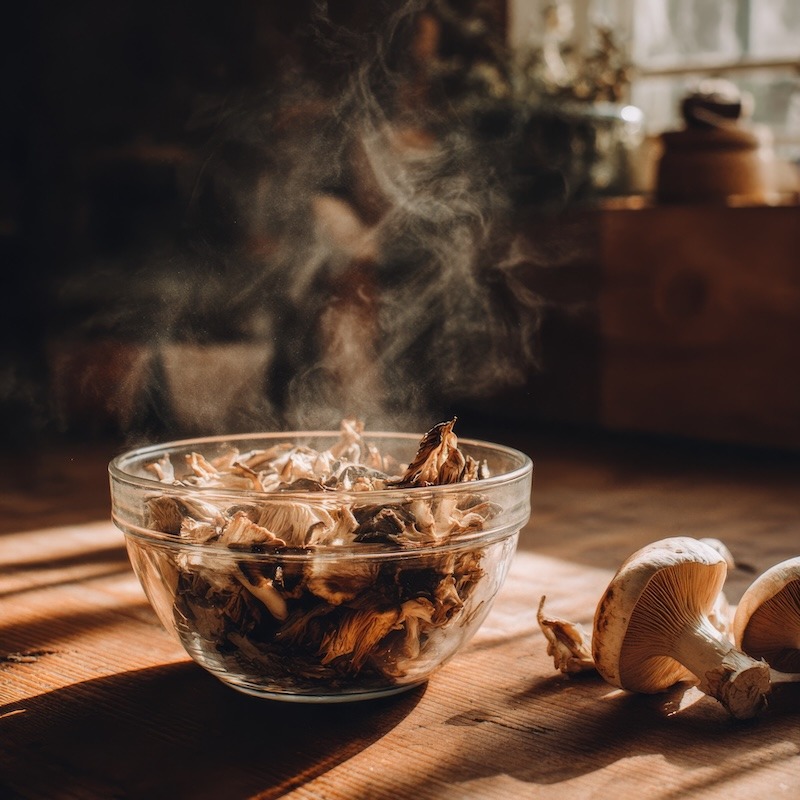
Usually. Place the mushrooms in a heatproof bowl, cover them with boiling water and soak until completely flexible. Thin slices commonly need 20–30 minutes, while thick pieces and whole caps may take longer. Follow the package directions when they differ, then cook the rehydrated mushrooms thoroughly.
Should I save dried-mushroom soaking liquid?
Save it only when it smells clean and tastes pleasant. Lift out the mushrooms and strain the liquid through a coffee filter, damp paper towel or very fine cloth to remove grit. Discard liquid that tastes bitter or smells off. Wood-ear soaking liquid normally adds little flavor and can be discarded.
Do all mushroom varieties use the same fresh-to-dried conversion?
The practical starting point of 1 ounce dried for 8 ounces fresh works for many cooked dishes, but it is not equally suitable for every variety. Porcini, shiitake, morels and black trumpets generally work well dried. Oyster mushrooms and button-family mushrooms have more noticeable texture changes. Dried chanterelles can become rubbery or bitter and are a poor direct substitute.
Can I substitute dried mushrooms for fresh mushrooms in any recipe?
No. Dried mushrooms work best in soups, sauces, risotto, stews and braises where mushroom flavor matters more than fresh texture and bulk. Choose fresh mushrooms for grilling, stuffing, sautéing and recipes that depend on a substantial fresh-mushroom texture.
How do I substitute sliced or chopped mushrooms for whole mushrooms?
Use weight whenever possible. Eight ounces of whole raw mushrooms still weighs eight ounces after slicing or chopping, although trimming may reduce the usable amount. Cup measurements change because whole mushrooms, slices and chopped pieces pack differently.
Can I substitute cooked mushrooms for raw mushrooms?
Sometimes, but there is no dependable one-to-one volume conversion. Cooked mushrooms have already released water and lost volume. They work best as a replacement in sauces, casseroles, fillings and other mixed dishes. Use fresh mushrooms when the recipe depends on browning or cooking them with the other ingredients.
Can mushroom powder replace dried mushrooms?
Not as a direct substitute. Mushroom powder adds concentrated flavor and umami but provides none of the texture or bulk of mushroom pieces. Use it as a seasoning or flavor booster rather than as a measured replacement for fresh, dried or rehydrated mushrooms.
Some of My Favorite Recipes With Mushrooms
Chicken Thighs with Mushrooms and Artichoke Hearts Recipe
Grilled Portobello Mushrooms Au Poivre
Rigatoni with Fresh Mushroom Sauce
15 Responses
My recipe calls for 14g dried mushrooms. I see when you convert in the other direction that a small amount – example 3 oz – of fresh mushrooms = 8 oz dried. But that’s not by weight. What you mean is one cup 8 oz = 1 cup. I am not expected to add 85 g dried mushrooms to the recipe.
I hope I said that right. But you will know what I mean if you tried to convert it in the other direction. Sure, I can lower the amount of liquid I need, but I still don’t know how many fresh mushrooms to use to make up 14g dried, nor whether I should dry them first, in a recipe for baked herbed rice.
Hi Sue, you were right to question that conversion. Fourteen grams of dried mushrooms is about ½ ounce. As a practical substitution, that equals about 4 ounces, or 113 grams, of fresh mushrooms.
You do not need to dry the fresh mushrooms first. For baked rice, I would slice and sauté them briefly before adding them. That removes some excess moisture and develops their flavor. Fresh mushrooms will still taste milder and provide more bulk than the dried mushrooms.
my canning recipe calls for a peck of fresh mushrooms. How many pounds of mushrooms would I need for a peck?
Hi Barbara, a U.S. peck is a volume measurement equal to 8 dry quarts, not a fixed weight of mushrooms. A rough estimate is about 8 pounds of whole button mushrooms, but the actual weight varies with mushroom size and how tightly they are packed.
Because you are canning, I would not rely on a converted estimate to adjust the recipe. Mushrooms are a low-acid food and must be pressure canned using a currently tested recipe. If the recipe doesn’t provide the mushroom weight or doesn’t come from a reliable canning authority, I would use the National Center for Home Food Preservation’s mushroom-canning instructions instead.
I have a recipe that calls for five(5) shitake mushrooms, rehydrated in 3 three cups of water. (Bad recipe instruction, I know, no actual measurement). I am thinking that this might equal approximately 5 ounces of fresh mushroom. Am I anywhere close, you reckon?
Hi Julie, you can’t accurately convert five dried shiitake mushrooms without weighing them. Whole dried caps vary considerably in size and thickness, and the three cups of water only tells you how much liquid the recipe uses for soaking.
If possible, weigh the five dried mushrooms before soaking. As a practical cooking substitution, every ½ ounce (14 grams) of dried mushrooms represents about 4 ounces of fresh mushrooms. Your estimate of 5 ounces fresh could be close, but it is only a rough estimate without the dried weight.
Fresh shiitake will also be milder and less chewy than rehydrated shiitake.
Hi! If a recipe calls for 4.5 cups of oyster mushrooms, how much would I need to purchase by weight? Thank you!
Hi Michael, our working conversion is about 86 grams (3 ounces) per cup of prepared oyster mushrooms.
For 4½ cups, you would need about 387 grams, 13½–14 ounces, or roughly 0.85 pounds. Oyster mushrooms have irregular shapes and don’t pack uniformly, so Iwould buy about 1 pound to allow for trimming and natural variation.
Jenny and Patrick, you were both correct. Chopped mushrooms pack more closely than sliced mushrooms, so the same weight occupies fewer cups.
The revised chart now uses approximately 70 grams for 1 cup sliced and 91 grams for 1 cup chopped. That means 1 pound makes about 6½ cups sliced or 5 cups chopped.
Thank you both for continuing to point out the problem. The earlier chart had those relationships reversed, and I’ve now corrected it.
Hi Stephen. Thank you for all this info. However, I agree with Vici that the sliced & chopped mushroom equivalents should be reversed. Ie 5 cups of chopped mushrooms would be equivalent to 6 cups of sliced mushrooms. Because more chopped mushrooms are crammed into each cup, not as many cups are required as for the sliced mushrooms.
Stephen,
They are both right. You said it again in your reply. 1 lb of mushrooms chopped fits a smaller volume than sliced. You can fit more chopped mushrooms into a known volume than you can sliced. So a pound would take less room than a pound of sliced.
1 pound of onions takes more cups than finely diced onions. From order of size, whole mushrooms, sliced mushrooms, chopped mushrooms. Chopped takes the least amount of room.
What they (Patrick & Jenny) said. ?
Jenny and Patrick, you were both correct. Chopped mushrooms pack more closely than sliced mushrooms, so the same weight occupies fewer cups.
The revised chart now uses approximately 70 grams for 1 cup sliced and 91 grams for 1 cup chopped. That means 1 pound makes about 6½ cups sliced or 5 cups chopped.
Thank you both for continuing to point out the problem. The earlier chart had those relationships reversed, and I’ve now corrected it.
My recipe calls for 4 LG. Shitake mushrooms. How many LG. Mini bellas would I use?
Hi Lorraine, the most dependable approach is to replace the four shiitake mushrooms with approximately the same weight of baby bellas. Mushroom counts can be misleading because both varieties vary considerably in size.
If you cannot weigh them, start with about 4–6 medium baby bellas for four large shiitake caps. Baby bellas have a milder flavor, so the substitution will provide similar mushroom bulk but not the same deep shiitake flavor. A small amount of mushroom powder or soy sauce can add more savory depth if it suits the recipe.