

Fast Answer
Tuna poached in marinara gives off juices and oils that end up in the sauce, and that's where the fishy taste comes from. Trim off the dark bloodline, pat the fish very dry, sear it briefly, and throw out the pan liquid before the tuna goes into the sauce.
What Went Wrong the First Time
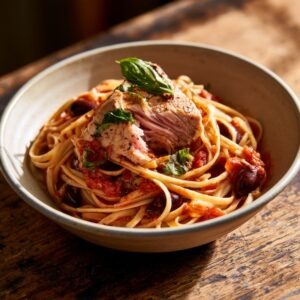
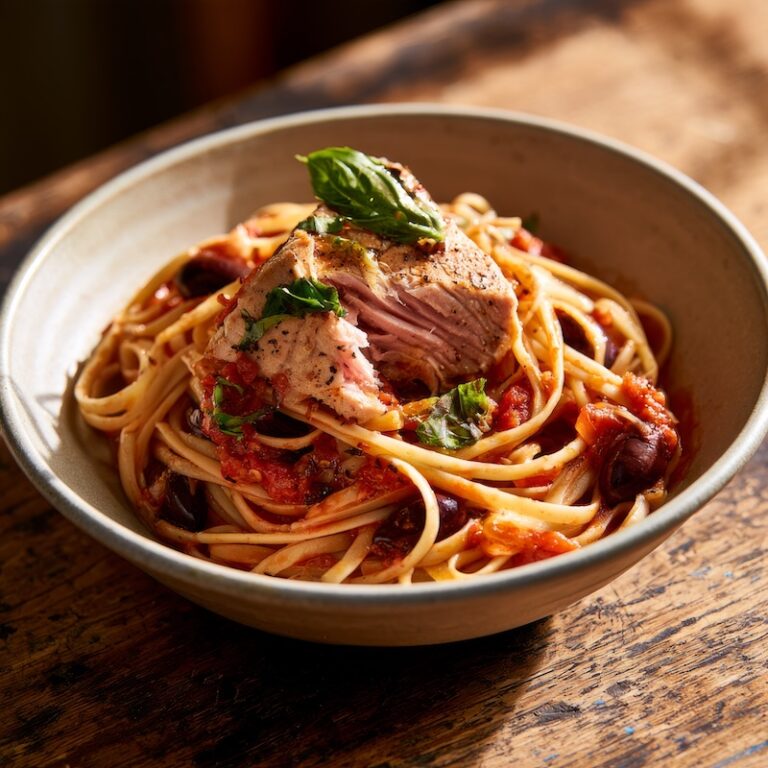
The idea was a quick dinner with my daughter: two pieces of flash-frozen Alaskan tuna from the seafood box we get every month, a jar of my favorite store-bought marinara, Kalamata olives and fresh linguine. The tuna was the first thing I suspected. But I’ve never had a bad piece of fish from that company, and as it turned out, the fish wasn’t the problem. The method was.
Start Here
- Thaw completely: Partly frozen tuna cooks unevenly and keeps giving off liquid once it's in the pan. The fridge overnight is best; cold water in a sealed bag works if you're short on time.
- Dry it seriously: Use more paper towels than seems reasonable. Surface liquid ends up in your sauce.
- Use a small skillet with a lid: The sauce should come about halfway up the sides of the fish. In a big pan it spreads too thin to poach anything.
- Don't walk away: Small tuna pieces go from just right to dry in a minute or two.
What Most Cooks Get Wrong
- Problem: Putting raw tuna straight into the sauce, which is what I did. Everything the fish releases as it cooks (moisture, proteins and oils) becomes part of the marinara.
- Why it shows up with tuna: Delicate white fish give off a mild flavor that can improve a sauce. Tuna is meatier and oilier, so its flavor comes through much more strongly.
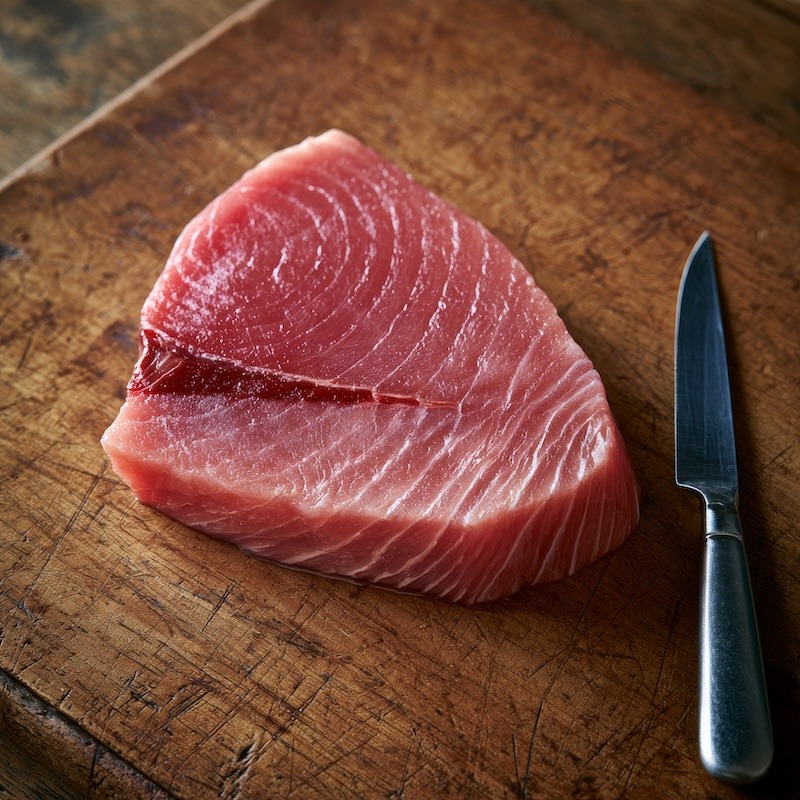
- The overlooked part: That dark red strip running through the steak is the bloodline. It tastes much stronger than the rest of the fish, and most recipes never tell you to trim it.
Why This Works
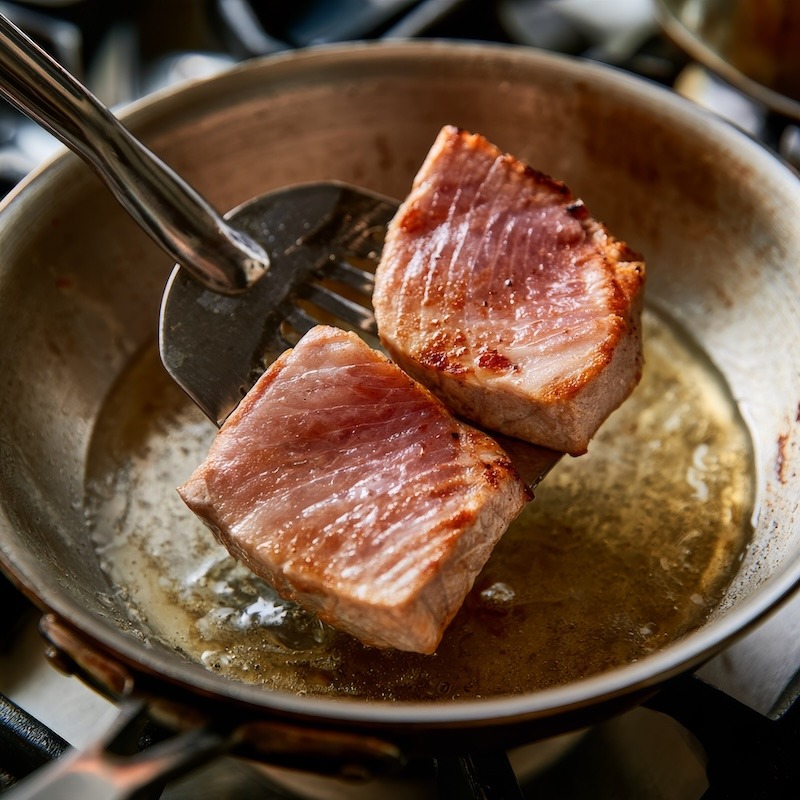
- Searing sets the surface: Thirty seconds or so per side over high heat firms the outside, so the fish releases less liquid into the sauce later.
- Discarding the pan liquid matters: Whatever comes out during the sear is concentrated fish flavor. Pour it off before the sauce goes in.
- The sauce finishes the fish, it doesn't cook it: Less time in the sauce means less fish oil in it. The tuna still picks up the tomato and garlic.
- Acid and brine help: Tomato, a squeeze of lemon, olives and capers all help keep the sauce from tasting fishy.
Quick Fixes and Tips
- Sauce already fishy? A squeeze of lemon, a spoonful of capers and more chopped olives will cover a lot of it. Fresh basil or parsley at the end helps too.
- Vacuum-sealed fish: If you're thawing it in the refrigerator, cut the bag open first, as the FDA recommends. Cold-water thawing in the sealed bag is fine.
- Smell before you cook: A mild ocean smell is normal. Sour, rancid or ammonia means the fish goes in the trash, not the pan.
- For full control: Cook the tuna completely on its own and spoon the marinara over it at the table.
- Jarred sauce is fine: I used one of my favorites. A good jarred marinara isn't what goes wrong in this dish.
What to Serve With This
- Fresh linguine: That's what I used. It cooks in a couple of minutes and the sauce clings to it.
- Arugula with lemon and olive oil: Something peppery and sharp to set against the richness of the tuna.
- Crusty bread: For the sauce left on the plate.
- Roasted broccoli or broccolini: A little char and garlic works well with the tomato.
- To drink: A dry rosé or a light red with some acidity, like a Sicilian Frappato, stands up to tomato and tuna. A Vermentino works if you want white.
Tuna Poached in Marinara
Ingredients
- 2 small tuna pieces
- 1½ cups marinara sauce store bought or homemade
- 1 tablespoon olive oil
- 1 small garlic clove sliced
- pinch red pepper flakes
- fresh basil or parsley
- salt and pepper to taste
- Kalamata olives optional
Instructions
Prepare the Tuna
- Make sure the tuna is completely thawed.
- Trim off the dark red bloodline if your pieces have one.
- Pat both pieces dry with paper towels, pressing until the towel comes away nearly dry.
- Season lightly with salt and pepper.
Sear Briefly
- Heat a thin film of olive oil in a small skillet over medium-high heat until it shimmers. Sear the tuna for 30–45 seconds per side, just long enough for the outside to turn opaque.
Warm the Marinara
- Lower the heat to medium-low and add the tablespoon of olive oil. Add the garlic and red pepper flakes and cook for about 30 seconds, until the garlic smells fragrant but hasn't browned.
- Pour in the marinara, plus the capers or olives if you're using them. Simmer gently for 3–5 minutes. You want a few lazy bubbles, not a rolling boil.
Add the Tuna
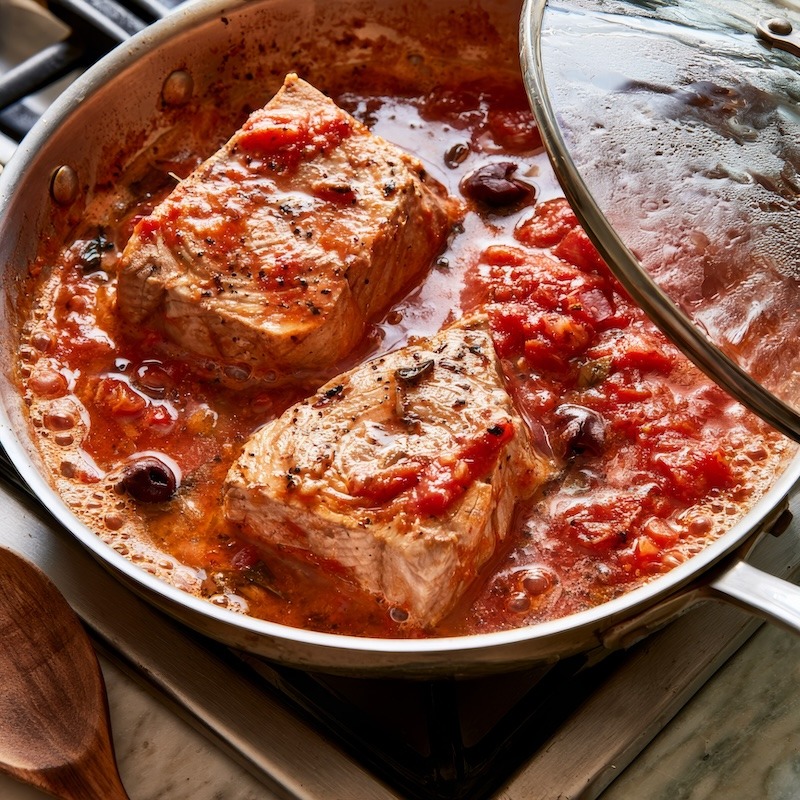
- Nestle both pieces into the sauce and spoon a little over the tops. The sauce should come about halfway up the sides of the fish.
Cover and Finish Gently
- Turn the heat to low and cover the pan. Since the tuna is already seared, it needs less time than a raw poach.
- Tuna thickness Original poach time After searing (approx.)½ inch 3–5 minutes 1–2 minutes¾ inch 5–7 minutes 2–4 minutes1 inch 7–10 minutes 4–6 minutes
Check for Doneness
- For fully cooked tuna, the FDA recommends an internal temperature of 145°F. The tuna should be opaque and separate easily with a fork.
Finish
- Take the pan off the heat, add fresh parsley or basil, and drizzle with a little good olive oil.
Storage and Make-Ahead
- Best eaten right away: Reheated tuna dries out and gets stronger in flavor.
- Leftovers: Refrigerate within 2 hours and eat within 1–2 days. Reheat gently over low heat, or eat the tuna cold over greens.
- Make ahead: Make the sauce with the olives and capers up to 3 days ahead. Sear and finish the tuna just before serving.
Why does my tomato sauce taste fishy after cooking tuna in it?
The tuna releases juices and oils into the sauce as it cooks. Searing it first and discarding the pan liquid cuts down on most of it.
Is fishy-tasting tuna bad?
Not necessarily. A mild seafood taste is normal, but a sour, rancid, or ammonia-like smell means the fish has gone off and shouldn’t be eaten.
Does flash-frozen tuna taste fishier than fresh?
No, properly flash-frozen tuna holds its quality very well. How it’s stored and thawed matters more than whether it was frozen.
Should I remove the dark part of tuna before cooking?
Yes, trim the bloodline for a sauce like this. It tastes much stronger than the rest of the fish.
How long do you poach tuna in marinara?
3–10 minutes on low for raw tuna, depending on thickness, or about half that if you sear it first. Check for 145°F.
What temperature should poached tuna reach?
145°F for fully cooked tuna, according to the FDA.
Can I use canned tuna instead?
Yes, but stir it in at the end just to warm through. It’s already cooked and will dry out if you simmer it.
Can I use jarred marinara?
Yes, a good jarred marinara works fine here. The tuna, not the sauce, is what causes the fishiness.
Is it better to thaw tuna in the fridge or in cold water?
The fridge is gentler, but cold water in a sealed bag is safe and quick. Either way, pat the fish completely dry before it hits the pan.
- The thaw matters more than most people think, and this covers how to thaw frozen fish safely.
- If you only bought capers for one recipe, here's what to do with capers.
- Poaching is gentler than most cooks give it credit for, and here's how poaching works.
- The olives in this dish point straight toward pasta puttanesca.
- For the sauce itself, here's homemade marinara if you want to skip the jar.