
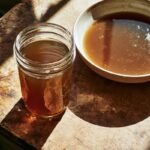
Fast Answer
The recipe calls for "cold water" without a quantity — here's the fix: use enough to cover the bones by about an inch, roughly 5 to 6 quarts for 7 pounds of bones. You're maintaining a level as it simmers, not hitting an exact number, so top it off as it evaporates.
Why I Went Back to Making My Own Veal Stock
I learned to make veal stock early on, back when it was purely the base for sauces like demi-glace. These days it’s also insurance: whenever I break down bone-in veal, those bones go in the freezer instead of the trash, and once I’ve got enough, I make a batch and freeze it in portions. That’s really what this recipe is for — building a supply you can pull from, not making a special occasion out of it.
Start Here
- Block off real time: About 45 minutes of active roasting, then 4 to 12 hours of mostly unattended simmering — plan this for a day you're home, not a weeknight.
- Ask for the right bones: Veal knuckle and neck bones specifically, cut into 2 to 3-inch pieces — most butchers will do this for you if you ask ahead.
- Get the straining gear ready before you need it: A fine mesh strainer or a colander lined with three or four layers of cheesecloth — you don't want to be hunting for this with a pot of hot stock in your hands.
What Most Cooks Get Wrong
- Problem: Letting the stock boil instead of simmer.
- What happens: A rolling boil emulsifies the rendered fat into the liquid instead of letting you skim it off — you end up with a cloudy, greasy stock instead of a clear one.
- Fix: Keep it at a bare simmer, around 195–200°F — small bubbles breaking the surface occasionally, not a boil — and skim every 30 minutes.
Why This Works
- Roasting isn't optional: Browning the bones and painting them with tomato paste builds the fond that gives brown stock its color and depth — skip it and you get a pale, flat-tasting stock instead.
- Gelatin is the actual goal: The long, slow simmer pulls collagen out of the bones and connective tissue, which is what gives stock body and lets it reduce into something that coats a spoon — broth, made mostly from meat, doesn't do this the same way.
- Why veal specifically: Its flavor is milder than beef, which is why culinary schools default to it — it backs up other ingredients instead of competing with them.
Veal Stock vs. Beef Stock
- Same method, different bones: Roast, deglaze, simmer, skim, strain — identical process for both.
- Veal is milder: Less assertive than beef, which is why it's the culinary-school default — it rounds out a dish instead of announcing itself.
- Beef bones are easier to find: Most butchers carry them regularly; veal bones often need to be requested ahead.
- Brown vs. white: Skip the roasting step and you get a paler "white" veal stock, more common in delicate sauces — this recipe makes the brown version.
Brown Veal Stock
Ingredients
- 7 pounds veal bones cut into 2 or 3-inch pieces
- 1 can tomato paste
- 1 cup celery chopped
- 1 cup carrot chopped
- 2 cups onion chopped
- 1 cup red wine for deglazing (substitute water)
- 1 tablespoon peppercorns
- 4 bay leaves
- 3 sprigs thyme
- cold water
Instructions
- Preheat the oven to 425°F.
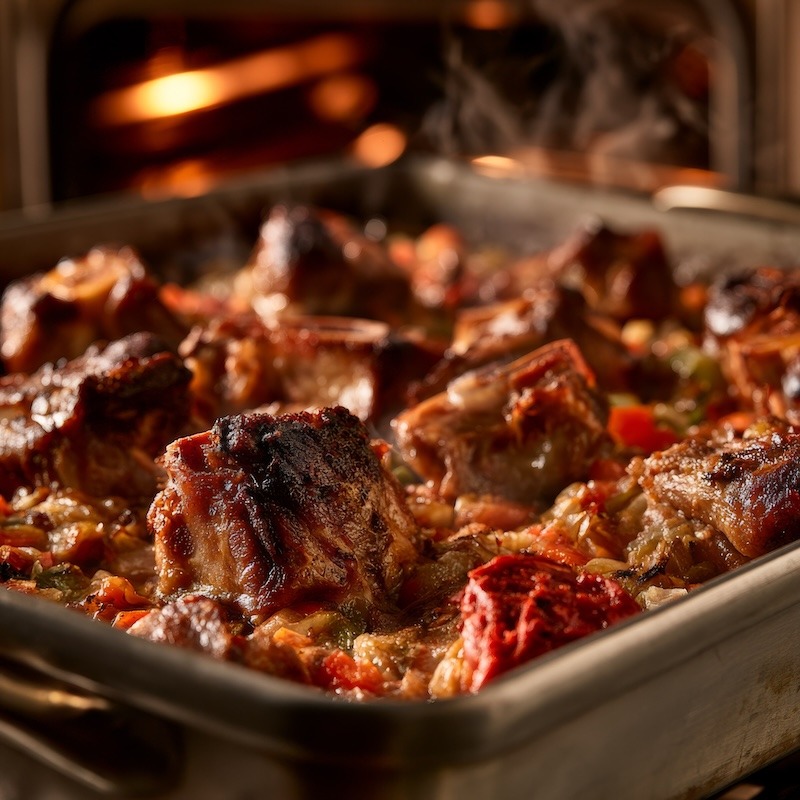
- Spread the bones in a roasting pan in a single layer and roast for about 30 minutes, turning once, until well browned.
- Remove from the oven and paint a thin layer of tomato paste over the bones — this deepens the color and flavor of the finished stock.
- Pile the vegetables on top of the bones and roast another 15–20 minutes, until they caramelize.
- Transfer the bones and vegetables to a stockpot.
- Deglaze the roasting pan with the wine (or water), scraping up the browned bits, and pour it into the stockpot.
- Add the peppercorns, bay leaves, and thyme. Cover the bones with cold water — about 5 to 6 quarts for 7 pounds of bones, or enough to cover them by roughly an inch
- Over medium heat, bring the pot slowly up to a bare simmer. Don't let it boil.
- Adjust the heat to hold a gentle bubble, and skim off any foam every 30 minutes.
- Let the stock simmer for at least 4 hours, up to 12 if you have the time. Top off with more water if it's evaporating faster than it should.
- When it's done, remove and discard the bones. Strain through a fine mesh strainer, or a colander lined with three or four layers of cheesecloth, for a clear stock.
- Chill quickly — portion it into smaller containers first, since smaller volumes cool faster and more safely than one large pot. Refrigerate, then skim off the solidified fat from the top and discard.
Veal Stock Uses
| Use | Why It Works |
|---|---|
| Demi-Glace & Pan Sauces | Reduce it hard and you get the backbone of classic French sauce work. |
| Soups & Consommé | The base for French onion soup or any clear soup that needs body without cloudiness. |
| Stews & Braises | Swap it in wherever a recipe calls for beef stock when you want a rounder, less aggressive flavor. |
| Risotto | Replace your usual stock — it disappears into the rice instead of competing with the other flavors. |
| Deglazing | A splash after searing meat lifts the fond right off the pan for an instant sauce. |
| Poaching | A more savory bath than plain water for gently poaching meat. |
| Grains | Cook rice, farro, or barley in it instead of water for a noticeably richer side. |
| Casseroles & Braised Vegetables | A spoonful keeps things moist and adds depth without announcing itself. |
Quick Fixes and Tips
- No scale for the bones? Cover them by about an inch of cold water and top off as it evaporates — you're maintaining a level, not hitting an exact volume.
- Tastes weak after a full simmer: That's usually too much water for the amount of bone, not too little time — use more bone relative to water next time.
- Straining twice — once through a colander, once through cheesecloth — gets you a genuinely clear stock without having to babysit the simmer as closely.
- Slow cooker works too: Roast the bones first, then transfer everything to a slow cooker on low for 12–24 hours at a bare simmer. You'll get a clean, gelatin-rich stock with slightly less reduction than the stovetop version.
Storage, Freezing, and Keeping a Supply On Hand
- Save your bones: Every time you cook something with bone-in veal, bag the bones and freeze them raw — once you've got 6 to 7 pounds, you've got enough for a batch.
- Fridge: 3 to 4 days in an airtight container, at or below 40°F.
- Freezer: 3 to 4 months. Portion it for how you'll actually use it — ice cube trays for spoonfuls, quart containers for soup-sized batches.
- Reduce before freezing to save space: Simmer the strained stock down by half, or further toward demi-glace, and you get the same flavor payoff in a fraction of the freezer room — thin it back out with water when you use it.
- Freezing doesn't meaningfully change the flavor — no noticeable difference in side-by-side use.
The Importance of Learning How to Prepare Veal Stock
It’s time to learn one of the fundamental skills of French cuisine: veal stock.
The French chefs were experts in procuring every bit of flavor from the leftover bones of the pigs, cows, and chickens they used to create incredible meals. No bones were tossed but used for making classic French stocks in sauces, soups, and stews.
The stock has gained quite a lot of mystique over the years. Many people are under the impression that stocks are difficult to make.
This is not the case. Yes, they are time-consuming, but only for the stove. Many stocks are born in the wee hours of the night: the last cook out the door ensures that the liquid is at a perfect, very slow simmer, and then the stock is left to itself until the next day.
Along with the depth of flavor, gelatin extraction is the goal of stock making. Rule number one: don’t rush it. Bring the temperature up slowly, never let it boil, skim diligently, and you will be rewarded with a beautiful stock.
Making your own veal stock might seem like growing your own wheat to make bread, but the depth of flavor a homemade stock delivers is worth considering. You will be able to tell the difference.
We live in a fast-paced world, and making stock allows you to slow down and connect with food on a level we don’t often have time for.
Frequently Asked Questions About Veal Stock
What’s the difference between veal stock and beef stock? The method is identical — only the bones change. Veal’s flavor is milder, which is why culinary schools default to it, but beef bones work with the exact same procedure if that’s what you can find.
What is veal stock used for? Mainly as the base for demi-glace and pan sauces, plus soups, stews, braises, risotto, and deglazing — see the table above for the full breakdown.
What’s the correct ratio for a gallon of veal stock? About 6 pounds of bones per gallon of water is a good starting point, based on the 5–6 quarts per 8 pounds ratio that’s worked well for readers of this recipe — adjust up if you want a stronger stock.
Is veal stock the same as bone broth? No. Stock is made mostly from bones and vegetables; broth is made mostly from meat. “Bone broth” is largely a marketing term for what cooks have always just called stock.
Can I make veal stock in a slow cooker? Yes. Roast the bones first, then transfer everything to the slow cooker on low for 12 to 24 hours at a bare simmer — you’ll get a clean, gelatin-rich stock with slightly less reduction than stovetop.
Should I cover the pot while it simmers? It doesn’t matter much either way, but uncovered makes it easier to control the heat and watch for cloudiness — and if you’re reducing toward demi-glace afterward, you might as well start that reduction now.
How do I chill the stock quickly without warming up my fridge? Portion it into smaller containers first, then use a cold water bath — a sink or large pot filled with ice water — rather than putting one large hot pot directly in the fridge.
Does freezing change the flavor of veal stock? Not in any noticeable way with regular use, though there’s no formal side-by-side test to back that up.
How long does veal stock last in the fridge or freezer? 3 to 4 days refrigerated, 3 to 4 months frozen — see the storage section above for portioning tips.
Can I substitute beef bones for veal bones? Yes — the ingredient list and procedure are identical either way; you’ll just end up with a slightly more assertive-tasting stock.
- Once you've got veal stock on hand, reducing it into a reduction sauce is the fastest way to put it to work.
- If demi-glace is the goal, our wild mushroom cream sauce shows how a rich stock-based sauce comes together on pasta, chicken, or polenta.
- Not sure what tomato paste is actually doing in the roasting step? Tomato paste vs. tomato sauce explains the difference.
- Onions are a third of your mirepoix here — how to cook onions covers the technique in more depth.
- If you're building toward a full culinary skill set, not just this one stock, the culinary career guide covers where stocks and mother sauces fit into that training.
- For a lighter application of the same technique, Provençale sauce is a good next stop.


20 Responses
Do you cover the pot with a lid during simmering?
It doesn’t really matter but i never cover stock because it is easier to control the heat uncovered. Gelatin extraction is optimum between 195 and 200 Fahrenheit. you don’t want to go much higher because the fat will emulsify with the water and your stock will become cloudy. Also, if you’re making demi glace, you’re going to reduce it anyways so you might as well make the stock uncovered to begin reduction.
I absolutely love this recipe! It’s sooooo fabulous and scrum-didily-umptious!
If you are not using it straightaway how can it be stored? Does freezing affect the flavour? How long will it last if just refrigerated?
Thanks!
Hi Naz, I freeze all my homemade stocks if I’m not going to use them in 3 or 4 days. I have not noticed any big flavor differences from freezing but I have not done a side by side test.
How much water should I expect to add for 7 pounds of bones?
Good question but I don’t have an answer for you. I don’t make my own stock much anymore because there are some really good commercial products on the market but next time I do, I’ll keep track of how much water is added.
Can you provide a link for any of the good quality commercially available veal stocks. I’ve had a look and all the ones I’ve found are very expensive, I’m reluctant to try one without knowing if it’s good because it would be such a waste.
Hi David, I’ve added some links to Amazon for some fine commercial veal stock. Hope this helps.
5-6 qts of water per 8lbs of bones usually works well
How much broth will this recipe yield?
My rule of thumb is, is just have enough liquid to submerge the bones. Use cold water, and keep adding water as stock reduces.
Hi
According to another site, what this recipe makes is bone broth, not stock. It says you need to then take another step simmering beef meat in it to get to stock. I have no idea who is right and am confused. Which is which and why?
Hi Zoe, this is stock not bone broth. Bone broth is a relatively new word created by probably the food industry to market a new (old) product. Bone broth is one of the latest “hot” foods out their for it’s health value. I am not a nutritionist so I can’t comment on the health benefits associated with bone broth, but I did receive a container from my wife for my birthday this year. Hmmm? For me, it has always been the question between stock and broth. Stock, like the recipe here, is made from mostly bones and vegetables. Broth is made from meat, maybe some bones and vegetables. If you simmer chicken meat without bones with some vegetables, you have broth but you wouldn’t use that to make a sauce because there isn’t a lot of flavor. With stock, you are using mostly bones, some vegetables and maybe some meat trimmings. I’ll have to do some more research on “bone broth” and how it is made, but I can tell you, it is making everything much more confusing to home cooks by calling it “bone broth”.
This recipe was worth every ounce of effort, it was fantastic! I only had about 4 pounds of veal bones, however followed the rest of the recipe quantities (carrots, celery, etc.). The recipe was unclear about the quantity of water, so I filled the pot to cover contents and placed everything on the stove at a medium low temperature on a gas stove to achieve a low rolling simmer/boil, skimming every 30 minutes for about 5 hours. Put it in the refrigerator overnight and then put on the stove again the next day for about an hour, filling the pot to full again and did the slow simmer again.
I didn’t have a cheese cloth, so I used a strainer and got about 12 cups of broth heaven- no store bought anything compares!
Thanks for letting me know and you were correct about adding the water to cover contents. Thanks for reaching out.
Hello,your recipe calls for me to chill quickly, do I refrigerate hot. I have heard should be room temp first. Could you elaborate. Thanks for your time and recipe.
Good question Ian. I agree with you that you should not add hot ingredients to the refrigerator to prevent warming up the fridge. So when a recipe calls for chilling quickly, there are other methods you can use. If you live in a cold weather climate and it is cold outside, you can always place them outside or in the garage. If you live in a warm weather climate, you can give the stock a cold water bath buy filling a larger pot with ice water and place the stock pot into the cold water bath. If you don’t have a pot big enough, you can add cold water to the sink and add some ice and use that to chill the stock. You can also transfer to storage containers and place them in a cold water bath. Hope this helps.
Can it be done in a slow cooker?
Yes, you can make veal stock in a slow cooker. It works especially well because veal bones benefit from long, gentle heat, which a slow cooker delivers without boiling. Roast the bones first for deeper flavor, then add them to the slow cooker with cold water and aromatics. Cook on low for 12 to 24 hours, keeping the liquid at a bare simmer. You will get a clean, gelatin-rich stock, just with slightly less reduction than a stovetop version.