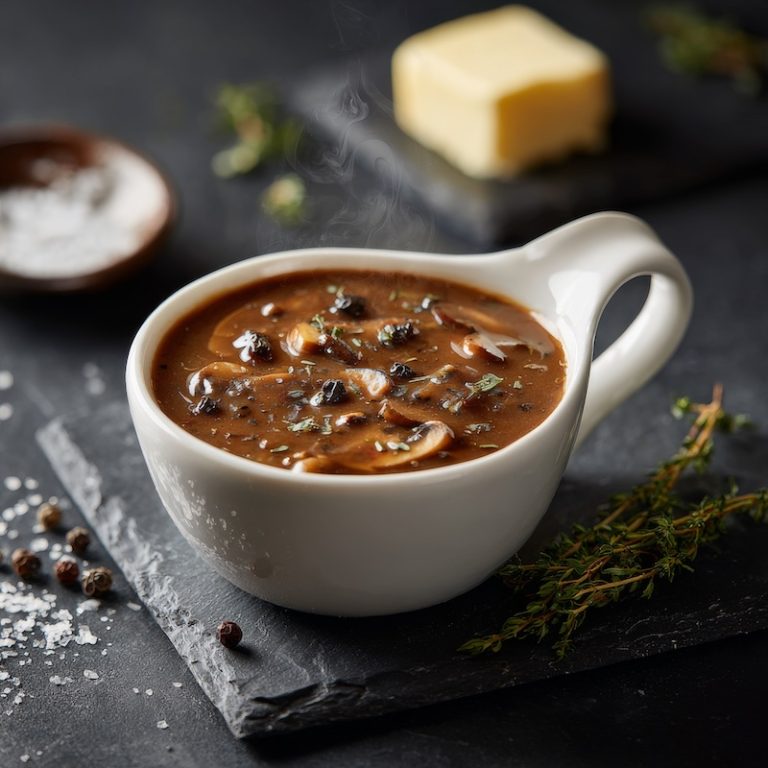
The History of Brown Sauce — From Carême’s Kitchen to a Bottle of Demi-Glace

I bought my first puck of commercial demi-glace over thirty years ago because I wanted to make the classic French sauces I'd read about in cookbooks. I had no idea how much history — or how much argument — was packed into that one container.

How I Ended Up Down This Rabbit Hole

When I started this site, I was mostly trying to teach myself how to make the classic sauces I kept reading about in cookbooks. Demi-glace was the ingredient that made it possible — a shortcut past hours of reduction.

Understanding it meant understanding brown sauce, which meant going back further, to Carême, who never actually called it that. What follows is the version of this history I’ve pieced together, arguments included.

Carême, and the Sauce That Didn’t Have a Name Yet

In the early 19th century, chef Marie-Antoine Carême set out to organize French cooking into a system rather than a pile of individual recipes. Part of that system was a small set of foundational sauces — what later cooks would call the “mother sauces” — that everything else built on.

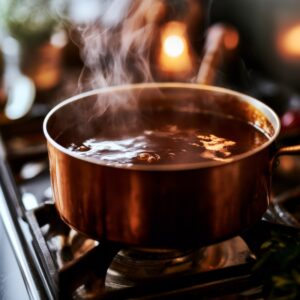
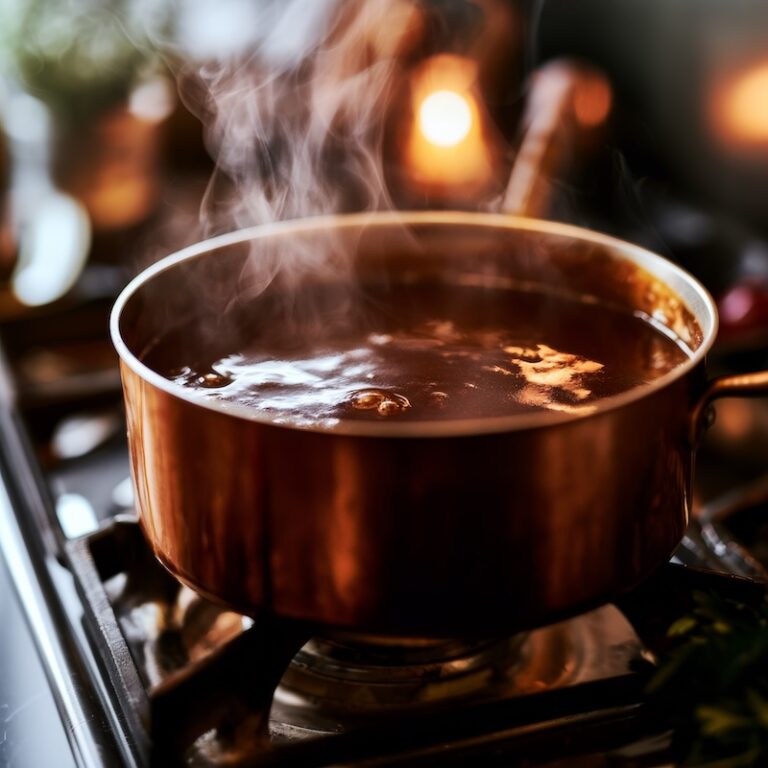
Espagnole, the sauce that eventually became known as brown sauce, was one of them: browned carrots, onion, and celery, beef broth, red wine, and a bouquet garni, reduced slowly until it thickened into something rich and dark.

Why “Espagnole,” and Why “Brown”

Nobody knows for certain why Carême called it Espagnole — “Spanish” — and the honest answer is that the two leading theories are both guesses. One is that red wine carried Spanish associations at the time; the other points to general cultural exchange between Spain and France in that era. Either way, the name stuck long before anyone could prove where it came from.

“Brown sauce” is the more literal name and the more useful one. It’s called that because the vegetables are deliberately browned before anything else happens, and that browning step isn’t decorative — it’s where a lot of the sauce’s actual flavor comes from.

Where Demi-Glace Comes In (and Where I Almost Got It Wrong)

Brown sauce doesn’t stay brown sauce forever. Reduce it further with an equal amount of beef stock, and you get demi-glace — the concentrated, glossy base behind classic pan sauces, beef Wellington, and most serious French sauces that need backbone.

I’ve had a reader push back on that connection before, and it’s worth mentioning, honestly. Someone once argued that “true” Escoffier demi-glace was closer to a pure stock reduction rather than Espagnole plus stock.

She caught her own mix-up a few minutes later — she’d been thinking of glace de viande, a different reduction entirely — and confirmed that Escoffier’s demi-glace is, in fact, brown stock and Espagnole.

It’s a small distinction, but it’s the kind of thing that trips up even people who take Escoffier seriously, and it’s exactly why you’ll sometimes see “brown sauce” and “demi-glace” used a little loosely.

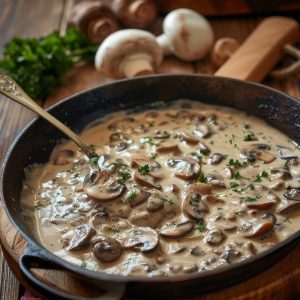
Madeira Sauce Recipe

Quick Facts

  • Codified by: Marie-Antoine Carême, early 1800s
  • One of: the five classical French mother sauces
  • Base: browned carrots, onion, celery, beef broth, red wine, bouquet garni
  • Becomes: demi-glace, when reduced further with beef stock

Explore More About This Topic

  • Want to make this yourself? My guide to beef stock and brown sauce walks through the full process.
  • Curious where it ends up on a plate? My Madeira Sauce recipe starts from a demi-glace made this way.
  • Don't have demi-glace on hand? My demi-glace substitute gets you close without hours of reduction.

Where You'll Actually Taste It

  • Beef bourguignon and Coq au Vin both build directly on it.
  • Classic pan sauces, like my Madeira Sauce, usually start from a demi-glace made from it.
  • Restaurant "brown sauce" or "jus" on a menu is very often a modern, simplified descendant of this same lineage.
Modern versions of brown sauce often swap in different vegetables or spices — bell peppers, paprika — or use a different stock or wine. Carême's basic principle hasn't really changed in two hundred years, even if almost nobody actually makes it his exact way anymore.

Frequently asked Questions

What is brown sauce actually made of?

Browned carrots, onion, and celery, beef broth, red wine, and a bouquet garni, simmered until it reduces into a thick, dark sauce.

Is brown sauce the same as Espagnole sauce?
Yes — they’re the same sauce. Espagnole is the classical French name; brown sauce is the more literal, descriptive one.

What’s the difference between brown sauce and demi-glace?
Brown sauce becomes demi-glace once it’s reduced further with an equal amount of beef stock. Demi-glace is more concentrated and more refined.

Why is it called Espagnole if it’s French?
Nobody knows for certain. The two leading theories both involve Spain’s cultural association with France at the time, but neither is confirmed.

Who invented brown sauce?
Marie-Antoine Carême codified it in the early 19th century as one of the five French mother sauces.

Is brown sauce still used in restaurants today?
Yes, though usually in a modern, simplified form — often as demi-glace or a reduced jus, rather than the full classical method.

Can I make brown sauce at home?
Yes. It takes time, mostly unattended simmering, but nothing technically difficult. My guide to <a href=”https://www.reluctantgourmet.com/how-to-make-beef-stock-for-brown-sauce/”>making beef stock and brown sauce</a> walks through it.
4 Responses

  1. 5 stars
    Hello! I just would like to give a huge thumbs up for the great info you have here on this post. I will be coming back to your blog for more soon.

    Thanks Tess – RG

  2. Lots of great information, thanks for sharing! Playing Devil’s advocate, however… Escoffier’s demi-glace isn’t made from Espagnole or brown sauce. It’s simply a highly concentrated stock reduction. Demi-glace made from brown sauce is a modern interpretation. Sorry, I hate to be “that guy” but I think it’s important for those of us who still respectfully follow Le Guide Culinaire to differentiate between classic and modern techniques. 🙂

  3. I’m an idiot and I know it… I was thinking “glace de viande” instead of demi-glace. Yes, Escoffier’s demi-glace is brown stock and Espagnole. But of course, you already knew that. I realized my error as I hit the “submit” button but by then it was too late! Please forgive my mistake and carry on!

  4. 5 stars
    Thank you for this great detailed knowledge. I am from India, doing my Graduation in Hospitality Management from Institute of Hotel Management, Mumbai. I want to be the World’s Best Food Critic and I will some day. I might meet you one day or the other. I think you can be a good inspiration for me and I can suck a lot of knowledge from you. 🙂

Leave a Reply

Your email address will not be published. Required fields are marked *

This site uses Akismet to reduce spam. Learn how your comment data is processed.