
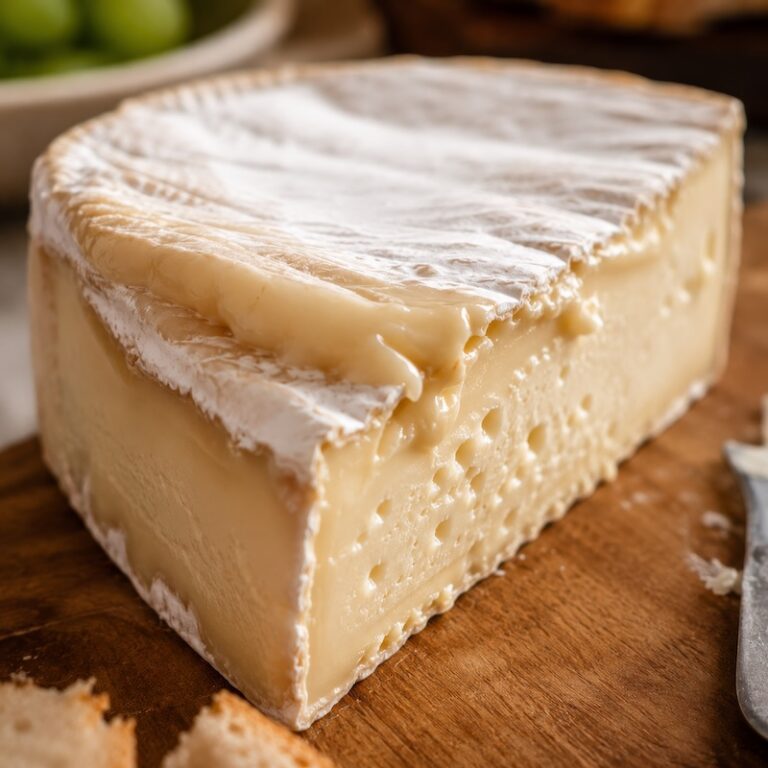

Brie that smells aggressively funky is either at its absolute peak or well past it — and the line between the two is closer than most people realize. If you've ever opened a wedge and wondered whether what you're smelling is a feature or a warning, you're asking exactly the right question.
Fast Answer
A mild ammonia smell in Brie is normal — it's a byproduct of the same bacteria that ripens the cheese. It's a warning sign only when the smell is sharp, overpowering, or lingers after the cheese sits out for 30–60 minutes; that usually means it's overripe. Airing it out unwrapped for a while is the first thing to try before deciding to toss it.
Why Does My Brie Cheese Smell Like Ammonia?
I received a comment from Angie, who read my post, Moldy Brie Cheese asking about some brie she purchased that looked lovely but had an overwhelming ammonia smell. I sent her question to my favorite cheesemonger, Jack Morgan, about why she experienced stinky brie cheese, and he gave a great reply.
Jack gives a small plug for his cheese shop here in Philadelphia at the end of his explanation, but it is also great advice when seeking a reputable cheese store anywhere.
It is essential to find a cheese person who doesn’t just try to sell you cheese but answers your questions and lets you try their cheeses. Be nice to your cheese purveyor; you will be surprised how much they will go out of their way to ensure you are satisfied.
I have read conflicting responses on other sites about the ammonia smell of Brie. The rind is pure white, and the cheese is a beautiful color, but the ammonia smell is throwing me. I have never tried this particular kind until tonight – Martin and Collet French Brie. I don’t know if I’ve had a French Brie before, but I do not recall it smelling like ammonia. Please help!- Angie
Good Stinky vs. Bad Stinky
- Good stinky: Mushroomy, a little sulfuric, almost like cauliflower. Any ammonia note is faint and fades within a few minutes of tasting.
- Bad stinky: Ammonia hits immediately, dominates the whole bite, and gets up into your nose in a way that's hard to ignore. If that's what you're tasting, not just smelling, trust it.
- One of our readers put it best: a good stinky Brie tastes like something. A bad one tastes like nothing but ammonia.
Reasons for Brie Cheese to Have Ammonia Smell
| Reason | Description | What It Means |
|---|---|---|
| Natural Rind Development | Brie is a bloomy rind cheese. During aging, the white mold (Penicillium candidum) produces ammonia as part of ripening. | Normal — usually dissipates after the cheese airs out for a while. |
| Under-Ripened Cheese | The interior hasn't fully softened, so the rind's ammonia is more concentrated. | Let it sit at room temperature; the smell should lessen as it matures. |
| Over-Ripened Cheese | Brie stored too long can develop a stronger, unpleasant ammonia smell. | May be past its prime — check texture and taste before eating. |
| Storage Issues | Keeping Brie sealed tightly for long periods traps ammonia. | Unwrap or air it out to reduce the smell. |
| High-Protein Breakdown | Proteins break down into amino acids and ammonia during aging. | Normal in bloomy rind cheeses — brief airing reduces the smell without affecting taste. |
Response From Jack:
Brie does not necessarily have to be “pure white.” True “Brie,” that soft-ripened cheese named after the town of its origin, should not, in fact, be all white. The various colored spots that may decorate an authentic Brie’s rind (fleuri) will tell you a little about the cheese’s state.
Just as our experiences tell us, a green banana will taste different than one that is yellow, spotted, or black (and all are very usable in each state of ripeness), so too with the average soft-ripened, bloomy rind cheese.
In truth, a pure white brie will usually denote that the cheese has been “ultra-pasteurized,”; a system of heating the curd using very high heat for long periods of time, twice, so that most, if not all, bacteria will be killed off. (The word “bacteria” should not be confused with “pathogens”). This process allows the cheese to be “shelf stable.” The resulting cheese is now an approximation of brie.
This supermarket ideal is based on ill-informed facts on how long a particular cheese on a grocer’s shelf will last before profits are lost with the ultimate decay of the product above. Knowing this, avoid it if you can only buy cheese at a supermarket and see a “spotted” brie. Indeed since the cheese has been stabilized, you can correctly deduce that the cheese is “old” rather than aged or professionally cured for x amount of time.
Ammonia Smell
A by-product of all bloomy rind cheeses is an “ammonia” smell. This somewhat offensive aroma results when the cultures used to make the cheese consume and convert the proteins in the curd into ammonia.
Refrigeration traps this aroma in the cheese, preventing it from evaporating. Exposing the cheese to air will help dissipate this aroma.
It is what it is. A lemon should be sour. Excessive anything is never good, so it will be up to the individual consumer to decide what is palatable.
If you cannot taste before you purchase, make sure the cheese slightly bulges to the touch, is not too colorful, and the smell does not overwhelm you.
Every person’s taste buds are legitimate. There are no hard fast rules to what we should like or dislike. Rare steak can be as enjoyable as well done. Do you want yellow bananas or black bananas for puddings and daiquiris? Find a cheese shop, establish a courteous relationship, and try some samples before you buy.
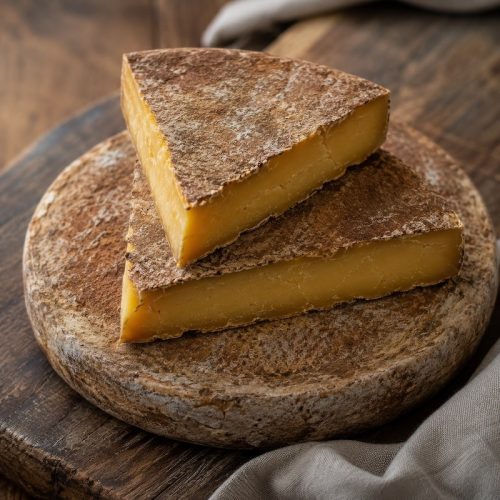
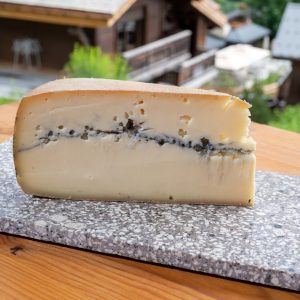
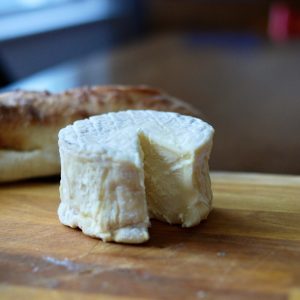
The photo above is “Brie Noir,” one year “aged.” At what point is this cheese not serviceable? The answer is up to who will use it and for what purpose.
A small plug for my shop – Customers can taste most of our cheeses. We supply service and knowledge that matches the superior products we sell. We do not require that any particular consumer know what it is they may want.
Cheese snobbery is a predictable result of insecure, self-important individuals. We try not to intimidate. The experience of tasting and purchasing should be pleasurable. After all, it is only cheese.

Jack Morgan
Downtown Cheese
The Reading Terminal Market
Philadelphia, PA
What Most Cooks Get Wrong
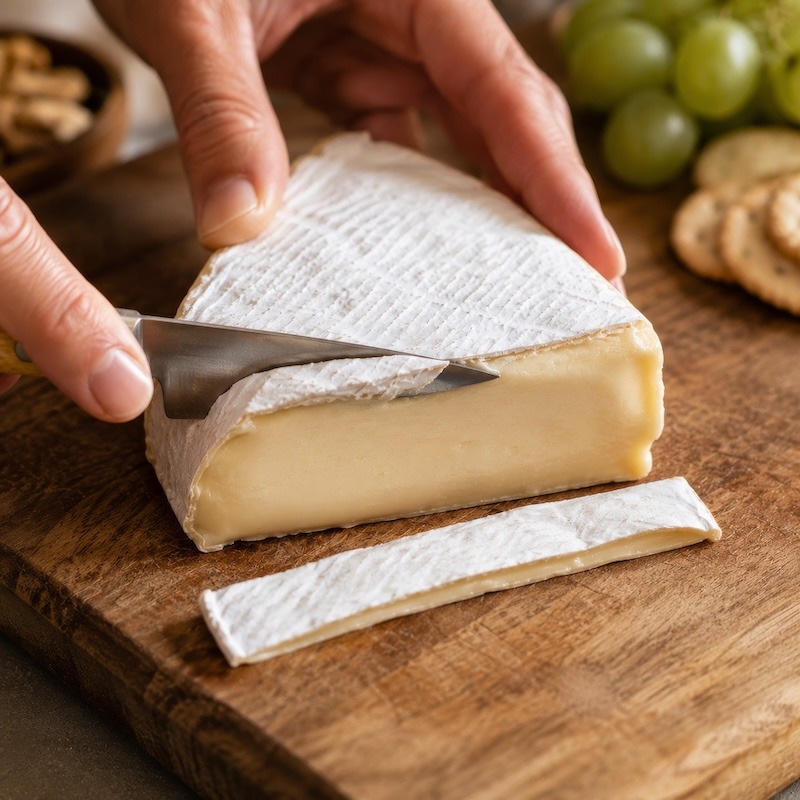
- Assuming cooking will fix an overripe, ammonia-heavy rind. It won't — heat concentrates that bitterness rather than cooking it out, especially in a sauce. If a wedge is past its best, trim the rind off before using the rest, don't melt the whole thing in.
- Throwing out the whole wedge over a strong-smelling rind. Several readers have found the interior perfectly creamy and mild even when the rind itself was nearly unbearable — cut through the middle and check before you toss it.
- Judging Brie by whiteness. A rind that's pure white with no color variation at all is often a sign of ultra-pasteurized, mass-market "Brie" rather than the real thing — see Jack's explanation above.
How to Buy Brie You'll Actually Like
- Make sure the cheese slightly bulges to the touch — a sign it's ripening properly, not dried out or overripe.
- Steer clear of anything too uniformly white, per Jack's point above — it's often a sign of ultra-pasteurized, mass-market Brie rather than the real thing.
- Trust your nose before you buy. A smell that overwhelms you at the counter isn't going to improve at home.
- Whenever you can, buy from a shop that lets you taste first. It's the single best way to avoid guessing.
How to Store Brie So It Doesn't Take Over the Fridge
- Wrap loosely in wax or cheese paper rather than sealing tightly in plastic — trapped gas is most of what makes the smell feel overwhelming.
- If you're serving it, pull it out and let it sit unwrapped at room temperature for at least a few hours before eating. It should get close to weeping. The flavor improves and the ammonia edge softens.
- If the fridge smell is bothering the rest of your food, a sealed container with the cheese still loosely wrapped inside solves both problems at once.
Frquently Asked Questions
Is it okay to eat smelly Brie? Usually, yes. A mild ammonia smell is a normal part of how Brie ripens. It’s only a problem if the smell is sharp and overwhelming, or if it comes with a slimy texture or off-color mold — those are signs to skip it.
What does expired Brie smell like? Beyond the everyday ammonia smell, spoiled Brie usually smells sour or rotten rather than just pungent, and the ammonia note dominates the taste immediately instead of fading after a bite or two.
Why does my cheese smell bad but it’s not expired? It’s almost always the same ripening process that gives all bloomy rind cheeses their sharp smell, made stronger by being sealed tightly in the fridge. Unwrapping it and letting it air out usually resolves it.
How do I stop Brie from smelling up my fridge? Wrap it loosely in wax or cheese paper instead of sealing it in plastic, which traps the gas that causes the strong smell. A loosely wrapped wedge inside a sealed container works well if it’s affecting other food nearby.
Can I cut off a smelly rind and eat the rest? Yes — smell lives mostly in the rind. If the interior tastes creamy and normal, trimming the rind and eating the rest is a reasonable call, even if the outside was unpleasant.
Does a pure white rind mean better quality Brie? Not necessarily. According to cheesemonger Jack Morgan, a perfectly uniform white rind often signals ultra-pasteurized, mass-market Brie made for shelf stability, not necessarily higher quality.

21 Responses
Well if she lets the smell put her off how about trying some Limburger cheese? A kiwi friend of mine used make sandwiches with it and bring them to the office. I remember the inmates of a German prison striking over their Camembert not being ripe. My personal favourite is Stilton.
thanks for the stinky brie cheese post..you just saved my night and stomach…I love brie however I have never gotten one that smelled so.much like ammonia.
Glad I could find something to explain that smell … really had me wondering if we were given something that should have been pitched. It tastes so good … will air it out and then maybe the sense of smell can enjoy along with the taste buds.
A recent BRIE purchase in West Palm Beach, FL smelled more like Limburger than any Brie I have ever purchased. I tolerated the odor because I also like Limburger but purchase Brie because it normally does not offend my wife nor stink up the refrig. Please comment.
Hi Maurice, not sure what you are asking that the article doesn’t describe. – RG
Wow! I didn’t realize this either. I just had the very same thing happen to me; I gotta nice round of brie – it was completely white and had been refrigerated. I tasted it even though the smell was really nasty ammonia smell, I didn’t like the outside at all, so I opted to cut the top off and then use a small spoon to scrape the softer center out to use; it was excellent this way although I feel like I lost out on the weight paid for the rind that was supposed to be able to eat as well. It was not a total loss. Does the ammonia smell appeal to some folks? ICK! I guess those people must like to clean the cat box, too. I love strong cheese, but chemical tastes do not appeal to me.
Thank you for solving a mystery! I have often purchased brie or Camembert, which I have thrown away because of the heavy ammonia smell, thinking that they were spoiled. Now I know that it is normal – and I will try leaving at room temperature for a while … if that doesn’t help, they’ll still go in the bin! Can’t eat something with such a pungent and unpleasant smell!
I agree, Dianne, and if the smell is that heavy of ammonia, it may be too overripe to eat. I have friends who like it really strong tasting, but if that’s not how you like it, don’t. That’s why getting to know your cheese merchant and taste BEFORE you buy is critical. – RG
thanks for solving the mystery of the stink, i’ve retreved it out of the bin ( it was still in its wrapper ) bon apetite’
I frequently do cheese hors doeuvres and the best results for an unbaked Brie is being at room temperature no less than three hours. It should be nearly weeping. The flavor will be amazing…and it lessens the ammonia smell/taste that many find unpalatable
I love a good stinky brie, but I have had the misfortune of purchasing bad brie from a cheese shop in New York. A good stinky brie will taste a bit mushroomy or sulfuric like cauliflower, and will perhaps have a very vague scent/taste of ammonia. By that I mean: after like ten minutes, the vegetal flavor will subside and you might taste something that very vaguely seems like it could be ammonia.
A *bad* stinky brie will a) smell overwhelmingly of ammonia and b) taste like nothing but ammonia. It will not taste like mushroom, or cauliflower, or anything vegetal. It will taste like ammonia, immediately, and like nothing else.
If your brie tastes like pure ammonia, and the taste gets up into your nose and feels like ammonia — it’s bad.
I ate some old muenster cheese, and now, every time I lie down to try to sleep, I get the ammonia smell in my nose, so I keep getting up and looking up old cheese on the computer.
For the first time in my life, I wish I lived in Philadelphia. Oh, to have a good cheesemonger instead of a “cheese island” in the supermarket. I especially like Jack’s comment about each person’s taste being legitimate. I frequently tell my wife that she doesn’t have to like my soft-ripened cheeses; that just leaves more for me, and I try not to make too much fun of her fondness for processed cheese food.
But now a question. I’ve occasionally run across imported soft-ripened and washed-rind cheeses which claim to be made from unpasteurized milk. Are they really? And if importing them is not a problem, why doesn’t Hampshire Cheeses send that marvelously smooth and flavorful Tunworth to the US? They always said that unpredictable times in a refrigerated container made exporting Tunworth to the US impractical. Of course, it does give me something to look forward to when I travel to the UK.
Thanks for the info! I have eaten a lot of Brie cheese, of varying quality, but today for the first time I had a wedge that is just *severe* in the ammonia department. I’m about to throw it into the yard but it’s good to know what the deal was.
Hi all, just shifted a wedge of the *nastiest* brie I think I have ever smelled. And it was before I had read this article. Was wondering if I would pay for this by ending up ill tomorrow, but having read all the posts I’m happy I’ve made the right decision.
The brie I had was past its “best before” – a good thing? – and had a terrible ammonia smell. I guessed this was from packaging so left it to air for a couple of days outside the fridge, loosely covered. It still smelled bad and the pointy end of the wedge was a caramel brown when cut as opposed to creamy. Decided it MUST be off so was about to throw out then I thought “why not cut through the middle and see what its like inside?”. Inside was creamy and lush. Outer rind was almost unbearable. So trimmed the rind off, chopped the rest, which was delicious, and will (hopefully) live to tell the tale!
Phil, are you still with us? I certainly hope so.
My father and I would take trips on the Union Pacific and after dinner he would order wheat crackers and Leiderkrantz cheese along with a nice snifter of brandy. This cheese was domestic in origin and was attributed to the Leiderkrantz club (I think in Philly) ..it was some of the best stinky cheese ever. Apparently the “club” burned down and it is no longer available. It was a close cousin to Camembert and a ripe cousin to Brie. Does anyone know if there is a cheese maker that still produces this variety? If it sat out long, the ammonia smell would creep up..and it could occasionally smell like (gasp) old sneakers….but was it ever GOOD!
enjoyed all your comments. learned much. i had my first ever bloomy rind tonight with some cab wine, and was blown away. it looked like hell,but tasted heavenly. i love limburger, but i’m putting bloomy rind a notch above it.
“I especially like Jack’s comment about each person’s taste being legitimate.” I have recently received a great deal of Brie rounds and wedges. I opened the Le Rustique first as it was “leaking”!The worst big-time ammonia blast has been stinking the whole fridge and, thus, the house!
Bravely, I am finishing it, 20-30 grammes per serving!Going home, tonight, with some fruits and port and red wine to further explore the depths of this Brie and a compliment, Roquefort!I will keep you updated.Ra.
I live just outside Philadelphia and will make a trip to the beloved Reading Terminal. I’ll look for Jack and thank him personally for the ton of info here
Thanks, Eileen, and please tell me Gary, the Reluctant Gourmet, says hi.
Had a wheel of brie that had passed the best use by date by about 2 weeks. Cut a slice out and it seemed okay. Decided I wasn’t going to let it go to waste if I was the only one eating due to picky kids and made 2 lbs of macaroni. Luckily I decided to make the sauce using the wheel in a separate pan. Used about 3-4 cups of the drained noodle water and melted the wheel rind and all. The rind didn’t break down well even through near constant stirring. The sauce was bitter! I added about 6 tbsp of butter. I slotted spooned out the bits of rind I could. I added a few pinches of baking powder to no avail. Accidentally boiled the sauce. Ended up with near 6 tbsp of honey. Finally a cup of shredded sharp cheddar. It was finally something I thought my kids would tolerate. I had been taste testing and adding more ingredients to the sauce throughout. I think I ate about a quarter of the Mac & Cheese before I landed on about 2 tbsp of salt stirred in. Bites were still a little bitter where the bits of rind remained. The kids ate about half of what was left so it still worked! If I ever run into the issue again I’ll leave it sit out to air because the flavor was strong of ammonia where the smell was not. Does anyone happen to have any other suggestions/tips?