Olive Oil Guide: Freshness, Flavor, and How to Use It Right

Most olive oil on store shelves is already fading before you open it. That “healthy drizzle” can taste dull—or vibrant and peppery. The difference? Freshness and quality. Learn how to spot great olive oil, and suddenly your cooking tastes brighter, sharper, and more intentional.

Everything You Need to Know About Olive Oil (and Why Fresh Matters)

Olive oil is one of the most used—and misunderstood—ingredients in the kitchen. From cooking to finishing, its flavor can elevate or flatten a dish. But not all olive oil is created equal. Understanding freshness, types, and how to use it properly helps you cook smarter. This guide breaks down what matters so you can choose better oil and use it with confidence.

Start Here: Your Olive Oil Game Plan

  • What it does: Adds richness, aroma, and flavor complexity to dishes.
  • When to use it: Cooking, finishing, dressings, and dipping.
  • Why it matters: Fresh, high-quality oil transforms dishes; stale oil dulls them.
  • Think like a cook: Use mild oil for cooking, bold oil for finishing.

Fast Answer

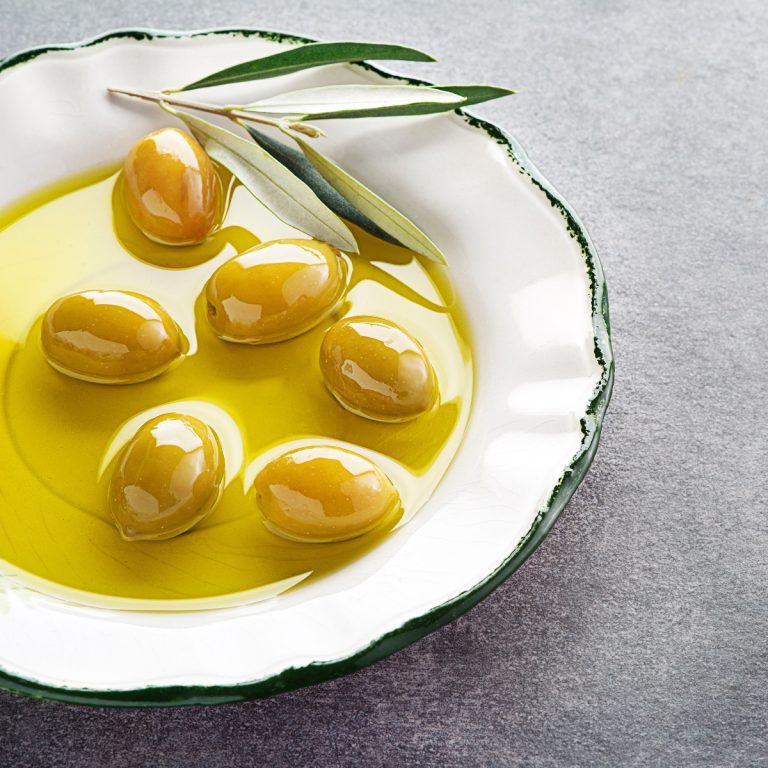
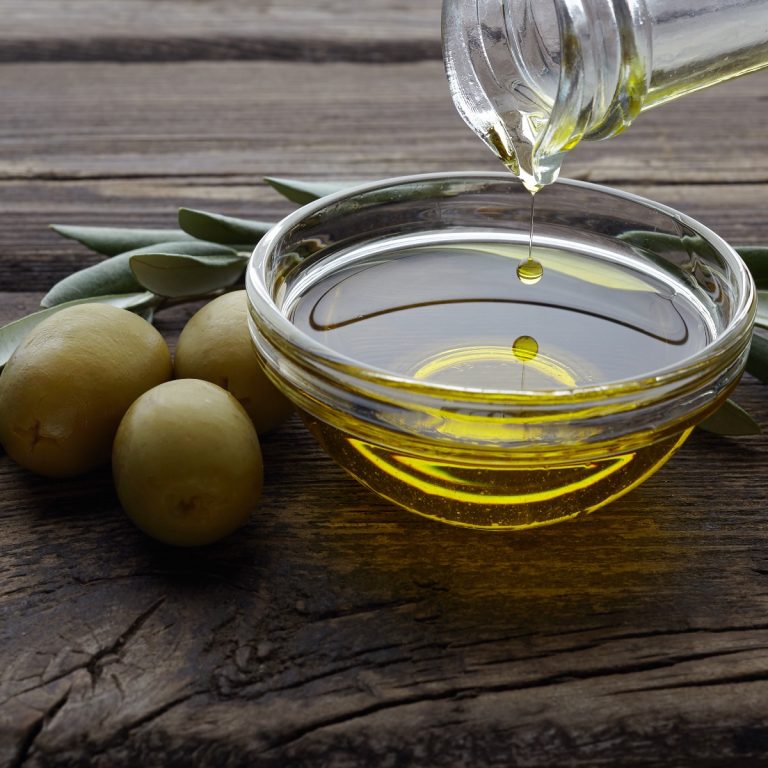
Olive oil is a fruit juice from olives. Its quality depends on freshness, harvest, and processing—not just the label—affecting flavor, aroma, and cooking performance.

Flavor & Function

  • Flavor profile: Fruity, grassy, peppery, sometimes bitter—those are signs of freshness.
  • Fat role: Carries flavor and adds richness to dishes.
  • Balance tool: Softens acidity and rounds out sharp flavors.
  • Texture impact: Adds silkiness to sauces, dressings, and finished dishes.

Core Concept: Freshness = Flavor

  • Olive oil is perishable: It degrades over time like fresh juice.
  • Harvest date matters: Not the “best by” date.
  • Use bold oil strategically: Save your best oil for finishing.
  • Think in layers: Cook with one oil, finish with another.

How to Choose the Best

  • Look for harvest date: Within the last 12–18 months is ideal.
  • Dark bottles only: Light damages oil.
  • Buy smaller quantities: Use it before it fades.
  • Trust your taste: Good oil tastes fresh, slightly bitter, and peppery.

Olive Oil Classifications (What Actually Matters)

  • Extra Virgin Olive Oil: First cold press, no chemicals, under 0.8% acidity. Best for salads, drizzling, and finishing where flavor shines.
  • Virgin Olive Oil: Also mechanically pressed, slightly higher acidity (up to 2.0%). Good for everyday cooking like sautéing and roasting.
  • Refined Olive Oil: Processed with heat and filtration. Very low acidity but neutral flavor. Ideal for high-heat cooking and frying.
  • Pure (Regular) Olive Oil: Blend of refined and virgin oils. Mild flavor, versatile for general cooking and baking.
  • Olive Pomace Oil: Extracted from leftover olive pulp using solvents. Lowest flavor quality. Used mostly for frying or commercial applications.
  • Important: “Light” or “Lite” olive oil is not a quality grade—it refers to lighter flavor and color, not fewer calories.
Extra Virgin Olive Oil

What Makes One Olive Oil Better Than the Next?

Several factors determine the quality of olive oil, including the type of olives used, the region where the olives are grown, the method of harvesting and extraction, and the age of the oil.

  1. Type of olives: The type of olives used to make the oil can affect the flavor and quality of the oil. Some of the most highly-regarded olive oils are made from a blend of different varieties, such as the Tuscan blend of Frantoio, Leccino and Moraiolo olives.
  2. Region: The region where the olives are grown can also affect the flavor and quality of the oil. Olive oils from Italy, Spain, and Greece are considered some of the best in the world.
  3. Harvesting and extraction: The method of harvesting and extraction also plays a role in the quality of the oil. Olives that are hand-picked and cold-pressed are generally considered to be of higher quality than those that are machine-harvested or treated with heat or chemicals.
  4. Age: Freshly pressed olive oil is considered the best quality and has the most delicate flavor and aroma, as the oil will start to degrade over time and lose its delicate flavors and aromas.
  5. Certification: Quality olive oil should be certified; look for certifications like DOP (Protected Designation of Origin) or IGP (Protected Geographical Indication), which guarantees that the olive oil was produced in a specific region using specific methods and meets certain standards.


Extra Virgin Olive oil is considered the highest quality and has the most delicate flavor and aroma. It is made from pure, cold-pressed olives and contains no more than 0.8% acidity. It is also the healthiest olive oil as it retains most of its natural antioxidants and anti-inflammatory properties.

What Most Cooks Get Wrong

  • Using old oil: Leads to flat, lifeless flavor.
  • Cooking everything with premium oil: Wastes flavor.
  • Ignoring bitterness: Fresh oil should have a slight bite.
  • Storing near heat: Speeds up spoilage.

Quick Diagnosis Strip

  • Dish tastes flat → oil is stale → switch to fresh oil
  • Oil tastes greasy → low quality/refined → upgrade to extra virgin
  • Too bitter → overuse or strong oil → balance with acid
  • No aroma → old oil → replace bottle

What Variety of Olives Are Used For Making Olive Oil?

The quality of olive oil can depend on several factors, including the variety of olives used, the growing conditions, and the methods used for harvesting and pressing the olives. 

It’s important to remember that the taste of olive oil can vary depending on the region, the weather, the harvest method, and the milling process. However, some of the most highly regarded varieties for making olive oil include:

Olive Variety Origin Description Flavor Profile
Arbequina Spain (Catalonia) Small, early-ripening olives prized for delicate oil production. Mild, buttery, fruity with hints of apple and almond
Coratina Italy (Puglia) Strong, robust olives with high polyphenol content. Intense, bitter, peppery, and fruity with dark green notes
Cobrancosa Portugal Traditional Portuguese variety prized for balanced flavor. Fruity, fresh, slightly spicy and bitter
Frantoio Italy (Tuscany) Highly regarded variety often blended with Leccino. Fruity, peppery, slightly bitter with a grassy aroma
Hojiblanca Spain (Andalusia) Versatile variety used for oil and table olives, late harvest. Fresh, slightly sweet, with a mild peppery finish
Itrana Italy (Lazio) Ancient variety prized for its smooth, fruity oils. Sweet, fruity, with a hint of almond and herbs
Koroneiki Greece Small, hardy olives with high oil content. Most widely used in Greece. Fruity, aromatic, slightly peppery with a hint of herbs
Leccino Italy (Tuscany) Traditional Tuscan variety known for balanced oils. Delicate, fruity, mild bitterness with grassy notes
Manzanilla Spain Dual-purpose olives used for oil and table consumption. Fruity, slightly nutty, mild bitterness
Pendolino Italy (Tuscany) Smaller olives used mainly for blending due to early ripening. Fruity, mild bitterness, slightly peppery
Picual Spain (Andalusia) One of the most widely cultivated varieties globally, known for stability. Bold, robust, slightly bitter and peppery with green notes
Picudo Spain (Andalusia) Less common, known for aromatic and fruity oils. Fruity, sweet, slightly bitter with herbal notes
Picholine France (Provence) Dual-purpose olive used for oil and table olives. Herbaceous, fruity, slightly peppery with a nutty finish

Simple Cheat Sheet

  • Best for finishing: Extra virgin
  • Best for cooking: Refined or mild olive oil
  • Store: Cool, dark place
  • Use within: 1–2 months after opening

Storage & Shelf Life

  • Store away from heat and light: Pantry is best.
  • Keep tightly sealed: Oxygen degrades oil.
  • Use quickly: Best within 1–2 months after opening.
  • Past prime signs: Waxy, dull, or crayon-like smell.
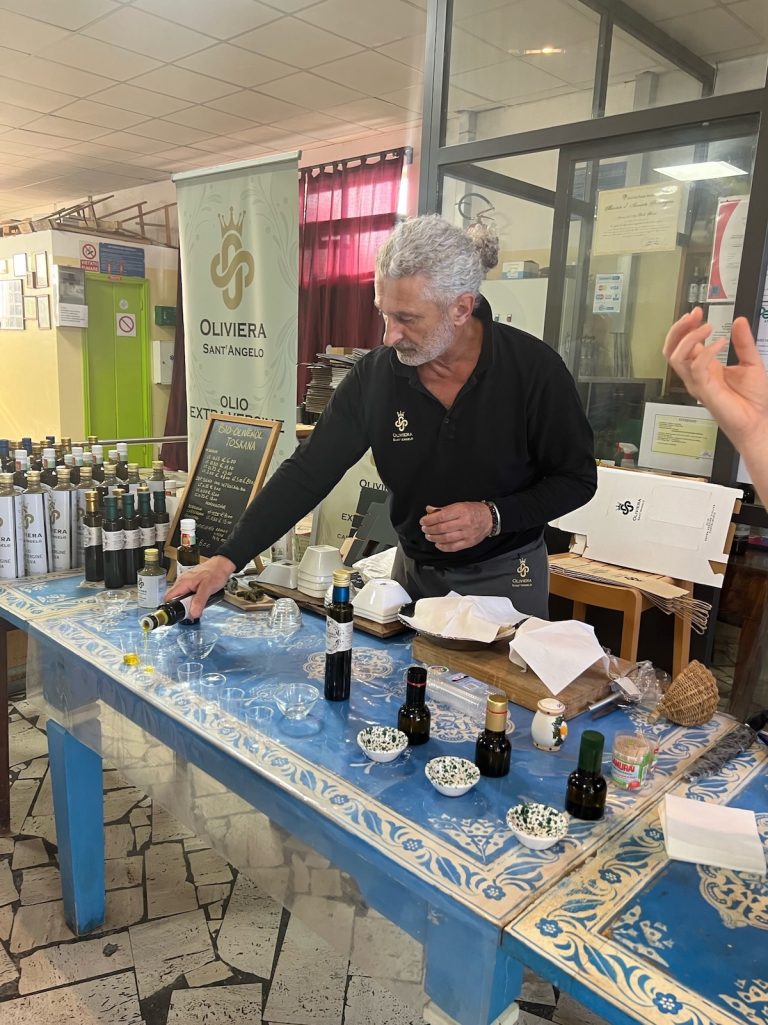
Oliviera Sant Angelo Olive Pressers
Giorgio Bindi of Oliviera Sant'Angelo Olive Oil Mill

How About In Tuscany?

During my vacation in Tuscany, Italy, with my family, I asked locals about olive oil and was surprised to discover that most Tuscans had never heard of pure olive oil. They only know extra virgin because olive trees are everywhere.

If you have a plot of land, you’ll likely have olive trees on your property. At harvest time, someone comes by, picks your olives, brings them to one of the few local presses, and produces your olive oil for the year.

Since our trip to Tuscany, I have developed a preference for Italian olive oils. So everywhere we went, there were olive trees, and we were able to visit Oliviera Sant’Angelo, a handcrafted olive mill in Siena, where we learned the process of pressing olives and enjoyed an olive oil tasting.

These are the most common, but the region has many other varieties. The blend of these varieties is often used to make the oil, allowing one to capture the best characteristics of different olives and create a unique taste in the oil.

Olive Variety Origin (City/Region) Description Flavor Profile
Correggiolo Tuscany Traditional Tuscan variety, sometimes considered a local name for Frantoio, valued for its high-quality oil. Fruity, balanced, with mild bitterness and peppery notes
Frantoio Tuscany Highly regarded, widely planted variety producing aromatic oils. Often blended with Leccino. Fruity, peppery, slightly bitter with grassy aroma
Leccino Tuscany Well-known for producing mild, balanced oils and adapting to different climates. Delicate, fruity, with gentle bitterness and grassy notes
Maurino Tuscany Early-ripening variety producing small fruits with aromatic oil. Sweet, delicate, fruity with light almond notes
Moraiolo Central Italy (Tuscany & Umbria) Ancient variety producing oil rich in polyphenols, often blended for complexity. Intense, fruity, peppery, with artichoke and herb notes
Pendolino Tuscany Used mainly as a pollinator variety but produces good quality oil. Fruity, mild bitterness, slightly peppery
San Felice Tuscany Less common variety producing aromatic and balanced oils. Fruity, smooth, with light pepper and herbal finish

How Are Olives Harvested?

Olives can be harvested in several ways, and the method directly affects the quality of the oil. Timing matters just as much as technique.

Most olives are harvested between October and December, depending on the region and variety. Producers aim for peak ripeness, when flavor and oil yield are balanced.

Here are the most common harvesting methods:

Hand-picking:
Workers pick olives by hand using ladders, rakes, or clippers. This traditional method allows for careful selection and produces the highest-quality oil. It’s slow and labor-intensive, but often used by small, artisanal producers.

Shaking:
Mechanical shakers vibrate the tree, causing olives to fall to the ground for collection. This method is fast and efficient, but it can bruise the fruit, which may lower oil quality.

Raking:
A middle-ground approach. Special rakes gently pull olives from branches. It’s faster than hand-picking and less aggressive than shaking, offering a balance of efficiency and care.

Vacuum Shaking:
Uses suction along with shaking to remove olives more gently. This reduces damage and is often used for older or more delicate trees.

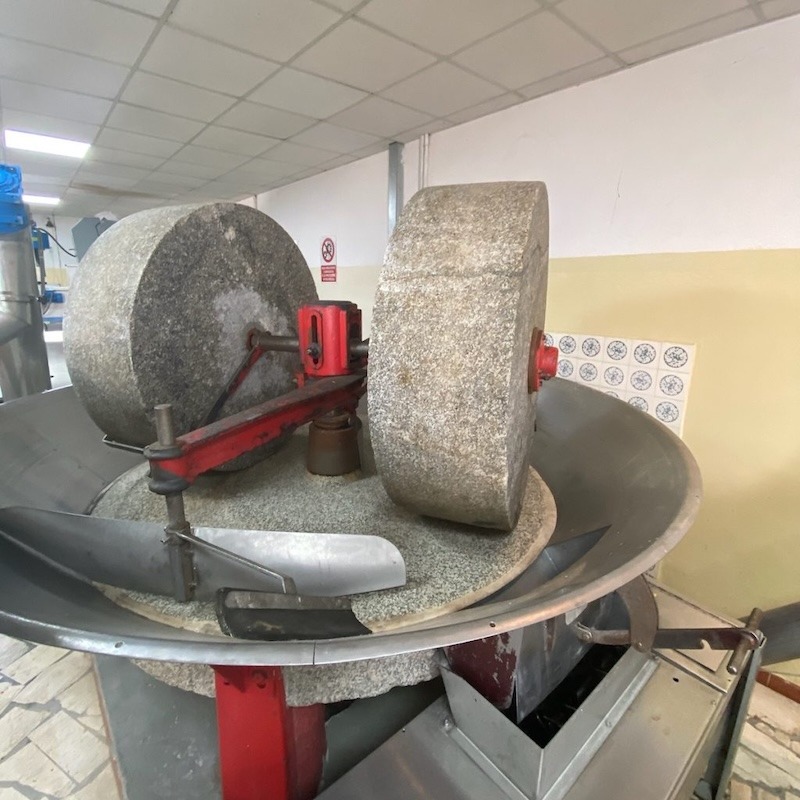
Cold Press Mill for Pressing Olive Into Olive OIl

Cold Pressing & Centrifugation

Cold Pressing

Cold pressing is the traditional method for producing high-quality olive oil. It uses mechanical extraction only—no heat, no chemicals—to preserve the oil’s natural flavor and nutrients.

The process starts by washing the olives to remove dirt and debris. They are then crushed into a paste using a stone mill or hammer mill. This paste is slowly pressed to release the oil, keeping temperatures low to protect flavor and aroma.

Because no heat is used, cold-pressed oil retains its fresh, fruity character, along with antioxidants and heart-healthy fats. This is what gives high-quality olive oil its signature peppery bite and complexity.

The tradeoff? It’s less efficient. Cold pressing requires more olives to produce the same amount of oil. But the payoff is better flavor, better aroma, and a more natural product.

For this reason, cold pressing is the standard for extra virgin olive oil and is favored by artisanal producers who prioritize quality over volume.

Centrifuge Mill for Pressing Olives Into Olive Oil Centrifuge Method

Centrifugation

Centrifugation is the modern standard for extracting olive oil. Instead of pressing, it uses high-speed spinning to separate oil from water and solids.

The process starts the same way: olives are washed, then crushed into a paste. That paste is gently mixed (no chemicals in high-quality production) to help the oil droplets combine. It’s then spun in a centrifuge, where the oil separates cleanly from the rest.

This method is faster and more efficient than traditional pressing, producing a higher yield with less waste. It’s widely used by both large producers and many high-quality mills today.

When done properly, centrifugation still qualifies as extra virgin—so “modern” doesn’t mean lower quality. The key factor isn’t the method, but how carefully the olives are handled and how fresh they are when processed.

Cartoon of Reluctant Gourmet drizzling olive oil reminding him of just mowed grass

Why Does Fresh Pressed Olive Oil Smell Like Freshly Cut Grass?

That fresh, grassy aroma isn’t a flaw—it’s a quality signal.

Fresh olive oil contains natural compounds created when olives are crushed. One of the most important is hexanal, which gives off that familiar “green” scent, similar to freshly cut grass.

This aroma tells you a few important things:

  • The olives were fresh when processed
  • The oil is likely high quality (extra virgin)
  • The flavor will be bright, vibrant, and slightly peppery

That grassy note isn’t alone. Fresh olive oil is a mix of subtle aromas:

  • Fruity notes: from esters
  • Nutty, floral, or spicy notes: from aldehydes
  • Floral and herbal tones: from alcohols and ketones

Think of it as a flavor spectrum, not a single note.

Over time, those fresh aromas fade. The oil becomes flatter, sometimes developing heavier, duller flavors like waxy or stale nuts. That’s why freshness matters more than almost anything else when choosing olive oil.

Bottom line:
If your olive oil smells lively, green, and a little peppery—you’re in good shape. If it smells flat or dull, it’s past its prime.

Leave a Reply

Your email address will not be published. Required fields are marked *

This site uses Akismet to reduce spam. Learn how your comment data is processed.