How to Tell When Food is Done Cooking (Without Guessing)

Recipes love to say “cook until done,” as if doneness is some obvious finish line everyone can see—yet they rarely explain what that actually looks, feels, or sounds like in the pan. So we fall back on the clock, only to end up with overcooked, undercooked, or just plain disappointing results when timing alone quietly betrays us.

Stop Cooking by Time. Start Reading Your Food.

Cooking time is never exact. Heat levels vary, pans behave differently, and even the size of your ingredients changes how fast food cooks. Instead of relying on the clock, the key is learning to recognize the signals your food gives you.

Stop Cooking by Time. Start Reading Your Food

Cooking times are rarely exact. Heat levels vary, pans behave differently, and even the size of your ingredients changes how quickly food cooks. Instead of relying on the clock, learn to recognize the signals your food gives you.

The 3 Signals of Doneness

  • 👀 Visual: Food changes how it looks as it cooks—color deepens, surfaces smooth or split, and structure shifts from raw to ready.
  • 🥢 Texture: Doneness reveals itself through resistance. Food moves from firm and tight to tender and responsive when properly cooked.
  • 🌫️ Sound & Steam: Cooking sounds and steam patterns change as moisture evaporates and heat settles—often becoming quieter as food finishes.

Once you learn these three signals, you can tell when almost any food is done—without cutting into it or relying on guesswork.

How This Works: A Quick Example with Pasta

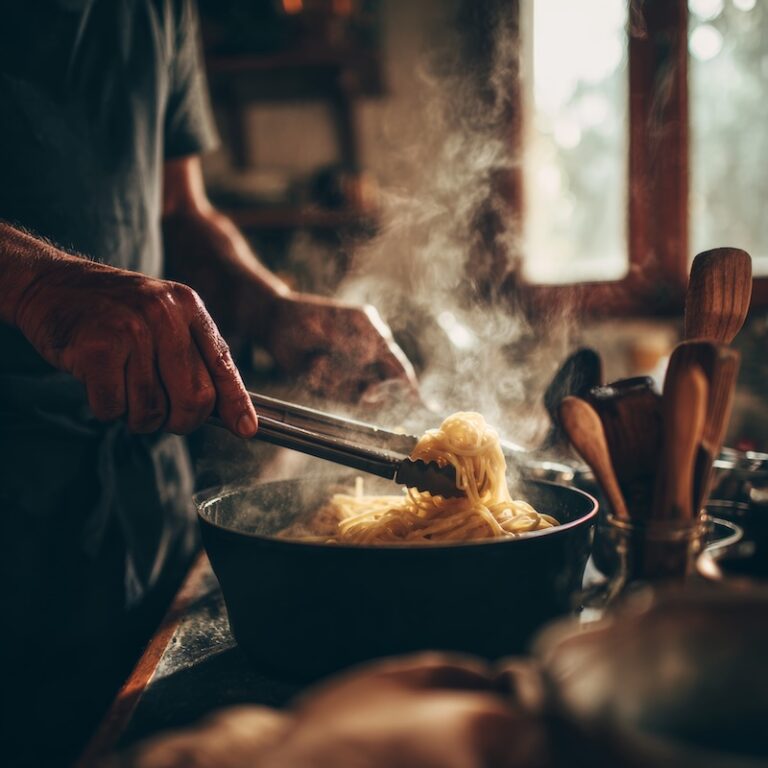
Here’s how to tell when pasta is done by reading the signals instead of the clock.

👀 Visual

Pasta loses its chalky look and turns smooth and slightly matte. The color becomes more even and less opaque.

🥢 Texture

It softens from stiff to flexible. Properly cooked pasta bends easily and twirls smoothly, but still holds its shape.

🌫️ Sound & Steam

The boil calms slightly and the water becomes silkier as starch releases and cooking nears completion.

👉 See exactly how to tell when pasta is perfectly cooked

Testing doneness of pasta by visual clues

The Temperature Test (The Most Reliable Signal)

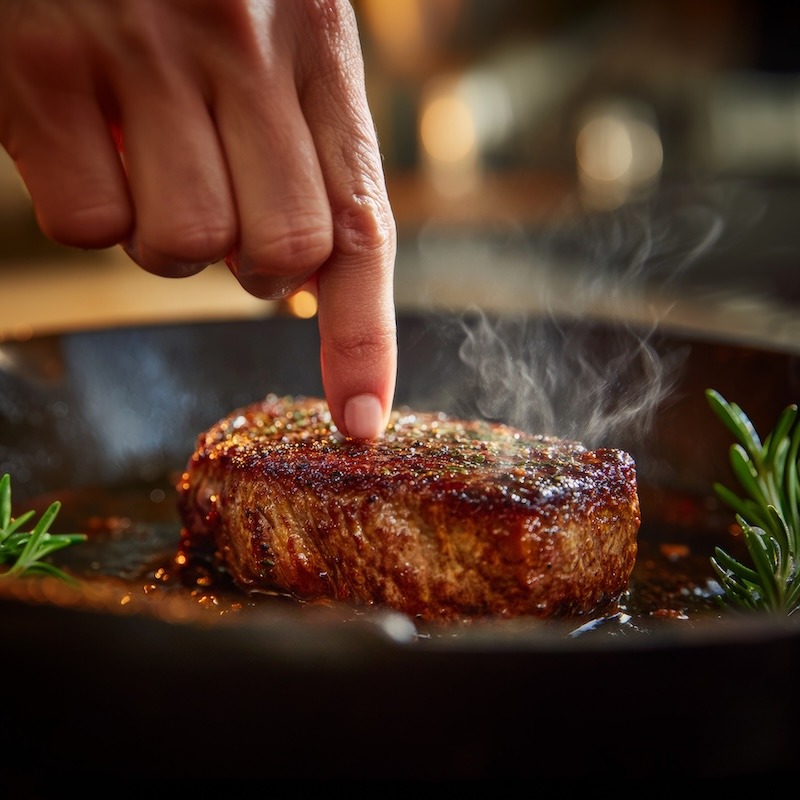
While visual cues and texture get you very close, temperature gives you something the eye can’t argue with—certainty. In many cases, it’s the most accurate way to confirm doneness.

This is the point where cooking stops being interpretation and becomes measurement.

  • Pasta: No temperature test needed, but residual heat during resting finishes texture.
  • Potatoes: Internal temperature should be hot and uniform all the way through, with no cool or firm center.
  • Rice: Fully cooked rice is evenly hot, with moisture absorbed and no cold or damp pockets remaining.

If everything feels right visually and physically, temperature confirms you’re not guessing—you’re done.
The Final Confirmation: The Taste Test

Everything up to this point is designed to help you recognize doneness without guessing. But if you choose to taste, think of it as confirmation—not discovery.

You’re not using taste to figure it out. You’re using it to verify what your senses already told you.

  • Pasta: A slight resistance at the center—tender, but still structured.
  • Potatoes: Fully soft and consistent from edge to core, with no chalky middle.
  • Rice: Each grain tender and separate, with no crunch or raw center.

If it confirms what you already noticed visually and physically, you’ve nailed it.

Leave a Reply

Your email address will not be published. Required fields are marked *

This site uses Akismet to reduce spam. Learn how your comment data is processed.