How can you tell when shrimp are done cooking?
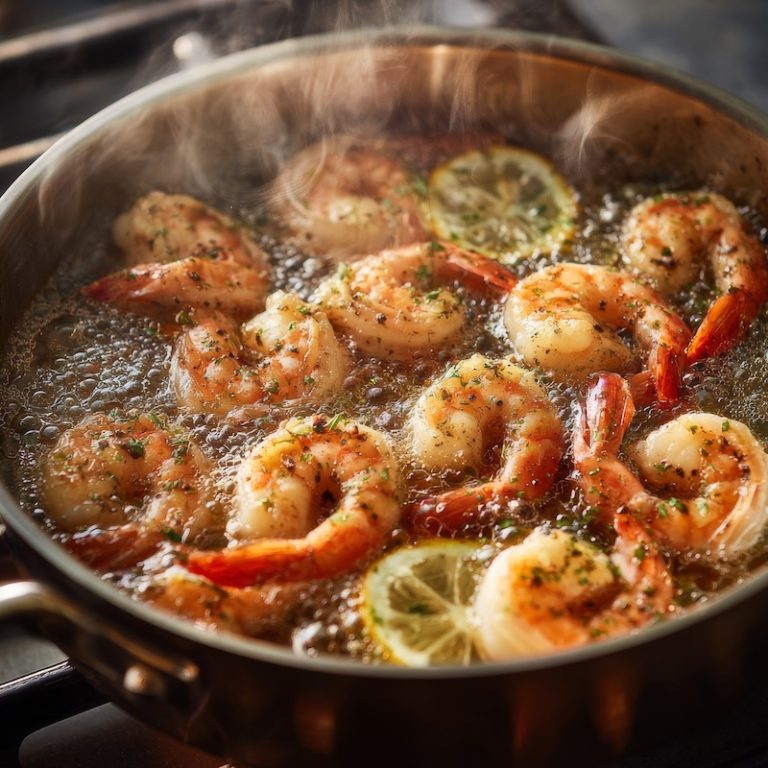
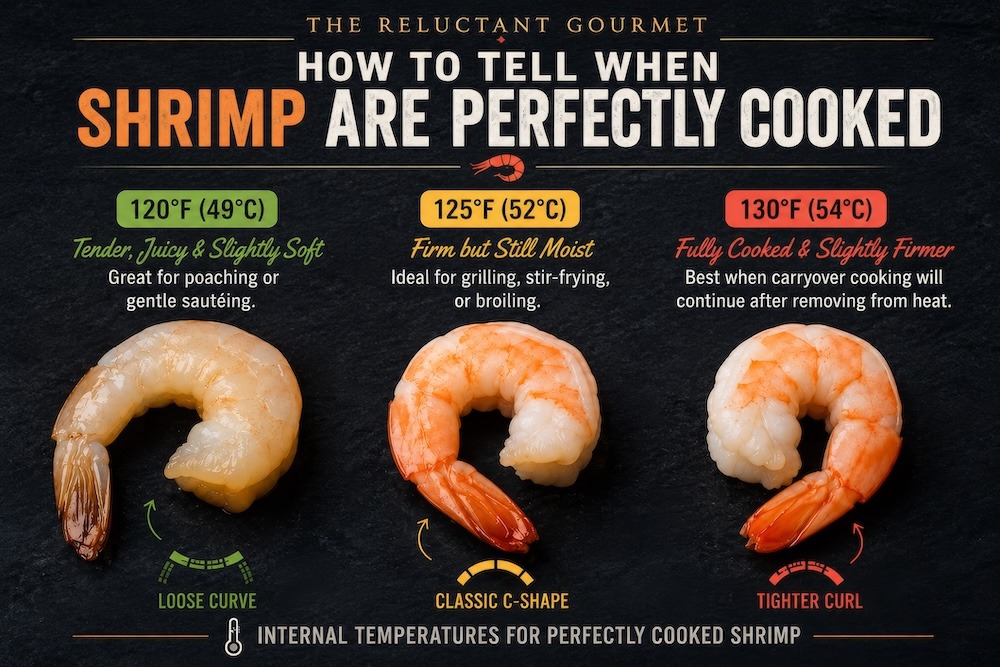
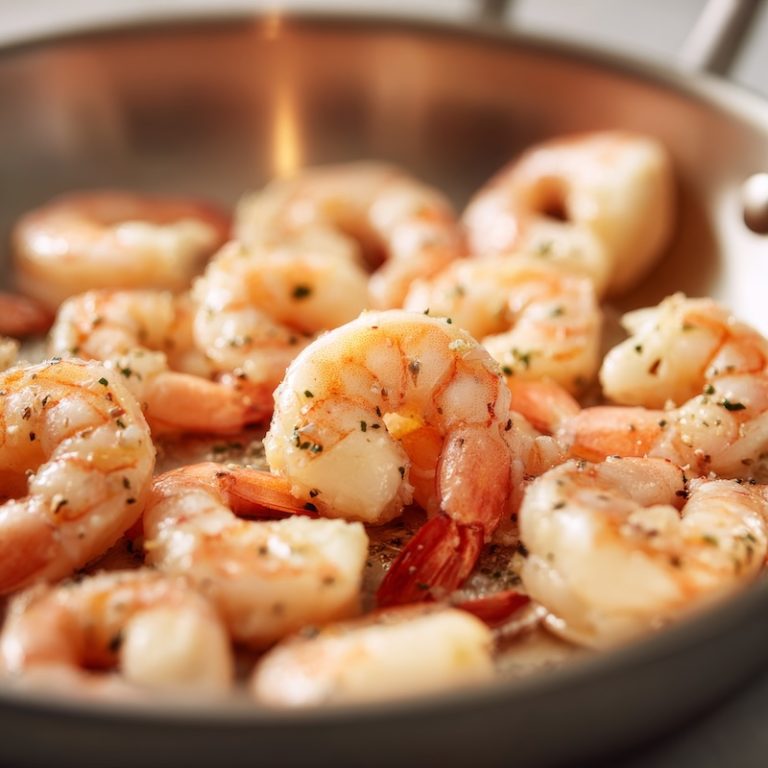
Shrimp are done when they turn pink and opaque and curl into a loose C shape. At that point they should look plump and pearly — not gray or translucent.
What color should cooked shrimp be?
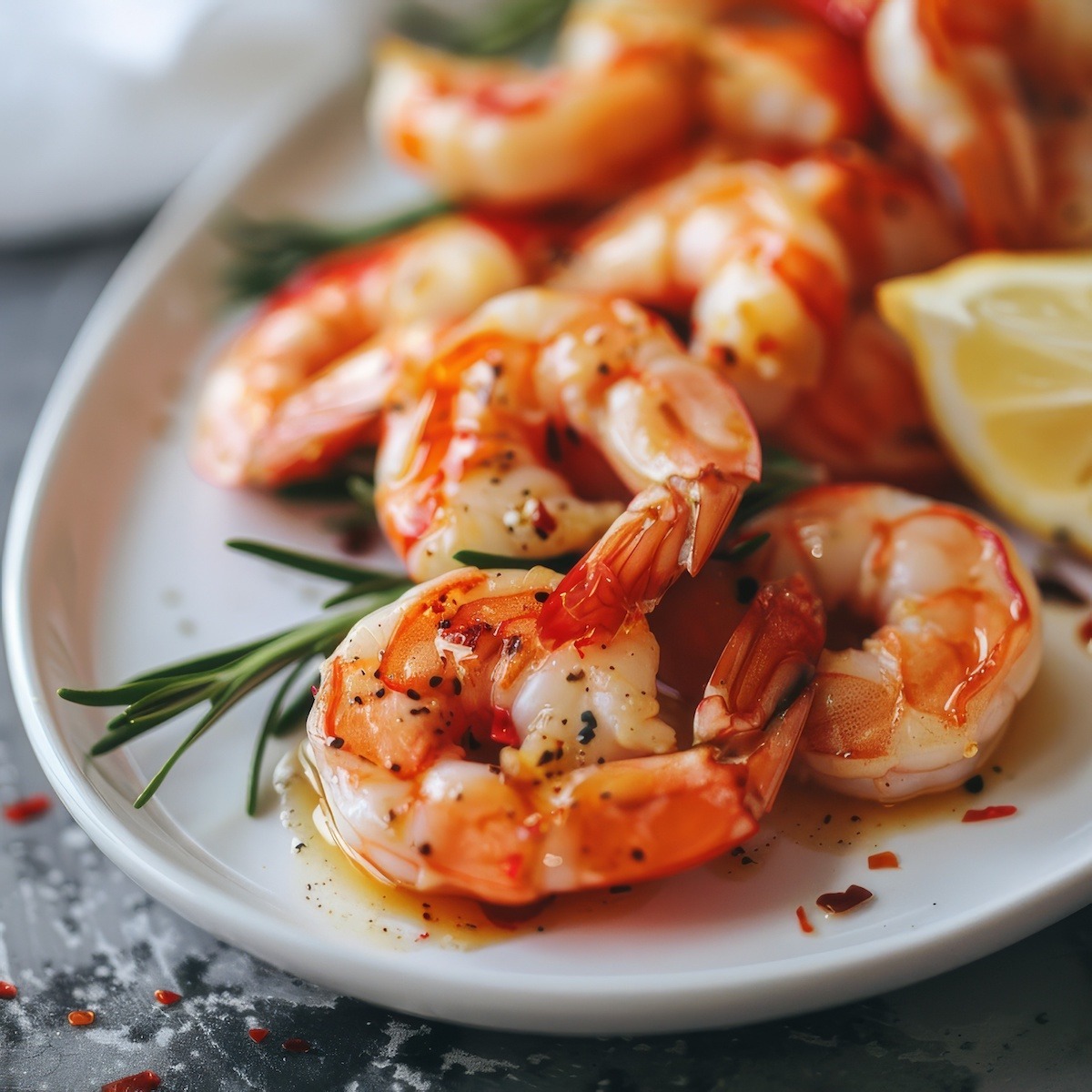
Opaque white interior with pink or red accents on the outside. Any gray or translucent areas mean they need more time.
What does overcooked shrimp look like?
Overcooked shrimp curl tightly into an O shape and look shrunken and dry. The flesh turns dense instead of springy.
How long does it take to cook shrimp?
Usually 2 to 4 minutes depending on size and method — which is why visual cues are more reliable than the clock.
Should shrimp be firm or soft when done?
Firm but springy when pressed. Mushy means undercooked, hard or rubbery means overcooked.
Is it okay if shrimp are slightly undercooked?
Shrimp should be fully opaque before eating. If the center looks translucent, give them another 20 to 30 seconds rather than a full extra minute.
Can shrimp finish cooking off the heat?
Yes — carryover heat continues cooking them for 20 to 30 seconds after you pull them. Removing them just before they look fully done prevents overcooking.
Do different sizes of shrimp cook differently?
Yes. Smaller shrimp cook in under 2 minutes and overcook fast. Larger shrimp take longer but the same visual cues apply.
How do you tell if shrimp are done without cutting one open?
Watch the color and shape — opaque flesh and a loose C means done. Cutting shrimp open releases juices and accelerates overcooking.
Are frozen shrimp cooked differently than fresh shrimp?
No — once fully thawed and patted dry, frozen shrimp cook identically to fresh. The key is starting dry so visual cues are easy to read.
Can you eat shrimp that are pink but translucent?
No. Pink color alone doesn’t mean done — shrimp must be opaque all the way through to be fully cooked and safe to eat.
What’s the biggest mistake people make when cooking shrimp?
Cooking them too long. Shrimp don’t recover once overcooked, which is why pulling them the moment they turn opaque is the only reliable method.
Do shrimp cook faster with the shell on or off?
Shell-on shrimp cook slightly more gently, which offers some protection against overcooking. Peeled shrimp cook faster and need closer attention.
How do you keep shrimp juicy after cooking?
Pull them from the heat the moment they turn opaque, transfer immediately to a plate, and let carryover heat finish the job.
Does shrimp curl when it’s done? Yes — it’s one of the most reliable signals there is. A loose “C” curl means cooked, a tight “O” means overcooked, and a straight or barely-curled shrimp needs more time.
Is it better to overcook or undercook shrimp? Undercook it, if you’re forced to pick — shrimp that need another 20 to 30 seconds can go right back on the heat and turn out fine, but overcooked shrimp can’t be fixed once they’ve gone rubbery. That said, neither is really the goal: undercooked shrimp is a genuine food-safety risk, not just a texture problem, so this only applies to a few extra seconds of cooking, not raw shrimp.
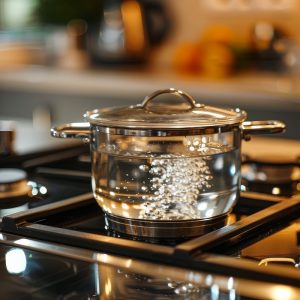
Why won’t my boiled shrimp turn fully opaque no matter how long I cook them? Usually a water-temperature problem, not a shrimp problem. Adding shrimp lowers the water’s temperature, especially in a large batch, and if it doesn’t return to a full boil quickly, the shrimp poach gently rather than boil, which keeps them from firming up. Cook smaller batches, make sure the water’s at a rolling boil before the food goes in, and leave the pot uncovered so it recovers quickly.
Why do my shrimp stay translucent even after they seem done in the pan? Usually the pan isn’t hot enough, or it’s crowded — both cause shrimp to steam instead of sear, so the heat can’t penetrate fast enough to turn them opaque. Use fewer shrimp in a hotter pan, pat them dry first, and check the thickest part, usually right where they were deveined — that’s the last spot to turn opaque and the most reliable place to judge doneness.



19 Responses
Thanks for the tips. I especially like the “C” is for cooked, “O” is for overcooked. I will see how this one works out. I usually use the look and see method coupled with experience over time. Like you, sometimes I get it wrong, and sometimes right. I love shrimps!
Let me know how it works out for you Alicia.
I cooked shrimp for the very first time last night, I’ve really only experienced shrimp from the shrimp cocktail kits I’ve bought at Walmart, For me and my husband, our new years resolution is to try more seafood. I broiled my shrimp for at least 4 minutes on each side, and later discovered that I had left the “peels” on but it still felt as if they were raw, it was pink, but the texture seemed off. I’m not sure if it is from my lack of experience with shrimp or if I actually under cooked it. Help please?
Even if shrimp are pink, that doesn’t guarantee they’re fully cooked. Shrimp cook very quickly, and shells can slow heat penetration and mask the texture, making them feel softer than they are. Fully cooked shrimp should be opaque all the way through, curl into a loose “C” shape, and feel firm but springy. If any part feels slimy or gelatinous, they’re undercooked and should be returned to heat briefly until opaque and slightly firm. Visual cues and texture are more reliable than timing alone, especially with shell-on shrimp.
Didn’t help me any
I just wanted to know if my very small shrimp is suppose to be white, I use it to make easy shrimp scampi.
Yes — very small shrimp will turn opaque white with pink accents when fully cooked. That’s normal for scampi; as long as they’re firm and slightly springy, they’re done.
I just sent back my fried shrimp for something else. I’m at a restaurant and their fairly small. When I bit into my first shrimp I looked at it. It was translucent (all gray or “clear”. No white. ) and the texture was that of raw fish. I sent it back once to be cooked more. When the shrimp came back without improvement I returned the dish to it to the waitress. Am I wrong? Was the shrimp cooked? I have been hospitalized with food poisoning once and take great care not to ever repeat that experience.
Janet, it doesn’t sound like it was cooked properly but hard to tell without seeing it. I’m guessing that will be the last visit to that restaurant.
Any idea of the cook time for shrimp in a pressure cooker? With a frozen lobster tail, shell down, meat up, it takes 3 minutes on low pressure with a quick release of pressure at the end of 3 minutes. This is with the lobster in a steam pot sitting above the water using a stove top pressure cooker.
Shrimp cook very quickly in a pressure cooker. Here’s a general guide:
Small to medium shrimp (51-30 count per pound): 1 minute on low pressure, quick release.
Large shrimp (21-25 count per pound): 1-2 minutes on low pressure, quick release.
Extra-large or jumbo shrimp (16-20 count per pound): 2 minutes on low pressure, quick release.
Since shrimp cook so fast, overcooking is a risk. It’s best to use low pressure instead of high, as high pressure can make them rubbery.
How can you tell if the Shrimp is fried, when it’s done if it has no shell on it
When frying shrimp without the shell, look for these signs to know it’s done:
Color Change – Raw shrimp are gray and translucent. When cooked, they turn pinkish-orange and opaque.
Curling Shape – Shrimp naturally curl as they cook. A loose “C” shape means they’re perfectly cooked, while a tight “O” shape usually means they’re overcooked.
Firmness – Gently press on the shrimp with a spatula or tongs. Done shrimp feel firm but still slightly springy. If they’re too tough, they’ve overcooked.
Golden Edges – If pan-frying or deep-frying, the outside should have a light golden-brown crisp where it touches the pan.
Time – Shrimp cook quickly! In a hot pan with oil, medium shrimp take about 2 minutes per side, while larger shrimp need about 3 minutes per side.
To avoid overcooking, remove them from heat just as they turn opaque—they’ll continue to cook for a few seconds off the pan.
Very worthwhile article, to the point and we’ll writen thank you. I’ll I’never forget again C not O thanks
I guess I like my shrimp a little over cooked: solid white in color. But, the last few times I’ve cooked shrimp (by boiling them), they never get to that stage no matter how long I cook them. What am I doing wrong?
Hi Jeff — this is actually a water temperature problem, not a shrimp problem. When you add shrimp to boiling water, the water temperature drops significantly, especially if you’re cooking a large batch. If it doesn’t come back to a full boil quickly, the shrimp poach at lower heat rather than boil, which keeps them from firming up and going fully opaque. Try a smaller batch, make sure the water is at a rolling boil before you add them, and don’t cover the pot — you want it to return to a boil fast. That should get you the solid white color you’re after. Though I’d mention — fully solid white usually means they’re slightly past the ideal point. The sweet spot is opaque with just a touch of pearliness, but if you prefer them firmer, a full rolling boil is the fix.
When boiling shrimp bring water to boil put in shrimp when comes back to boil take them off they are done
Why are my prawns still translucent after they’re cooked?
Hi Char — most likely one of two things. Either the pan isn’t hot enough, so the prawns are steaming rather than searing and the heat isn’t penetrating fast enough to turn them opaque. Or you’re crowding the pan, which has the same effect. Try fewer prawns in a hotter pan, make sure they’re patted dry before they go in, and watch for that color change at the thickest part — usually right at the back where you deveined them. That’s the last spot to turn opaque and the best indicator of where they actually stand.