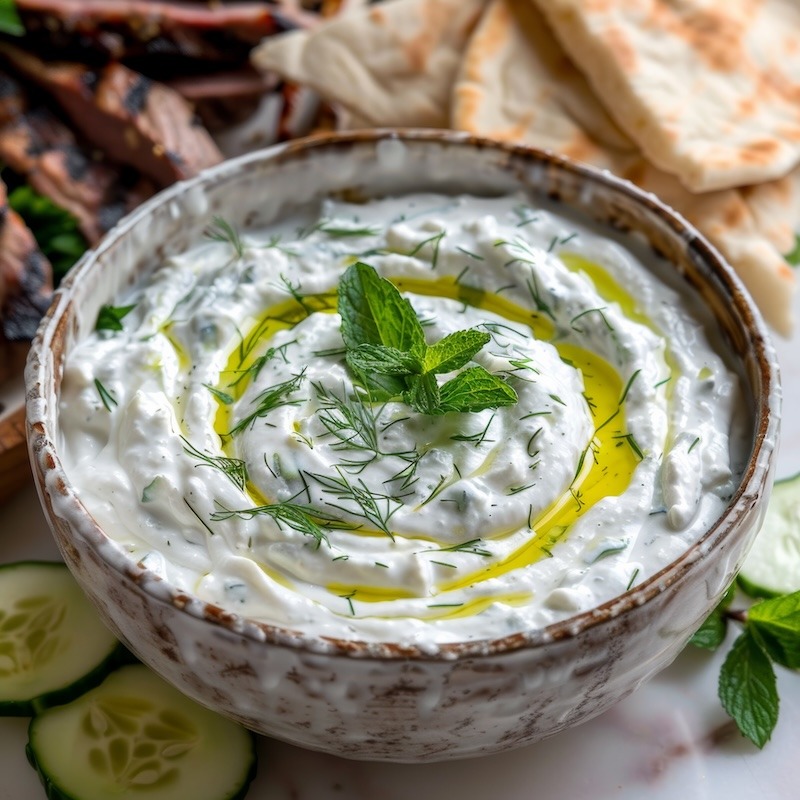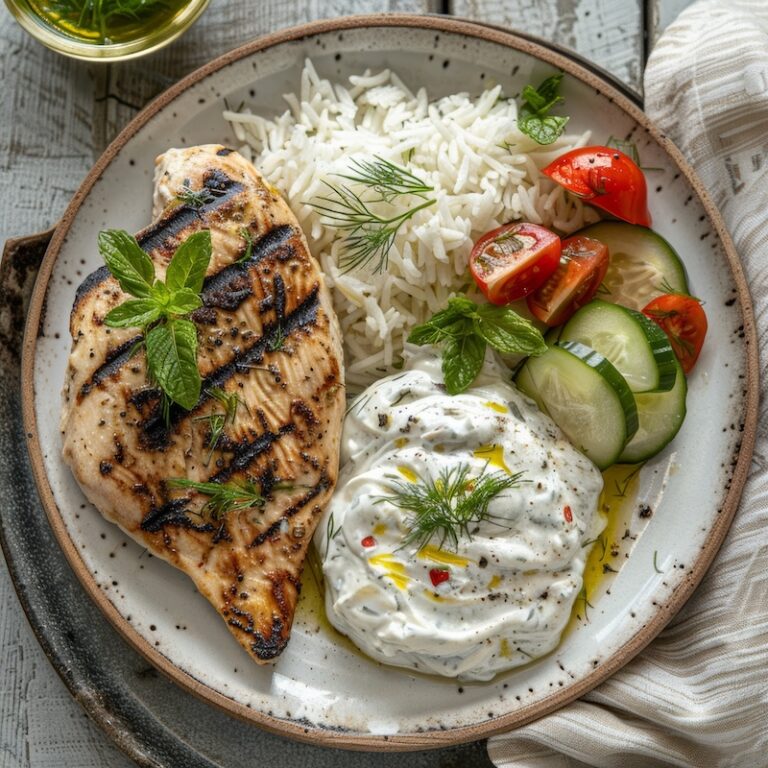



Tzatziki is one of those sauces that makes simple food taste finished. Spoon it over grilled lamb, chicken, salmon, roasted vegetables, or tuck it into a pita, and suddenly dinner feels brighter, fresher, and more complete. This version is fast, uses Greek yogurt, cucumber, garlic, lemon, and mint, and comes together in minutes with a blender or food processor.
Easy Tzatziki Sauce with Greek Yogurt
Fast Answer
Tzatziki is a cold Greek yogurt sauce made with cucumber, garlic, lemon, olive oil, and herbs. It’s creamy, tangy, and refreshing, and it works as a dip, spread, or sauce for lamb, chicken, fish, vegetables, grain bowls, and pita.
Why This Tzatziki Recipe Works
Greek yogurt gives it body: It makes the sauce creamy and tangy without feeling heavy.
Cucumber keeps it fresh: It adds cool flavor and balances rich grilled meats and roasted vegetables.
Mint and lemon brighten everything: They wake up the sauce and keep it from tasting flat.
The blender shortcut saves time: This version is smoother than hand-grated tzatziki, but it is quick, easy, and full of flavor.
Tzatziki Sauce For Lamb
Ingredients
- 2 scallions roughly chopped
- 1 garlic clove roughly chopped
- 1 medium cucumber peeled, seeded & chopped (about 1 cup)
- ½ cup plain Greek yogurt
- 3 tablespoons fresh mint leaves
- 1 tablespoon olive oil extra virgin
- 1 teaspoon lemon zest chopped
- 1 tablespoon fresh lemon juice
- salt & pepper to taste
Instructions
Prep the Vegetables
- Roughly chop the scallions and garlic. Peel the cucumber, cut it in half lengthwise, scrape out the seeds, and chop it into chunks.
Remove Excess Moisture from the Cucumber
- Place the chopped cucumber on paper towels or a clean kitchen towel and press lightly to blot away excess water. This helps keep the tzatziki thicker and creamier.
Load the Processor
- Add the scallions, garlic, cucumber, Greek yogurt, mint leaves, olive oil, lemon zest, and lemon juice to a food processor or blender.
- Season with a small pinch of salt and a few grinds of black pepper.
Pulse First, Then Blend
- Pulse a few times to break everything down evenly. Then blend just until the sauce is mostly smooth and creamy.
- Stop and scrape down the sides if needed. Do not over-process, or the cucumber can release too much water.
Taste and Adjust
- Taste the tzatziki and adjust with more salt and pepper if needed. If you want a brighter flavor, add a little more lemon juice.
Chill Before Serving
- Transfer the sauce to a bowl or storage container, cover, and refrigerate for at least 30 minutes if you have time. This allows the flavors to come together.
Serve
- Serve cold with lamb, chicken, vegetables, pita, or anywhere you want a cool, tangy, creamy sauce.
What Most Cooks Get Wrong with Tzatziki
They skip draining the cucumber: Raw cucumber is mostly water. If you don’t squeeze or blot it dry, your tzatziki turns thin and watery instead of creamy.
They use regular yogurt: Standard yogurt is too loose. Greek yogurt gives tzatziki its signature thickness and tang.
They over-blend it: A quick blend is fine, but over-processing breaks down the cucumber and releases more water. The result can feel more like dressing than sauce.
They under-season it: Tzatziki needs enough salt, garlic, and acid to stand up to grilled meats and roasted foods. Taste and adjust before serving.
They serve it immediately: Freshly made tzatziki is good. Letting it chill for 30–60 minutes is better. The flavors settle and the texture improves.
They forget balance: Too much garlic overwhelms. Too little acid makes it flat. The goal is cool, bright, and balanced—not sharp or muddy.
Where You Can Use Tzatziki
Think beyond lamb: This cool, creamy sauce adds brightness and balance to all kinds of dishes. Use it anywhere you want to cut richness or add fresh flavor.
🥩 Grilled & Roasted Meats
Lamb, chicken, beef, or pork. Spoon it over kebabs, chops, or sliced steak to add contrast and freshness.
🐟 Fish & Seafood
Perfect with grilled salmon, shrimp, or white fish. It cools and balances smoky or charred flavors.
🥙 Wraps & Sandwiches
Spread inside pita, gyros, burgers, or wraps. It replaces mayo with something brighter and more flavorful.
🥗 Vegetables & Grain Bowls
Drizzle over roasted vegetables, grain bowls, or salads. It ties everything together like a built-in dressing.
🍟 Dips & Starters
Serve with pita chips, flatbread, or raw vegetables. It’s an easy, crowd-pleasing appetizer.
🍳 Breakfast & Eggs
Try it with eggs, breakfast wraps, or savory bowls. It adds a cool, tangy contrast to rich flavors.
Think Like a Cook: Tzatziki works best anywhere food feels rich, salty, or heavy. It adds coolness, acidity, and creaminess—all in one spoonful.
How You Can Dress Up Tzatziki
Start simple, then adjust: Once you know the base, small changes can shift tzatziki from classic to bold, herby, or even a little smoky.
Change the herbs: Swap mint for dill for a more traditional Greek flavor. Or combine both for a fresher, more complex taste.
Boost the garlic: Add more for a sharper, more assertive sauce—or mellow it with roasted garlic for a softer, sweeter note.
Play with acidity: Lemon juice keeps it bright, but a splash of red wine vinegar adds a deeper, slightly sharper edge.
Add richness: A drizzle of good olive oil deepens the flavor and gives the sauce a silkier finish.
Make it chunkier or smoother: Blend for a smooth, creamy sauce, or fold in finely chopped cucumber for more texture.
Try bold add-ins: Crumbled feta, a pinch of cumin, or a little grated lemon zest can push the flavor in new directions.
Turn it into a sauce or dip: Thin it slightly for drizzling over bowls, or keep it thick for dipping with pita or vegetables.
Think Like a Cook: Every change affects balance. More garlic increases sharpness, more acid adds brightness, and more oil softens everything. Adjust one element at a time and taste as you go.
“Tzatziki” (τζατζίκι) comes from the Turkish word cacık, a similar yogurt-and-cucumber sauce. The name reflects the shared culinary roots of the Eastern Mediterranean, where variations of this cool, tangy sauce appear across many cultures.
Tzatziki: A Quick History
Tzatziki is a classic Greek sauce made from yogurt, cucumber, garlic, olive oil, and herbs. It’s closely related to similar yogurt-based sauces found across the Eastern Mediterranean and Middle East, including Turkish cacık and Persian mast-o-khiar.
The idea is simple and ancient: combine cultured dairy with fresh ingredients to create something cool, tangy, and refreshing—perfect for balancing grilled meats and warm climates.
Today, tzatziki is a staple of Mediterranean cooking and shows up everywhere from traditional gyros to modern grain bowls and sandwiches.
Tzatziki Sauce FAQ
Can I make tzatziki ahead of time?
Yes, and it’s actually better that way. Letting it rest for at least 30–60 minutes allows the flavors to blend and the texture to thicken slightly.
How long does tzatziki last in the refrigerator?
Tzatziki will keep for about 3 to 4 days in an airtight container. Stir before serving, as some liquid may separate.
Why is my tzatziki watery?
This usually happens when the cucumber isn’t drained properly or when regular yogurt is used instead of Greek yogurt. Always squeeze excess moisture from the cucumber and use thick yogurt.
Do I need to peel and seed the cucumber?
Peeling is recommended for a smoother texture. Seeding is optional, but removing seeds helps reduce excess water.
Can I use regular yogurt instead of Greek yogurt?
You can, but it will be thinner. For best results, strain regular yogurt through cheesecloth or a fine sieve before using.
Can I use dried herbs instead of fresh?
Fresh herbs give the best flavor, but dried can work in a pinch. Use about one-third the amount and let the sauce rest longer to develop flavor.
Is tzatziki made with dill or mint?
Both are used. Dill is more traditional in Greek versions, while mint adds a fresh, slightly sweeter note. You can use either or a combination.
Can I freeze tzatziki?
Freezing is not recommended. The yogurt can separate and become grainy when thawed.
What does tzatziki taste like?
It’s cool, creamy, tangy, and slightly garlicky with a fresh herbal note. It’s designed to balance rich or grilled foods.
What do you serve tzatziki with?
It pairs well with lamb, chicken, fish, roasted vegetables, grain bowls, pita, wraps, and even burgers or sandwiches.