Fast Answer
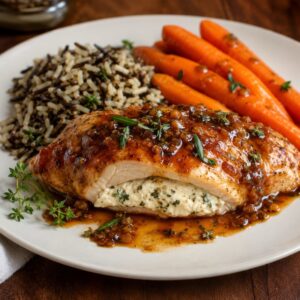
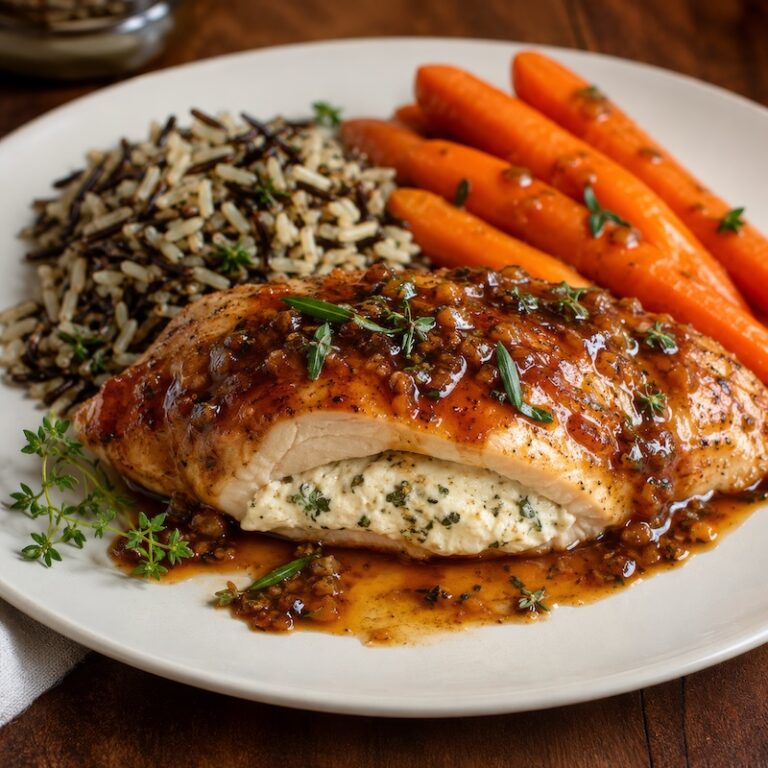
Chicken breasts stuffed with herbed goat cheese are made by cutting a horizontal pocket into each breast, filling it with a goat cheese and tarragon mixture, then searing in butter and oil before finishing in the oven or continuing on the stovetop. A red wine pan sauce built from the same pan — with shallots, peach chutney, chicken stock, and roasted garlic — finishes the dish.
Goat Cheese Stuffed Chicken Breasts — How to Stuff, Sear, and Sauce Them Right
Stuffed chicken breasts are one of those dishes that sound like more work than they are. The technique — cutting a pocket, filling it, searing it closed — takes about ten minutes of active prep. What separates a good version from a forgettable one isn’t the filling. It’s the sauce.
This recipe pairs herbed goat cheese with a red-wine-and-peach chutney pan sauce that most stuffed-chicken recipes don’t bother with. It’s worth bothering with.
Start Here: What to Know Before You Cook
- Pull the chicken from the fridge 20–30 minutes early. Cold chicken goes into the pan unevenly — the outside overcooks before the center is done. Room temperature gives you more control.
- Bring the goat cheese to room temperature too. Cold goat cheese is stiff and hard to mix. Room temperature goat cheese blends smoothly with the herbs and fills the pocket without tearing it.
- Roast the garlic first — it takes an hour. The sauce calls for a full roasted garlic bulb. If you haven't made this ahead, start it before everything else. You can roast it the day before.
- Don't overfill the pocket. The cheese expands slightly as it heats. A generously packed pocket is right. A stuffed-to-bursting pocket will leak filling into the pan and burn.
- Have toothpicks ready. They hold the pocket closed during the sear. Remove them before serving — or at least warn your guests they're there.
- This is a stovetop-to-oven or all-stovetop recipe. Thicker breasts may need a few minutes in a 375°F oven after the sear to reach 165°F without burning the outside. Have a thermometer ready.
Why This Recipe Works
- Goat cheese stays put. Unlike mozzarella or brie, fresh goat cheese doesn't fully melt and run. It softens, warms through, and stays in the pocket as a creamy filling rather than pooling in the pan.
- Tarragon is the right herb for this job. Its mild anise flavor pairs naturally with both goat cheese and chicken without overpowering either. Rosemary or thyme alone would be too assertive in the filling.
- The sear does two things. It gives the outside color and flavor, and it partially seals the pocket edge so the filling doesn't escape. Don't rush this step — let the crust develop.
- The pan sauce earns the dish. Most stuffed chicken recipes stop at the sear. Building a sauce in the same pan — deglazing with wine, adding chutney and roasted garlic, reducing with chicken stock — is what makes this dinner-party food rather than a weeknight workaround.
- Peach chutney balances the sauce. The red wine and chicken stock reduction is savory and slightly sharp. The chutney adds sweetness and body without making the sauce taste fruity. It disappears into the sauce and rounds it out.
- Roasted garlic gives depth, not heat. Raw garlic in a pan sauce can taste sharp and one-dimensional. Roasted garlic is mellow and sweet — it integrates rather than dominates.
Chicken Breasts Stuffed with Herbed Goat Cheese
Equipment
- frying pan
Ingredients
- 4 ounces fresh goat cheese at room temperature
- 1 tablespoon fresh tarragon chopped
- 4 boneless chicken breasts at room temperature
- salt and pepper to taste
- 1 tablespoon olive oil
- 1 tablespoon butter
For the sauce
- 1 tablespoon shallots chopped
- 1 tablespoon olive oil
- 6 ounces red wine
- 2 tablespoons peach chutney
- 1 teaspoon fresh thyme minced
- 1 teaspoon fresh rosemary minced
- 1 cup chicken demi-glace or 2 cups of chicken stock reduced by half before using
- 1 bulb roasted garlic mashed
Instructions
Before You Start
- Two things need to happen before anything else:Roast the garlic. It takes an hour at 350°F. Cut the top quarter off a full head to expose the cloves, drizzle with olive oil, season with salt and pepper, wrap tightly in foil, and roast until the cloves are completely soft and golden — about 60 minutes. Squeeze the cloves out of their skins and mash them into a paste. This can be done up to 3 days ahead.
- Bring the chicken and goat cheese to room temperature. Pull both from the fridge 20–30 minutes before you cook. Cold goat cheese won't mix smoothly. Cold chicken cooks unevenly.
Make the Filling
- In a small bowl, combine 4 oz of room-temperature goat cheese with 1 tablespoon of fresh chopped tarragon. Season with salt and pepper.
- Mix until smooth and well combined — the tarragon should be evenly distributed throughout. Taste it. The filling should taste seasoned and herbal on its own, because once it's inside the chicken it won't get much additional seasoning.Optional addition: sauté 2 minced garlic cloves in a small amount of butter until soft, let them cool briefly, and fold into the goat cheese mixture. This adds depth without sharpness.
- Set the filling aside at room temperature while you prep the chicken.
Cut the Pockets
- Lay each chicken breast flat on a cutting board, smooth side up. The thickest side faces you.
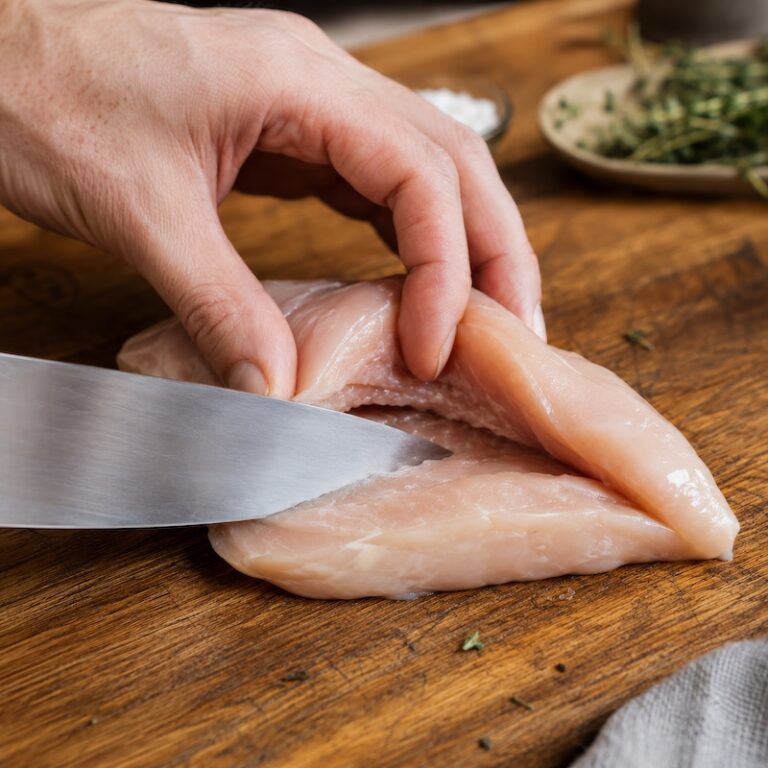
- Using a sharp paring knife or boning knife, insert the tip into the thickest side of the breast — not the top, the side. Cut a horizontal slit going about three-quarters of the way through the breast, moving the knife back and forth gently to open the pocket. You're creating a cave, not a tunnel. Don't cut all the way through to the other side, and don't cut through the top or bottom surfaces.How deep is deep enough? Insert your finger into the pocket — it should reach almost to the center of the breast on all sides without breaking through.
- Season the outside of each breast with salt and pepper.
Fill & Seal
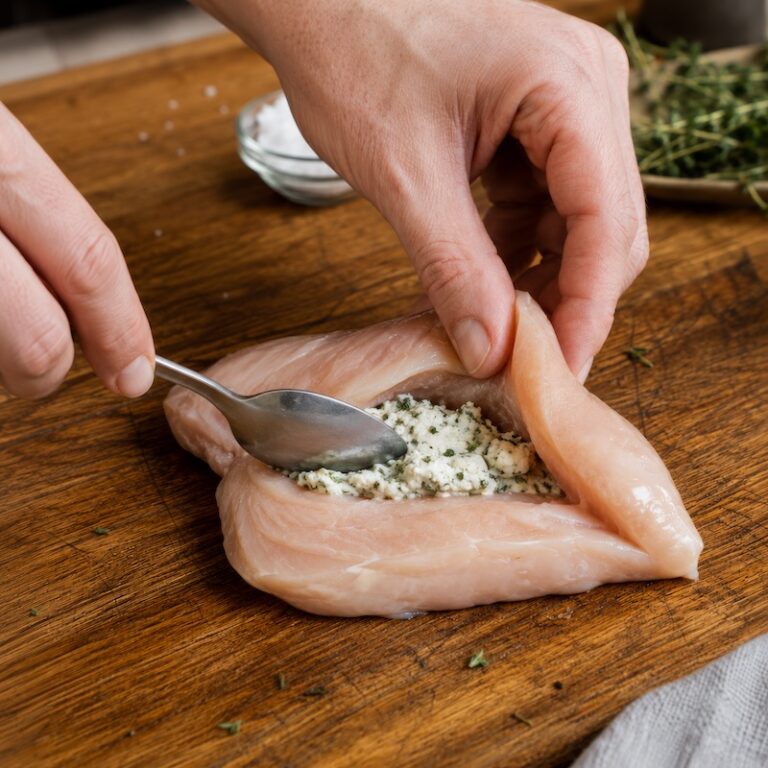
- Use a spoon to fill each pocket with the goat cheese mixture. Pack it in firmly, but don't push so much that the pocket is straining at the opening. Leave a small margin — the cheese expands slightly as it heats.
- If any filling sits at the very lip of the opening, push it back gently. Then press the opening closed with your fingers and secure it with one or two toothpicks angled across the gap.Note for later: write yourself a reminder to remove the toothpicks before serving, or warn guests they're there.
Sear the Chicken
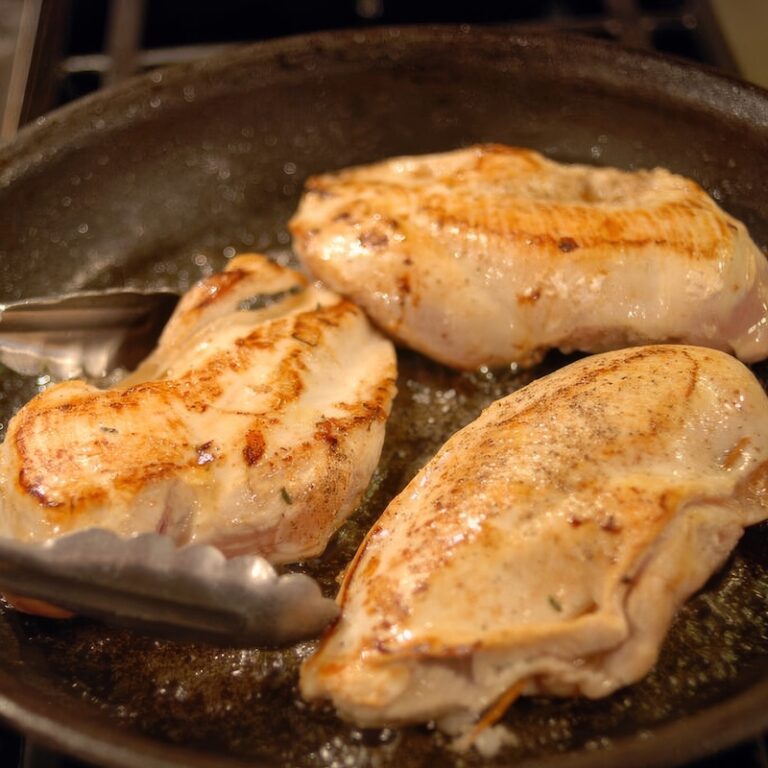
- Heat 1 tablespoon of olive oil and 1 tablespoon of butter together in a sauté pan large enough to hold all four breasts without crowding — an 11 or 12-inch pan works well. Heat over medium-high until the butter stops foaming and the oil shimmers.
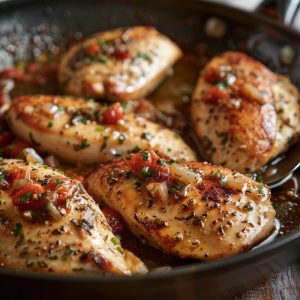
- Add the stuffed breasts to the pan, sealed side down first. This helps the pocket edge sear closed. Cook undisturbed for 4–5 minutes until the bottom is deeply golden brown. Don't move the chicken during this time — let the crust develop.
- Flip and cook an additional 3–4 minutes on the other side.
- Check the temperature. Insert a thermometer into the thickest part of the meat — not into the filling pocket, which will read hotter. You're looking for 165°F. If the breasts aren't cooked through yet after 8–9 minutes total on the stovetop, transfer the pan to a 375°F oven for 8–12 minutes to finish cooking through without burning the exterior.
- Transfer the cooked chicken to a warm plate. Remove the toothpicks now if you remember. Cover loosely with foil to rest while you make the sauce — 5 minutes of rest is enough.
Build the Pan Sauce
- Pour off any excess fat from the pan, but leave the fond — the browned bits left from searing the chicken. These are flavors. Reduce the heat to medium.
- Add 1 tablespoon of olive oil and 1 tablespoon of minced shallot directly to the pan. Stir and cook for about 3 minutes until the shallot softens and turns translucent. Don't let it brown.
- Pour in 6 oz of red wine. It will sizzle, and the fond will release immediately — scrape the bottom of the pan to lift it all into the sauce. Reduce the wine until it's nearly gone — "an essence." This takes about 3–4 minutes. You'll know it's right when the wine looks almost syrupy, and the sharp alcohol smell has cooked off.
- Add 2 tablespoons of peach chutney, 1 teaspoon fresh minced thyme, 1 teaspoon fresh minced rosemary, the mashed roasted garlic, and 2 cups of chicken stock that has been pre-reduced by half (or 1 cup of a good store-bought demi-glace).
- Stir everything together and let the sauce simmer, stirring occasionally, until it thickens enough to coat the back of a spoon and hold a line when you run your finger through it — about 8–10 minutes.
- Taste and adjust with salt and pepper.
Plate & Serve
- Remove the toothpicks from the chicken if you haven't already. Spoon the sauce generously over each breast. Serve immediately.
Notes
What Most Cooks Get Wrong
- Cutting the pocket too deep or all the way through. You want three-quarters of the way through — enough space for filling, not a tunnel that opens on both ends. Go slowly with the knife tip and feel the resistance as you cut.
- Using cold goat cheese. It won't mix smoothly, it won't fill cleanly, and it takes much longer to warm through in the oven. Five minutes on the counter fixes this entirely.
- Overfilling and then wondering why the pan smells like burning cheese. The filling expands. If it's already at the lip of the pocket before it goes in the pan, it will leak out and burn. Pack it in firmly but leave a small margin at the opening.
- Skipping the toothpick. The pocket will open during the sear without something holding it. You don't need many — one or two per breast, angled across the opening, is enough.
- Cooking entirely on the stovetop at high heat. Thick chicken breasts need time to cook through. High heat the whole way gets you a beautiful exterior and a raw center. Finish thicker breasts in a 375°F oven for 8–12 minutes after the sear.
- Skipping the pan sauce. The fond left in the pan after the chicken comes out is concentrated flavor. Leaving it behind means skipping the best part of the dish. The sauce takes 10 minutes.
Quick Fixes & Pro Tips
- No peach chutney? Apricot jam works well — as noted in the original recipe from the dinner party version. Fig jam also works. You want something with sweetness and a little acidity to balance the wine reduction.
- No fresh tarragon? Use half the amount of dried tarragon. Fresh basil or fresh chives also work well in the filling. Avoid dried rosemary directly in the goat cheese — it's too coarse.
- Sauce too thin? Keep reducing. It will thicken as the liquid evaporates. If you've already added everything and it's still loose, a small additional measure of reduced chicken stock will bring it back without diluting the flavor.
- Sauce too thick? Add a small splash of chicken stock and stir to loosen. Taste again after adjusting.
- Making more than four? This recipe scaled to 12 breasts for a dinner party (per the original post). The sear needs to happen in batches — don't crowd the pan. The sauce scales easily.
- Want to add more to the filling? Sautéed garlic folded into the goat cheese mixture adds depth. Sun-dried tomatoes, chopped spinach, or caramelized shallots all work. Keep additions small so the pocket closes properly.
What to Serve With This
- Asparagus risotto. The original dinner party version paired these exactly — the creamy, savory risotto works with the richness of both the goat cheese filling and the pan sauce.
- Roasted or mashed potatoes. A neutral, starchy base gives the pan sauce somewhere to go on the plate and keeps the focus on the chicken.
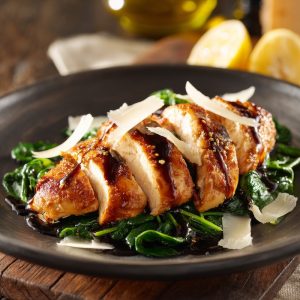
- Sautéed spinach or wilted greens. The slight bitterness of greens cuts through the richness of the goat cheese and pan sauce. Fast to make while the chicken rests.
- Roasted root vegetables. Carrots, parsnips, or butternut squash roasted with olive oil and thyme echo the herbaceous notes in the filling.
- Simple green salad. If the sides are already rich, a lightly dressed arugula or mixed green salad keeps the plate from feeling heavy.
- Wine pairing. The red wine in the sauce points toward a medium-bodied red at the table — a Côtes du Rhône, a Barbera, or a lighter Pinot Noir all work. If you prefer white with chicken, a full-bodied white Burgundy or an oaked Chardonnay holds up against the richness of the goat cheese and sauce.
Storage & Make-Ahead
The sauce: Can be made through the reduction step, then refrigerated and reheated gently before serving. Don't make it too far in advance — it's best fresh, and it takes only 10 minutes.
Make-ahead: This dish is well-suited to prep-ahead cooking. The goat cheese filling can be made and refrigerated up to 2 days in advance. The chicken can be stuffed, toothpicked, and refrigerated up to 24 hours before cooking — pull it out 20–30 minutes before it goes in the pan. The roasted garlic can be made up to 3 days ahead.
Freezing: The stuffed raw chicken freezes well. Freeze individually on a baking sheet first, then transfer to a bag. Thaw overnight in the fridge before cooking.
Leftovers: Refrigerate cooked chicken and sauce separately for up to 3 days. Reheat the chicken gently in a covered pan with a small splash of chicken stock over low heat — 3 to 4 minutes per side. Microwave dries the filling out. The sauce reheats well on the stovetop over low heat.
How to Stuff the Chicken Breast
To stuff a chicken breast like a pro, start with a sharp knife and a steady hand. Lay each chicken breast flat on a cutting board, smooth side up.
Hold it steady with your non-cutting hand, then carefully insert the tip of the knife into the thickest side of the breast. Gently cut a horizontal slit, going about three-quarters of the way through—not all the way out the other side—to create a pocket. Think of it as carving a cozy little cave for your goat cheese mixture to snuggle into.
Once the pocket’s open, use a spoon (or your fingers if you’re feeling rustic) to stuff in that herbed goat cheese goodness. Don’t overfill—it should be generously packed but not bursting at the seams.
If a little cheese peeks out, that’s fine—it just means flavor is trying to escape. Press the breast gently to seal it, and if needed, secure the opening with a toothpick or two to keep everything in place while it cooks.
Now you’ve got a stuffed chicken breast ready to impress—minimal fuss, maximum flavor.
FAQ Section
Q: How do I keep the filling from leaking out during cooking? Three things help: don’t overfill the pocket, seal the opening with one or two toothpicks angled across the gap, and make sure the sear side goes down first so the heat helps seal the edge. A little filling at the very edge of the pocket will leak — that’s normal. A lot of filling leaking means the pocket was overfilled or the toothpick was skipped.
Q: Can I use a different cheese instead of goat cheese? Yes, with some adjustment. Goat cheese works because it doesn’t fully melt and run — it stays as a filling. Cream cheese behaves similarly and is a good substitute with a milder flavor. Brie or camembert will melt more aggressively and may leak. Feta is too crumbly to mix smoothly but can be combined with a small amount of cream cheese to hold it together.
Q: Do I need to finish the chicken in the oven? It depends on the thickness of your chicken breasts. Thin breasts (under ¾ inch) can finish on the stovetop over medium heat after the initial sear. Thicker breasts need 8–12 minutes in a 375°F oven after the sear to cook through without burning the outside. A meat thermometer is the reliable answer — pull the chicken at 165°F measured in the thickest part of the meat, not the filling.
Q: Can I make this without the pan sauce? You can, but it’s worth making. The sauce is built in the same pan after the chicken comes out — it takes 10 minutes and uses the fond left behind from the sear. Without it, the dish is a decent stuffed chicken. With it, it’s something you’d serve at a dinner party.
Q: What can I substitute for peach chutney in the sauce? Apricot jam is the closest substitute and works very well — it was used in the dinner party version described in the original post. Fig jam, mango chutney, or even a tablespoon of honey with a small squeeze of lemon will also work. You want sweetness and a little acidity to balance the wine reduction.
Q: How do I roast garlic if I’ve never done it? Cut the top quarter off a full head of garlic to expose the cloves. Drizzle with olive oil, season with salt and pepper, wrap in foil, and roast at 350°F for about an hour until the cloves are completely soft and golden. Squeeze the roasted cloves out of their skins and mash them. Roasted garlic keeps refrigerated for up to a week, so it’s worth making a few heads at once.
Q: Can I butterfly the chicken instead of cutting a pocket? Yes. Butterflying — cutting the breast open like a book rather than cutting a pocket — works if you want a larger surface area for filling. Add the filling to one half, fold the other half over, and secure with toothpicks. The cooking method is the same, though butterflied breasts are thinner and will cook faster.
Q: How far ahead can I stuff the chicken before cooking it? Up to 24 hours. Stuff the breasts, secure with toothpicks, and refrigerate on a covered plate. Pull them out 20–30 minutes before cooking to take the chill off. Stuffing them too far in advance beyond 24 hours risks the moisture from the filling softening the chicken texture.