
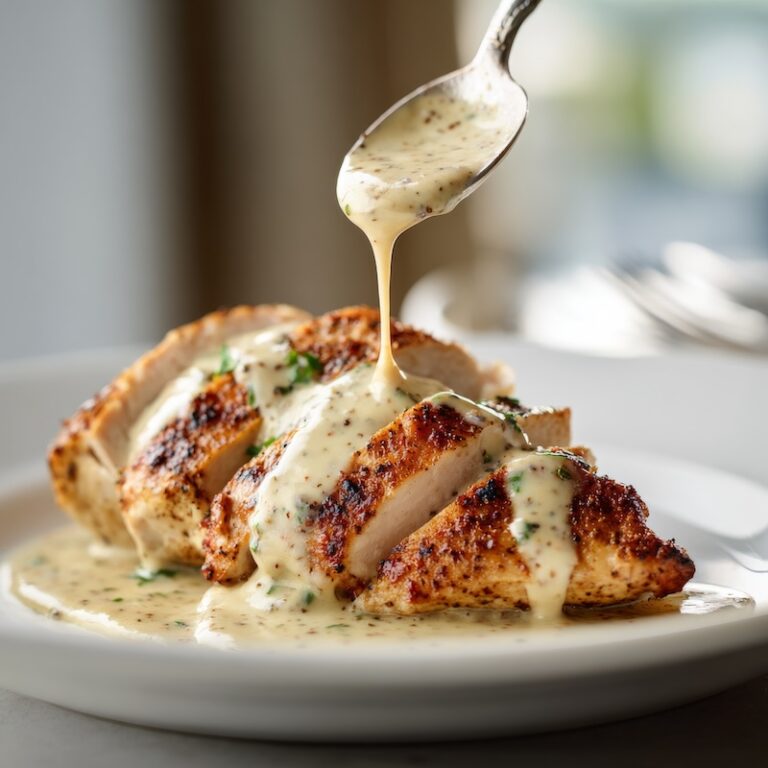
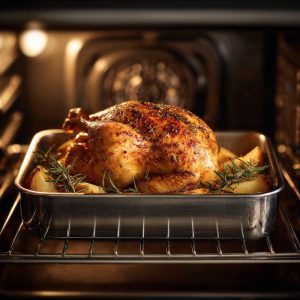
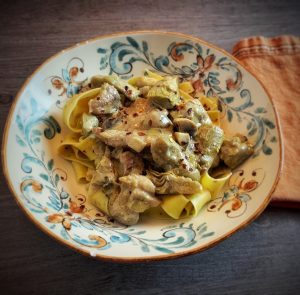

Chicken with Whole Grain Mustard Cream Sauce
This whole grain mustard cream sauce pairs so well with chicken
Servings: 4 people
Ingredients
For the Marinade
To Finish
- 1 medium onion
- 1 cup heavy cream
- 2 - 3 tablespoons whole grain mustard to taste
- 1 cup white wine
Instructions
Prep the Chicken
- Pat chicken breasts dry. Season both sides with salt and pepper. Optional: lightly pound for even thickness.
Sear the Chicken
- Heat oil (and a little butter if desired) in a skillet over medium-high heat.
- Add the chicken and cook for 4–5 minutes per side, until golden brown.
- Remove and set aside.
Build the Base
- Lower heat to medium. Add shallots or garlic if using. Cook briefly until fragrant.
Deglaze the Pan
- Add a splash of white wine or chicken stock. Scrape up the browned bits.
Make the Sauce
- Stir in chicken stock, then add whole grain mustard.
- Add cream and bring to a gentle simmer.
Reduce & Balance
- Let the sauce simmer until slightly thickened, 3–5 minutes. Taste and adjust seasoning.
Finish the Chicken
- Return chicken to the pan. Spoon sauce over the top.
- Simmer gently until cooked through.
Serve
- Plate the chicken and spoon the sauce generously over it. Garnish with herbs if desired.
Notes
UPDATE - A reader commented that the three tablespoons of mustard were too much, so I'm suggesting you start with two tablespoons, taste, and adjust. Just like hot pepper, some people like more and some like less, so adapt this and every recipe to your preferences.
What Most Cooks Get Wrong

What Most Cooks Get Wrong
- Not drying the chicken: Moisture prevents proper browning.
- Skipping the fond: Cleaning the pan too early removes key flavor.
- Boiling the sauce: High heat can break the cream and dull the flavor.
- Adding too much mustard: Overpowers instead of balancing the sauce.
- Not reducing enough: Thin sauce = weak flavor and poor texture.





11 Responses
I cant wait to try this recipe, Im going to give your page to my son and daughter both of whom love food and cooking, cant wait thank you for this blog
Thank You for this wonderful site and for this recipe, it sounds so good! One question though from someone who is always either over cooking or under cooking chicken — when you simmer the chicken in the sauce until completely cooked, how long is that exactly? 10, 20, 30 minutes?
I just made this recipe and I LOVE it! Even my coworkers are asking for the recipe.
I cut my chicken breasts in half (length wise, so they are thinner) and marinated them in juice from a meyer lemon (it’s a sweeter veriety). The lemon compliments the mustard flavor well. I put each piece in the butter for about 10 minutes on each side– basically just until they were white through and through and they had slightly borwned on each side.
Tricia, how long it takes depends on your pan, stove and the temperature you are cooking it at.
Because you already sauteed the chicken breasts, it should mot take that long in the sauces. I would say 5 to 10 minutes, but here is where you want to have and use an instant thermometer to bring it to the right internal temperature.
Our finicky teens keep asking me to do this one fairly frequently. The recipe is right on. Thanks
I love your blog. Have a question — I frequently make coq au vin and of course saute the chicken. sometimes I make the dish in advance and reheat it just before serving. I find that the chicken dries out. Same holds true with a tagine that I make. Why does that happen and how do I avoid it?
Not seeing your recipe and knowing your cooking technique, it’s hard to say but I’m guessing it has to do with the cut of chicken you are using. If you are cooking with boneless, skinless chicken breasts, they are more likely to dry out. I made a chicken dish in the crock pot the other night with legs and thighs, cooked it all day and the meat was tender but not dry.
I made this dish last night and it was fantastic. I emailed it to a few friends that love to cook and will make it again in a few weeks when i am having friends for dinner. The only thing i did different is leave out the red pepper flakes, I don’t like the taste of them. This was my first time on this site but i am eager to try some other recipes. Thank you
Tara
You are welcome and thank you for telling some of your friends about the site. – RG
Is there a healthier substitute for the cream that would work well?
Hi Murray, I think cream is a healthy ingredient in moderation but if I wanted to make it lighter, I guess you could try half and half or one of those cream substitutes but if you are trying to loose weight for health reasons, I would either skip this recipe or just eat a smaller portion. You could also experiment with using less cream and see how it come out too. – RG
We ended up adding mushrooms which was a great idea! But 3 tablespoons of whole grain mustard was WAY too much. It was extremely overpowering and we couldnt eat all of it. We do live in th Uk though so is there a chance the mustard whole grain mustard here is stronger? Either way we thought that the dish would be brilliant with only a small amount of mustard and less thyme.
Great idea adding mushrooms and I wonder if it could be your mustard is stronger but I’ll go back and adjust my recipe so people can add more or less based on their tastes. Thanks for sharing.