
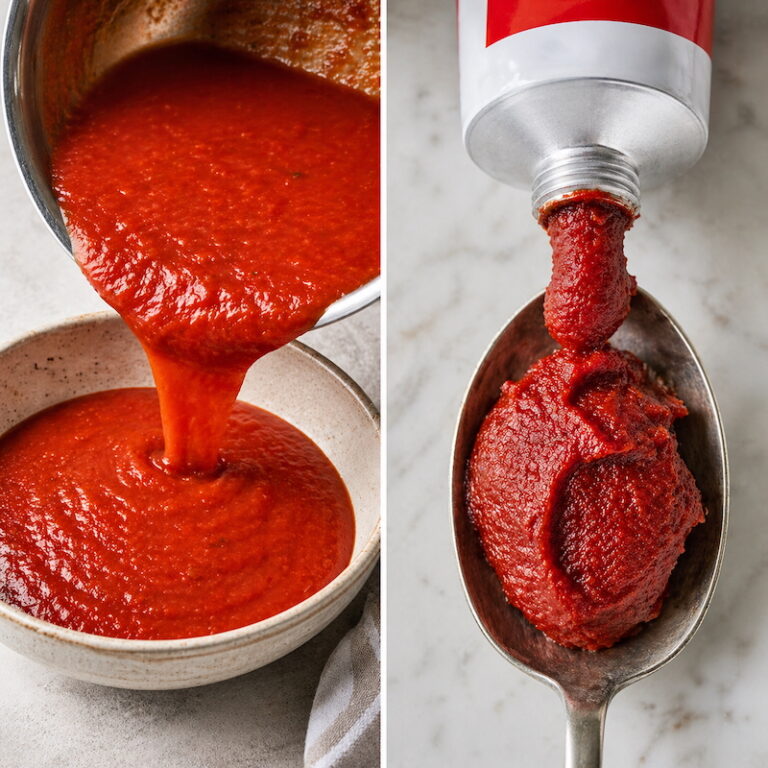


Ever make a sauce that tasted thin… or one that felt oddly heavy and overpowering? The culprit might be your tomatoes. Tomato sauce and tomato paste may look related, but they play completely different roles—and using the wrong one can quietly sabotage your dish.
Tomato Sauce vs Tomato Paste: The Key Difference Every Cook Should Know
Tomato sauce and tomato paste both start with tomatoes, but they behave very differently in the kitchen. One builds the body of a dish. The other intensifies it.
Understanding how each works will help you control flavor, texture, and balance—whether you’re making pasta sauce, soup, stew, or braised dishes.
Fast Answer
Tomato sauce is a cooked, seasoned, ready-to-use base with a lighter flavor, while tomato paste is a concentrated form used to deepen flavor, thicken sauces, and add richness.Start Here: Tomato Sauce vs Tomato Paste
- Tomato sauce: A ready-to-use base that adds body, moisture, and balanced tomato flavor.
- Tomato paste: A concentrated flavor booster used in small amounts to deepen richness and thicken dishes.
- Use sauce when: You need volume and structure (pasta sauces, soups).
- Use paste when: You want intensity without adding liquid.
- Why it matters: Choosing the right one controls flavor strength and texture.
Flavor & Function
- Tomato sauce flavor: Mild, slightly sweet, balanced acidity.
- Tomato paste flavor: Deep, rich, slightly sweet with strong umami.
- Sauce function: Adds liquid, builds the base of a dish.
- Paste function: Thickens, intensifies, and adds depth.
- Key difference: Sauce spreads flavor; paste concentrates it.
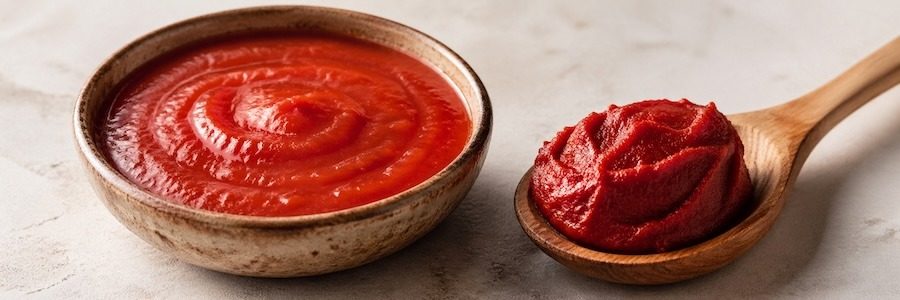
Core Concept: Dilution vs Concentration
- Tomato sauce: Diluted tomato flavor designed to fill space in a dish.
- Tomato paste: Reduced tomato flavor designed to amplify taste.
- Think of it like this: Sauce is the “canvas,” paste is the “paint pigment.”
- Smart cooks: Build with sauce, then adjust intensity with paste.
How to Choose the Best
- Look for: Short ingredient lists—tomatoes, maybe salt.
- Avoid: Added sugars, excessive preservatives.
- Sauce quality: Bright red color, fresh aroma.
- Paste quality: Thick, deep red, smooth texture.
- Premium tip: San Marzano tomatoes often deliver better flavor.
Types & Variations
- Tomato sauce: Plain, seasoned, marinara-style.
- Tomato paste: Canned or tube (tube is easier to portion).
- Double-concentrated paste: Even stronger flavor.
- Fire-roasted versions: Add smoky depth.
- Best use: Choose based on desired flavor intensity.
What Most Cooks Get Wrong
- Using paste like sauce: Leads to overpowering flavor.
- Skipping paste entirely: Results in flat, one-dimensional sauces.
- Not cooking paste: Raw paste tastes metallic—always sauté it.
- Over-diluting sauce: Weakens flavor unnecessarily.
Quick Diagnosis
- Dish tastes weak → Not enough concentration → Add a small amount of tomato paste.
- Too thick and heavy → Too much paste → Add liquid or tomato sauce.
- Metallic taste → Paste not cooked → Sauté paste before adding liquid.
- Too acidic → Tomato imbalance → Add fat or a pinch of sugar.
Substitutions That Work
- No tomato paste: Reduce tomato sauce to concentrate flavor.
- No tomato sauce: Dilute paste with water (1:1 or more).
- Flavor impact: Substitutions change thickness and intensity.
- Best rule: Adjust liquid and seasoning after substituting.
How to Use It
- Tomato paste: Add early and cook briefly to deepen flavor.
- Tomato sauce: Add after aromatics to build the base.
- Quantity tip: Paste is measured in tablespoons, sauce in cups.
- Layering: Use both for balanced flavor and depth.
Simple Cheat Sheet
- Sauce = volume: Builds the dish.
- Paste = intensity: Boosts flavor.
- Use both: For balanced sauces.
- Cook paste first: Always.
- Adjust liquid: When substituting.
Flavor Pairing Ideas
- Tomato + garlic + olive oil: Classic base.
- Tomato + herbs: Basil, oregano, thyme.
- Tomato + fat: Butter or cream balances acidity.
- Tomato + umami: Mushrooms, anchovies, Parmesan.
Storage & Shelf Life
- Tomato sauce: Refrigerate after opening, use within 5–7 days.
- Tomato paste: Keeps longer; freeze leftovers in small portions.
- Tube paste: Lasts longer and reduces waste.
- Past prime: Dull color, sour smell.
FAQ Section
What is the main difference between tomato sauce and tomato paste?
Tomato sauce is a ready-to-use liquid base, while tomato paste is concentrated and used in small amounts to boost flavor.
Can I substitute tomato paste for tomato sauce?
Yes, but you must dilute it with water and adjust the seasoning.
Why do recipes use tomato paste?
It adds depth, richness, and umami without adding extra liquid.
Do I need to cook tomato paste?
Yes. Cooking removes raw, metallic flavors and enhances sweetness.
Can I use both in one recipe?
Yes. This creates a balanced sauce with depth and body.
Why does my sauce taste weak?
It likely needs concentration—add tomato paste.
Why is my sauce too thick?
Too much paste or not enough liquid—add water or sauce.
Is tomato paste healthier than sauce?
Paste is more concentrated, so nutrients are denser per spoonful.
Do you usually cook with tomato sauce, tomato paste, or both? Have you ever fixed a bland sauce with paste? I’d love to hear how you use them in your kitchen in the comments section below.