Parmesan isn’t just a topping—it’s a flavor amplifier hiding in plain sight. Use it right, and your dish tastes richer, deeper, and more “finished.” Use it wrong, and you’re sprinkling expensive dust with zero impact. The difference? Understanding what Parmesan actually does.
Fast Answer
Parmesan cheese is a hard, aged cheese that adds salty, nutty, umami flavor. Use it to enhance dishes, not just garnish them.
How to Choose, Use, and Store Parmesan Cheese Like a Cook
Parmesan cheese is one of the most powerful flavor tools in your kitchen. Known for its nutty, salty, and deeply savory profile, it enhances everything from pasta to vegetables to soups.
But not all Parmesan is created equal. Understanding how to choose, use, and substitute it helps you cook smarter and build better flavor in every dish.
Start Here
- What it does: Adds salt, umami, and depth to dishes instantly.
- Best use: Finish dishes, enrich sauces, and boost flavor without adding bulk.
- Why it matters: It’s a shortcut to complexity—one ingredient, multiple flavor layers.
- Quick tip: Freshly grated beats pre-grated every time.
Flavor & Function
- Flavor: Salty, nutty, slightly sharp, and packed with umami.
- Umami boost: Enhances savory flavors without overpowering them.
- Texture role: Melts into sauces or adds a fine, granular finish.
- Binding agent: Helps hold together meatballs, breading, and fillings.
Think Like a Cook
- Parmesan is seasoning: Treat it like salt + umami combined.
- Layer it: Add some during cooking and more at the end.
- Don’t bury it: Use where it can shine, not disappear.
- Balance matters: Pair with acid (lemon, tomatoes) to keep flavors bright.
Types of Parmesan
| Cheese | Origin | PDO Status | What to Expect |
|---|---|---|---|
| Parmigiano-Reggiano | Italy | Yes (PDO) | Bold, nutty, complex flavor; gold standard for finishing dishes |
| Grana Padano | Italy | Yes (PDO) | Milder and slightly less complex; great everyday alternative |
| Stravecchio (36+ months) | Italy | Yes (PDO) | Extra sharp, crumbly, intensely savory; use sparingly |
| Grana Trentino | Italy | Yes (PDO) | Alpine style; slightly more delicate and nuanced |
| Domestic Parmesan (U.S.) | United States | No | Varies widely; milder flavor, less aging, more budget-friendly |
| Reggianito | Argentina | No | Firm and salty; good cooking option, less complex |
| Gran Moravia | Czech Republic | No | Italian-style cheese; balanced flavor, solid alternative |
| Other “Parmesan” styles | Global | No | Generic versions; flavor and quality vary widely |
| Characteristic | Details |
|---|---|
| Milk Source | Cow’s milk, traditionally from Reggiana and Frisona breeds |
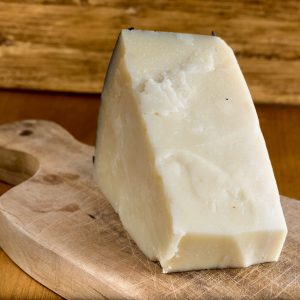
| Texture | Hard, granular, crumbly, with slight creaminess |
| Aging | Minimum 12 months; often aged 24–36 months |
| Flavor | Nutty, savory, umami-rich, slightly fruity, and salty |
| Aroma | Complex, with hints of toasted nuts and butter |
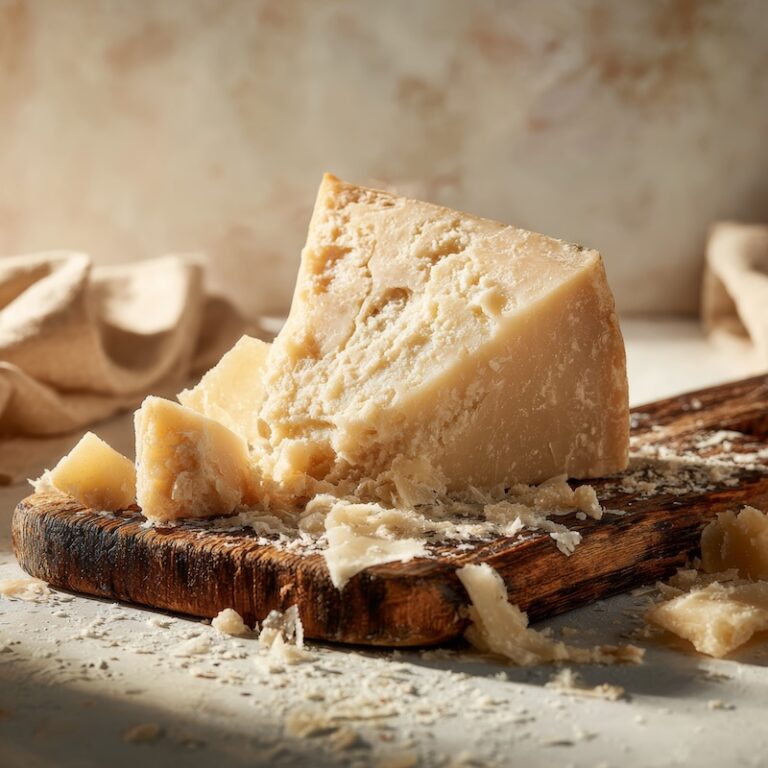
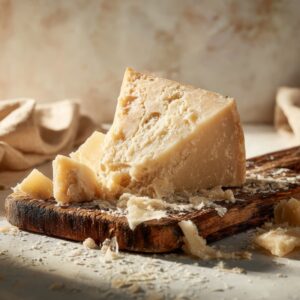
| Interior | Pale golden, grainy, with small crunchy protein crystals |
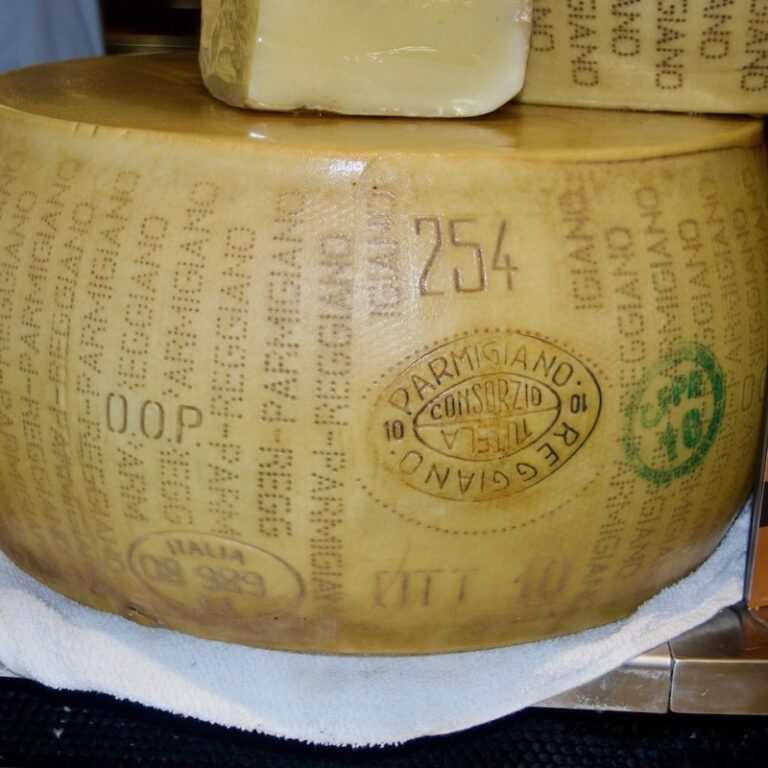
| Rind | Thick, natural, golden to straw-colored, and stamped with official markings |
| Size & Shape | Large round wheels, about 70–100 pounds |
| Region | Parma, Reggio Emilia, Modena, and parts of Bologna and Mantua, Italy |
| PDO Status | Protected Designation of Origin for authentic Parmigiano-Reggiano |
| Milk Treatment | Raw cow’s milk, partially skimmed naturally |
| Culinary Uses | Grated, shaved, melted into sauces, or eaten in chunks |
| Shelf Life | Keeps for months when wrapped tightly and refrigerated |
| Serving Temperature | Best served at room temperature, about 65–72°F |
Why Real Parmesan Matters
- Deep roots: Parmigiano-Reggiano dates back to the 13th century in Parma and Reggio Emilia, where monks developed it to preserve milk.
- Strict standards: Today, it’s protected by PDO status, meaning it must be made in specific regions using traditional methods.
- Consistent quality: The consortium enforces aging, ingredients, and production rules—this is why it tastes reliable and complex.
- Why you care: Authentic Parmesan delivers deeper flavor, better texture, and more impact in your cooking.
How Parmesan Is Made (Why It Tastes So Good)
- Milk blending: Partially skimmed evening milk + fresh morning milk creates balance between richness and structure.
- Natural fermentation: Whey starter from the previous batch builds depth and complexity over time.
- Fine curds: Breaking curds into tiny granules creates that signature crumbly, granular texture.
- High heat cooking: Heating to about 131°F tightens curds, concentrating flavor and removing moisture.
- Salt bath: Long brining seasons the cheese evenly and helps preserve it.
- Long aging: 12–36 months develops nutty flavor, umami, and that sharp, savory bite.
- Strict inspection: Only the best wheels earn the Parmigiano-Reggiano stamp.
How to Choose & Buy
- Go authentic when it matters: Look for “Parmigiano-Reggiano” stamped on the rind for the highest quality and true flavor.
- Check the source: Traditional methods and grass-fed milk produce better depth and complexity.
- Age = flavor: Younger (12 months) is mild; older (24–36 months) is sharper, nuttier, and more intense.
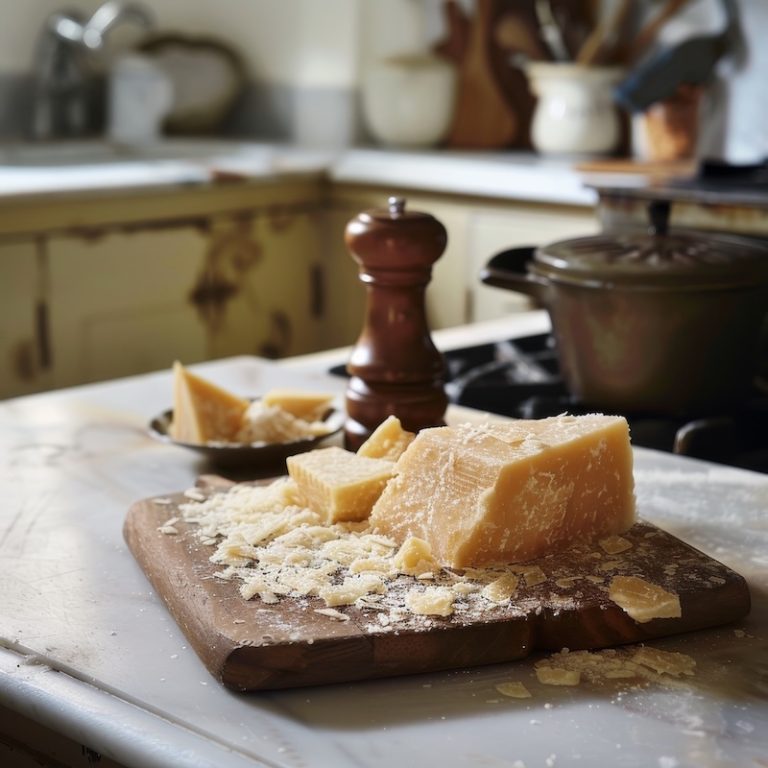
- Buy a wedge, not pre-grated: Blocks hold flavor longer and melt better; pre-grated trades quality for convenience.
- Look at texture and color: It should be firm, crumbly, and pale golden—not rubbery or bright white.
- Mind the shelf life: Check the date, but prioritize freshness and proper storage over long expiration windows.
How to Use It
- Finish dishes: Add at the end for maximum flavor.
- Use sparingly: A little goes a long way.
- Grate fresh: Releases aroma and flavor.
- Save the rind: Simmer in soups and sauces.
Flavor Pairings
- Tomatoes: Classic balance of acid and umami.
- Pasta: Enhances richness and depth.
- Vegetables: Especially broccoli, asparagus, and zucchini.
- Proteins: Chicken, beef, and eggs benefit from its savory boost.
What Most Cooks Get Wrong
- Using pre-grated: It lacks flavor and doesn’t melt well.
- Adding too early: Heat can dull its flavor.
- Overusing: Too much overwhelms the dish.
- Ignoring the rind: It’s packed with flavor—don’t waste it.
Substitutions That Work
- Pecorino Romano: Saltier and sharper—use less.
- Grana Padano: Closest match, slightly milder.
- Nutritional yeast: Vegan option with umami flavor.
- Asiago (aged): Nutty and firm, works in most dishes.
Storage & Shelf Life
- Wrap it tight: Use parchment + foil or plastic wrap to limit air exposure and prevent drying.
- Use the cheese drawer: Slightly higher humidity helps preserve texture and flavor.
- Keep it away from odors: Parmesan absorbs smells easily—store it away from strong foods.
- Grate as needed: Pre-grated dries out fast; fresh grating keeps flavor sharp.
- How long it lasts: A wedge keeps for weeks to months when properly stored.
- Freezing option: Freeze tightly wrapped for up to 6 months; best for cooking, not finishing.
- Watch for signs: Dry edges are fine—just trim. Off smell means it’s past its prime.
What to Make with Parmesan
- Caesar Salad: Crisp romaine, creamy dressing, and shaved Parmesan for a bold, salty finish.
- Spaghetti Carbonara: Eggs and Parmesan create a silky, rich sauce without cream.
- Baked Parmesan Tomatoes: Sweet tomatoes topped with a golden, cheesy crust.
- Chicken Parmesan: Crispy chicken layered with marinara, mozzarella, and Parmesan.
- Parmesan Risotto: Creamy rice finished with butter and Parmesan for depth.
- Eggplant Parmesan: Layered comfort dish with crispy eggplant and melted cheese.
- Parmesan-Crusted Fish: Adds crunch and flavor to mild white fish.
- Garlic Parmesan Wings: Buttery, garlicky, and packed with savory punch.
- Parmesan Polenta: Creamy and rich, perfect with roasted or braised dishes.
- Parmesan Crisps (Frico): Crisp, savory bites made from melted cheese.
How do you use Parmesan in your kitchen—finishing touch, cooking ingredient, or both? And have you noticed a difference between fresh and pre-grated? Leave your comment below.
The Green Can Reality
- Let’s be honest: That green can isn’t really Parmesan—it’s Parmesan-adjacent.
- What’s inside: Often a blend of milk, milk powders, and anti-caking agents to keep it “shakeable.”
- Flavor check: Salty, a little dusty, and nowhere near the nutty depth of real Parmigiano-Reggiano.
- Why it exists: Convenience. It pours. It lasts forever. It never clumps.
- When it works: Fine in a pinch or for quick weeknight pasta.
- When it doesn’t: Finishing dishes where flavor actually matters.
- Bottom line: If you want real impact, grab a wedge and a grater.
Parmesan Cheese Frequently Asked Questions
What is the difference between Parmesan and Parmigiano-Reggiano?
Parmigiano-Reggiano is authentic, Italian-made cheese with strict standards. “Parmesan” can be a generic version.
Can you freeze Parmesan cheese?
Yes, but it may become crumbly. Best used for cooking after freezing.
Why does Parmesan taste so strong?
Aging develops concentrated flavor and umami compounds.
Is Parmesan lactose-free?
Aged Parmesan contains very little lactose and is often tolerated.
Can I eat the rind?
Not directly, but it’s excellent for flavoring soups and sauces.
Why doesn’t pre-grated Parmesan melt well?
It often contains anti-caking agents that affect texture.
How much Parmesan should I use?
Start small. Taste and adjust—it’s powerful.
What dishes benefit most from Parmesan?
Pasta, risotto, soups, roasted vegetables, and salads.