Dry Halibut Ruins Dinner. Here’s How to Keep It Tender

Halibut has about a three-minute window between “restaurant quality” and “why does this taste like drywall?” That’s the danger of lean fish. Most home cooks blame the fish itself when the real problem is heat control, timing, and not recognizing the visual cues that say, “Stop cooking now.”

Fast Answer

Halibut dries out because it is lean fish with very little fat protection. High heat, overcooking, and uneven thickness quickly push it from moist and flaky to dry and tough.

Why Is My Halibut So Dry? Fix the #1 Mistake Home Cooks Make

Halibut is one of the easiest fish to overcook because it is naturally lean and cooks fast. A few extra minutes in the pan, oven, or grill can turn a beautiful fillet dry and chalky.

The good news? Once you understand how moisture, heat, thickness, and carryover cooking work together, you can consistently cook halibut that stays moist, flaky, and tender.

Start Here

  • Best for: Home cooks struggling with dry, tough, or chalky halibut.
  • Use this guide when: Pan-searing, roasting, grilling, or baking lean white fish.
  • Success looks like: Moist flakes, gentle resistance with a fork, and a silky texture instead of cottony dryness.
  • Main goal: Learn to control heat and timing instead of relying on exact minutes alone.

Why This Technique Works

  • Halibut is lean: It has very little fat to protect it from overcooking, so moisture escapes quickly.
  • Gentle heat matters: Moderate heat cooks the center before the outside dries out.
  • Carryover cooking continues: Fish keeps cooking after leaving the heat, especially thick fillets.
  • Thickness changes timing: Thin tail pieces cook much faster than thick center cuts.

Core Concept

  • Think in texture, not time: Great cooks watch how fish changes during cooking instead of blindly following minutes.
  • Fish is done early: Halibut should look slightly underdone in the center when removed from heat.
  • Moisture is everything: Once moisture leaves lean fish, you cannot fully bring it back.

Step-by-Step Technique Guide

  • Start with even pieces: Choose fillets close in thickness for more predictable cooking.
  • Pat dry: Remove excess surface moisture so the fish sears instead of steams.
  • Season lightly: Salt just before cooking to avoid pulling moisture out too early.
  • Use medium heat: Avoid blasting halibut with high heat unless the fillet is very thick.
  • Watch the sides: The opaque cooked color slowly rises upward from the bottom.
  • Flip carefully: Turn the fish once the first side releases naturally from the pan.
  • Pull it early: Remove halibut when the center still looks slightly translucent.
  • Rest briefly: Let carryover cooking finish the fish for 2 minutes before serving.
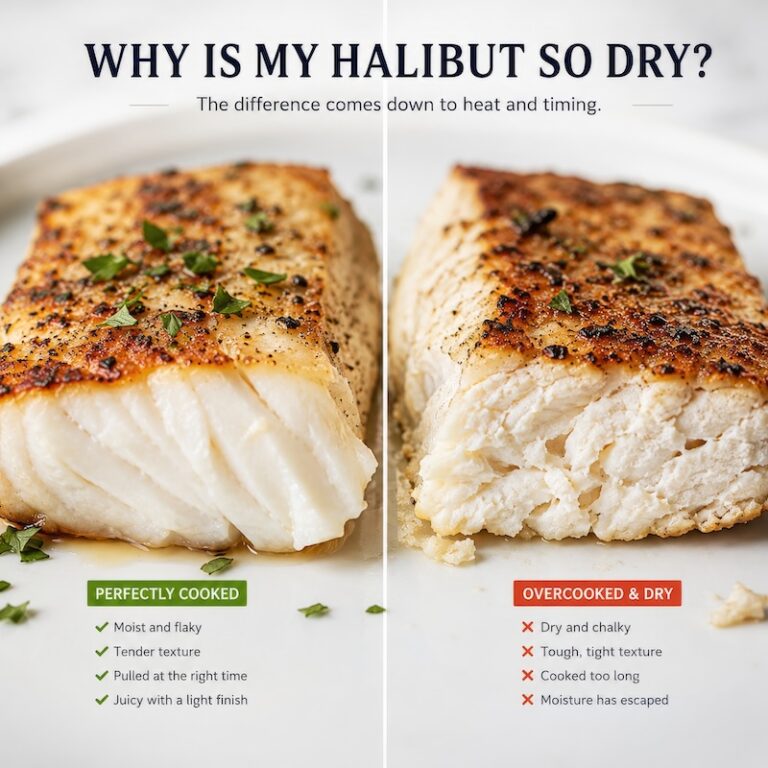
Perfectly cooked halibut versus overcooked and dry halibut

Visual Cues That Tell You It’s Working

  • Color: The fish changes from glossy translucent white to soft opaque white.
  • Texture: The flesh begins separating into moist flakes without looking dry or stringy.
  • Surface: A golden crust forms without deep browning or shriveling.
  • Sound: Gentle sizzling means proper heat. Loud aggressive crackling usually means the pan is too hot.
  • Smell: Fresh, buttery seafood aroma instead of sharp “fishy” smells.
Frustrated cook making common mistakes.

What Most Cooks Get Wrong

  • Cooking by fear: Many people overcook fish because they worry about undercooking it.
  • Using high heat: High temperatures dry out the outside before the center cooks properly.
  • Ignoring thickness: A thin tail section and thick center cut need different cooking times.
  • Waiting for “fully flaky”: By the time halibut flakes aggressively, it is often already overcooked.
  • Skipping resting time: Cutting immediately lets valuable juices escape.

Quick Diagnosis Strip

  • Dry and chalky → Overcooked → Pull earlier next time
  • Rubbery texture → Heat too high → Lower burner temperature
  • No browning → Pan not hot enough or fish too wet → Pat dry thoroughly
  • Outside dry, center raw → Fillet too thick for high heat → Finish gently in oven
  • Fish falling apart → Overhandled during cooking → Flip only once

Quick Fixes & Pro Tips

  • Add fat: Butter, olive oil, or a light sauce helps protect lean fish from tasting dry.
  • Use residual heat: Turn off the burner slightly early and let the pan finish the cooking.
  • Brine briefly: A quick 15-minute salt brine can improve moisture retention.
  • Try lower oven temperatures: Gentle roasting gives you a wider margin for error.
  • Use a thermometer: Pull halibut around 125–130°F for moist results.

Control the Variables

  • Heat: Lower heat gives you more control and slower moisture loss.
  • Thickness: Thick fillets cook more evenly and stay juicier than thin pieces.
  • Time: Even one extra minute can noticeably dry out halibut.
  • Moisture: Butter, oil, marinades, and sauces help compensate for halibut’s low fat content.
  • Pan material: Heavy pans maintain steadier heat and reduce scorching.
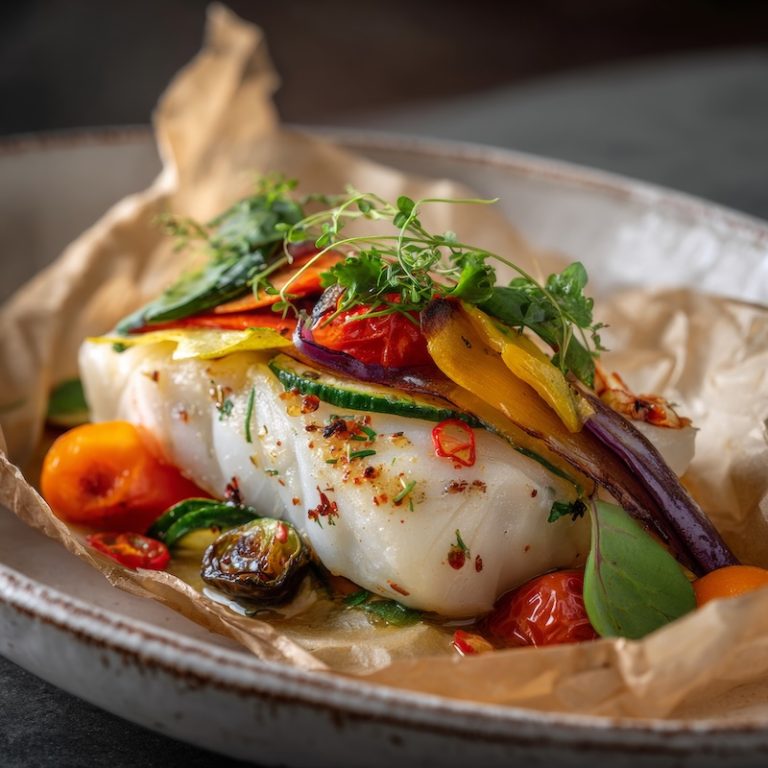
A beautifully plated halibut en papillote, parchment paper slightly opened to reveal tender fish

Control the Variables

  • Heat: Lower heat gives you more control and slower moisture loss.
  • Thickness: Thick fillets cook more evenly and stay juicier than thin pieces.
  • Time: Even one extra minute can noticeably dry out halibut.
  • Moisture: Butter, oil, marinades, and sauces help compensate for halibut’s low fat content.
  • Pan material: Heavy pans maintain steadier heat and reduce scorching.

When to Use This Technique

  • Best for: Halibut, cod, haddock, mahi-mahi, and other lean white fish.
  • Especially useful: Pan-searing and roasting thick halibut fillets.
  • Not ideal for: Extremely thin fish pieces that cook almost instantly.
  • Skip aggressive heat: Lean fish rarely benefits from steak-style blasting heat.

Simple Cheat Sheet

  • Medium heat wins: Don’t rush lean fish.
  • Watch opacity: The center should still look slightly translucent.
  • Pull early: Carryover cooking finishes the job.
  • Use fat wisely: Butter and oil improve texture and flavor.
  • Texture matters most: Moist flakes beat exact timing.

Frequently Asked Questions

Why does halibut dry out so fast?

Halibut is naturally lean with very little fat. That means moisture evaporates quickly once the temperature rises too high.

What temperature should halibut be cooked to?

For moist halibut, aim for about 125–130°F internally. The temperature will continue rising slightly while resting.

Is halibut supposed to flake apart easily?

Yes, but gently. If it shreds aggressively or looks stringy, it is probably overcooked.

Should I cook halibut on high heat?

Usually no. Medium heat gives you better control and reduces the risk of drying out the fish.

Can you save overcooked halibut?

You cannot fully restore lost moisture, but butter sauces, olive oil, broth, or flaking the fish into tacos or pasta can help.

Should I brine halibut before cooking?

A quick salt brine for 15 minutes can help improve moisture retention and seasoning.

Is baked or pan-seared halibut better?

Both work well. Pan-searing gives better crust development, while gentle roasting offers more forgiveness.

Why is my halibut rubbery?

Rubbery halibut usually means the fish was cooked too long or at too high a temperature.

How do restaurants keep halibut moist?

Restaurants often use thicker cuts, controlled heat, butter basting, and precise timing.

Does frozen halibut dry out more easily?

It can if poorly thawed. Slow thawing in the refrigerator helps preserve texture and moisture.

7 Responses

  1. I just discovered your fun web site when I was checking to see if you had Les Cheneaux Culinary School on it (it’s a great school and restaurant but there is a typo – it’s in Hessel not Hassel). I lived in the Seattle area for many years, so halibut was a favorite. I learned of the following recipe from a highly regarded commercial fisherman and cook. I put it in my book, Hollyhocks & Radishes, for preparing large, firm Great Lakes fish. It’s a no-fail, and absolutely the only way to prepare halibut. To serve 6: one 2-3 lb. filet, juice of 2 limes, salt & freshly ground pepper to taste, low-fat mayonnaise, 1/4 cup freshly grated Parmesan. Preheat oven to 500 degrees. Place fish in shallow glass dish to marinate in lime juice up to 30 minutes. Lay filet on cookie sheet lined with aluminum foil seasoning with salt and pepper to taste. Spread about 1/8-inch of mayo over fish. Top with cheese. Place fish in preheated oven, immediately turning it off. Bake 30 minutes before opening door. Fish will be perfect…actually you can leave it in even longer than that, if the need be.

  2. Yea, a thousand times “don’t overcook it”, but no proper recipe just words:-
    “HOW TO COOK HALIBUT WITHOUT DRYING IT OUT”. Yes, pan fry, oven fry, etc. you mean all the usual methods but HOW, WITHOUT DRYING IT OUT…………?…

    1. Hi Eleanor, I updated this post to offer even more ways to prevent halibut from drying out when cooking but it seems you are looking for a specific recipe. One of my favorite recipes for cooking moist halibut is in parchment paper. You can find the recipe here.

  3. I make a curry fabulous Sri Lankan fish curry with halibut. It enhance the flavours and keep moist too. Next time you too make it with home made curry powder and coconut milk. Great combination.

Leave a Reply

Your email address will not be published. Required fields are marked *

This site uses Akismet to reduce spam. Learn how your comment data is processed.