Fast Answer
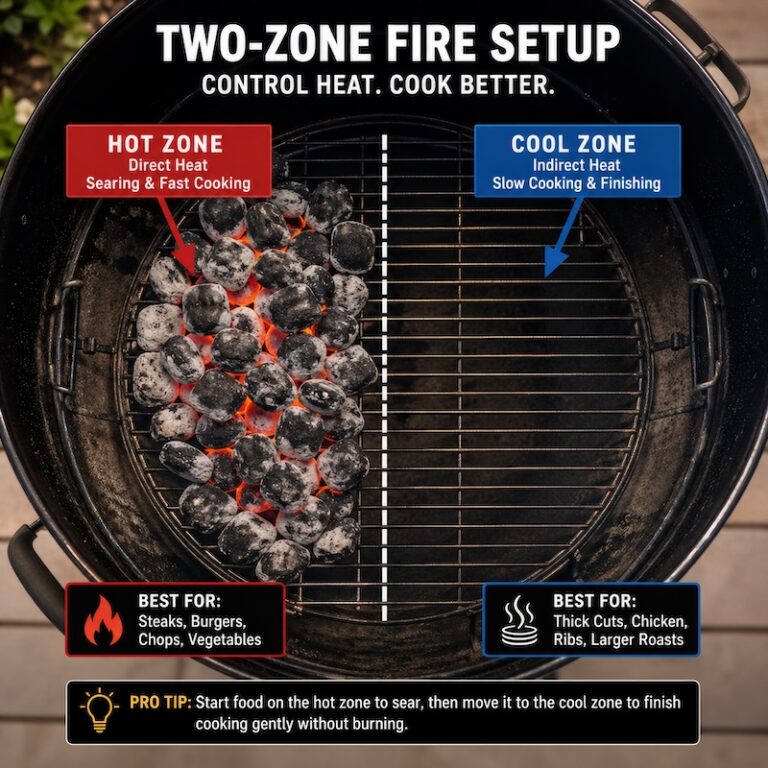
Two-zone grilling means one side of the grill is hot and direct, the other side has no flame under it. On charcoal, bank all the coals to one side. On gas, leave half the burners off. Sear over the hot side, then move food to the cool side to finish gently or escape a flare-up.
Why One Side of the Grill Should Always Be Empty
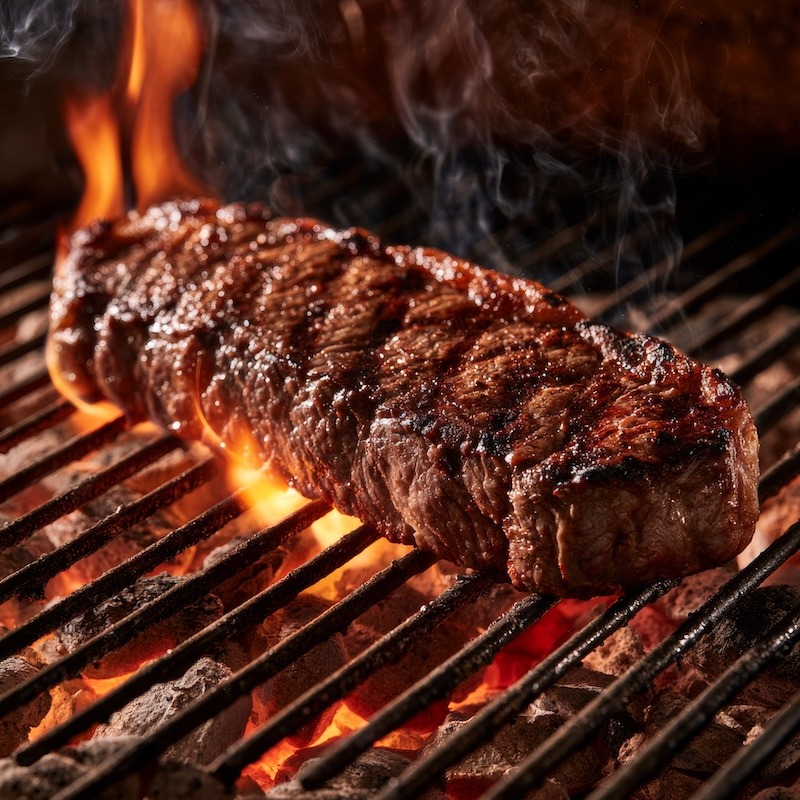
One grill, two jobs. The hot side sears—where you build a crust and get real grill marks —using the same direct heat you’d use for a quick steak or burger. The cool side is your safety valve: no flame under it, just residual heat, so food can finish cooking through, wait for the rest of dinner, or ride out a flare-up without turning into charcoal itself.
Setting it up takes five minutes and works the same way in spirit on charcoal or gas, even though the mechanics differ. That’s what the rest of this covers — separately, so you’re not hunting through instructions for a grill you don’t own.
Start Here
- This is for you if: your food keeps coming off the grill either burnt outside and raw inside, or you've had a flare-up turn dinner into a small emergency.
- When to use this: almost every time you grill anything thicker than a hot dog — steaks, chicken, ribs, burgers, even vegetables that need more than a quick char.
- Success looks like: a crust you controlled on purpose, a center that's cooked through without guessing, and a place to retreat to the instant flames get out of hand.
Why This Works
- Searing and cooking through are two different jobs. High heat browns the outside fast; finishing gently lets the inside catch up without burning the crust you just built. One heat setting can't do both well at once.
- Fat dripping onto open flame is what causes most flare-ups. With a cool side available, a flare-up is a five-second problem — slide the food over, let the flames die down, move it back — instead of a five-minute one.
- Thicker cuts need time the direct side can't give them without burning. A thick steak or a whole chicken thigh needs several extra minutes to cook through; the indirect zone gives it that time without adding more char.
Step-by-Step: Setting Up Two Zones on Charcoal
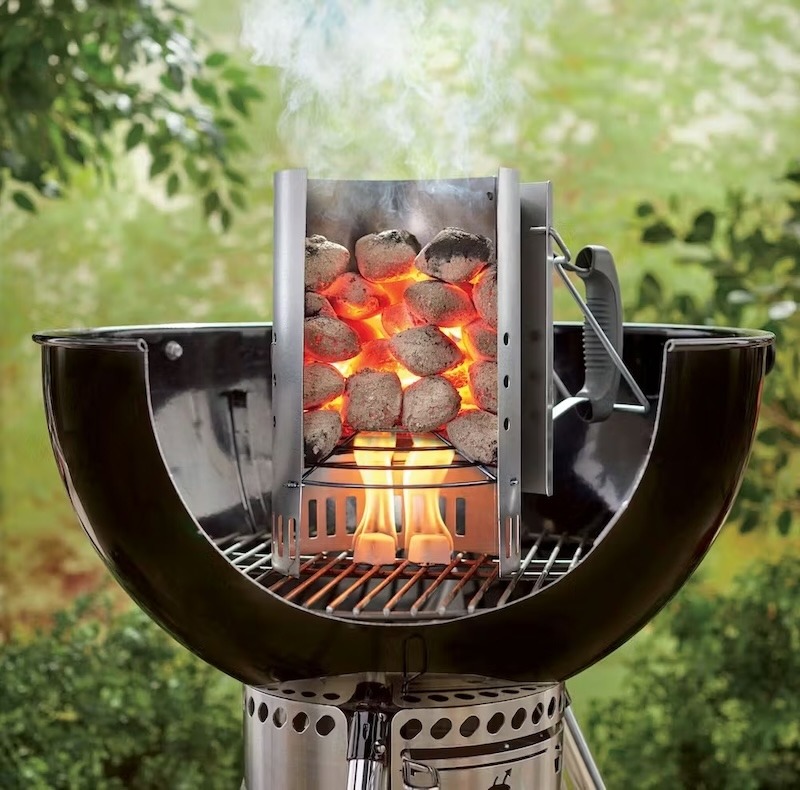
- 1. Light a full chimney starter. Let it burn until the top coals are ashed over gray, about 20 to 25 minutes. Don't dump it early — half-lit coals give you an unpredictable fire.
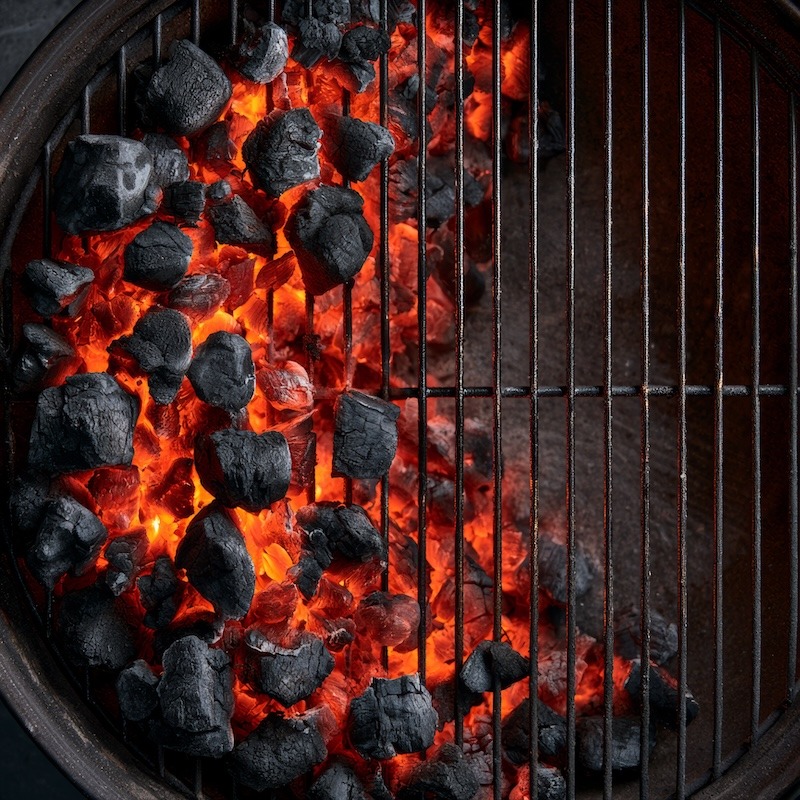
- 2. Bank all the coals to one side. Dump the entire chimney onto one half of the charcoal grate, not spread evenly across the bottom. That pile is your direct heat zone; the empty half is your indirect zone.
- 3. Position the top vent over the empty side. This pulls heat and smoke across the food instead of straight up and out, which matters more than people expect for how evenly the indirect side cooks.
- 4. Expect roughly 450°F to 600°F over the coals, and roughly 225°F to 350°F on the empty side, depending on how hot the direct side is running. Adjust the bottom vent to bring the whole fire up or down.
- 5. Keep a thermometer on each side of the grate. The two zones run at genuinely different temperatures — a single thermometer built into the lid won't tell you what's actually happening at grate level on either side.
Step-by-Step: Setting Up Two Zones on Gas
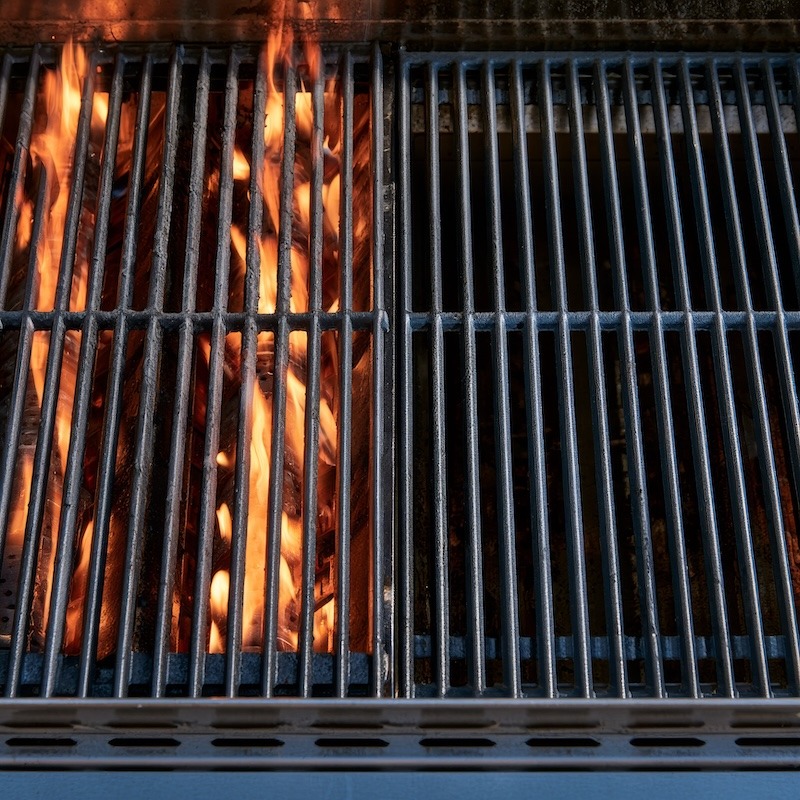
- 1. Turn on burners on one side only. You need at least two burners for this to work. Set the lit side to high; leave the other side completely off.
- 2. Close the lid and let it fully preheat. Give it the same 10 to 15 minutes you'd use to preheat for any grilling — a gas grill that hasn't come up to temperature yet won't give you a real direct zone.
- 3. The zones are simple to find. Direct heat is whatever's sitting directly over a lit burner; indirect heat is everything over the unlit side. No coals to bank, no vents to manage.
- 4. Adjust the ratio to the food. For something like bone-in chicken that needs a lot of gentle time, leave more burners off than on — one or two lit, the rest shut down completely.
- 5. You can fine-tune the hot side's intensity. Unlike charcoal, you can turn the lit burners down mid-cook instead of waiting on vents to change the fire — one of the real advantages of gas here.
What Most People Get Wrong
- They spread the coals out evenly. An even bed of charcoal gives you one uniform medium-hot grill, not two zones — you've built a single-temperature fire and lost the whole point.
- They panic during a flare-up instead of just moving the food. The instinct is to yank everything off the grill entirely. The actual fix is calmer: slide it to the cool side, let the flames burn out, then move it back.
- They forget the indirect side is still cooking. "Cool" is relative — 225°F to 350°F still cooks food, just gently. Food left there too long can overcook just
What Went Wrong (and Why)
- Flare-up is scorching the crust → fat is dripping onto open flame directly under the food → slide it to the indirect zone immediately, let the flames die down, then move it back.
- Crust is forming way faster than the inside is cooking → the direct zone is doing all the work → move the food to the indirect side to finish gently instead of leaving it over the flame.
- Outside looks pale, not browned → the grill wasn't actually hot enough on the direct side to begin with → give the direct zone more time to come up to temperature, or add more lit coals or burners before starting.
- Food came out overcooked and dry → it sat on the indirect side longer than it needed to → indirect heat still cooks; check doneness with a thermometer instead of leaving it there "to be safe."
- Everything's cooking unevenly across the grate → the two zones aren't clearly separated → on charcoal, make sure the coals are actually banked to one side, not spread thin; on gas, confirm the off burners are fully off, not just turned low.
Control the Variables
- Grill type: controls how you build the zones in the first place. Charcoal gives you a wider, hotter direct zone (450–600°F) that cools gradually as it burns down; gas gives you a fixed, adjustable direct zone you can dial up or down instantly.
- Food thickness: controls how much indirect time you'll need. A 1-inch steak needs only a few minutes to finish; a 1½-inch steak, a whole chicken thigh, or a rack of ribs needs meaningfully more — use time as a rough guide, not a guarantee.
- Fat content: controls how often you'll deal with flare-ups. Fattier cuts (ribeye, chicken thighs with skin) will send you to the cool side more often than lean cuts will.
- Wind and starting temperature: both affect timing more than most people expect. A cold steak straight from the fridge, or a grill fighting a stiff breeze, will take longer than the numbers on a recipe suggest.
When to Use This (and When Not To)
- Use two-zone grilling for: steaks over an inch thick, bone-in chicken, ribs, burgers you don't want to babysit, and anything prone to flare-ups from dripping fat.
- Skip it for: thin, quick-cooking foods like shrimp, thin fish fillets, or sliced vegetables — direct heat the whole way through is faster and simpler when there's no risk of the outside finishing well before the inside does.
- Don't rely on it for: true low-and-slow smoking. Two-zone gets you into the right neighborhood (225°F to 275°F on the indirect side), but dedicated smoking setups add wood and manage that temperature far more precisely over much longer cook times.
Apply It to Real Food
- Steak (1 to 1½ inches): sear hard on the direct side for the crust, then finish on the indirect side until it hits 145°F internal for medium-rare-leaning doneness, with a 3-minute rest after.
- Bone-in chicken: mostly indirect with occasional trips to the direct side to crisp the skin — chicken needs to reach 165°F internal throughout, including near the bone, before it's safe to eat.
- Ribs: almost entirely indirect, low and slow, with the direct side reserved only for a final sauce-and-char pass at the end.
- Burgers: direct heat for most of the cook since they're thin, but keep the indirect side ready as an escape hatch — burgers are one of the most common flare-up culprits.
- Fish fillets and vegetables: usually direct heat only — see "When Not To" above. Save the indirect side for thicker cuts of fish like a whole trout or a thick salmon fillet, which can otherwise char before the center's done.
Frequently Asked Questions
What is two-zone grilling? It’s setting up your grill with one hot side with direct flame underneath and one cool side without —so you can sear over the hot side and finish, rest, or rescue food on the cool side, all on the same grill.
How do I set up two-zone grilling on a charcoal grill? Light a full chimney of charcoal, let it ash over, then dump it all onto one side of the grate instead of spreading it out. That pile is your direct zone; the empty side is indirect.
How do I set up two-zone grilling on a gas grill? Turn on the burners on one side only and leave the rest completely off. The area over the lit burners is direct heat; the area over the unlit burners is indirect.
What temperature is each zone? On charcoal, the direct side usually runs 450°F to 600°F, and the indirect side runs roughly 225°F to 350°F depending on how hot the direct side is. On gas, it depends entirely on how you’ve set the lit burners, but the goal is a similar direct/indirect gap.
What do I do if I get a flare-up? Move the food to the indirect side right away and let the flames die down before bringing it back. Don’t panic and pull everything off the grill entirely — the cool side is there specifically for this.
Is two-zone grilling the same as smoking? Not quite. Two-zone grilling gets the indirect side into roughly the same temperature range smoking uses, but a real smoking setup adds wood for smoke flavor and manages that temperature far more tightly over a much longer cook.
Do I need this for something like shrimp or thin vegetables? Usually not. Thin, fast-cooking foods can go directly over the hot side the whole time — there’s no risk of the outside finishing before the inside does, so a second zone isn’t doing much for you there.
- Once your zones are set, direct-heat searing is its own skill — How to Grill a Steak with Direct Heat covers the sear side in depth.
- Charcoal specifically has its own learning curve beyond just banking coals — Charcoal Grilling Mastery covers fire control and flavor.
- Setting up a gas grill well goes beyond just burner zones — Grilling with Gas is the fuller setup guide.
- Not sure your grill is actually hitting the temperatures above? How Hot Is My Grill? covers testing methods for both zones.
- The Many Ways to Grill a Steak to Perfection is a good next stop for putting this setup to use.