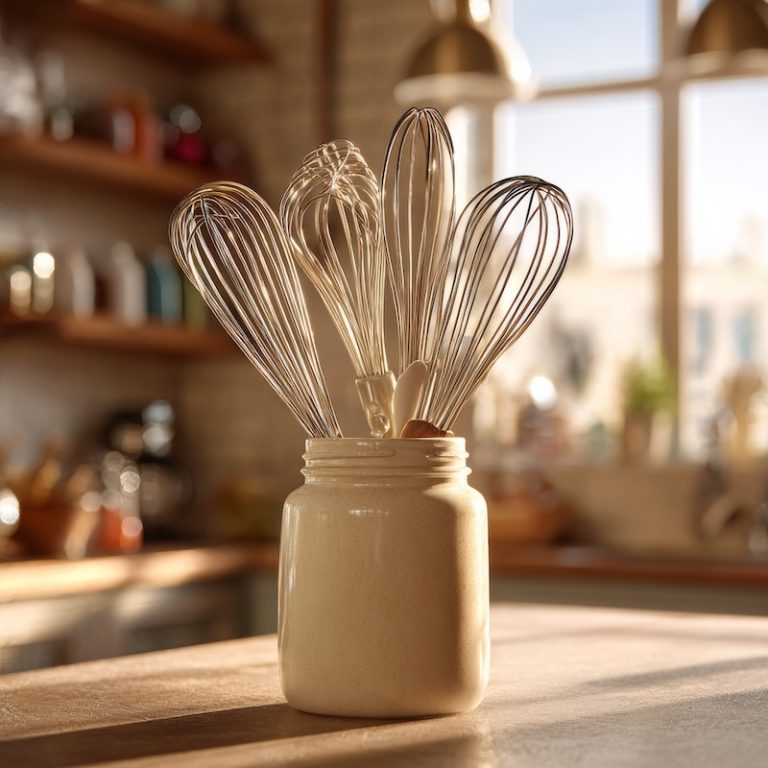
A whisk looks humble at first glance, just a tangle of wires on a handle. But give it a bowl and a purpose, and it becomes a tiny engine of transformation. It pulls air into cream until it billows, persuades oil and vinegar to cooperate, and turns eggs into silk. From delicate sauces to towering meringues, this simple tool quietly does the heavy lifting behind some of the most satisfying moments in the kitchen. Before you reach for one, it helps to know that not all whisks are created equal, and choosing the right type can be the difference between a smooth success and a lumpy disappointment.
Types of Whisks Explained: What Each One Does Best
Whisk Quick Guide: Choose the Right Tool in Seconds
Not all whisks are built the same. Use this quick guide to grab the right one without second-guessing.
🥚 Balloon Whisk
Best for: Whipping cream, egg whites, meringue
Why it works: Its wide shape traps air fast, creating light, fluffy textures.
Skip if: You’re working in shallow pans or making sauces.
🍳 French Whisk
Best for: Everyday mixing, batters, sauces
Why it works: Narrower than a balloon whisk, giving you more control and strength.
Pro tip: If you only buy one whisk, make it this one.
🧈 Flat Whisk (Roux Whisk)
Best for: Gravies, sauces, pan cooking
Why it works: Reaches into corners and keeps sauces smooth.
Secret weapon: Perfect for deglazing pans.
🌀 Coil Whisk
Best for: Small amounts, dressings, sauces in cups
Why it works: The coil concentrates motion in tight spaces.
Great for: Vinaigrettes and quick mixes.
🥣 Ball Whisk
Best for: Light mixing, thin batters
Why it works: Individual wires move independently for quick blending.
Downside: Not ideal for heavier mixtures.
Bottom line: If you cook often, keep a French whisk and a balloon whisk on hand. That combo covers almost everything in the kitchen.
Available on Amazon
Whisk Types
A closer look at the essential whisks every kitchen should know.
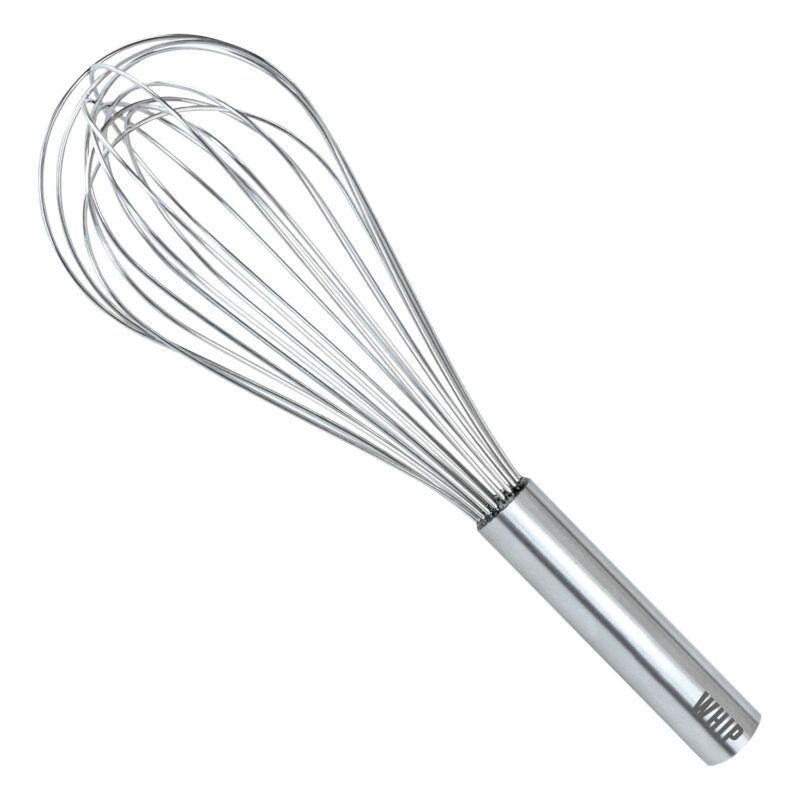
Balloon Whisk
Light, airy, built for whipping cream and egg whites.
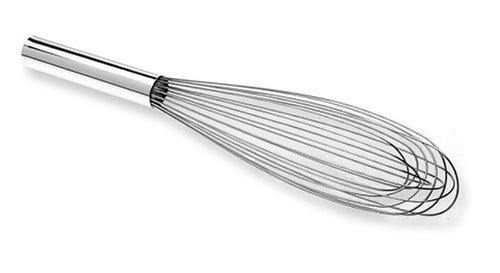
French Whisk
The everyday workhorse for sauces, batters, and general mixing.
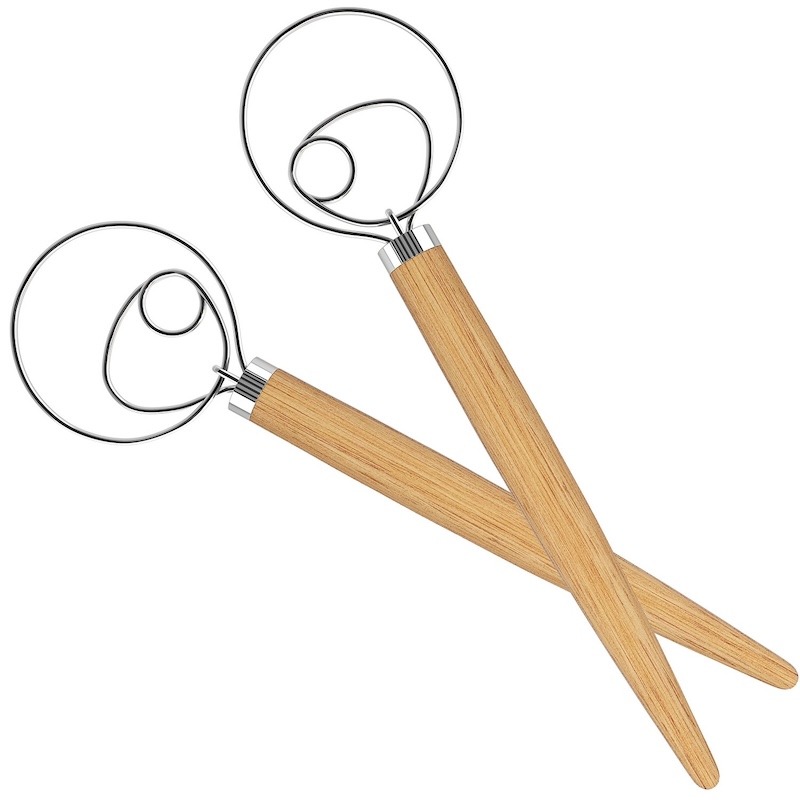
Dough Whisk
Mixes thick dough efficiently without clogging or overworking ingredients.
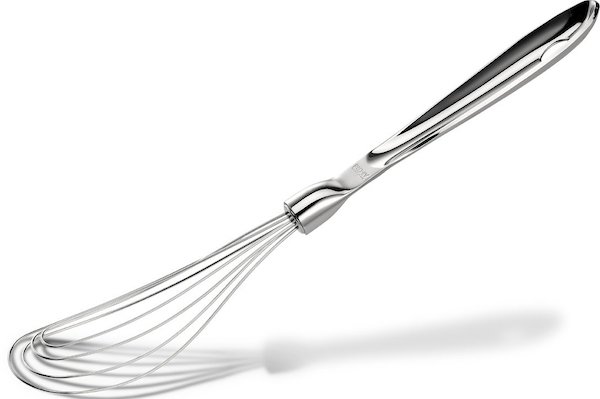
Flat Whisk
Designed for pans and sauces where precision matters.
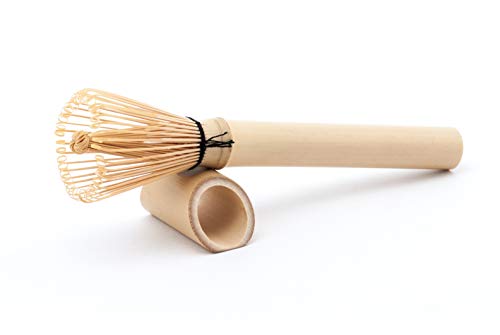
Matcha Whisk
Whisks matcha powder into water, creating a smooth, frothy tea.
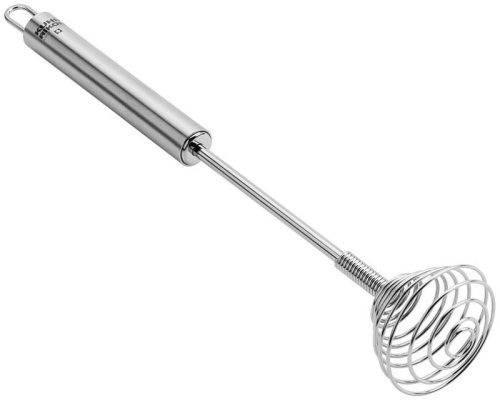
Coil Whisk
Perfect for small-batch emulsions and dressings.
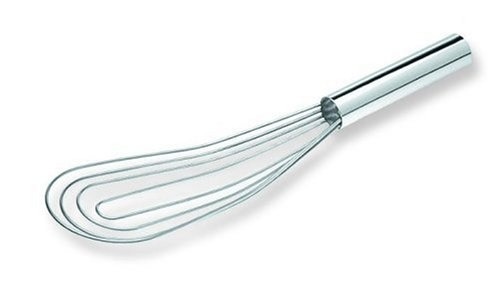
Sauce Whisk
Blends sauces smoothly while reaching pan edges to prevent lumps.
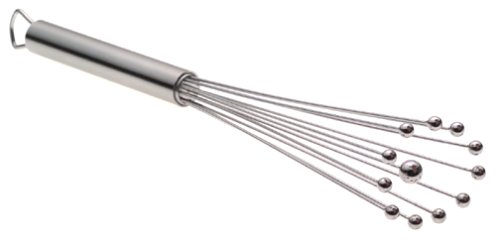
Ball Whisk
Flexible wires for quick blending and light mixtures.
Specialty Whisks: When You Want More Precision
These aren’t essential for most kitchens, but they shine in specific tasks.
🥄 Sauce Whisk
Best for: Delicate sauces
Why it works: Smaller head gives precise control.
🥗 Vinaigrette Whisk
Best for: Dressings
Why it works: Designed to emulsify small amounts quickly.
🌀 Spiral Whisk
Best for: Sauces in shallow pans
Why it works: Stays in constant contact with the pan surface.
🍞 Dough Whisk
Best for: Mixing bread dough
Why it works: Cuts through thick mixtures without clogging.
Whisk (n.) A mixing tool designed so its many strands of looped wire make it effective for beating. (v.) To beat with a whisk until well mixed.
How to Use a Whisk Like a Pro
Whisking isn’t just stirring faster. Use the right motion and technique to get smoother sauces, fluffier eggs, and better results every time.
🌀 Use a Wrist Motion
How: Move your wrist, not your whole arm.
Why it works: Creates faster, controlled movement with less fatigue.
🥄 Keep It Moving
How: Whisk continuously, especially for sauces.
Why it works: Prevents lumps and keeps ingredients evenly blended.
🥣 Match the Bowl Size
How: Use a whisk that fits comfortably in your bowl or pan.
Why it works: Gives better contact and more efficient mixing.
💨 Add Air When Needed
How: Lift the whisk slightly as you mix.
Why it works: Incorporates air for lighter textures like whipped cream.
🍳 Scrape the Edges
How: Occasionally run the whisk along the sides of the pan.
Why it works: Keeps sauces smooth and prevents sticking.
🔥 Control the Heat
How: Lower heat when whisking sauces or eggs.
Why it works: Prevents curdling and gives you more control.
Pro tip: Let the whisk do the work. Fast, controlled movement beats brute force every time.
Whisk Comparison Guide
| Whisk | Best For | Why It Works |
|---|---|---|
| Balloon Whisk | Whipping cream, egg whites, meringues | Large, airy shape incorporates maximum air for light, fluffy textures |
| French Whisk | All-purpose mixing, batters, sauces | Balanced shape offers control and strength for everyday cooking tasks |
| Flat Whisk (Roux Whisk) | Sauces, gravies, deglazing pans | Flat design reaches pan edges and prevents clumping in roux-based mixtures |
| Coil Whisk | Small batches, dressings, vinaigrettes | Concentrated coil action blends efficiently in cups and small containers |
| Ball Whisk | Light batters and quick mixing | Flexible wire tips move independently for fast, even blending |
| Dough Whisk | Bread dough and thick mixtures | Rigid loop design cuts through dense dough without clogging |
Buying a Whisk
Why It Matters: The right whisk makes mixing easier, faster, and more effective. A well-designed whisk can mean smoother sauces, fluffier eggs, and better control in the kitchen.
Check Quality: Look for sturdy wires that spring back into shape, a comfortable handle, and solid construction where the wires meet the handle. Avoid flimsy whisks that bend easily or feel loose.
Choose the Right Type: A French whisk is the best all-purpose option. Add a balloon whisk for whipping and a flat whisk for sauces if you cook often.
Where to Shop: Kitchen supply stores and online retailers offer the widest selection, from basic everyday whisks to professional-grade tools.
Amazon Convenience: Amazon makes it easy to compare whisk types, sizes, and materials. You can read reviews and find sets that cover multiple kitchen tasks in one purchase.
Storage Tip: Store whisks in a utensil holder or hang them to prevent bending the wires and to keep them within easy reach.
🛒 Check Prices for Whisks on AmazonAvailable on Amazon
History of the Whisk
Whisks have been part of the kitchen for centuries, evolving from simple bundles of twigs and reeds used to mix and aerate ingredients. Early cooks relied on whatever materials were available, tying together thin branches to create a tool that could beat eggs or blend liquids. By the 18th and 19th centuries, these rustic tools gave way to more refined designs made from metal wire, improving durability and performance. As cooking techniques became more sophisticated, so did the whisk.
Today’s whisk reflects that steady evolution, with specialized shapes designed for specific tasks. From the airy reach of a balloon whisk to the precision of a flat whisk for sauces, each variation builds on the same basic principle: efficient mixing and aeration. While materials and designs have improved, the whisk’s role in the kitchen remains unchanged, quietly transforming ingredients into smoother, lighter, and more cohesive dishes.


3 Responses
A good compilation and touches on almost everything about whisks. I am surprised you did not add about spiral whisk. This article is a good piece of information though. Thanks!
I want to find another whisk like my mom bought in the 70s or 80s. Rather than the wires just being shoved into the handle or into some plastic fitting with holes, the wires are actually welded together at the base and then I guess there is a rod underneath that that inserts into the handle which is then secure by a a small nail through the top part of the handle. The result is that the wires of the whisk never come loose and the whisk never pops out of the handle. It’s a way better design, and I can’t find any pics of this design online. 🙁 I wish I at least knew what I have here.
Just started working for a company that revolves around food. This info was great! thanks